
UnsungZero_OldTimeAdMan
Well-Known Member
Ok, kidOk boomer
Sponsored
Ok, kidOk boomer
The aerodynamic vents/slits on the roof of the R2, SHOULD reduce the vacuum effect, and low pressure drag that SUV’s and squared off back vehicles are known for.. so it SHOULD be better than the R1S for sure..could really even get to at least model X measurements for .cDI think people misjudge the drag coefficient value of the Rivian designs. It really is pretty efficient.
I have not seen numbers for the R2 but looking at the R1S Rivian does a lot of work to eliminate negative pressure areas that kill the efficiency. It is more about creating a smooth flow around the design.
Here is a comparison of the R1S:
Tesla Model X - .24
Rivian R1S - .28
Range Rover - .39
Drag coefficient obviously matters, but without consideration for frontal area it's somewhat meaningless unless comparing very similar vehicles. Which you kind of did with the comparison to the Range Rover.I think people misjudge the drag coefficient value of the Rivian designs. It really is pretty efficient.
I have not seen numbers for the R2 but looking at the R1S Rivian does a lot of work to eliminate negative pressure areas that kill the efficiency. It is more about creating a smooth flow around the design.
Here is a comparison of the R1S:
Tesla Model X - .24
Rivian R1S - .28
Range Rover - .39
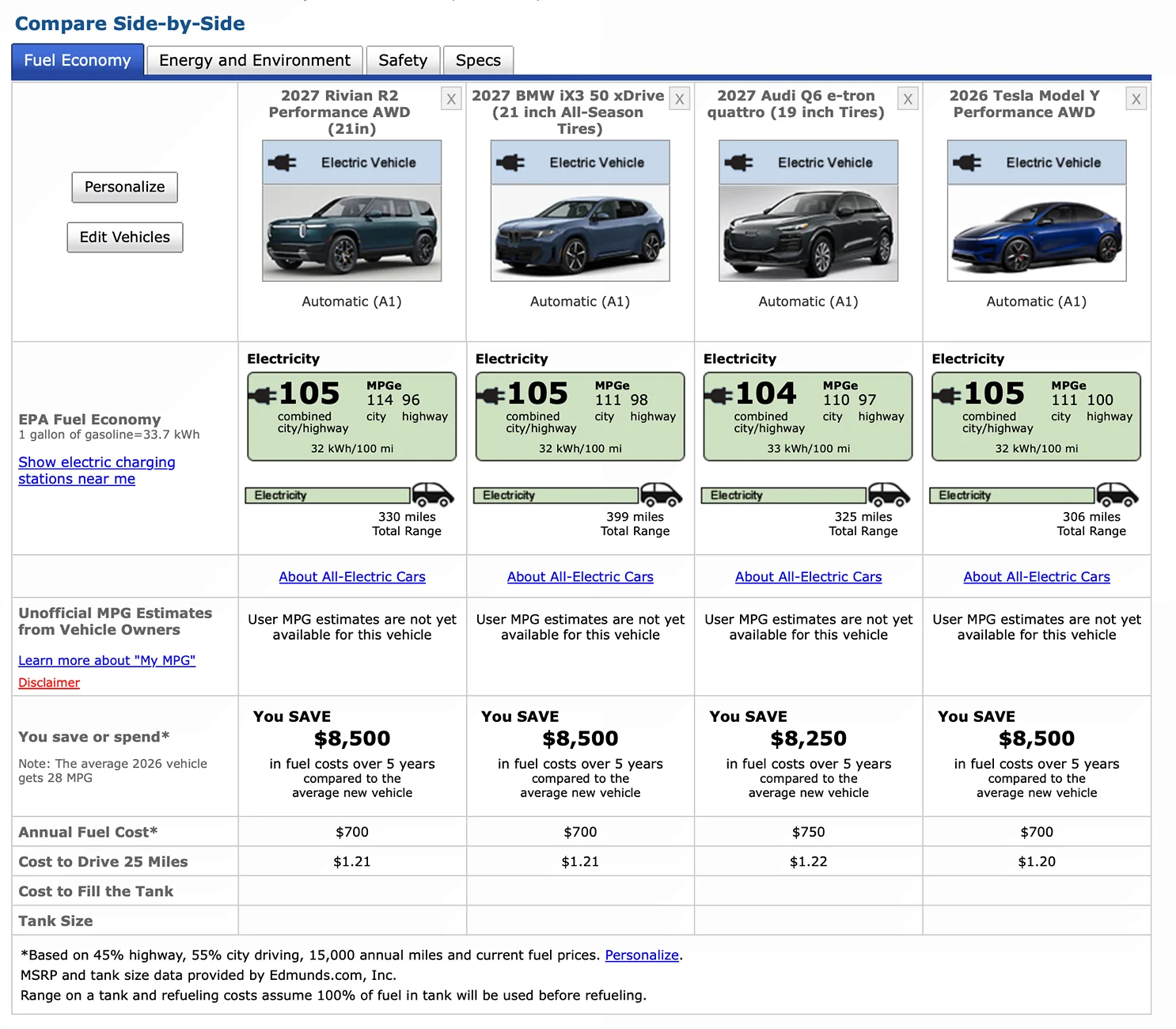
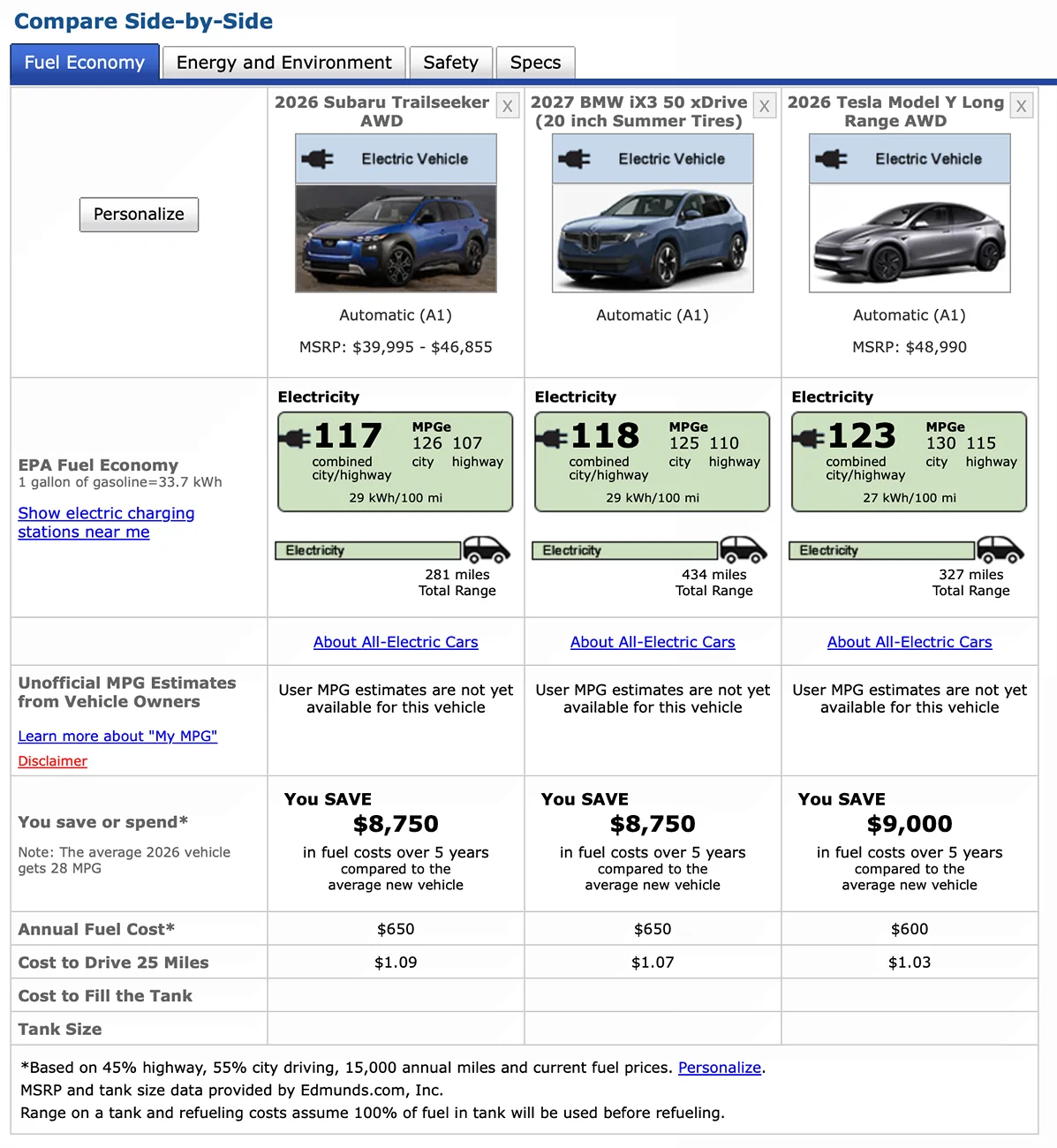
I think this is likely bc they're all efficient under 55 mph just cruising around town. The Model Y is the most efficient on the highway due to its shape and lack of drag compared to others. It's highway number reflects that.Interesting how tightly everything is clustered on efficiency

And it's not just the vents at the rear spoiler. There are also vents just aft of the front wheel well. Plus, often overlooked and less obvious things done to reduce drag. Things like shape of the mirrors, shape of A-pillars, little trim pieces that are also spoilers (example, at left and right edges of R1T's rear glass), shape of the front bumper, little flaps attached to it just ahead of front tires, shape of underbody panels. With R1T, they even tested multiple versions of trim piece at the top of the tailgate. With R2, the decision to recess the rear wiper was also done for sake of aero.The aerodynamic vents/slits on the roof of the R2, SHOULD reduce the vacuum effect, and low pressure drag that SUV’s and squared off back vehicles are known for.. so it SHOULD be better than the R1S for sure..could really even get to at least model X measurements for .cD
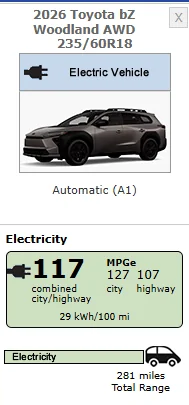
The EPA uses energy supplied to the car by the charger not energy supplied by the HV battery. There are unknown charging losses.If it is 32kWh for 100 miles that equates to 3.1 miles per kWh. Given a battery size of 88.5 kWh then the range would be 276 miles. This is less than quoted, what am I missing?

Thanks, I have heard charging loss can be upto 10% which would boost 3.1 to 3.4 and get closer to the 3.7 or so that the range equates to.The EPA uses energy supplied to the car by the charger not energy supplied by the HV battery. There are unknown charging losses.
On road efficiency will be better than 3.1.

I was surprised to see how efficient the Woodland is given its size and design.Interesting how tightly everything is clustered on efficiency

Everyone knows how to do this now. It is just a question of which incremental trade you make. More jellybean gives you and extra 8% or so, stiffer tires buys you ~7% (BMW), less frontal area always wins in real world highway where the derate is very real!I was surprised to see how efficient the Woodland is given its size and design.

Simply having 800V isn't really much of a game changer either. It's 800V AND ability to charge in 5 minutes or so (including infrastructure that requires), like what the Chinese are already doing. If refueling time and cost of purchase has parity with ICE cars, EV adoption rate would be way higher.Everyone knows how to do this now. It is just a question of which incremental trade you make. More jellybean gives you and extra 8% or so, stiffer tires buys you ~7% (BMW), less frontal area always wins in real world highway where the derate is very real!
IMO incremental efficiency is no longer all that valuable. With batteries costing under $100kwh fully packaged, tossing and extra 10kwh into the belly is under $1k. If you have 800V charging, it does not matter much there either (+/- 1 minute to get the same number of miles). The days where efficiency dictated design are passing quickly. Lots more flexibility will yield better designs. R2 is a good example (though I wish RJ had not skimped on the 800V or offering the 46120s as a max pack).

The Woodland is 500lb lighter than R2 and has a low front end to facilitate aero.I was surprised to see how efficient the Woodland is given its size and design.
I am not very optimistic that we're going to get something like the shenxing level charging capability on 800 volt anytime soon much less moving to a BYD1000 volt system! But a combination of 400 KW which the current systems are capable of and ongoing improvements in flattening the charging curve and increasing the c-rate should meaningfully deliver 15 minute charging pretty routinely. Given that 80% of EV charging or more is done at home at least by people who buy new vehicles who overwhelmingly own single-family homes, I wonder if that's going to be more than enough or not? Right now I don't think the main gap is technical I think it's perception. The gap between a 10% market share and a 50% market share in new car sales in the US is mostly problematic pricing and negative PR I think. Getting above 50% gets into real technical challenges like having to reach into the full-size pickup market which represents what that 18% of total new car sales?Simply having 800V isn't really much of a game changer either. It's 800V AND ability to charge in 5 minutes or so (including infrastructure that requires), like what the Chinese are already doing. If refueling time and cost of purchase has parity with ICE cars, EV adoption rate would be way higher.
You forget, not every motorist is a homeowner. And not every motorist and homeowner has a garage or driveway. There are people who live in apartments or condos with subterranean or communal parking that have no charging infrastructure whatsoever, and landlords or HOAs who have no interest in the challenges of installing one.I am not very optimistic that we're going to get something like the shenxing level charging capability on 800 volt anytime soon much less moving to a BYD1000 volt system! But a combination of 400 KW which the current systems are capable of and ongoing improvements in flattening the charging curve and increasing the c-rate should meaningfully deliver 15 minute charging pretty routinely. Given that 80% of EV charging or more is done at home at least by people who buy new vehicles who overwhelmingly own single-family homes, I wonder if that's going to be more than enough or not? Right now I don't think the main gap is technical I think it's perception. The gap between a 10% market share and a 50% market share in new car sales in the US is mostly problematic pricing and negative PR I think. Getting above 50% gets into real technical challenges like having to reach into the full-size pickup market which represents what that 18% of total new car sales?