Mathme
Well-Known Member
- First Name
- Matt
- Joined
- Jul 25, 2022
- Threads
- 3
- Messages
- 1,378
- Reaction score
- 1,814
- Location
- Los Altos, CA
- Vehicles
- R1T: El Cap, OC, 20AT, Off road package
- Occupation
- High Tech
- Thread starter
- #1
This is the first time in a year I've towed with Artee since I got him about a year ago. The problem child today was the Tesla Every time you drive it in the heat it throws a code saying the PEM/fan (computer module) is getting warm and the only place to get is serviced is up in Santa Rosa - which is about 100 miles away. Although the battery is 14+ years old and can still easily drive way farther than that, doing so with a hot computer on a 100 degree day isn't an option. So the Rivian and a trip to the local U-Haul shop to the rescue.


Onto the trailer Tuesday night and on the road yesterday about 6:30 so we could get through San Francisco before the rush hour traffic really hit. Overall towing with the Rivian is easy. Towed the same car and trailer several years ago with my v8 SUV, and the Rivian is hands-down much easier. I could feel 5,500lbs of trailer back there but the Rivian didn't complain about it at all. Since it was almost $250 cheaper to do a local rental we ended up towing the Tesla up and bringing an empty trailer back. We left the house at 85% SoC.
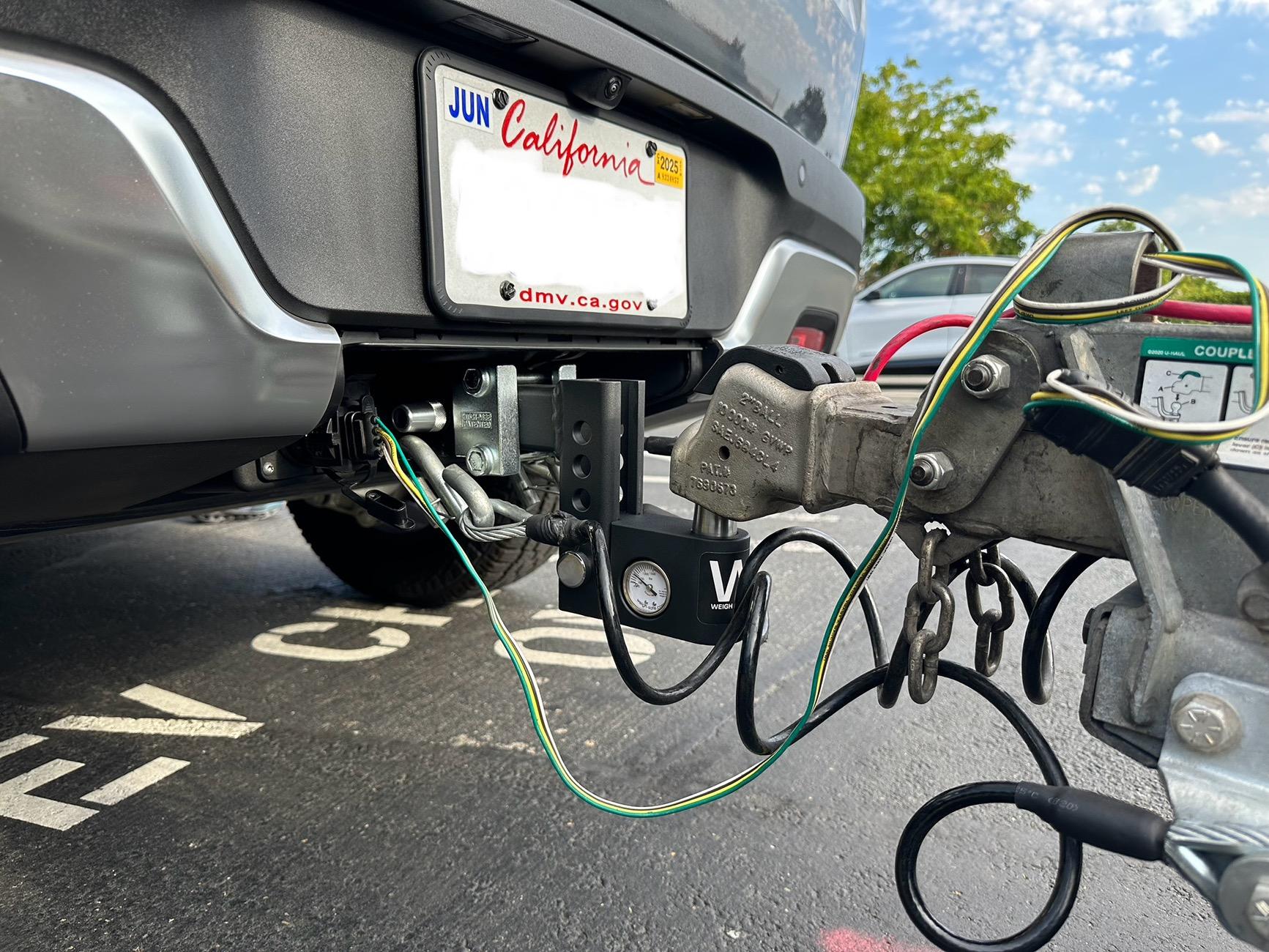
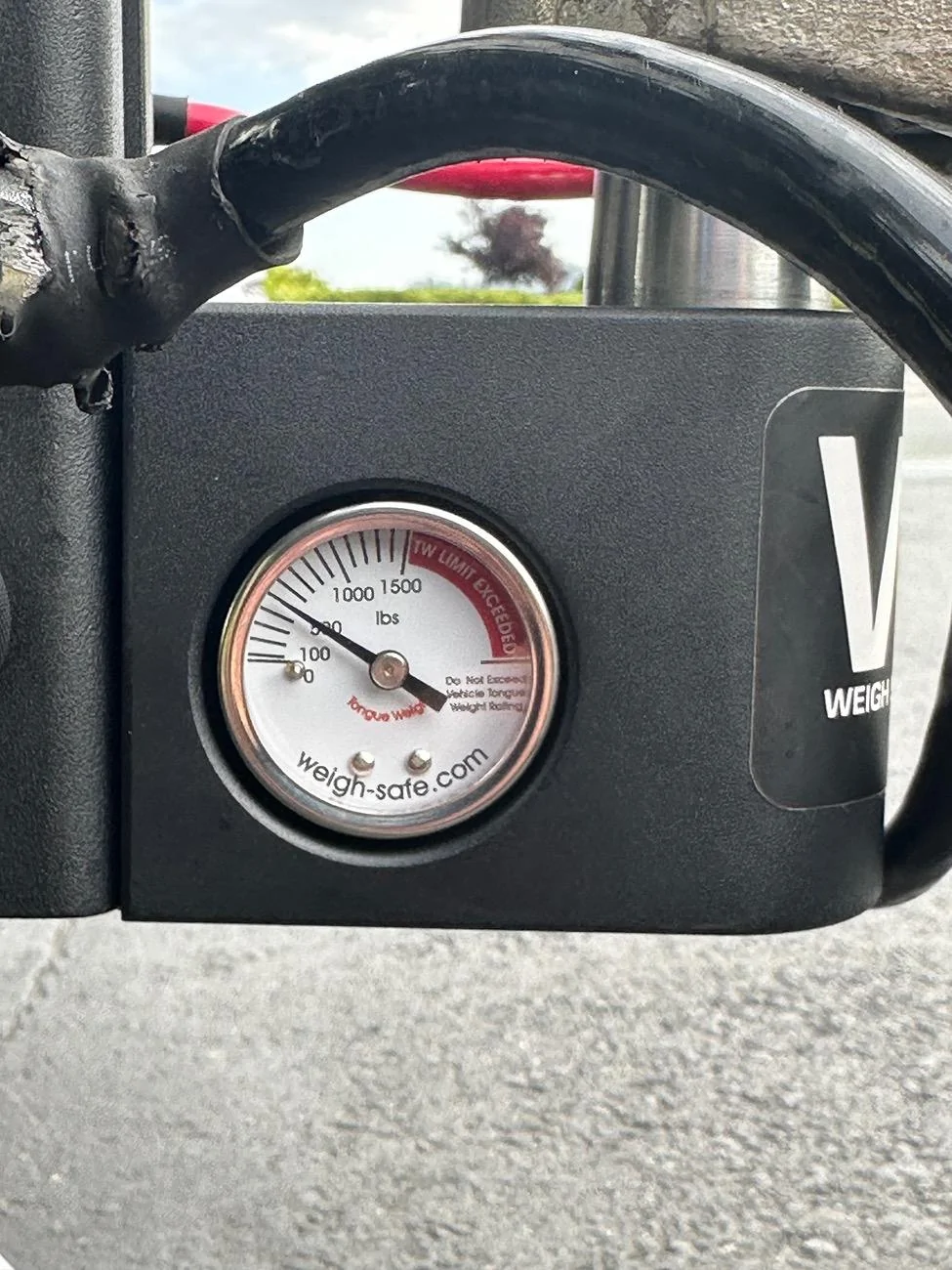
I recently purchased the newest Weigh-Safe 4" drop hitch and an anti-rattle clamp. The aluminum versions of this go for about $350 and this powder coated slim line was about $170 delivered. I loved knowing that 5,500lb of trailer had a little more than 500lb on the tongue

We stopped at the RAN in Corte Madera on the way up. Unfortunately, this is one of those RANs with no trailer stall but it was early and the parking lot was empty so I pulled into a space at the end and easily charged.
This RAN is in a nice Mall so there was a Philz for coffee nearby. 31 minutes and 42kWh later we were back on the road again. This put me at 90% SoC.
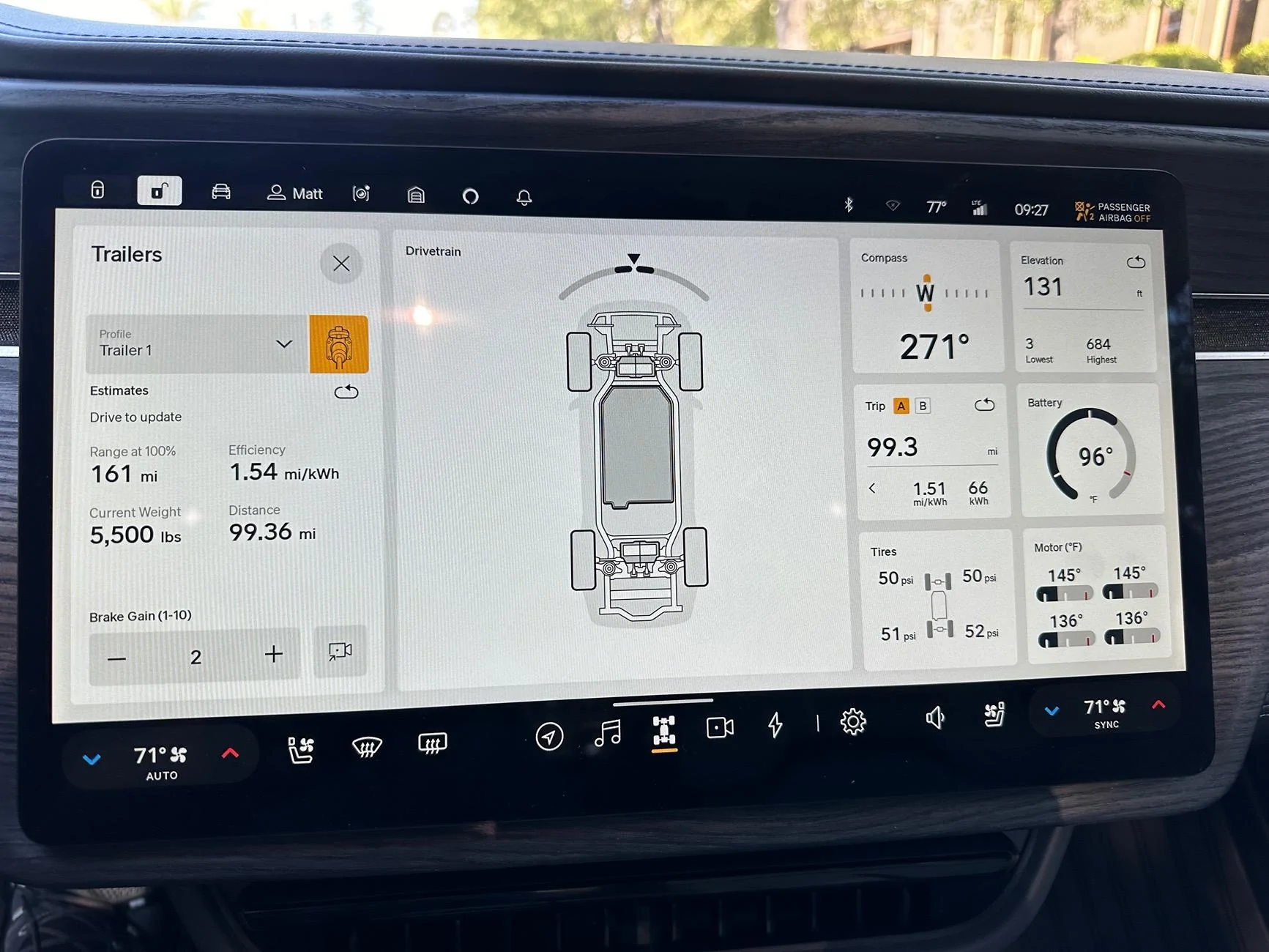
Dropped the Tesla off for service and here's the stats on the pull. 1.54 miles/kWh efficiency while my overall for the past 4-5,000 miles is 2.07. We were in AP with Standard height suspension. Since it's California, and has a slower towing speed limit, we were doing about 60 on average on the freeway. The first 40 miles going up to San Francisco is hilly with rolling hills of up to almost 700'.
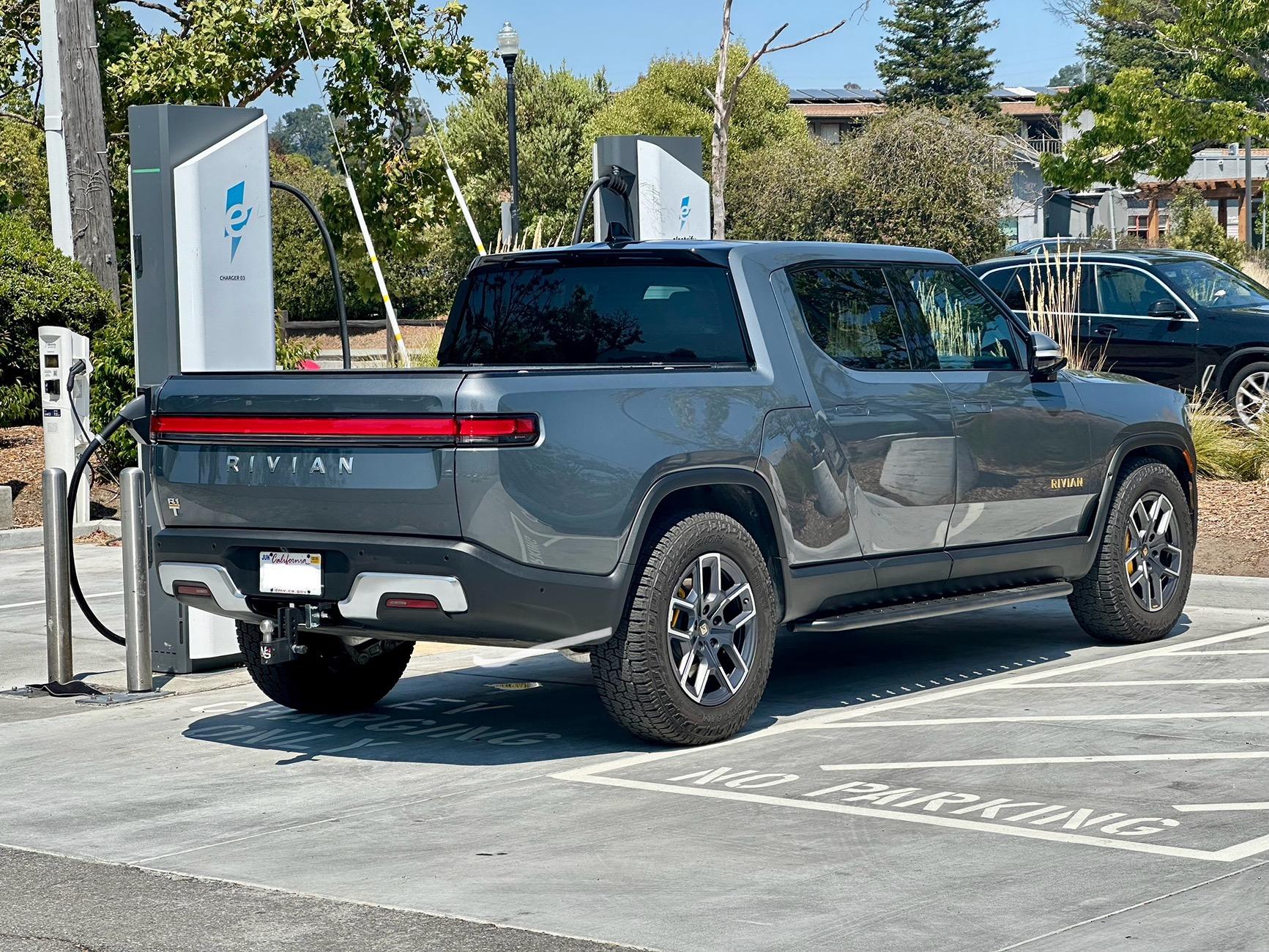
On the return trip the plan was to Stop in Corte Madera at the RAN for another charge. Although I could have gotten home on the charge, I would have been down to less than 10 miles range which would have meant a charge before dropping off the trailer again. Unfortunately, the entire RAN station was down because of a communication error so we had to go to an EA station at a local Safeway. I had to drop the trailer because of the location of the charger but luckily I found an open 350 kWh stall. Max charging speed here was 212kWh but I was quickly speed limited by the station to 149kWh - at least is was still pumping out a descent amount of kWh even though it was limited. By the time we walked the dog, ourselves, and got a drink we had 38kWh added in 15 minutes or about 51% SoC -- way more than enough for what we needed to get home and return the trailer.
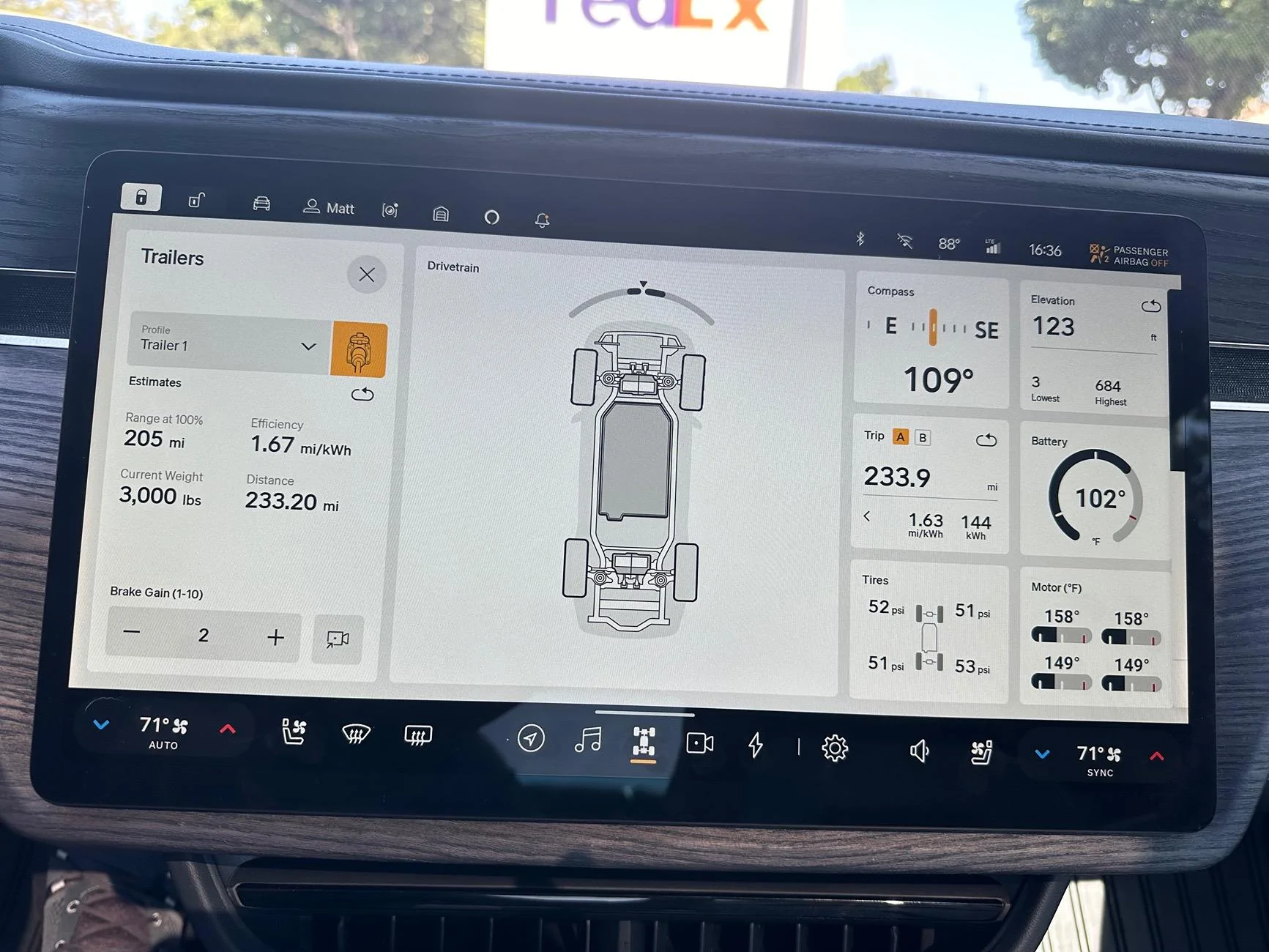
The trip back through the city was uneventful and we increased our average consumption (not surprisingly) on the entire trip with 3,000lbs less on the trailer. Here's the stats from when I dropped off the trailer. By the time I got back home, Artee was at 29% SoC.
The plan is to drive the Tesla back once it's finished with service so likely not towing again.
Observations on this day of towing:
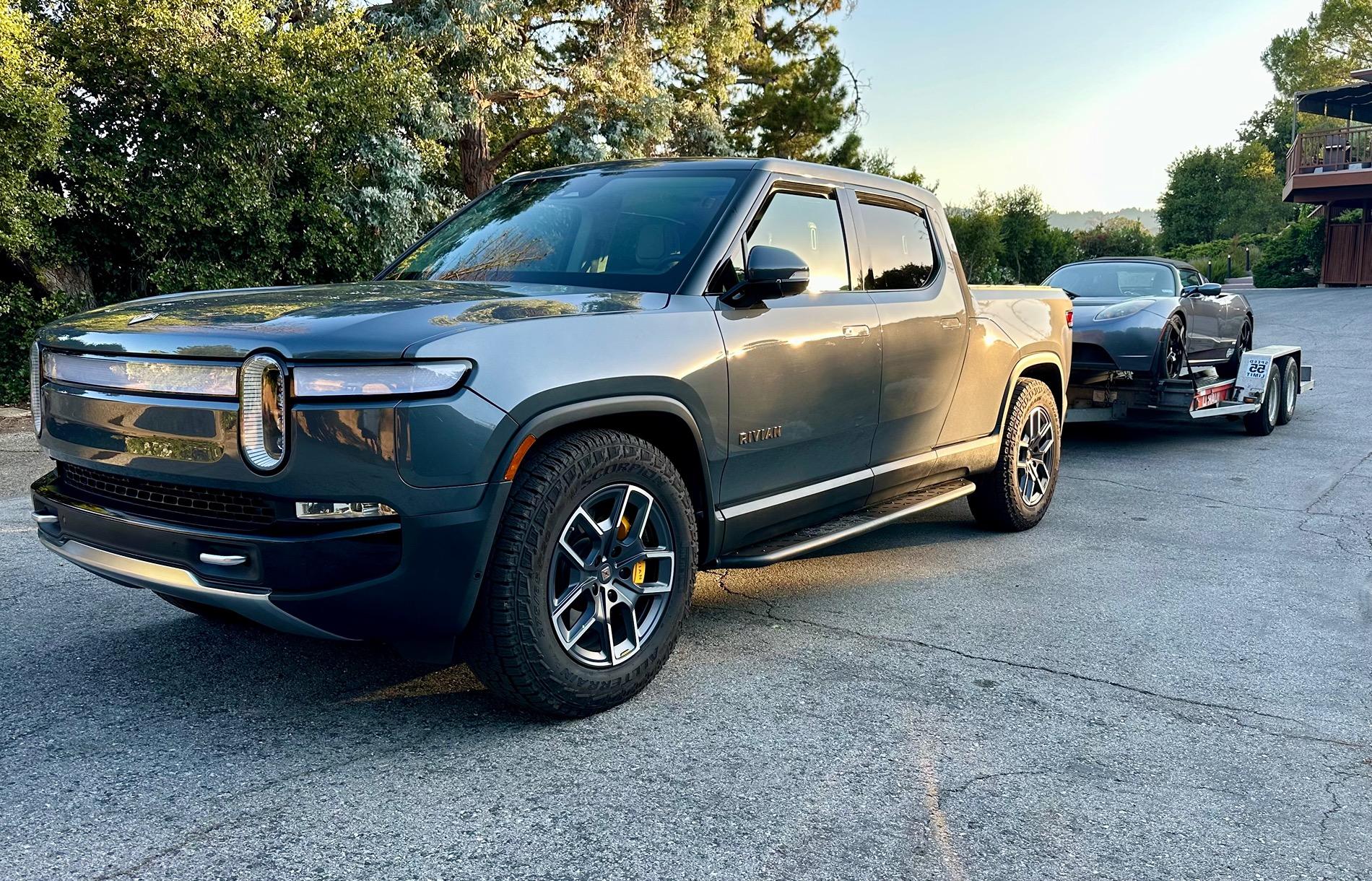
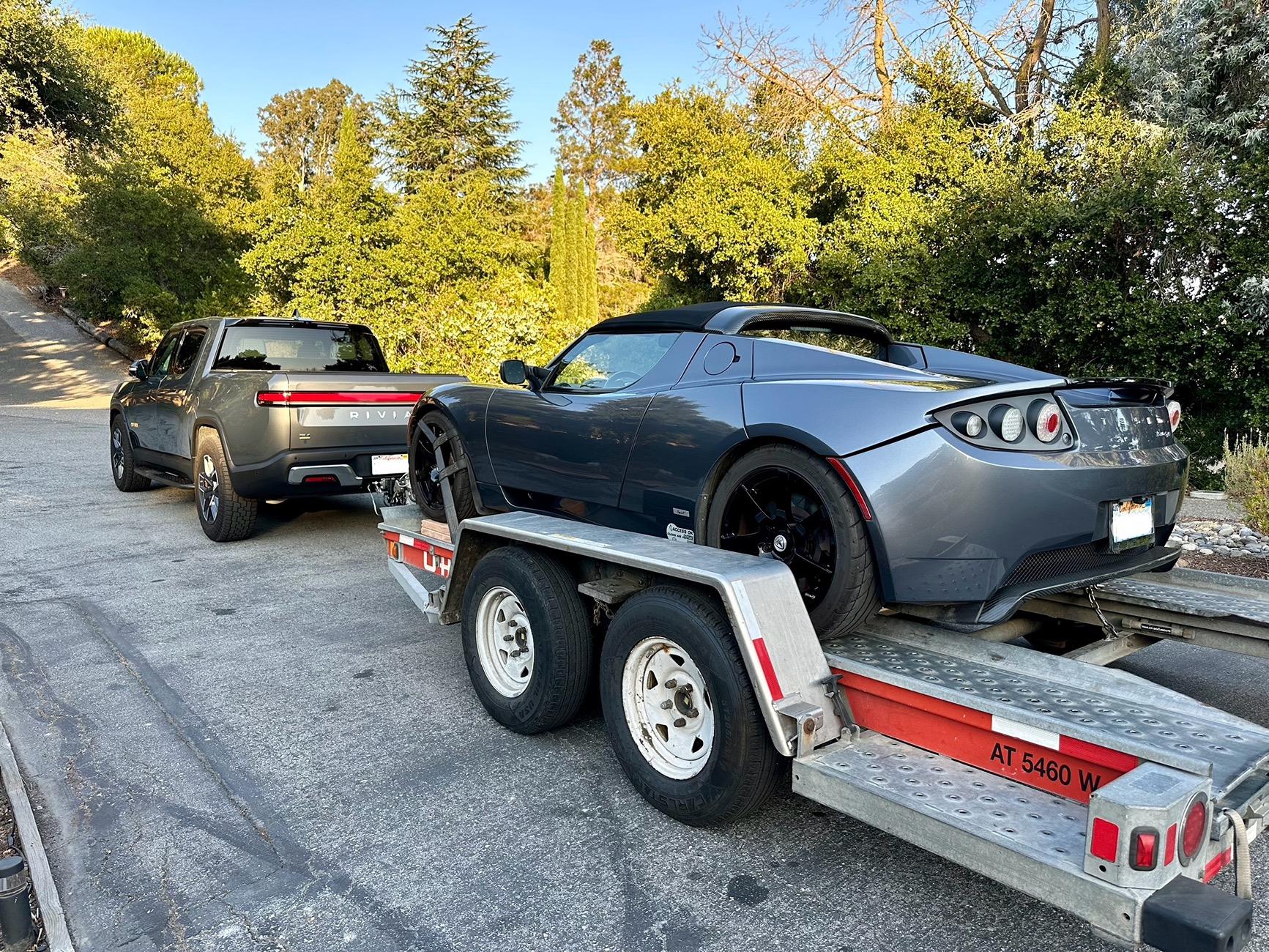
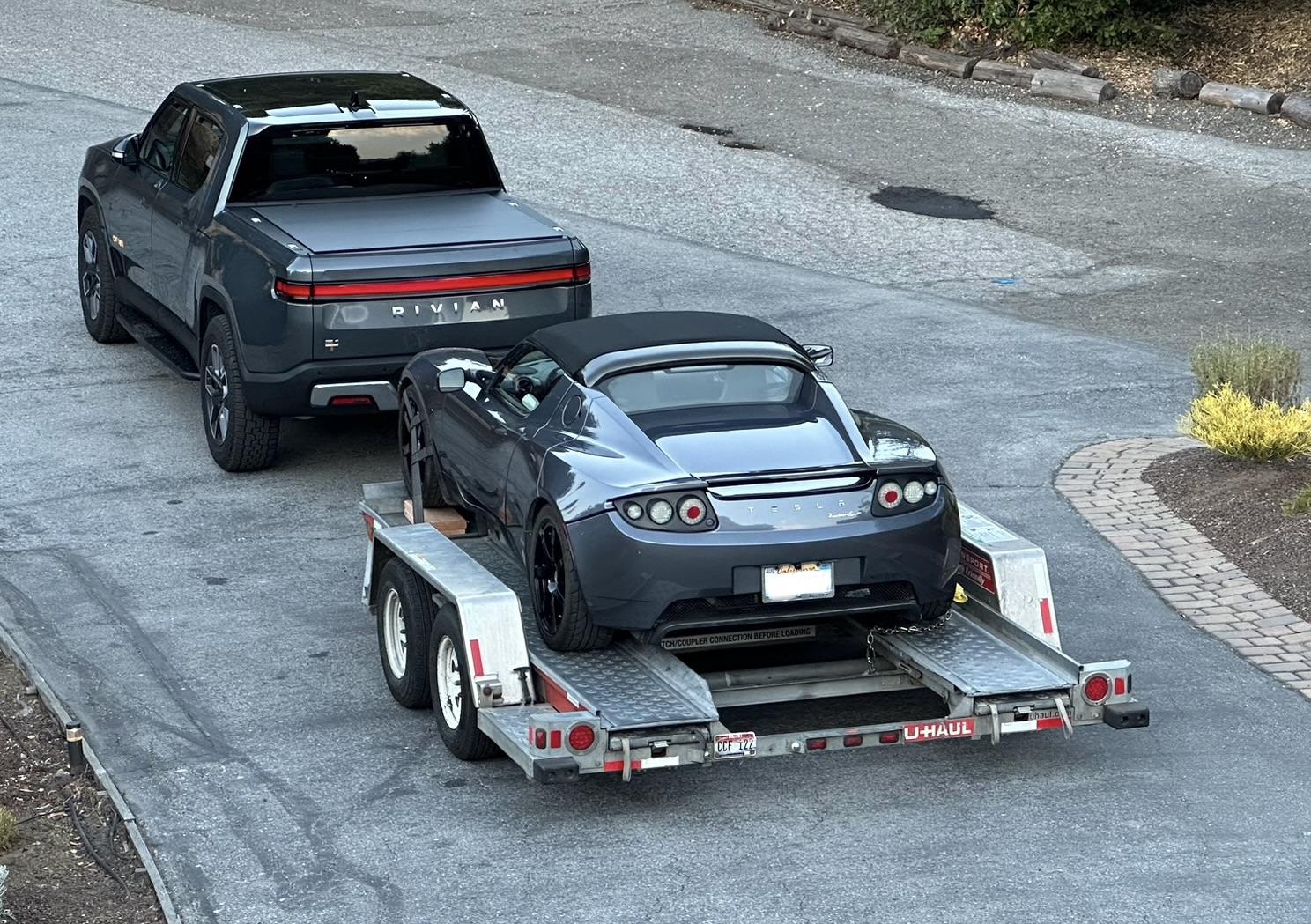
Onto the trailer Tuesday night and on the road yesterday about 6:30 so we could get through San Francisco before the rush hour traffic really hit. Overall towing with the Rivian is easy. Towed the same car and trailer several years ago with my v8 SUV, and the Rivian is hands-down much easier. I could feel 5,500lbs of trailer back there but the Rivian didn't complain about it at all. Since it was almost $250 cheaper to do a local rental we ended up towing the Tesla up and bringing an empty trailer back. We left the house at 85% SoC.
I recently purchased the newest Weigh-Safe 4" drop hitch and an anti-rattle clamp. The aluminum versions of this go for about $350 and this powder coated slim line was about $170 delivered. I loved knowing that 5,500lb of trailer had a little more than 500lb on the tongue
We stopped at the RAN in Corte Madera on the way up. Unfortunately, this is one of those RANs with no trailer stall but it was early and the parking lot was empty so I pulled into a space at the end and easily charged.
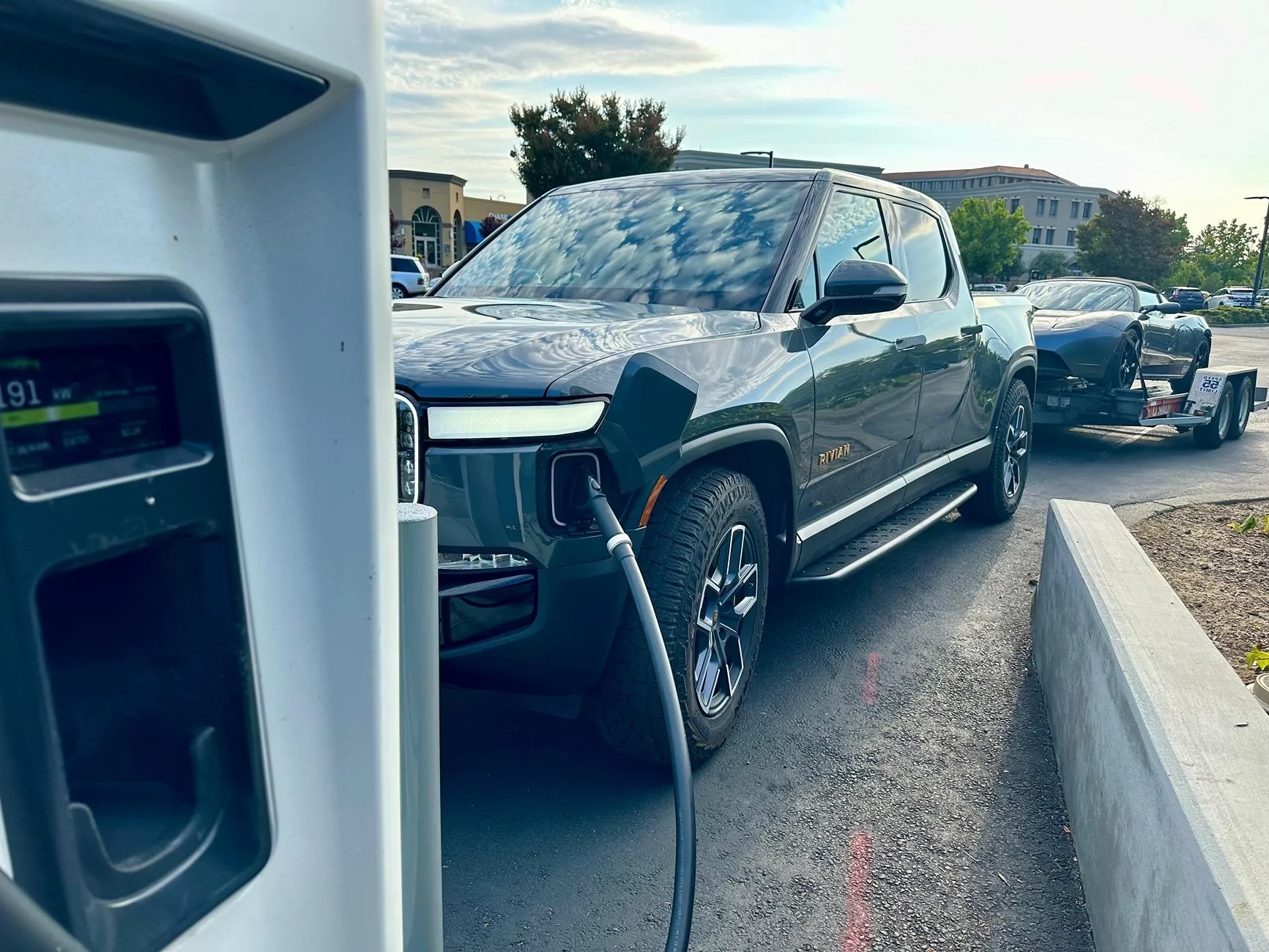
This RAN is in a nice Mall so there was a Philz for coffee nearby. 31 minutes and 42kWh later we were back on the road again. This put me at 90% SoC.
Dropped the Tesla off for service and here's the stats on the pull. 1.54 miles/kWh efficiency while my overall for the past 4-5,000 miles is 2.07. We were in AP with Standard height suspension. Since it's California, and has a slower towing speed limit, we were doing about 60 on average on the freeway. The first 40 miles going up to San Francisco is hilly with rolling hills of up to almost 700'.
On the return trip the plan was to Stop in Corte Madera at the RAN for another charge. Although I could have gotten home on the charge, I would have been down to less than 10 miles range which would have meant a charge before dropping off the trailer again. Unfortunately, the entire RAN station was down because of a communication error so we had to go to an EA station at a local Safeway. I had to drop the trailer because of the location of the charger but luckily I found an open 350 kWh stall. Max charging speed here was 212kWh but I was quickly speed limited by the station to 149kWh - at least is was still pumping out a descent amount of kWh even though it was limited. By the time we walked the dog, ourselves, and got a drink we had 38kWh added in 15 minutes or about 51% SoC -- way more than enough for what we needed to get home and return the trailer.
The trip back through the city was uneventful and we increased our average consumption (not surprisingly) on the entire trip with 3,000lbs less on the trailer. Here's the stats from when I dropped off the trailer. By the time I got back home, Artee was at 29% SoC.
The plan is to drive the Tesla back once it's finished with service so likely not towing again.
Observations on this day of towing:
- Overall Artee did a great job pulling his brother in for service by just doing it with no complaints. Whereas with the SUVs, there was a lot of ICE rasping and thrashing around.
- Love the Weigh Safe hitch as knowing your tongue weight will make for a safer tow every time. This particular one comes with a 2" ball and a clamshell adapter so you can go up to the 2 5/16 if needed. This is also a 12,500 rated hitch.
- The Rivian appears to sense weight every time you start a drive. If you're on the trailer screen it will say "sensing." This particular trailer must be right about 2,500lbs empty as the first time I connected it it said 2,500lbs as well as several times after that. The last time I connected it and drove, Artee estimated the empty weight as 3,000lbs as shown above. My other indication about this procedure was when leaving the house in the morning. Our driveway loses about 130' of elevation in .2 miles with a max downward slope of 13 degrees (per Artee one day). When I got on the freeway in the morning Artee was saying the trailer + car was only 3,000lbs. I guess that's what happens when driving down hill and it's sensing braked trailer weight.
- Just like without a trailer, when the cruise control is on, you can't move from one drive mode to the trailer screen - you can only do so when the cruise control is off. It'd be nice to be able to do this, just to check the stats while you have a moment.
- The backup cameras are great for checking the hitch and overall load while towing. Lines for the trailer hitch make for connecting the first try simple.
- I wish there was an easier way to feather small amounts of power in reverse when getting close to the hitch. It seems like the power is either on or off and it could be easy to put a digit in the license plate. The old adage from boating comes to mind: never approach anything (in this case a trailer) any faster than you're willing to hit it.
- As others have said, long distance towing would take a lot of planning if you had to stop and charge every 100ish miles and wait 40 minutes to charge. For this trip, charging was mostly seamless. Sad though that EA had to come to the rescue in the case of a RAN.
Sponsored