Sponsored

Engi_Nerd

Well-Known Member
Joined
Jul 21, 2021
Threads
6
Messages
248
Reaction score
487
Location
Western NY
Vehicles
Model Y LR, Alfa Romeo Giulia
The pedaling resistance isn't fixed. It's variable based on the drive mode, or whatever 'gear' you set it in manual.
Is there a reference you could point me to? Snazzy's review said it's fixed resistance. It's not clear to me if the modes and faux gears are just giving you increasing cadence-based assist, or if they are able to vary the amount of resistance torque (and input energy at a given cadence) the user feels through the pedals.
Sponsored


VandalSibs

Well-Known Member
First Name
Andrew
Joined
Dec 27, 2023
Threads
15
Messages
1,418
Reaction score
2,458
Location
Eastern Washington State
Website
www.sibulskymusic.com
Vehicles
R1T Dual Motor Large Pack
Occupation
Composer, IT Service Desk Analyst
Clubs
 
Is there a reference you could point me to? Snazzy's review said it's fixed resistance. It's not clear to me if the modes and faux gears are just giving you increasing cadence-based assist, or if they are able to vary the amount of resistance torque (and input energy at a given cadence) the user feels through the pedals.
I might have mis-interpreted Also's phrasing on the site. I'll do a re-read of it.
 

VandalSibs

Well-Known Member
First Name
Andrew
Joined
Dec 27, 2023
Threads
15
Messages
1,418
Reaction score
2,458
Location
Eastern Washington State
Website
www.sibulskymusic.com
Vehicles
R1T Dual Motor Large Pack
Occupation
Composer, IT Service Desk Analyst
Clubs
 
@Engi_Nerd

I'm no bike or e-bike expert, but the way they talk about riding in manual mode seems like there would be different levels of resistance:

In manual, choose your gear like you would on a traditional bike, though with none of the sticking, slipping, or lag time. Because the TM-B’s gears are software-defined, the shifting experience is smooth, responsive, and immediate—like the perfect bike.
So depending on the 'gear' you select, resistance should be different, right? Or am I not thinking thru things correctly?
 

mkhuffman

Well-Known Member
First Name
Mike
Joined
Nov 9, 2020
Threads
14
Messages
2,885
Reaction score
3,235
Location
Virginia
Vehicles
2025 R1T Tri-Max, Jeep GC-L, VW Jetta
The helmet seems very cool, and I will probably buy one.
I agree. That is something I would get also, except will it be worth the price if they offer it for $1,000? It might be worth $400 to me.

I really like the integrated lights because it means I can take the lights off my road bike. The higher position of the lights at head level means better visibility to motorists and others who might be on a bike/walk trail.
 

Zorg

Well-Known Member
Joined
Nov 1, 2022
Threads
9
Messages
1,009
Reaction score
1,230
Location
SF bay area
Vehicles
Model X
As a commuter bike, this is very cool though heavy. However, I suspect that the commuter crowd sweet price point is $2k +-$500. I wish them well. Santa Cruz Bullit owner (bike rips).
 

Sponsored

ENVErider

Well-Known Member
First Name
Tyler
Joined
May 2, 2025
Threads
1
Messages
186
Reaction score
177
Location
Oakland, CA
Vehicles
2022 R1T Launch Edition
Occupation
Mechanical Engineer
After watching a few release videos on this bike, I'm convinced that it's unique in several ways. It takes the styling from the Lemond e-bikes and adds Rivian-like tech. Reviewers were surprised by the $4500 cost, calling it low, but I didn't feel the same; it seems appropriately priced, but not a steal. As a Rivian owner, I was disappointed that they are using Rivian's "Launch Edition" model, but the only thing I found unique was changing that translucent cover from grey to a purple launch color. Most men, including me, don't see adding more lavender trim as an improvement; it's already very feminine-looking as is. I might end up getting one, but I don't love it enough to be an early adopter.
 
OP
OP
Snazzy Labs

Snazzy Labs

Well-Known Member
First Name
Quinn
Joined
Apr 15, 2022
Threads
8
Messages
92
Reaction score
589
Location
Salt Lake City
Vehicles
R1S, Genesis GV80, 1976 Sebring-Vanguard CitiCar
Occupation
YouTuber
@Engi_Nerd

I'm no bike or e-bike expert, but the way they talk about riding in manual mode seems like there would be different levels of resistance:


So depending on the 'gear' you select, resistance should be different, right? Or am I not thinking thru things correctly?
I was hoping this conveyed itself through the post but it seems not. In manual mode (which is limited to the $4,500 bikes), you do get pedal resistance. Pedal in 8th “gear” from a stop and it’ll be hard. Pedal in 1st gear at 15MPH and nothing will happen. But that’s only in manual mode. In automatic mode (which is the default mode and also the only mode on the entry bike), there is a fixed pedal resistance. Not to say there’s “no resistance,” there is, but it doesn’t vary. Same effort required (very little effort, to be clear) from a stop, max speed, up hill, down hill. Identical.
 

mkhuffman

Well-Known Member
First Name
Mike
Joined
Nov 9, 2020
Threads
14
Messages
2,885
Reaction score
3,235
Location
Virginia
Vehicles
2025 R1T Tri-Max, Jeep GC-L, VW Jetta
I was hoping this conveyed itself through the post but it seems not. In manual mode (which is limited to the $4,500 bikes), you do get pedal resistance. Pedal in 8th “gear” from a stop and it’ll be hard. Pedal in 1st gear at 15MPH and nothing will happen. But that’s only in manual mode. In automatic mode (which is the default mode and also the only mode on the entry bike), there is a fixed pedal resistance. Not to say there’s “no resistance,” there is, but it doesn’t vary. Same effort required (very little effort, to be clear) from a stop, max speed, up hill, down hill. Identical.
"Very little resistance" means very little power. Which means very little charging is done to the battery while pedaling in auto mode. I assume they are instead heavily leveraging regen as the way to get more range out of the bike.
 

Singletracker

Well-Known Member
Joined
Mar 10, 2022
Threads
39
Messages
1,308
Reaction score
1,278
Location
NV
Vehicles
2023 R1T QM w/20” A/T’s
Here's a few other basic categories:
1) Max-power eMTB: this is a class all it's own, where you can rock climb portions no unassisted human can, and flats are max speed always. I would argue Specialized pretty much made this category, and it continues.
You apparently don’t own an E-MTB. Your statement is a gross exaggeration and simply not true, in any way.
 

av8or

Well-Known Member
First Name
Randall
Joined
Mar 1, 2022
Threads
35
Messages
669
Reaction score
1,094
Location
Oregon
Vehicles
2020 Jeep Wrangler, 2023 Rivian R1T
Occupation
FedEx Retired
Clubs
 
Yeah, but can it ride itself?
 
  • Love
Reactions: GRC

Sponsored

LivingInKaos

Well-Known Member
Joined
Jun 30, 2022
Threads
19
Messages
987
Reaction score
1,944
Location
Oregon
Vehicles
R1T Launch Green Forest Edge
Occupation
Own Fabrication Company / VP of Portland Rivian Club
Clubs
 
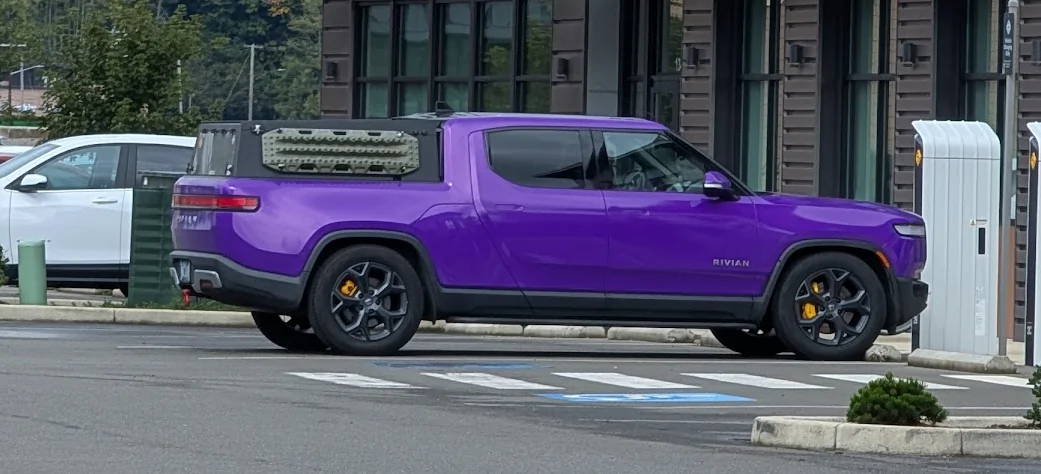
After watching a few release videos on this bike, I'm convinced that it's unique in several ways. It takes the styling from the Lemond e-bikes and adds Rivian-like tech. Reviewers were surprised by the $4500 cost, calling it low, but I didn't feel the same; it seems appropriately priced, but not a steal. As a Rivian owner, I was disappointed that they are using Rivian's "Launch Edition" model, but the only thing I found unique was changing that translucent cover from grey to a purple launch color. Most men, including me, don't see adding more lavender trim as an improvement; it's already very feminine-looking as is. I might end up getting one, but I don't love it enough to be an early adopter.
Hey now....

Don't diss the purple ....
Rivian R1T R1S Review: I rode the ALSO TM-B E-Bike: Rivian Micromobility Startup’s First EV 1761240268360-vx
 

Dark-Fx

Well-Known Member
First Name
Brian
Joined
Jul 15, 2020
Threads
148
Messages
13,608
Reaction score
27,498
Location
Michigan
Vehicles
R1T, R1S, Livewire One, Sierra EV, R1S
Occupation
Engineering
Clubs
 
Is there a reference you could point me to? Snazzy's review said it's fixed resistance. It's not clear to me if the modes and faux gears are just giving you increasing cadence-based assist, or if they are able to vary the amount of resistance torque (and input energy at a given cadence) the user feels through the pedals.
If you've ever ridden a bike trainer with an ERG setup, I imagine it's a lot like that. Difficulty can be tuned based on simulated gear or to match a specific input effort regardless of pedal speed. Input could also vary based on pedal RPM.

My one real question about this all though, is what the inertial feel is. That's hard to commute without having an actual mass.
 

SASSquatch

Well-Known Member
Joined
Feb 3, 2022
Threads
36
Messages
2,303
Reaction score
4,471
Location
Washington DC
Vehicles
BMW i3s Ford C-Max Hybrid
Occupation
Semi-Autonomous Yeti
Clubs
 
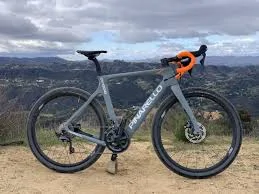
e-Gravel bikes are fun. I bought a Pinarello Nytro Grinta Apex a couple years ago to help rehab on a broken leg and it make me enjoy cycling again. Class 1 and has a good torque sensor, so you actually have to work for the assist...you get nothing for free, which was actually a detriment to the rehab angle. It's also only 30 lbs and you can remove the battery and motor, dropping about 8 lbs off the bike if you want to ride unassisted. By the time my leg had enough, I couldn't get a lot of assist to get back to the car/house...oops. That said, I currently have it set so the lowest assist mode is down around 50W so I can just ride a bit longer, but I'm still doing most of the work. I even threw a rack on it, so I can carry a trunk bag or panniers.

I purchased a Pinarello Dyodo Gravel some years back in response to rehabbing after surgery. I personally like the fact that you an adjust the assist down so that you are just getting a little help. My hardcore cycling days are behind me so it makes getting up those steep inclines that much more enjoyable with the assist. I replaced the 650b stock wheels with hand built carbon fiber 700c ones and it weighs ~30lbs battery and motor included. e-Bikes have really made cycling much more accessible for a lot of people and that's a good thing in my book.

Rivian R1T R1S Review: I rode the ALSO TM-B E-Bike: Rivian Micromobility Startup’s First EV 1761252953754-g0
 

NeverFollow

Well-Known Member
Joined
Aug 5, 2020
Threads
0
Messages
66
Reaction score
37
Location
A Galaxy Far Far Away
Vehicles
リビアン
3,236 words 19,053 characters...

I just spent the day in San Francisco riding a bike unlike any other I’ve ever ridden. This is it. It’s not your average looking or functioning bike—and that may not come as a surprise once you hear it’s the result of that secret skunkworks project that spun out of automaker Rivian earlier this year. ALSO, that’s the company’s name. ALSO. Also, the ALSO TM-B (as it's called) costs $4,500. Yeah. But before you click away thinking this is just another absurdly priced Silicon Valley fever dream, you need to understand that this thing isn’t really a bike. It’s a vehicle—and that’s not some marketing mumbo-jumbo I’m being paid to say. ALSO didn't sponsor this, they have no editorial control, and no first preview rights. I’ll show you why I consider it a vehicle, but first, you need to understand that the $100B+ cycling industry is hurting with multiple large manufacturers filing for bankruptcy just this year.

Post-COVID retractions and new tariffs mean now is an awful time to launch a premium e-bike. Furthermore, the market is fractured: at the low end, you've got cheap Chinese bikes with primitive tech and zero margins. At the high end, the tech is great but prices are bonkers. DJI—the drone maker famous for undercutting everyone—just launched a bike reviewers are calling an incredible value… at eight thousand dollars.

And look, there's a sliver of the market buying recreational e-bikes who might stomach those prices. But most people adopting e-bikes want transportation—to replace car trips. And when your "affordable vehicle alternative" costs as much as a decent used Honda Civic, something's broken. The problem is mostly structural. Almost every e-bike maker is essentially an assembler buying white-labeled motors from Bosch or Bafang, batteries from Panasonic or Samsung, displays, controllers, and mechanical hardware from yet more vendors, and bolting it all together. Rad Power Bikes' entire value proposition is literally that: import everything, assemble cheap, undercut on price. Which works! But there's only so much innovation you can do with other people's parts. Everyone's bikes end up with similar capabilities, limitations, and pricing because everyone's paying the same suppliers for the same components. ALSO's solution is to stop treating e-bikes like bikes. Build a vertically integrated vehicle platform from the ground up—own the motors, batteries, electronics, software—exactly like Tesla did for electric cars. Or, ya know, like Rivian…

I’ll be honest: when I first saw the ALSO TM-B, I thought it looked ugly. There’s a step-through frame with this chunky centered abscess attached to a big downtube and seat post with wimpy looking brakes. But over two hours with it, it started to click… this isn’t styled like a bike. And I don't mean that in the pejorative "designed by committee" way—I mean it's clearly designed with manufacturing and functionality as the primary constraints, with aesthetics as a distant third.

There’s a chunky, structural, magnesium heart that houses almost everything: the motor mounts to it. The battery latches into it. The rear suspension pivots on it. The seat mates with it. And it utilizes "zonal architecture"—a term borrowed from automotive where instead of having electronics scattered all over the vehicle, you consolidate compute and power distribution into zones. For a bike, it means no cassette nor derailleur, no seat stay, no motor bolted to a frame that was designed before anyone knew a motor was going in. Everything crucial lives in this central hub. It's utilitarian in a way that saves cost and simplifies assembly, and honestly? I came around on it. There's something refreshingly honest about a design that says, "Here's where all the important stuff is, and we're not going to hide it." Form following function in a way that feels considered, not lazy.

That utilitarian, function-first philosophy extends way beyond the physical design—it's baked into the software stack too, and the first place you notice that is the display. They call it the "Portal," which is a bit dramatic, but whatever. It's a bright, high-contrast LCD mounted in the center of the handlebars that's easily visible even in direct sunlight. But the screen itself isn't the interesting part—it's what's running underneath: a real-time OS built from scratch, close to the metal, which means it's responsive and powerful in a way that e-bike displays just aren't. During the demo, I pulled the battery out to examine it—turn the handle, pull straight out, and you've got a 500 or 800 watt-hour pack depending on trim level. It's got 240-watt USB-C PD 3.1 bidirectional ports that can charge the battery itself or power anything else you plug into it, plus a little e-ink display shows state of charge. Anyways, when I slammed it back in, the display fired up instantly. No boot logo. No loading screen. Just on. Chris, the CEO, lit up when I pointed this out—apparently I was the first person in their demo cycle to notice. But it's a small example of what can be done when you have full control of everything: from pedal cadence, to assist curves, to brake feel. It also means they can push over-the-air updates to continuously improve the bike rather than leave it frozen in time. More importantly, the connectivity enables smartphone integration at a level that simply doesn't exist in the e-bike world—the kind of seamless experience you'd only find in the best electric cars.

It utilizes your phone as a key. Walk up to the bike, it wakes up, knows its you, and loads your settings. You hop on and go. Walk away, it locks. The motor physically immobilizes the rear wheel, the pedals decouple, the battery latches electronically. Motion sensors send you a push notification if someone tampers with it and a very loud alarm sounds to deter theft. If someone does actually manage to steal it, you can track it via GPS and remotely disable the entire bike. And while there’s also the potential for ALSO to use this for evil, every component is also serialized and bound to your bike unless you unbind it, eliminating the resale value for stolen parts.

This set of features addresses the worst part of bike ownership in the US: where do I park this thing and will it still be there when I get back? This eliminates the need for bike racks. No carrying a u-lock. Just park it and walk away. Like a vehicle. It’s frictionless.

Beyond security, there’s turn-by-turn navigation designed for cycling that actually accounts for your assist level, average speed, state of charge, and elevation. So you get accurate ETAs and arrival state of charge—critical if you’re using this as…. a vehicle. There’s media integration too. Whatever’s playing on your phone shows up on the display, you can control volume and seeking with the handlebar buttons. Incoming calls also pop up on the display asking if you want to accept or decline. These aren’t bike features. They’re vehicle features. And that distinction is what ALSO is betting on—that people (especially here in the US) will stop thinking: “I’m going to go for a bike ride” and start thinking: “I’m going to take my ALSO to get groceries at the farmers market.” Which we did, by the way, without having to park a car 5 blocks away—we just rode our vehicles straight through. It’s a paradigm shift, and I started to “get it.”

ALSO claims this multi-use functionality is enabled by their modular frame system. The pitch is simple: instead of buying multiple bikes for different purposes, you buy one TM-B and swap the top frame depending on what you're doing. There's a "Solo" frame for recreation, a "Utility" frame with a rear rack for hauling cargo or kids, and a "Comfort" frame with an upright seating position for people who don't identify as cyclists. You go into the settings menu, hit "swap frame," wait a couple seconds for the electric latch to release, lift off the old frame, pop on the new one, and it auto-detects everything—powering the integrated lights and adjusting the vehicle's ride settings based on expected load.

It's cool! Genuinely cool! And I can kinda see one legitimate use case: having two utility racks—one set up with a toddler seat for taking my kid to school, another configured with bins for grocery runs. But beyond that? I'm skeptical. How often is someone actually going to swap these? Does the rear rack suddenly become a burden when I want to ride up the canyon? I doubt it. I mean, it's an 80-pound e-bike. Really, the modularity aspect is most useful when multiple people in the home want to ride the same bike. You each have your own seat with your preferences paired to it and it's an easy swap. But that's also only necessary because there's no quick seat-post adjustment like most bikes have. You need to use an allen key. Now, ALSO wisely decided that most third-party bike accessories were already great and they didn't need to make many proprietary ones—though they will be selling a phone holster and bins that are the exact same size as a paper grocery bag, which is clever. Being compatible with stuff that already exists is great! But it also means accepting different mounting systems that are typically rather permanent once installed. Even ALSO's own custom front rack isn't that easily removable—you pressure clamp it onto the fork upper and it stays there. It feels like they started with this ambitious modular concept and then kind of gave up after the seat. Which, fine. Maybe modularity for modularity's sake isn't the point. But it does make me wonder if the complexity and cost of the electric latch system and serialized frames is justified when, in practice, most people will probably install one configuration and leave it there forever.

That said, despite being and looking the way that it does, the bike handles shockingly well. It's agile at low speeds and easy to maneuver in tight spaces (not typical of 80 pound e-bikes), but it's also stable at high speeds. I hit 31 miles per hour multiple times and it never felt twitchy or nervous. Part of that is geometry. They tuned head tube angle and trail to balance maneuverability with stability. Part of that is weight distribution. That magnesium heart puts the battery and motor low and central. More so than any e-bike on the market. But it's mostly suspension. Both the front and rear have a shocking amount of travel and the inverted front fork has enough adjustability that you can dial in a comfortable setup to absorb road bumps without it feeling sloppy or tighten it up when you need more feedback. Chris actually told me to intentionally hit a pothole to test it. So I did. And then a manhole cover. The bike soaked up both impacts without complaint—no harsh jarring, no loss of control—but it never felt slow or unresponsive either. Given that the retail price of this almost certainly white-labeled FOX fork is $2 grand alone, perhaps I should be unsurprised it was so good.

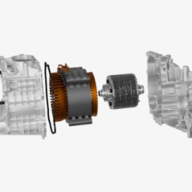
But the real party trick is the propulsion system they call Dream Ride. This bike is completely pedal-by-wire—the first of its kind. There's no mechanical connection between the pedals and the rear wheel. You pedal into a generator that converts your input to electrical energy, which the bike either sends to the motor or, if you’re generating more than it needs to output, into the battery. And that motor? It’s massive. ALSO built it in-house using a bar-wound stator—and extremely high-end technique you’d mostly only see in the best electric cars. Which, given where this comes from, makes sense. But it’s overkill for a bike in the best possible way. It’s also the first e-bike with real regenerative braking. While you can coast like a normal bike, as soon as you start to pull the brakes, energy is captured by your deceleration, run through inverters, and put back into the battery. And just like in a Rivian, the regen is really good. The bike can regen all the way down to a complete stop, and unless you’re biting into the handbrakes with a really aggressive braking event, you don’t use the friction brakes at all—which explains why the disk brakes appear to be a little undersized—because you basically never use them.

Upfront, you’ll also see something quite unusual: while most e-bikes have a wheel speed sensor that measures how often the front wheel finishes a complete rotation, the ALSO has a grid-type speed sensor that measures more than 60 times per revolution—more than any other bike on the market. The rear doesn’t even have one of these sensors—also unheard of—but that’s because it uses the much more accurate real-time input/output at the drive motor—which is possible because the belt is always spinning, which is possible because the pedals aren’t connected to the drivetrain at all. Not only does this allow them to implement a pseudo regen-controlled ABS system, but it also makes for the smoothest accelerating, gentlest braking, and most responsive e-bike I’ve ever used. It’s like the first time I drove an EV. Incredibly smooth, but also weird.

And this bike feels weird.

Because in the default automatic mode, there is no gearing because the bike literally doesn’t have gears. It's like an electric car. Now, there are “assist levels”—standard e-bike vernacular—but they're not really "assisting" you. Because you cannot move this bike without the bike moving itself. Remember, there is no physical connection to the rear wheel! At assist level one, the lowest setting, you top out at about 10 to 11 miles per hour. At assist level ten, you max out at the Class 3 speed limit of 28 mph. Maybe 30 if you're going downhill before the limiter kicks in. But here's the bizarre part: no matter what assist level you're in, the pedaling resistance feels the same. It's one long, predictable, consistent "gear." You go up a hill and there's zero resistance increase on the pedals. You go downhill and you pedal at the same speed with the same resistance. It's truly bizarre. Not in a bad way, but absolutely an adjustment. It feels like a vehicle, not like a bicycle.

Now, if you don't want that, there's a manual mode on all but the base-trim with 10 fixed ratios that you can shift through with the same handlebar buttons. Start peddling from a stop in 8th gear and there’s a ton of resistance—just like there would be in a high gear on a real bike—but it’s an artificial sensation created by resistance from the pedal stator. The best way to explain it is to just show you:


So yeah, the torque is absurd. It’s rated at 180 Newton-meters at the wheel—more than double what most e-bikes push. In max assist mode, if you stomp the pedals from a stop, the front wheel actually lifts. It’s like: “Oh, you want to go?” Chris told me one of their core safety goals was for the bike to out-accelerate a car at an intersection—specifically hitting 0.3 Gs, which is right at the line between normal and aggressive driving. And yeah, they nailed it. I took this thing up a legitimately steep Palo Alto hill—the kind where you’d normally downshift on a regular bike and resign yourself to a slow grind. While the motor was audibly working, hard, the bike held its maximum speed the entire way up. No slowdown. Just relentless forward motion. And the thing genuinely keeps up with traffic, which is kind of the point if you’re trying to use it for real transportation. The idea is that by accelerating like a vehicle—rather than like a bike—you’re less likely to get cut off or misjudged by drivers who expect cyclists to be slow and in the way. But there’s a trade-off: the more the bike behaves like a motorcycle, the more rider skill matters, and the more serious things get if something goes wrong. Speed can help you escape danger—but it can also amplify it.

Now, about regulations: the TM-B cleverly meets multiple e-bike classifications depending on mode. In off-road mode, it's limited to 20 mph and the throttle is disabled, making it a Class 1 bike—though there's a clever workaround where you can press the throttle while pedaling to get a slight boost because it creates artificial “half-gears.” In road mode, the throttle works up to 20 mph (Class 2) but pedal assist takes you to 28 mph (Class 3). It’s truly a class e-bike of all time.

Obviously, the more aggressively you ride, the more power you consume. And if you misjudge range, you're walking home or calling an Uber because remember, you cannot pedal unassisted—the pedals are just a video game controller. While the bike's 500 or 800 watt-hour battery seems to be on the small side, much of that energy is recaptured through regeneration. ALSO claims you'll get anywhere from 60 to 100 miles based on battery size and how you ride, which should cover most use cases.

Riding this bike was an absolute blast—the most fun I've had on any e-bike ever. But at the end of my two-hour ride, I was left with an uncomfortable question: who is this for?

You see, there will be three trims. A limited Launch Edition and a Performance trim—with the same capabilities, both at $4,500. Then, a base model will follow with the smaller battery, cheaper fork, automatic-only modes, and a price in the $3,000s. But even at those prices, the TM-B sits in no-man's-land. It's way more expensive than cheap Chinese e-bikes that still get you from A to B. But it's also not specialized enough to win over serious mountain bikers dropping $8,000+ on their rigs. Those buyers want proven trail capability, and the TM-B—despite its all-terrain package—isn't that bike. This is a high-performance urban vehicle that can handle gravel.

ALSO is betting there's a market in between. People who want quality transportation and will pay for features that genuinely make it better than a car for short trips. People who care about integrated software and phone-as-a-key. People in cities where parking is impossible and traffic is miserable. Maybe that market exists in San Francisco, Portland, Amsterdam, or Paris. In most of America? I'm less convinced.

But ALSO's real play seems to be commercial. They showed a number of four-wheeled cargo quad prototypes to replace golf carts and smaller vans for last-mile delivery, which are becoming increasingly desired in cities like New York, where they're permitted in bike lanes. And that's where all this vertical integration pays off. When you've already built all the hardware and own the software, adapting it to new form factors is trivial. Especially in a largely unregulated market such as this one—no crash or safety tests and years long certifications required. That's where they might actually have something.

The TM-B is unlike anything else out there. It made me rethink what a bicycle is and should be used for. So who's it for? Definitely not everybody. But it's for me. I've wanted to ride it again every single day since that demo, so I put down a deposit—not for the Launch Edition because I'm not into that colorway, but I'm getting one. Whether ALSO succeeds or fades into obscurity doesn't really matter. Someone needed to take this swing, and I'm glad it's them.

Thanks so much for watching, and as always, stay snazzy.
Does it include the Gear Guard Camera ad Motion Sensor,
because when parked it will certainly disappear in less than five minutes !!!

Rivian R1T R1S Review: I rode the ALSO TM-B E-Bike: Rivian Micromobility Startup’s First EV Bike Gear Guard
Sponsored

 
Last edited:


Top