Sponsored

JeremyP

Well-Known Member
Joined
Feb 27, 2021
Threads
12
Messages
383
Reaction score
701
Location
Grand Junction, CO
Vehicles
Toyota 4runner, BMW I3, preordered R1S
Occupation
Engineer
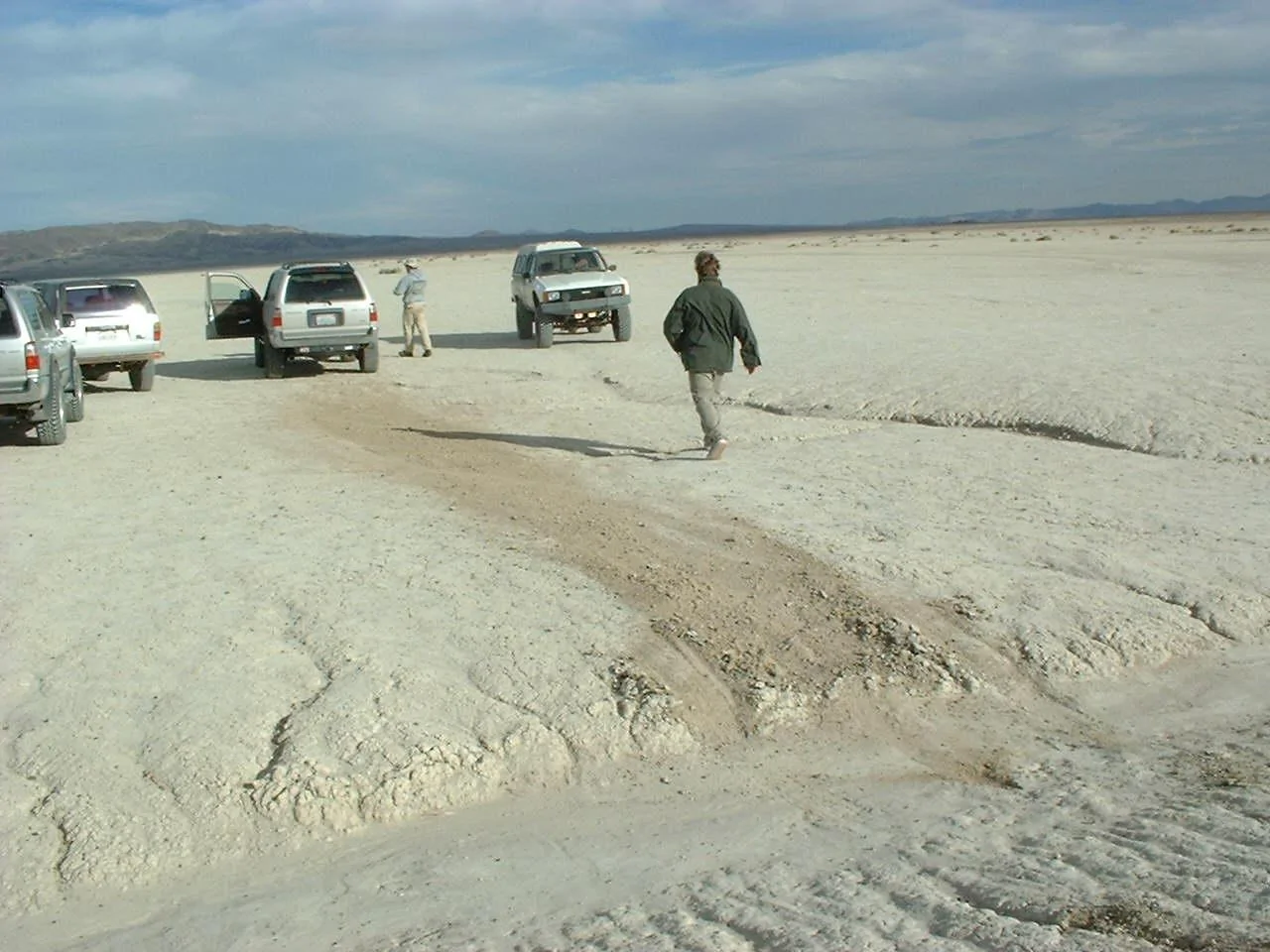
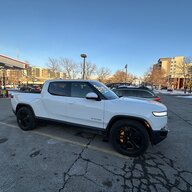
Unrelated but good to note: watch out for those wash-outs in the desert! No one was around so I couldn't offer to pull them out.
Rivian R1T R1S Edmunds' 2025 Gen2 R1T Dual Motor vs. Tacoma TRD Pro Off-Road Comparison 20250117_084530
Sponsored


Rivianero

Well-Known Member
First Name
Brent
Joined
Dec 2, 2024
Threads
19
Messages
313
Reaction score
349
Location
San Marcos TX
Vehicles
2022 R1T quad large
Not much off-road experience here, except with respect to ranch work.

At first viewing of the video, I thought the capabilities of each vehicle were fairly well represented. Certainly did not lead me to regret getting my R1T DMP.

The follow-up comments were a _huge_ education for me. Also enlightening that perhaps the Rivian needs to be driven a little differently than traditional ICE off-road vehicles in order to exploit the braking differential capability.

Wonderful! Thanks everyone.
 

BrentInCO

Well-Known Member
Joined
Jun 22, 2021
Threads
17
Messages
403
Reaction score
529
Location
Colorado
Vehicles
Tesla S, Toyota FJ, R1S Quad Large Pack Feb 2023
@R.I.P. I would be curious to hear your thoughts, if you’re willing to watchthe video and read these comments?
 
Last edited:

HaveBlue

Well-Known Member
Joined
Nov 22, 2022
Threads
41
Messages
2,932
Reaction score
2,240
Location
91107
Vehicles
R1S DMP Max, Lifted GX470, APR Audi A7, BMW 325Ci
Clubs
 
I think it's key not to stop. Steady throttle through an obstacle is best. When you stop, the traction control has to figure out from zero rpm where to apply torque.
 

Sponsored

HaveBlue

Well-Known Member
Joined
Nov 22, 2022
Threads
41
Messages
2,932
Reaction score
2,240
Location
91107
Vehicles
R1S DMP Max, Lifted GX470, APR Audi A7, BMW 325Ci
Clubs
 
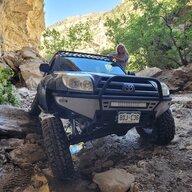
Unrelated but good to note: watch out for those wash-outs in the desert! No one was around so I couldn't offer to pull them out.
20250117_084530.jpg
Even have to watch the small holes if you're moving along fast, like on a dry lake. I went flying over several one time and the landing angle dragged the hitch lol.
Rivian R1T R1S Edmunds' 2025 Gen2 R1T Dual Motor vs. Tacoma TRD Pro Off-Road Comparison 1000029673
 

denonbike

New Member
Joined
Nov 15, 2024
Threads
0
Messages
2
Reaction score
2
Location
Sacramento
Vehicles
R1S 2025
The dual motor vehicles, for better or worse, are open differential. That's going to be a pretty big limitation. There will be no 'transfer of power' because of this. You need *some* form of differential to transfer force. The idea being that torque vectoring would use the brakes to imply a false torque (traction) back to the 'loose' wheel should transfer power back to the wheel that IS maintaining traction is what torque vectoring does.

However, in practice, there is a huge efficiency loss and it's not super easy to accomplish this in all scenarios. Typically it's helpful for a moment, but technically the only way the system can 'detect' it's regained traction, it has to disable the brake to detect whether or not the wheel is turning the same speed as the wheel with traction. And it's sort of a loop logic at this point: Slipping? - > Lock brake and hope traction engaged wheel moves you out of the spot you're 'stuck in' -> release brake -> detect slippage (or not) -> re-apply torque vectoring if slipping -> re-engage nominal driveline characteristics if both wheels appear to no longer be traction limited (turning at same rate).

If the vehicles had a limited slip differential (Quaiff, DCCD, Torsen, Viscous Coupling, etc), they'd have less difficulties putting power to the traction positive wheel by 'borrowing it' from the traciton limited wheel.

If you're on a surface that requires a LOT of intervention or is going to prove to be difficult to maintain traction, having power to all 4 wheels is advantageous. I'm not going to argue for/against lockers--I'm sure someone's going to bring that up (deadhorse.gif), but the basic idea here is: get power to where it's needed when it's needed. And that's going to be difficult when you have open differentials and a drivetrain dependent upon traction dynamics detection through the system.
The dual motor vehicles, for better or worse, are open differential. That's going to be a pretty big limitation. There will be no 'transfer of power' because of this. You need *some* form of differential to transfer force. The idea being that torque vectoring would use the brakes to imply a false torque (traction) back to the 'loose' wheel should transfer power back to the wheel that IS maintaining traction is what torque vectoring does.

However, in practice, there is a huge efficiency loss and it's not super easy to accomplish this in all scenarios. Typically it's helpful for a moment, but technically the only way the system can 'detect' it's regained traction, it has to disable the brake to detect whether or not the wheel is turning the same speed as the wheel with traction. And it's sort of a loop logic at this point: Slipping? - > Lock brake and hope traction engaged wheel moves you out of the spot you're 'stuck in' -> release brake -> detect slippage (or not) -> re-apply torque vectoring if slipping -> re-engage nominal driveline characteristics if both wheels appear to no longer be traction limited (turning at same rate).

If the vehicles had a limited slip differential (Quaiff, DCCD, Torsen, Viscous Coupling, etc), they'd have less difficulties putting power to the traction positive wheel by 'borrowing it' from the traciton limited wheel.

If you're on a surface that requires a LOT of intervention or is going to prove to be difficult to maintain traction, having power to all 4 wheels is advantageous. I'm not going to argue for/against lockers--I'm sure someone's going to bring that up (deadhorse.gif), but the basic idea here is: get power to where it's needed when it's needed. And that's going to be difficult when you have open differentials and a drivetrain dependent upon traction dynamics detection through the system.
Here is a video of torque vectoring working from my outing on gen2 dual R1S:


ekiM

Member
First Name
Mike
Joined
Apr 22, 2023
Threads
4
Messages
13
Reaction score
10
Location
Delaware
Vehicles
2023 R1T
The dual motor vehicles, for better or worse, are open differential. That's going to be a pretty big limitation. There will be no 'transfer of power' because of this. You need *some* form of differential to transfer force. The idea being that torque vectoring would use the brakes to imply a false torque (traction) back to the 'loose' wheel should transfer power back to the wheel that IS maintaining traction is what torque vectoring does.

However, in practice, there is a huge efficiency loss and it's not super easy to accomplish this in all scenarios. Typically it's helpful for a moment, but technically the only way the system can 'detect' it's regained traction, it has to disable the brake to detect whether or not the wheel is turning the same speed as the wheel with traction. And it's sort of a loop logic at this point: Slipping? - > Lock brake and hope traction engaged wheel moves you out of the spot you're 'stuck in' -> release brake -> detect slippage (or not) -> re-apply torque vectoring if slipping -> re-engage nominal driveline characteristics if both wheels appear to no longer be traction limited (turning at same rate).

If the vehicles had a limited slip differential (Quaiff, DCCD, Torsen, Viscous Coupling, etc), they'd have less difficulties putting power to the traction positive wheel by 'borrowing it' from the traciton limited wheel.

If you're on a surface that requires a LOT of intervention or is going to prove to be difficult to maintain traction, having power to all 4 wheels is advantageous. I'm not going to argue for/against lockers--I'm sure someone's going to bring that up (deadhorse.gif), but the basic idea here is: get power to where it's needed when it's needed. And that's going to be difficult when you have open differentials and a drivetrain dependent upon traction dynamics detection through the system.
Preach on, brother. I also have a 6spd FJ Cruiser and a 6Spd B5 Audi S4. Center Torsen in both, rear locker in the 'yota. My R1T Quad does well in the limited trail driving I've done in the past year and a half, but I feel the FJ has a bit more in its toolbox when things get serious. Getting on to the S4, it has the brake-biased diff / stability control. Cutting edge stuff for the turn of the Century. Still unimproved in my wife's Alltrack. Still needs to let off a bit to continue its traction evaluation loop.

Anyhow, I think they need to combine a "level sensor" with a "droop sensor" to detect the wheel at full extend and not engage that wheel until it has detected a certain amount of "landing". The ability to sense these events is likely already in existence...

-Mike
 

White Shadow

Well-Known Member
First Name
Thomas
Joined
Nov 11, 2021
Threads
13
Messages
1,406
Reaction score
1,159
Location
NJ
Vehicles
Jeep & Audi
Occupation
SP
The bottom line is that without any lockers, you better have a damn good brake based traction control system. Land Rover is the gold standard here. And Jeep has pretty much copied them down to the smallest detail. Toyota's ATRAC is also decent, but still needs lockers to really compete. I've had all three of these vehicles, so my opinion is based of my own experiences and what I've seen from others on trails.

That said, I would not choose a Land Rover, Jeep, or Toyota that didn't also have at least a rear locker because it does make a big difference over having even the best brake based traction systems.
 

Sponsored

HaveBlue

Well-Known Member
Joined
Nov 22, 2022
Threads
41
Messages
2,932
Reaction score
2,240
Location
91107
Vehicles
R1S DMP Max, Lifted GX470, APR Audi A7, BMW 325Ci
Clubs
 
Here is a video of torque vectoring working from my outing on gen2 dual R1S:

This is actually an example of using the traction control incorrectly. Stopping and starting is the bain of the system. It will simply never allow zero speed like a locking dif. Had you approached the obstacle at a low constant speed without starting and stopping several times, it would have gone right up. It is also much heavier than most 4wheelers and that mass also has to be compensated for. It's like driving a regular 4wheeler towing a several thousand pound Trailer. As you get more comfortable driving off road you will find a good medium where the traction control works best and still not scratch your new baby.
 

cardad

Well-Known Member
First Name
Kelvin
Joined
Oct 2, 2021
Threads
2
Messages
194
Reaction score
169
Location
Moab
Vehicles
R1T/S, Bronco Raptor, Wrangler4xe, Ioniq5, Winbago
Occupation
insurance agent
Emme Hall is a pro and has great experience with Rivian but I was surprised she didn’t air down. Seems that would have helped with traction in both climbing difficulty examples. I wonder if Rivian will consider adding lockers. At least in the dual motors.
You shouldn’t need to air down for that hill. I’ve driven a ton off road with full psi on decent off road wheels and tires. Maybe airing down would have helped but the problem here is more fundamental.
Sponsored


Top