
av8or
Well-Known Member
- Thread starter
- #1
Comparing consumption Jeep Wrangler vs. Rivian R1T
If you just want the numbers scroll down.
It’s been pretty interesting to learn and compare the differences between these two vehicles, but lately I’ve had a lot of questions come up about how the EV will fair while off-roading. Before Rivian there was really zero information about how a BEV would handle off-road use, and if steep grades or high torque demand would be a problem or if range would be an issue.
Below are 2 examples of typical day trips for me and the results are pretty interesting. These trips were done back to back in 2 days, the conditions were almost identical, clear and sunny with temps between 60 early and 80 for a high. I took photos about every hour of the dash of both vehicles for verification and time stamps. I could add them if some wants to see them, or for any nonbelievers. The off-road portions each day were similar in terrain and distance, the extra miles on day 2 was pavement getting to and from the trails. This is unscientific and I did forget a couple pictures and also I should have recharged the Rivian to 100% to cover any losses in charging, but the jest of this is all accurate and to the best of my knowledge. YMMV literally.
First trip was 10/06/2023 ~9:30am~5:30pm from Tigard, Oregon to Tillamook State Forest and back in my 2020 Jeep Wrangler. While in the state forest I did only easy/blue trails. They were a very short trail called University-Firepower, a small portion of Cedar Tree, and Hogsback.
I of course started the day with a fuel tank of gas. One of the first things that stood out on this day was that in 4lo at low speed the Jeep shows current consumption of 1-3 miles per gallon. At~19 gallons of usable fuel I guess I should have been worried about running out, but it never crossed my mind. Moving on, I also noticed the fuel gauge and miles remaining changed based on if the Jeep was facing uphill vs down.
Second trip was 10/07/2023 ~8:00am~6:30pm from Tigard to Bennett pass, High Prairie and surrounding area to Hood River and back to Tigard in my 2023 Rivian R1T. Bennet Pass (beautiful and part of Oregon BDR I think) was the only official trail we did, but we also did some exploring up around High Prairie.
I started the day at 100% soc and right away I notice how much bigger and more comfortable the R1T is, but with that comes the acres of sheet metal it has which means it’s more nerve racking off road and much easier to get costly body damage compared to the Jeep. I ran conserve mode from home to the trail and back, then ran all terrain mode and some all purpose mode when off road.
Ok now for some numbers.
Jeep:
Beginning range 309 showing full on gauge
Ending range 136 showing half full on gauge
Total miles driven, 124 using 173 miles of projected range in 124 miles. GOM off by ~29%.
Average mpg according to the dash, 14.5mpg. Actual was 12.33mpg.
When back in Tigard I refueled and added 10.047 gallons at $4.25 a gallon for a total cost of $42.79 for a 124 mile day drive.
Rivian R1T:
Beginning range 313 miles 100% soc, interesting note, this didn’t change for the first 10 miles, then it started dropping (conserve mode)
Ending range 105 miles 33% soc (conserve mode)
Total miles driven, 192 using 208 miles of projected range in 192 miles.
GOM off by ~9%.
Average mp/kWh 2.24 using 85.3 kWh. If I round up to 87 kWh for
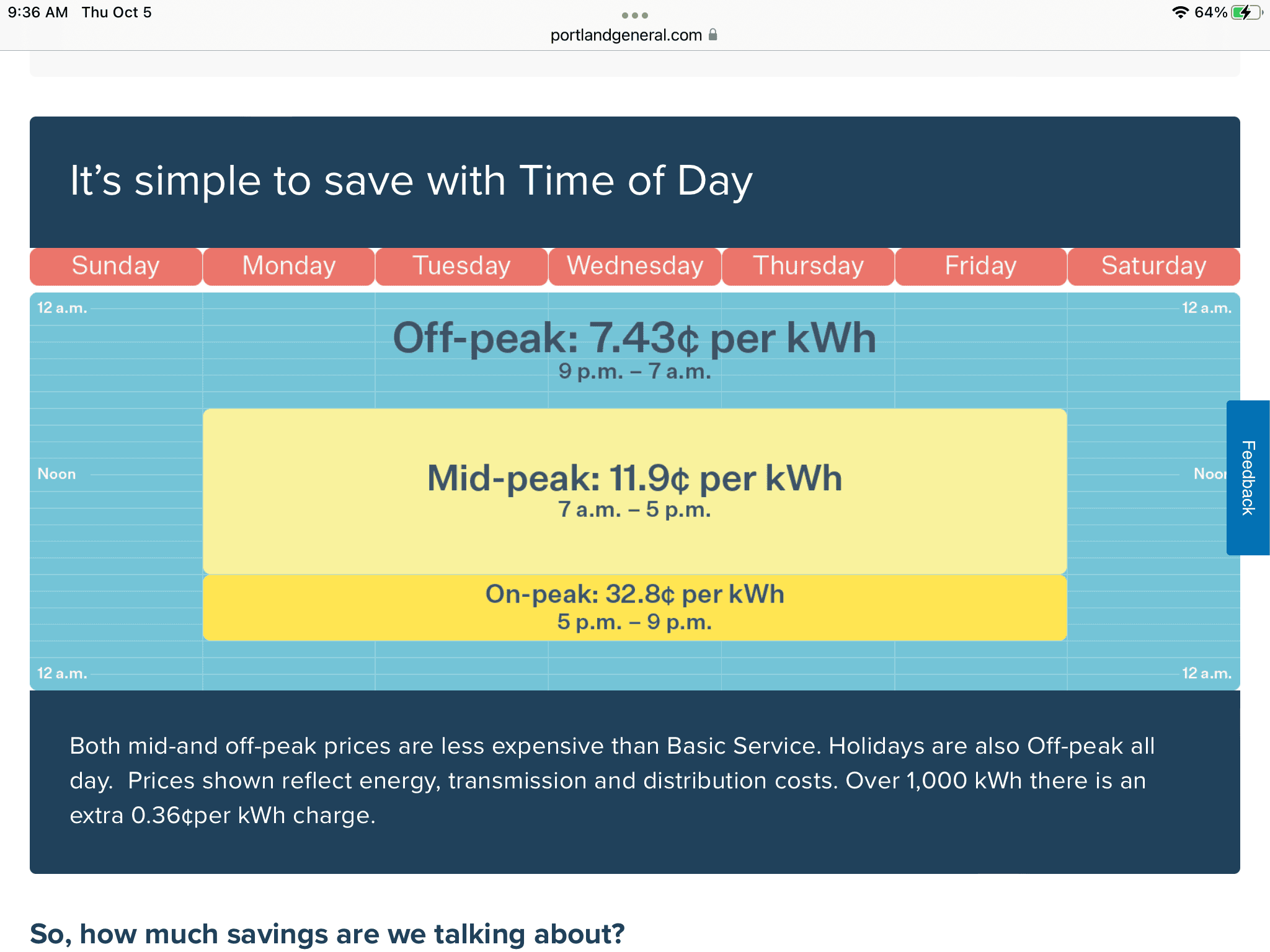
charging losses, it’s 87 kWh x $0.11 per kWh (mine rate is .08 + some other charges for a total of $0.11)= $9.38 for a 192 mile day drive.
Bottom line is the fuel type doesn’t make much difference at the end of the day. Both vehicles burned more than they thought they would, but not so much more that it changed any outcome. I think regen braking makes a huge difference. On one stretch with the Rivian between 2:20pm and 3:40pm I traveled 33.8 miles coming downhill from High Prairie to Hood River and the soc went up from 56% to 58%!
If you just want the numbers scroll down.
It’s been pretty interesting to learn and compare the differences between these two vehicles, but lately I’ve had a lot of questions come up about how the EV will fair while off-roading. Before Rivian there was really zero information about how a BEV would handle off-road use, and if steep grades or high torque demand would be a problem or if range would be an issue.
Below are 2 examples of typical day trips for me and the results are pretty interesting. These trips were done back to back in 2 days, the conditions were almost identical, clear and sunny with temps between 60 early and 80 for a high. I took photos about every hour of the dash of both vehicles for verification and time stamps. I could add them if some wants to see them, or for any nonbelievers. The off-road portions each day were similar in terrain and distance, the extra miles on day 2 was pavement getting to and from the trails. This is unscientific and I did forget a couple pictures and also I should have recharged the Rivian to 100% to cover any losses in charging, but the jest of this is all accurate and to the best of my knowledge. YMMV literally.
First trip was 10/06/2023 ~9:30am~5:30pm from Tigard, Oregon to Tillamook State Forest and back in my 2020 Jeep Wrangler. While in the state forest I did only easy/blue trails. They were a very short trail called University-Firepower, a small portion of Cedar Tree, and Hogsback.
I of course started the day with a fuel tank of gas. One of the first things that stood out on this day was that in 4lo at low speed the Jeep shows current consumption of 1-3 miles per gallon. At~19 gallons of usable fuel I guess I should have been worried about running out, but it never crossed my mind. Moving on, I also noticed the fuel gauge and miles remaining changed based on if the Jeep was facing uphill vs down.
Second trip was 10/07/2023 ~8:00am~6:30pm from Tigard to Bennett pass, High Prairie and surrounding area to Hood River and back to Tigard in my 2023 Rivian R1T. Bennet Pass (beautiful and part of Oregon BDR I think) was the only official trail we did, but we also did some exploring up around High Prairie.
I started the day at 100% soc and right away I notice how much bigger and more comfortable the R1T is, but with that comes the acres of sheet metal it has which means it’s more nerve racking off road and much easier to get costly body damage compared to the Jeep. I ran conserve mode from home to the trail and back, then ran all terrain mode and some all purpose mode when off road.
Ok now for some numbers.
Jeep:
Beginning range 309 showing full on gauge
Ending range 136 showing half full on gauge
Total miles driven, 124 using 173 miles of projected range in 124 miles. GOM off by ~29%.
Average mpg according to the dash, 14.5mpg. Actual was 12.33mpg.
When back in Tigard I refueled and added 10.047 gallons at $4.25 a gallon for a total cost of $42.79 for a 124 mile day drive.
Rivian R1T:
Beginning range 313 miles 100% soc, interesting note, this didn’t change for the first 10 miles, then it started dropping (conserve mode)
Ending range 105 miles 33% soc (conserve mode)
Total miles driven, 192 using 208 miles of projected range in 192 miles.
GOM off by ~9%.
Average mp/kWh 2.24 using 85.3 kWh. If I round up to 87 kWh for
charging losses, it’s 87 kWh x $0.11 per kWh (mine rate is .08 + some other charges for a total of $0.11)= $9.38 for a 192 mile day drive.
Bottom line is the fuel type doesn’t make much difference at the end of the day. Both vehicles burned more than they thought they would, but not so much more that it changed any outcome. I think regen braking makes a huge difference. On one stretch with the Rivian between 2:20pm and 3:40pm I traveled 33.8 miles coming downhill from High Prairie to Hood River and the soc went up from 56% to 58%!
Sponsored