
Sponsored
Cactus
Well-Known Member
- First Name
- Doug
- Joined
- Nov 11, 2020
- Threads
- 18
- Messages
- 292
- Reaction score
- 364
- Location
- Scottsdale, AZ
- Vehicles
- Feb 2014 Tesla Model S, June 2023 R1S
- Occupation
- Professor
If I'm out in the boonies, camping or off-roading and I mistakenly forget to pay attention to my SoC, this little gadget might give me 15-20 miles to a charging station.

Gshenderson
Well-Known Member
- First Name
- Greg
- Joined
- Sep 28, 2019
- Threads
- 13
- Messages
- 1,229
- Reaction score
- 2,777
- Location
- Park City, UT / Kemmerer, WY
- Vehicles
- 2015 Tesla S 85D, 2019 4Runner TRD Offroad, R1T
Call it a “power tranfusion”. It’s sort of like a person-to-person blood transfusion. ?Except we couldn't call it a jump because it will take a while. May be a we call it a leisurely stroll? You may actually get to know the person helping you.


Lsthrz
Well-Known Member
I don’t understand what juice it actual offers. I have a Delta Pro 3600W and it’ll give me maybe 12 miles on the R1T. Not saying I wouldn’t take that, but the Delta Pro is a pretty beefy portable storage solution and that’s all you get.
Gshenderson
Well-Known Member
- First Name
- Greg
- Joined
- Sep 28, 2019
- Threads
- 13
- Messages
- 1,229
- Reaction score
- 2,777
- Location
- Park City, UT / Kemmerer, WY
- Vehicles
- 2015 Tesla S 85D, 2019 4Runner TRD Offroad, R1T
Where MAGA hats a flat brims collide! The world will once again be in perfect harmony.My personal plan is to befriend all Lightning owner that have the 30 amp outlet option. Is Tinder a good app for that?

Sponsored
moondog417
Active Member
- First Name
- Scott
- Joined
- Nov 3, 2021
- Threads
- 1
- Messages
- 30
- Reaction score
- 37
- Location
- Los Angeles
- Vehicles
- Model X, R1S
- Occupation
- Education
As someone who has owned three different EVs (Tesla, Honda, Nissan), I agree 100%. The miles of range readout, and even SoC is certainly not exact but it’s so much more precise than a fuel gauge. As you get to know the vehicle, you develop a sense of what types of driving will deplete that readout faster/slower. (For Honda, night driving at 80mph was the worst: count on only getting 80% of the estimated range. Nissan systems seems to be better at estimating than even Tesla.)Yeah, just not worth it. One big thing with EVs is that you have a constant readout of your battery state. You know you're at a given percent. In a car, gas gauges can be flaky. You can drive on "E" for a while.
And while carrying a compact reasonably light (~6 pounds) container of gas can get you 20-50 miles depending on the vehicles, to go even 10 miles in a Rivian requires 40+ pounds of battery.
The best solution is to watch your charge, and don't get in to a situation where you run out of charge. Which again, is a lot easier in an EV where you see exact mile or percent battery states.
"The next possible charge stop is 55 miles away, and my vehicles says I only have 50 miles of range?" Drop your speed. Turn off your HVAC. You'll get that extra 5 miles.
I would add an additional suggestion for any EV. Plan a trip on a weekend where you will be less than a mile from home when your readout gets to 0% (or drive around your block for 20 minutes at 0%). You’ll learn if that E really means E. Now, your car will certainly yell at you with all kinds of beeps and messages, and advise you to pull over right now or else… but the reality is you probably can make it home to charge overnight. (Most manufacturers will provide a small charge as part of the roadside assistance package even if the car were to get to a true 0%. Think of it as a call to AAA for a tow but one you’re not surprised by.) As long as you don’t have to be anywhere that afternoon… it will help alleviate future range anxiety in that last few percent of charge.

CharonPDX
Well-Known Member
Yep. I've run every one of my EVs (carefully, close to charging,) down to 0% just to see the behavior as it gets close. Only twice have I come close unintentionally - one on a road trip that I knew I'd get home "darned close to empty", and indeed, I got home with 0 miles displayed and "all the warning lights." The other was a trip (third drive of it in a week) over a mountain pass, knowing I could make it to the next charger, but neglecting the fact that I had ~300 pounds more in the car than before. Cresting the pass, I saw "54 miles of range" - "55 miles to charger." (And I had topped off at the last possible charger before the pass. This was in a BMW i3 - fully loaded in snow, that was a trip it was *JUST* able to make.) Went down the downhill side with heat off. Made it to the charger with 2 miles to spare.
swazi
Well-Known Member
Fully agree, but the little voice in my head is saying "what if that charger you are banking on is not working and you cannot make it to the next one?"Yeah, just not worth it. One big thing with EVs is that you have a constant readout of your battery state. You know you're at a given percent. In a car, gas gauges can be flaky. You can drive on "E" for a while.
And while carrying a compact reasonably light (~6 pounds) container of gas can get you 20-50 miles depending on the vehicles, to go even 10 miles in a Rivian requires 40+ pounds of battery.
The best solution is to watch your charge, and don't get in to a situation where you run out of charge. Which again, is a lot easier in an EV where you see exact mile or percent battery states.
"The next possible charge stop is 55 miles away, and my vehicles says I only have 50 miles of range?" Drop your speed. Turn off your HVAC. You'll get that extra 5 miles.

Speedrye
Well-Known Member
Sure would be nice if Rivian built trucks with something like this built-in to minimize this issue. We could call it "Max Pack" or something... Even better, do something like that for the R1S too...
<sarcasm>
<sarcasm>
CommodoreAmiga
Well-Known Member
People always push the limits. EVs used to only have 200 miles range, and the ~300 miles provided by the "large" pack would be considered a luxury. When the Max pack does ship, people will lament "if only it got 500 miles".Sure would be nice if Rivian built trucks with something like this built-in to minimize this issue. We could call it "Max Pack" or something... Even better, do something like that for the R1S too...
<sarcasm>
Sponsored
Gshenderson
Well-Known Member
- First Name
- Greg
- Joined
- Sep 28, 2019
- Threads
- 13
- Messages
- 1,229
- Reaction score
- 2,777
- Location
- Park City, UT / Kemmerer, WY
- Vehicles
- 2015 Tesla S 85D, 2019 4Runner TRD Offroad, R1T
Range anxiety is real! The good news is that it gets better over time as you build more trust in the car and charging networks. It also gets better as the charging networks get more built out so you have fallback options.Fully agree, but the little voice in my head is saying "what if that charger you are banking on is not working and you cannot make it to the next one?"
I can tell you from personal experience that when I got my Tesla in 2015 and did several cross-country trips, this was a real thing. If a supercharger was down, or some idiot parked his F-350 with trailer in tow across all 8 charging bays at a hotel in Nebraska (ask if me if this really happened ?), you were basically f’d. No other option or plan B other than either finding a campground for 9.6kW slow charging or plugging into a wall outlet for 1.8kW super-slow charging.
By the time I sold that car last year, I seldom had any range anxiety at all. I sort of had the opposite problem where I was overconfident and often in a hurry, so I would put the bare minimum charge in at a stop on a road trip - just enough to get to the next chargers with ~20 miles of charge remaining. That resulted in me often rolling in with something less than 20 miles left. But that anxiety was self-imposed. Give yourself a little buffer when you charge and all will be good. ?
Gshenderson
Well-Known Member
- First Name
- Greg
- Joined
- Sep 28, 2019
- Threads
- 13
- Messages
- 1,229
- Reaction score
- 2,777
- Location
- Park City, UT / Kemmerer, WY
- Vehicles
- 2015 Tesla S 85D, 2019 4Runner TRD Offroad, R1T
My closest call was another time driving across NE. I had gained a lot of confidence in my and the car’s ability to accurately estimate my consumption. So my plan had me rolling into a supercharger with ~20 miles of charge remaining. As I roll up on the exit, it’s closed! Signed detour has me going to the next exit and doing a U-turn and then coming back. That exit was 10 miles away! It’s one of a handful of times I rolled into a charger with the car showing 0 miles remaining. ?
Last edited:
swazi
Well-Known Member
As a Tesla owner for over 3 years I don't have any range anxiety anymore (or very little). But I am not talking about range anxiety. I am talking about reliability outside of Tesla's supercharger network.Range anxiety is real! The good news is that it gets better over time as you build more trust in the car and charging networks. It also gets better as the charging networks get more built out so you have fallback options.
I can tell you from personal experience that when I got my Tesla in 2015 and did several cross-country trips, this was a real thing. If a supercharger was down, or some idiot parked his F-350 with trailer in tow across all 8 charging bays at a hotel in Nebraska (ask if me if this really happened ?), you were basically f’d. No other option or plan B other than either finding a campground for 9.6kW slow charging or plugging into a wall outlet for 1.8kW super-slow charging.
By the time I sold that car last year, I seldom had any range anxiety at all. I sort of had the opposite problem where I was overconfident and often in a hurry, so I would put the bare minimum charge in at a stop on a road trip - just enough to get to the next chargers with ~20 miles of charge remaining. That resulted in me often rolling in with something less than 20 miles left. But that anxiety was self-imposed. Give yourself a little buffer when you charge and all will be good. ?
But I now have the luxury of planning my trips based on which network (Tesla/J1772) would serve me best.
FYI I was looking into a trip that have 1 Tesla and 3 J1772 level 2 chargers at the destination (with a lot of outage reports on plugshare, and nothing else for miles in the area). But based on level 3 charger spacing on route, I would be able to figure something out in the Tesla. In the Rivian I would be scrambling. Just an example of what I am referring to.
Aubs
Well-Known Member
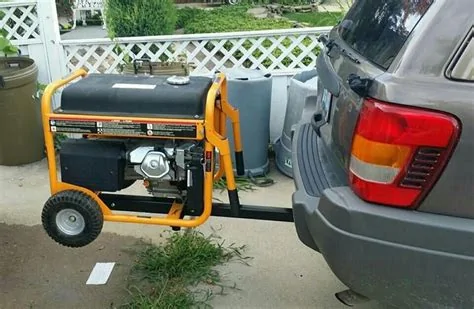
I know this kind of goes against the idea of BEV, but is there a compact generator you can store and a tank of gas as a backup? It would be great if you could also charge while driving
Speedrye
Well-Known Member
I know this kind of goes against the idea of BEV, but is there a compact generator you can store and a tank of gas as a backup? It would be great if you could also charge while driving

Sponsored
Similar threads

- Replies
- 5
- Views
- 648
- Replies
- 11
- Views
- 951
- Replies
- 15
- Views
- 4,525

- Replies
- 78
- Views
- 9,294


- Replies
- 33
- Views
- 3,569
