
domoplaytime
Well-Known Member
- Thread starter
- #1
My truck got to take an exciting trip without me. My wife and I have moved to Maui from Seattle, and we explored a number of options for getting our truck there. Here's a short version and a long version of the story.
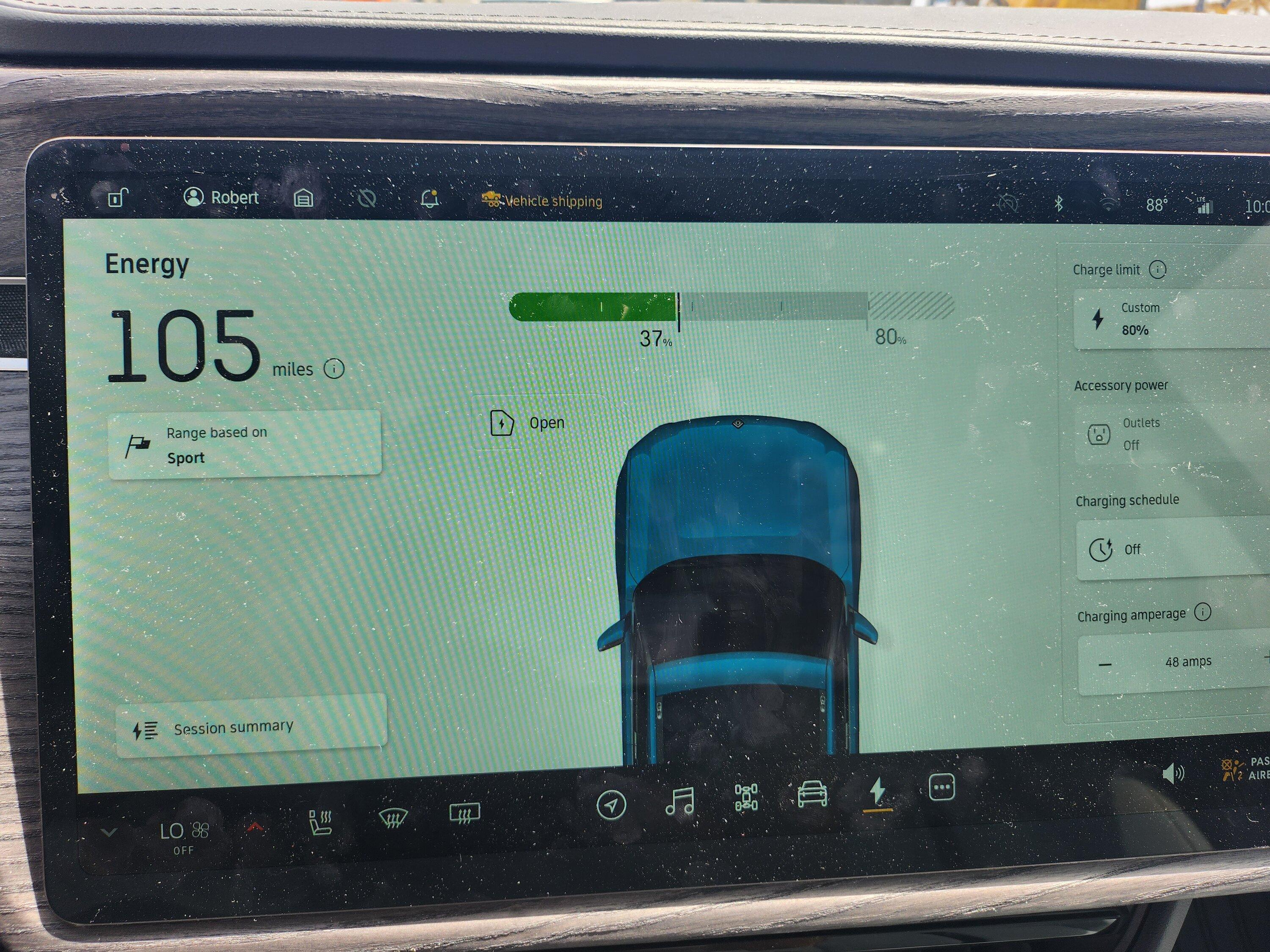
TL;DR - The truck made it to Maui safely after 27 days in transit, and lost only 24% of battery (72 miles) while in Shipping Mode. Matson did not make it easy for us, but despite the drama and opaqueness we were able to pick up the vehicle at the early end of the estimated window, with no damage.
Long version:
Matson does not ship out of Seattle any more, so our container of household goods had to ship out of Tacoma. We looked into putting the truck directly into the shipping container, but we simply have too much junk for that to have worked. Even if the truck would fit (barely a possibility), the risk of our junk falling and damaging the truck was too high. There's no service center on the islands! Further complicating our plans, Matson suddenly stopped shipping vehicles out of Tacoma. The closest reliable port for shipping vehicles was Oakland. We briefly considered using Pacha instead to ship out of Seattle, but the third party car forwarding services just weren't as reliable as those who ship through Matson. So we opted to send our truck to Oakland and ship from the port there.
Matson imposed several challenges on us. They wanted the vehicle completely empty, so we removed the first aid kit, compressor hoses, flashlight and camp speaker and shipped those in our container separately (but we left the spare with the truck). The vehicle interior and exterior had to be completely clean too, presumably for damage reports on the bill of lading. Also, the USDA in Hawaii thoroughly examines vehicles for soil and invasive species. I had no idea how much debris gets trapped under the frunk hood and under the spare tire cover!
After cleaning the vehicle, we turned off gear guard and put the truck into Shipping Mode, aka 'Ship (Transport)' in the settings interface.
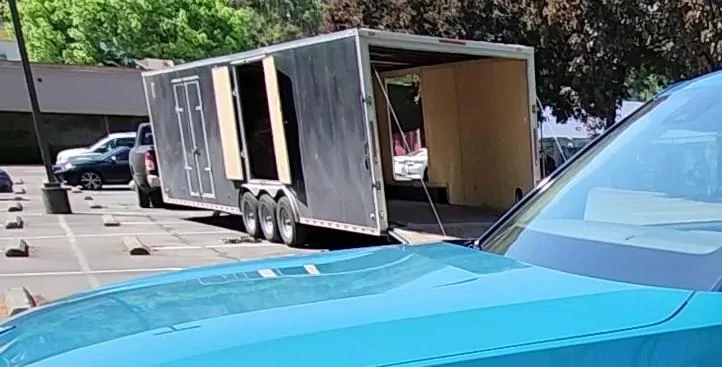
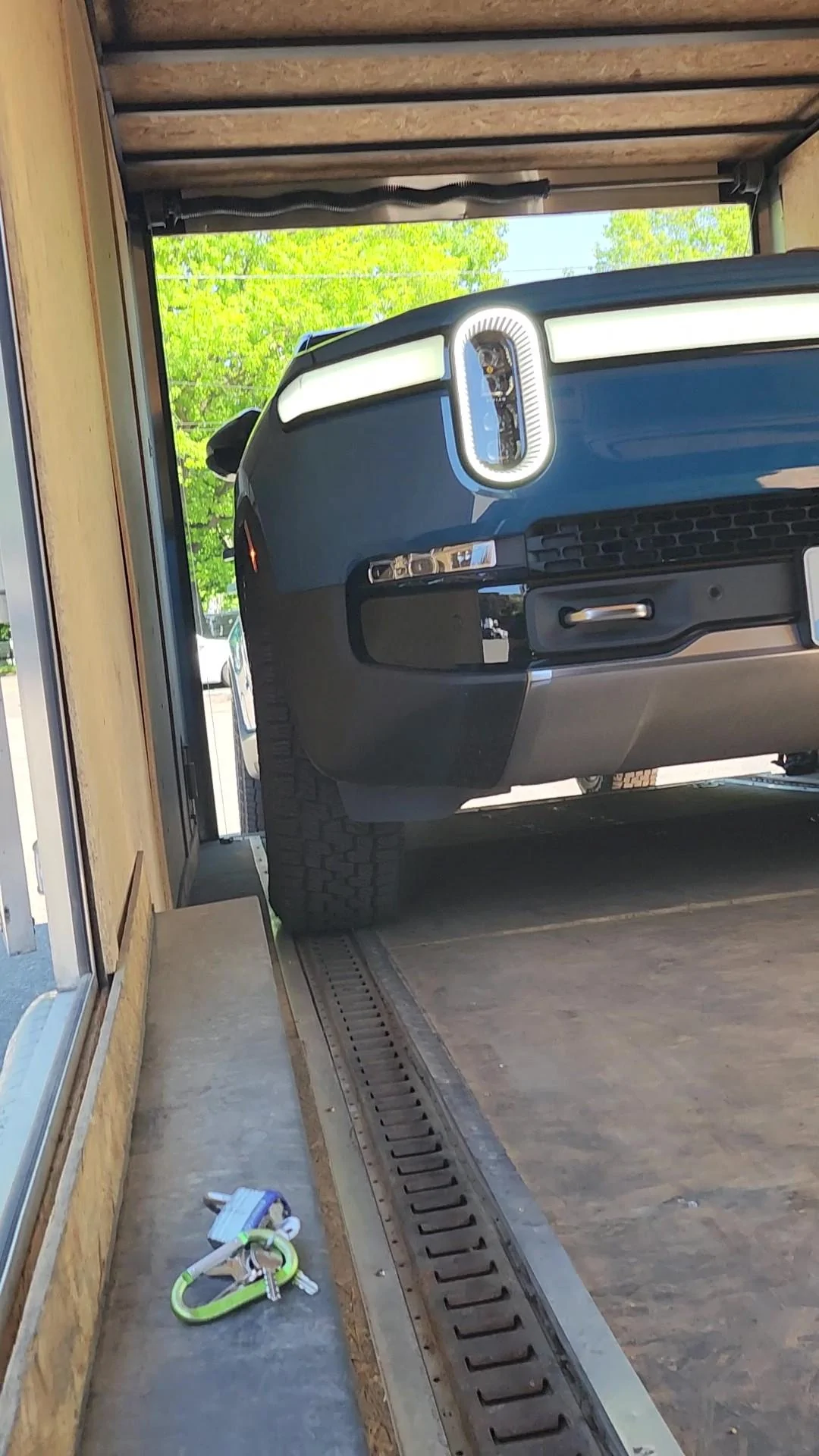
Matson will not ship vehicles with cracked windshield glass, so given the reports of possibly weak Rivian glass we decided to ship via closed transport. I was expecting an 18 wheeler, but instead the driver showed up with a super duty truck and what can best be described as a renovated horse trailer. It gave me slightly more confidence when the driver pointed to the million dollar super car parked inside the trailer, but the process of loading the truck was nerve wracking. The trailer was too narrow for the truck unless the side mirrors were tucked, which makes bird's eye view useless thanks to some questionable design decisions from Rivian about camera placement. The truck was as paranoid as I was and screamed at the driver the whole time. He got it in perfectly with some guidance from me and my wife peeking in through the side loading doors of the trailer.


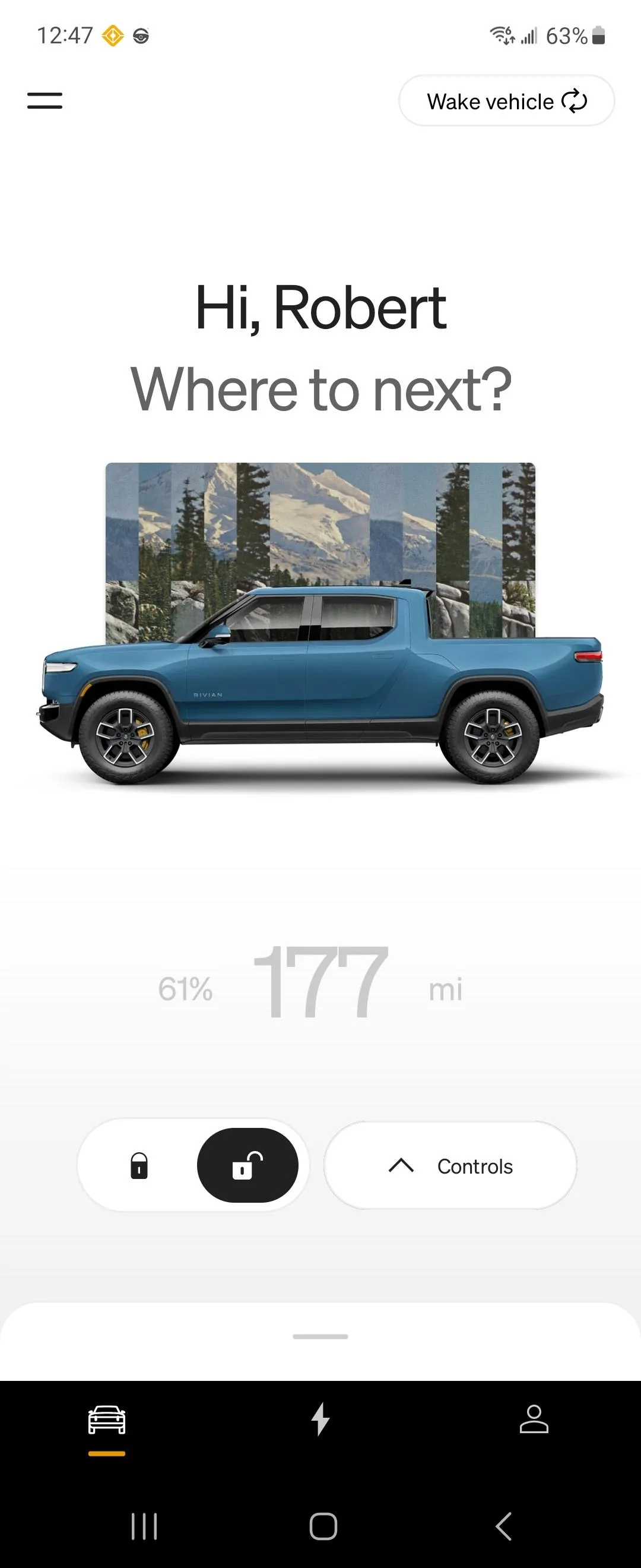
Matson will not ship EVs with a SoC above 65%. I presumed that was due to the possibility of battery fires, and was perhaps an outdated rule that they wouldn't enforce. I was wrong, and regret charging to 80% before sending our truck off in covered transport. When Matson rejected the driver's delivery, we asked if we could pay him by the hour to take a joy ride around the Bay Area to burn off some power. The driver successfully delivered the truck to Matson with 61% battery. I learned two lessons about Shipping Mode: 1) you can still drive the vehicle, it just doesn't phone home when parked and can't be monitored remotely using the app, and 2) while the vehicle is being driven it actually does phone home, so we monitored the driver's location and the truck's battery while he wheeled around SF.

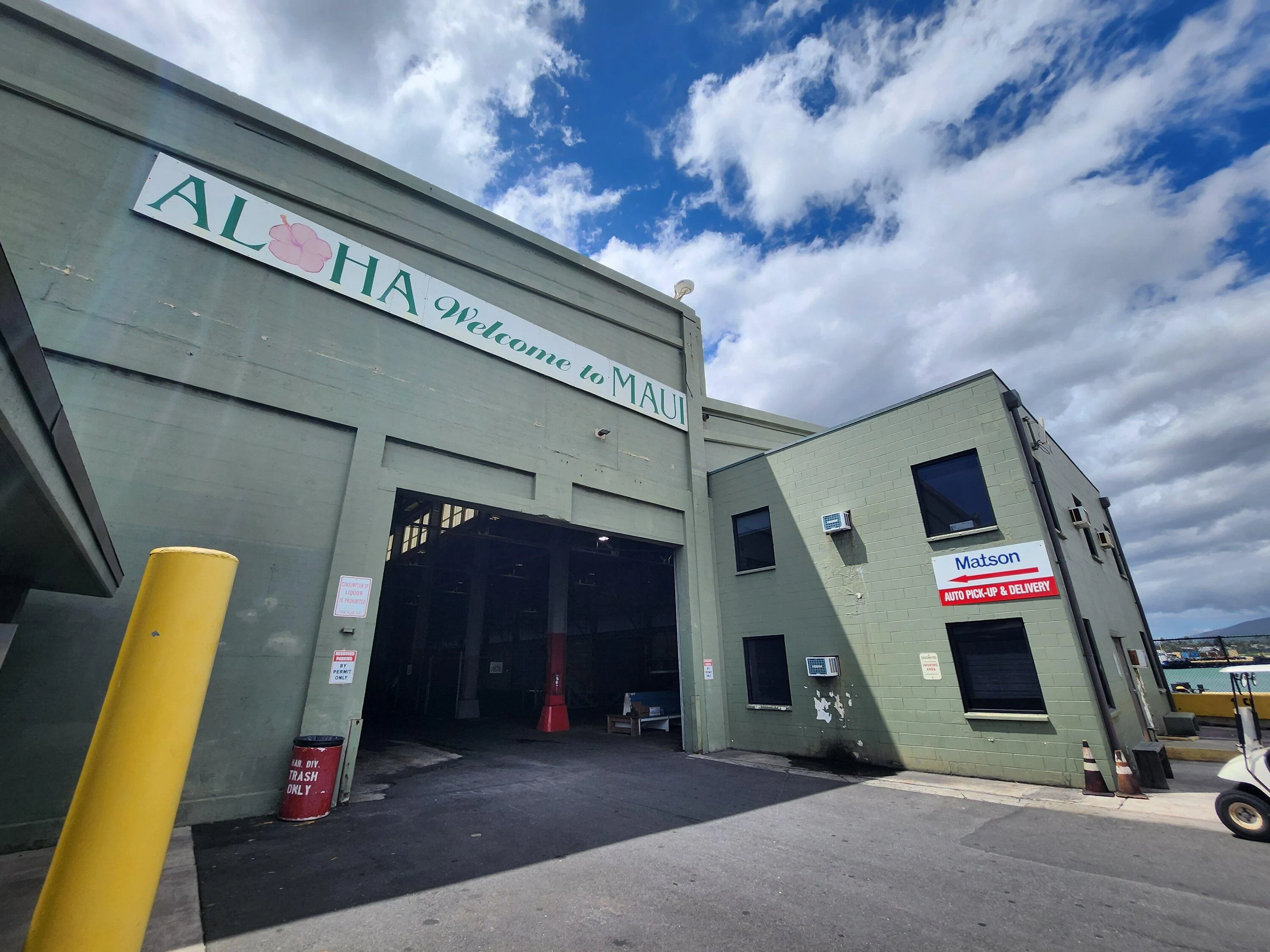
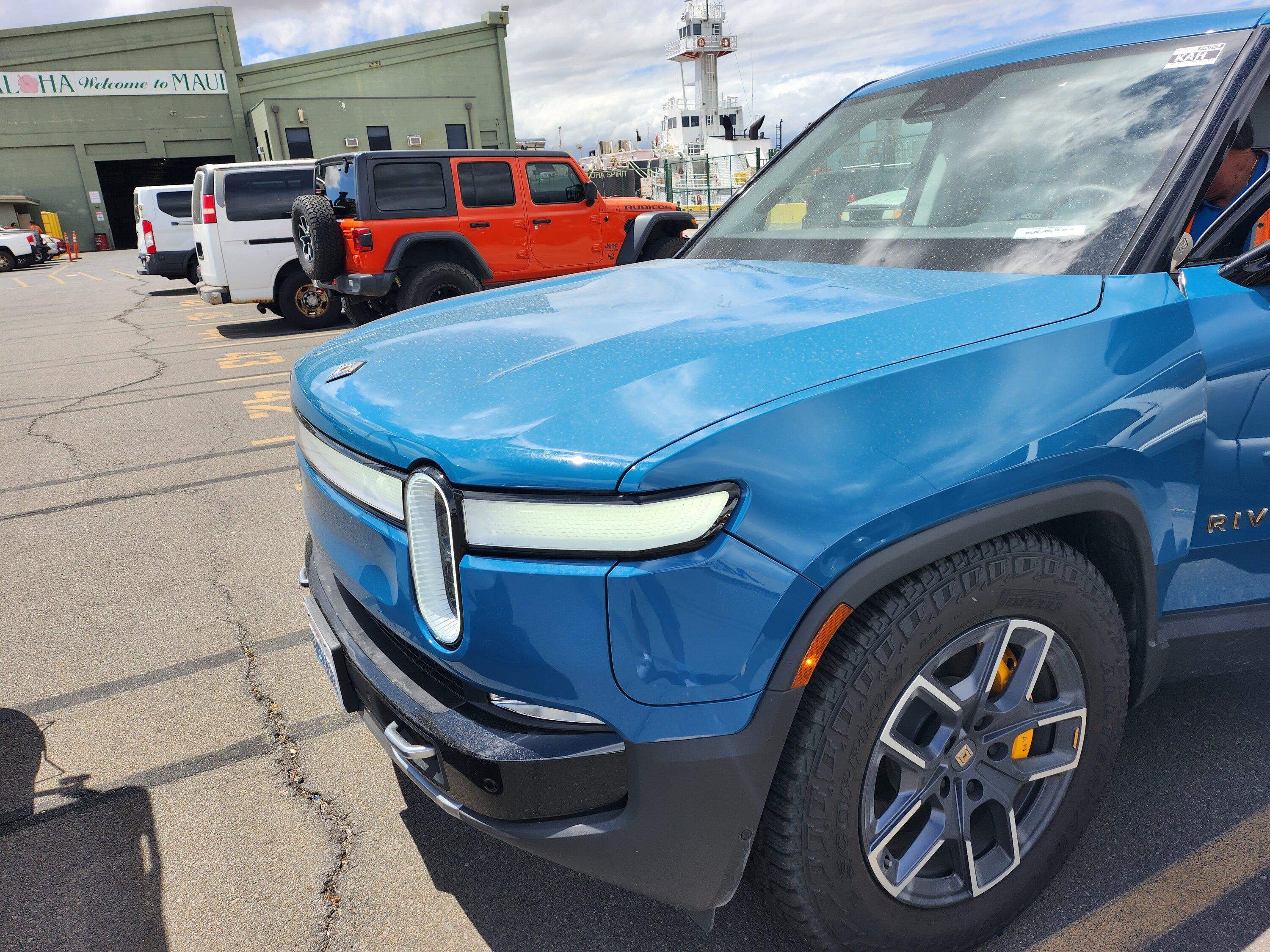
Finally, the truck was on its way to Hawaii. We used our Matson booking number to track the progress. It arrived in Honolulu first for USDA inspections, then got loaded onto a Young Brothers barge to Maui. At that point Matson couldn't confirm the location of our vehicle, so we just had to assume it made the barge on time. The next day we received notice that our truck was ready to be picked up from the port. The pickup process was easy, though the vehicle was filthy with dust so it was a bit challenging to check for damage. The only aggravation was that someone decided to close the tonneau cover, which I always leave open. Fortunately it retracted just fine and appears to still be usable. Being so far from a service center, I think I'll wait a while before using it again. C'mon Rivian, give me a vehicle setting to disable the button for the tonneau please!

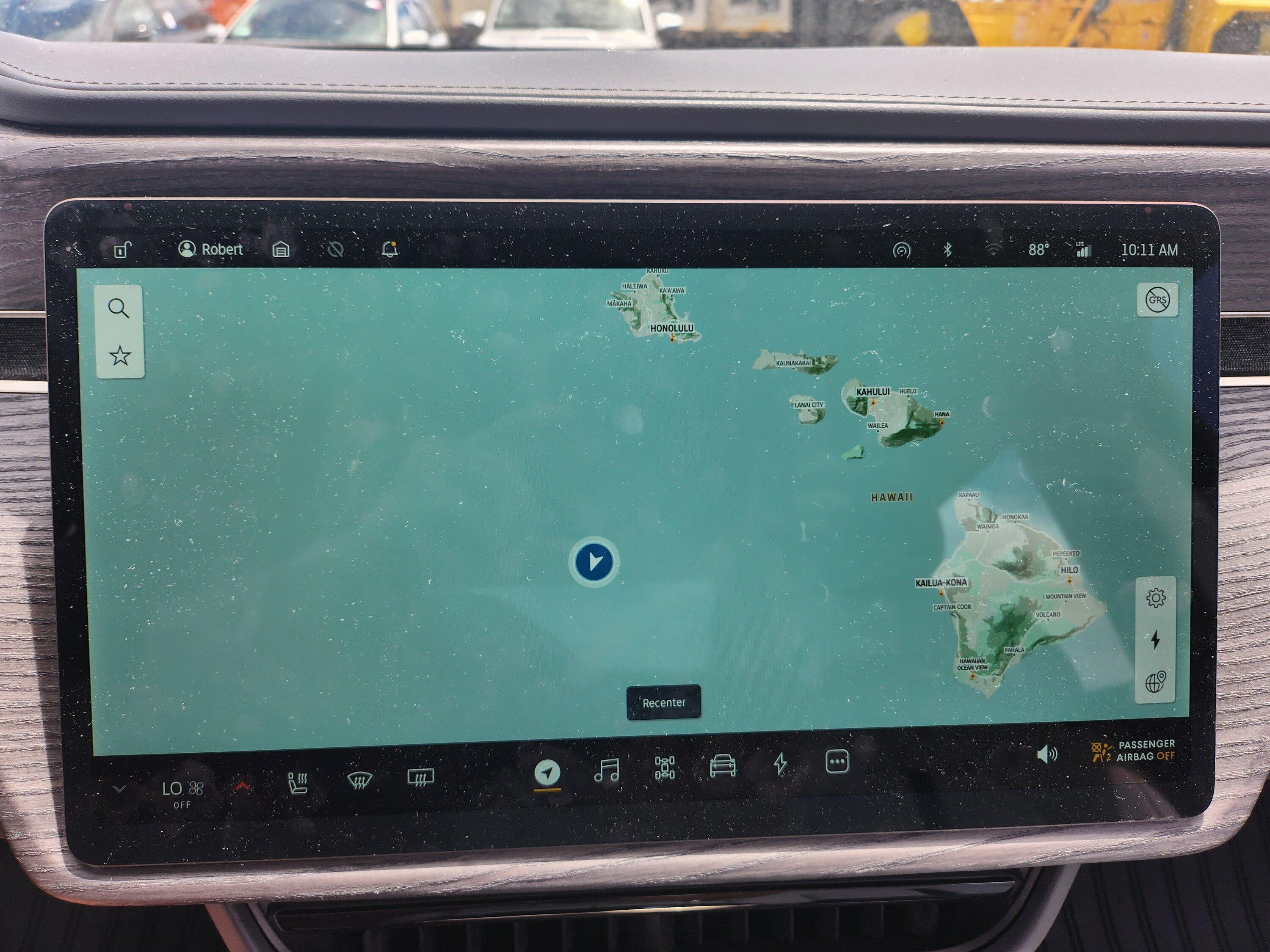
Before pulling out of the port I decided to preload several new addresses into the truck's navigation system. Sadly I couldn't delete all the old Seattle recent searches, which were mostly the locations of vandalized public charging stations. Then, I discovered Rivian GPS placed my vehicle right in the ocean, and wouldn't let me navigate anywhere. A quick reboot fixed that.
What we have observed about EVs on Maui after arriving:
TL;DR - The truck made it to Maui safely after 27 days in transit, and lost only 24% of battery (72 miles) while in Shipping Mode. Matson did not make it easy for us, but despite the drama and opaqueness we were able to pick up the vehicle at the early end of the estimated window, with no damage.
Long version:
Matson does not ship out of Seattle any more, so our container of household goods had to ship out of Tacoma. We looked into putting the truck directly into the shipping container, but we simply have too much junk for that to have worked. Even if the truck would fit (barely a possibility), the risk of our junk falling and damaging the truck was too high. There's no service center on the islands! Further complicating our plans, Matson suddenly stopped shipping vehicles out of Tacoma. The closest reliable port for shipping vehicles was Oakland. We briefly considered using Pacha instead to ship out of Seattle, but the third party car forwarding services just weren't as reliable as those who ship through Matson. So we opted to send our truck to Oakland and ship from the port there.
Matson imposed several challenges on us. They wanted the vehicle completely empty, so we removed the first aid kit, compressor hoses, flashlight and camp speaker and shipped those in our container separately (but we left the spare with the truck). The vehicle interior and exterior had to be completely clean too, presumably for damage reports on the bill of lading. Also, the USDA in Hawaii thoroughly examines vehicles for soil and invasive species. I had no idea how much debris gets trapped under the frunk hood and under the spare tire cover!
After cleaning the vehicle, we turned off gear guard and put the truck into Shipping Mode, aka 'Ship (Transport)' in the settings interface.
Matson will not ship vehicles with cracked windshield glass, so given the reports of possibly weak Rivian glass we decided to ship via closed transport. I was expecting an 18 wheeler, but instead the driver showed up with a super duty truck and what can best be described as a renovated horse trailer. It gave me slightly more confidence when the driver pointed to the million dollar super car parked inside the trailer, but the process of loading the truck was nerve wracking. The trailer was too narrow for the truck unless the side mirrors were tucked, which makes bird's eye view useless thanks to some questionable design decisions from Rivian about camera placement. The truck was as paranoid as I was and screamed at the driver the whole time. He got it in perfectly with some guidance from me and my wife peeking in through the side loading doors of the trailer.
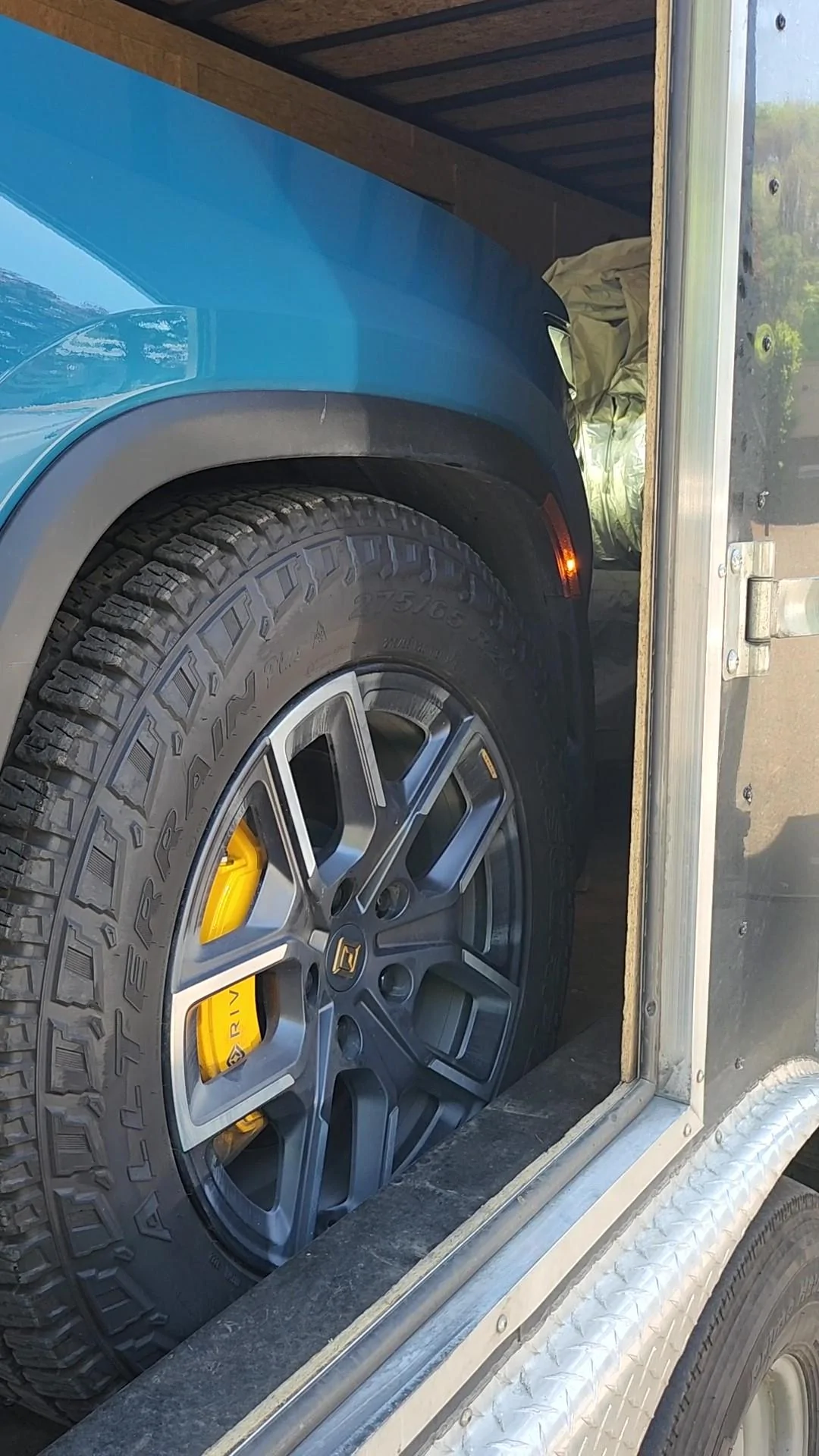
Matson will not ship EVs with a SoC above 65%. I presumed that was due to the possibility of battery fires, and was perhaps an outdated rule that they wouldn't enforce. I was wrong, and regret charging to 80% before sending our truck off in covered transport. When Matson rejected the driver's delivery, we asked if we could pay him by the hour to take a joy ride around the Bay Area to burn off some power. The driver successfully delivered the truck to Matson with 61% battery. I learned two lessons about Shipping Mode: 1) you can still drive the vehicle, it just doesn't phone home when parked and can't be monitored remotely using the app, and 2) while the vehicle is being driven it actually does phone home, so we monitored the driver's location and the truck's battery while he wheeled around SF.
Finally, the truck was on its way to Hawaii. We used our Matson booking number to track the progress. It arrived in Honolulu first for USDA inspections, then got loaded onto a Young Brothers barge to Maui. At that point Matson couldn't confirm the location of our vehicle, so we just had to assume it made the barge on time. The next day we received notice that our truck was ready to be picked up from the port. The pickup process was easy, though the vehicle was filthy with dust so it was a bit challenging to check for damage. The only aggravation was that someone decided to close the tonneau cover, which I always leave open. Fortunately it retracted just fine and appears to still be usable. Being so far from a service center, I think I'll wait a while before using it again. C'mon Rivian, give me a vehicle setting to disable the button for the tonneau please!
Before pulling out of the port I decided to preload several new addresses into the truck's navigation system. Sadly I couldn't delete all the old Seattle recent searches, which were mostly the locations of vandalized public charging stations. Then, I discovered Rivian GPS placed my vehicle right in the ocean, and wouldn't let me navigate anywhere. A quick reboot fixed that.
What we have observed about EVs on Maui after arriving:
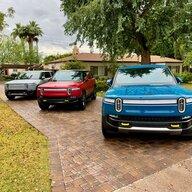
- In our first two weeks we saw five different Rivians - four different colors (FG, White, Silver and Blue) and at least two different configs with the same color. We saw one on our first day, even though we were way upcountry in a rural setting. There must be at least a dozen on the island.
- I met one Rivian owner at a charging station and learned quite a bit. There are over 50 Rivians across the islands. A mobile service rep makes the rounds about once a quarter for repairs and recall service operations that can be done as mobile service. The Rivian owner I spoke with was hesitant to bring his vehicle to Maui right away, so he left it in California where he took delivery until he felt comfortable shipping it to Maui. He was charging at one of the more expensive charging stations, ironically located at the HQ of the Maui Electric Company. But overall charging during peak solar production hours is cheap at $0.28/kW if you find the right station, which is less than residential rates here and less than Seattle public charger rates. Maui has a lot of solar generation that has nowhere to go in the cooler morning hours when A/C use is low and fewer people are at home using appliances.
- The half-dozen L3 charging stations (50 kW max) here are installed and managed by various third parties, and operated by Shell using the Shell Recharge app. The stations are extremely flaky, and often lose their cell data connection that makes the station unusable for extended periods of time. I experienced a down charger that went offline immediately after someone else had a successful charge. An unhappy Leaf owner rolled up after me and complained that this was a common problem, and that the stations seemed especially prone to go offline after being used by a Tesla with a CCS adapter. Somehow that seems fitting. Two other stations have been down recently for much longer, one for weeks and another for months. Maui has vague plans for more charging stations in the future, but it's unclear how serious those are or whether they will include high speed charging above 50 kW. Tesla supposedly also has plans to install a Supercharger station, but it's unclear when and whether they will include CCS. At least Rivian has plans to offer an adapter.
- The same Rivian driver usually charges at home using his dryer outlet, which is located in his garage. We only have a wall outlet in the garage of our rental, but the dryer is just inside the garage interior door. My wife found a smart switch for NEMA 14-30 dryer / NEMA 14-50 EV dual use, and combined with a NEMA 14-50 extension cord we should be able to charge at home more often. I'll post updates once that gear arrives.
- Only once have I been able to pull up and charge right away at a public charging station, which luckily was on the day I picked the truck up from the port.
- According to another EV driver I met, charging infrastructure used to be better two years ago. Systems are often down, repairs take forever, and tons of EV rentals new to the island are clogging the limited infrastructure. As with other aspects of the stereotypical clueless tourist, EV etiquette is not great. We both cursed the Tesla rental camped at the charging station for over two hours.
Sponsored
Last edited: