Sponsored

Really Fast Charging! (BYD)

Rivian Owner

Well-Known Member
First Name
Mark
Joined
Sep 15, 2024
Threads
1
Messages
229
Reaction score
293
Location
Pacific North West
Vehicles
1971 GTO, 2019 F150,
Clubs
 
I'm jealous, did you see this article that appeared in the NY Times about BYD's Megawatt chargers that can give you a couple of hundred miles of range in 5 minutes? It is sad to think we, "the most advanced country on the planet" probably won't have this technology for several years. Sad to think this type of charging may make it to Europe before the US!

https://www.nytimes.com/2025/08/19/...le-chargers-china.html?searchResultPosition=1
Sponsored

 

BigSkies

Well-Known Member
First Name
Brian
Joined
Sep 4, 2021
Threads
17
Messages
1,235
Reaction score
2,651
Location
Denver
Vehicles
R1T, Model Y
Clubs
 
There's a few US projects for 1 MW chargers around EV semis. They are MASSIVELY expensive. Here's the one I know of that opened.

Just because it can be demonstrated doesn't make it economical. You'd probably be paying a couple dollars per kWh at MW speeds.

Just for a little context, a typical house might draw 1kW to 7kW most of the time. You might get up to 10-15kW if the AC and oven and dryer are running at the same time.
 

ndmiller

Well-Known Member
First Name
Noah
Joined
Nov 19, 2023
Threads
15
Messages
1,388
Reaction score
1,737
Location
Atlanta
Vehicles
23 R1T Silver (The AG)
Occupation
Retailler
Clubs
 
It is sad to think we, "the most advanced country on the planet" probably won't have this technology for several years. Sad to think this type of charging may make it to Europe before the US!
Not sure the US is the most advanced country on the planet anymore or even wants to be from my perspective. Just not investing in the future anymore, funding the past and going backwards to the way it was before in many aspects of life. May only last a few years, but it's where we are.

Even in Red state politicians where infrastructure money was put to great use (i.e. GA where I live and Rivian is building a plant), politicians still voted away EV and alternative fuel leadership and clawed back money that was being used in rural red states for things like healthcare. BUT the government just unfroze the $5 billion National Electric Vehicle Infrastructure (NEVI) program and released revised guidance for states to access these funds. None of it makes sense, just a weird time to be alive
 
OP
OP

Rivian Owner

Well-Known Member
First Name
Mark
Joined
Sep 15, 2024
Threads
1
Messages
229
Reaction score
293
Location
Pacific North West
Vehicles
1971 GTO, 2019 F150,
Clubs
 
There's a few US projects for 1 MW chargers around EV semis. They are MASSIVELY expensive. Here's the one I know of that opened.

Just because it can be demonstrated doesn't make it economical. You'd probably be paying a couple dollars per kWh at MW speeds.

Just for a little context, a typical house might draw 1kW to 7kW most of the time. You might get up to 10-15kW if the AC and oven and dryer are running at the same time.
Yes, but economies of scale and practical experience tend to lower prices and improve technology, look at photovoltaics as an example. The first solar cells were more than a million dollars per watt and now you are below a dollar per watt for a solar panel.

I don't understand your analogy using a residence? I understand the power demands of a house, but we are talking about EV charging here. There are ways to provide a lot of current in a very short period of time if you are suggesting that the grid couldn't handle megawatt chargers.
 

Zoidz

Well-Known Member
First Name
Gil
Joined
Feb 28, 2021
Threads
226
Messages
5,192
Reaction score
11,696
Location
PA
Vehicles
23 R1S Adv, Avalanche, BMWs-X3,330cic,K1200RS bike
Occupation
Engineer
Not sure the US is the most advanced country on the planet anymore or even wants to be from my perspective. Just not investing in the future anymore, funding the past and going backwards to the way it was before in many aspects of life. May only last a few years, but it's where we are.

Even in Red state politicians where infrastructure money was put to great use (i.e. GA where I live and Rivian is building a plant), politicians still voted away EV and alternative fuel leadership and clawed back money that was being used in rural red states for things like healthcare. BUT the government just unfroze the $5 billion National Electric Vehicle Infrastructure (NEVI) program and released revised guidance for states to access these funds. None of it makes sense, just a weird time to be alive
Agree. Defunding research academia and National Science Foundation, and policies that alienate big brain researchers so much that they seek work in other countries is not advancing our technology, EV or otherwise.
 

Sponsored

BigSkies

Well-Known Member
First Name
Brian
Joined
Sep 4, 2021
Threads
17
Messages
1,235
Reaction score
2,651
Location
Denver
Vehicles
R1T, Model Y
Clubs
 
Yes, but economies of scale and practical experience tend to lower prices and improve technology, look at photovoltaics as an example. The first solar cells were more than a million dollars per watt and now you are below a dollar per watt for a solar panel.

I don't understand your analogy using a residence? I understand the power demands of a house, but we are talking about EV charging here. There are ways to provide a lot of current in a very short period of time if you are suggesting that the grid couldn't handle megawatt chargers.
I don't work in the industry, but I've tried to read up on how charging works, and what the bottlenecks are.

I use residential for context because many people don't understand the difference between a watt, kilowatt, and megawatt.

I don't disagree that MW charging will be needed for things like heavy trucks.

I understand getting to MW speeds involves a multi-year utility connection process. Many distribution networks aren't set up to handle this amount of current.

Also, a Kwh delivered at higher speeds is more expensive than one delivered at lower speeds. And the difference is non-linear.

Out of curiosity, I looked up my utilities demand fees. A bank of 4x Megawatt chargers that run simultaneously for 15 minutes at any point in the month will generate about $70k/month in demand fees, before even paying for electricity. A bank of 4x 150kW chargers will generate about $10.5k in demand fees per month. I don't know exactly where the supply/demand curve falls, but I suspect most EV drivers wouldn't pay ~6.5x the price of a 150kW charger for MW charging.

I'm all for faster charging, but I don't think MW charging is practical for most applications.

The practical path that will speed up charging is the next generation of batteries. At least that's how they're marketed. While they won't charge faster than the underlying charger, they likely won't need to throttle charging speeds the same way as the battery gets closer to full.
 
OP
OP

Rivian Owner

Well-Known Member
First Name
Mark
Joined
Sep 15, 2024
Threads
1
Messages
229
Reaction score
293
Location
Pacific North West
Vehicles
1971 GTO, 2019 F150,
Clubs
 
I don't work in the industry, but I've tried to read up on how charging works, and what the bottlenecks are.

I use residential for context because many people don't understand the difference between a watt, kilowatt, and megawatt.

I don't disagree that MW charging will be needed for things like heavy trucks.

I understand getting to MW speeds involves a multi-year utility connection process. Many distribution networks aren't set up to handle this amount of current.

Also, a Kwh delivered at higher speeds is more expensive than one delivered at lower speeds. And the difference is non-linear.

Out of curiosity, I looked up my utilities demand fees. A bank of 4x Megawatt chargers that run simultaneously for 15 minutes at any point in the month will generate about $70k/month in demand fees, before even paying for electricity. A bank of 4x 150kW chargers will generate about $10.5k in demand fees per month. I don't know exactly where the supply/demand curve falls, but I suspect most EV drivers wouldn't pay ~6.5x the price of a 150kW charger for MW charging.

I'm all for faster charging, but I don't think MW charging is practical for most applications.

The practical path that will speed up charging is the next generation of batteries. At least that's how they're marketed. While they won't charge faster than the underlying charger, they likely won't need to throttle charging speeds the same way as the battery gets closer to full.
In the article they mention that different battery technology is required for the super fast charging to occur, so I'm assuming you agree with that part of the article? It sounds like BYD is well on their way to production scale of new battery technologies that can handle the rapid charge, while the US falls further behind with archaic thinking and policies.

As for the power delivered, as I said, there are ways to locally store power and provide a large burst of power over a short period of time. I would guess right now you have things like a smelting plant or a bauxite to aluminum plant that draws huge quantities of power in short bursts, so we basically already have the ability to do this now, the technology just hasn't been applied to our grid. Maybe some forward thinking with this type of technology could also eliminate brown-outs and grid failures?

You say you looked up your utility's fees, were those the residential rates or industrial rates? Just because those rates exist, changes to fee structure could just as easily favor faster charging as rates aren't always based on the utility's true cost to deliver power. You are assuming the grid infrastructure will be the same archaic system we have in place now, which again the article points out, the investments by the Chinese government in their grid are what will make this type of charging possible. Don't get me wrong, I don't want to live in China, but there are things they are doing right now that are leading their economy into the future while we seem to be stuck in the past.
 

Great Gatsby

Well-Known Member
First Name
Alex
Joined
Jan 15, 2025
Threads
15
Messages
745
Reaction score
1,425
Location
Atlanta
Vehicles
2018 BMW M240i
I'm jealous, did you see this article that appeared in the NY Times about BYD's Megawatt chargers that can give you a couple of hundred miles of range in 5 minutes? It is sad to think we, "the most advanced country on the planet" probably won't have this technology for several years. Sad to think this type of charging may make it to Europe before the US!

https://www.nytimes.com/2025/08/19/...le-chargers-china.html?searchResultPosition=1
Several years? The way things are going, it'll probably be decades before we get anything like this while the rest of the world laps us in technology.
 

Dark-Fx

Well-Known Member
First Name
Brian
Joined
Jul 15, 2020
Threads
148
Messages
13,563
Reaction score
27,375
Location
Michigan
Vehicles
R1T, R1S, Livewire One, Sierra EV, R1S
Occupation
Engineering
Clubs
 
In the article they mention that different battery technology is required for the super fast charging to occur, so I'm assuming you agree with that part of the article? It sounds like BYD is well on their way to production scale of new battery technologies that can handle the rapid charge, while the US falls further behind with archaic thinking and policies.
CATL's 6C cells are still LFP, they are just constructed differently for better heat dissipation. Heat is the #1 reason charge rates can only be so fast.
 

Donald Stanfield

Well-Known Member
First Name
Donald
Joined
Jul 31, 2022
Threads
59
Messages
8,309
Reaction score
16,656
Location
USA
Vehicles
2025 R1S Tri Ascend, 2024 i4 M50
Occupation
Stuff and things
It's great that people are experimenting with EV batteries to improve them, but this doesn't translate to significant benefits in real-world use. Building mW chargers isn't going to be realistic because we don't have enough electrical capacity to service a broad rollout of them.
 

Sponsored

OP
OP

Rivian Owner

Well-Known Member
First Name
Mark
Joined
Sep 15, 2024
Threads
1
Messages
229
Reaction score
293
Location
Pacific North West
Vehicles
1971 GTO, 2019 F150,
Clubs
 
It's great that people are experimenting with EV batteries to improve them, but this doesn't translate to significant benefits in real-world use. Building mW chargers isn't going to be realistic because we don't have enough electrical capacity to service a broad rollout of them.
Exactly my point, and the point of the article, we haven't and we aren't making the investments needed, other countries are moving forward while we are stuck in pessimistic thought.

As for batteries, heat is the current (pun not intended) limitation based on the current technologies. Keep in mind 20 years ago the charging speeds and battery life we have now were just a dream. Whether better heat management or better battery chemistries with lower internal resistance, new technologies will be found that will enable much faster charge cycles. The question is who will control the markets?
 

Donald Stanfield

Well-Known Member
First Name
Donald
Joined
Jul 31, 2022
Threads
59
Messages
8,309
Reaction score
16,656
Location
USA
Vehicles
2025 R1S Tri Ascend, 2024 i4 M50
Occupation
Stuff and things
Exactly my point, and the point of the article, we haven't and we aren't making the investments needed, other countries are moving forward while we are stuck in pessimistic thought.

As for batteries, heat is the current (pun not intended) limitation based on the current technologies. Keep in mind 20 years ago the charging speeds and battery life we have now were just a dream. Whether better heat management or better battery chemistries with lower internal resistance, new technologies will be found that will enable much faster charge cycles. The question is who will control the markets?
You should not find too many people here who would argue against EV infrastructure investment. With that said, China doesn't have many mW chargers either, nor do they have a plan to deploy a large number of them. It's just not realistic, but that same cooling technology might make it so you can sustain a state of charge deeper into the pack.
 

Ggunn9

Well-Known Member
First Name
top
Joined
Apr 27, 2024
Threads
1
Messages
71
Reaction score
58
Location
Georgia
Vehicles
R1T, model y perf
Occupation
Legal
Clubs
 
Many interesting comments and perspectives here. While we may not currently be able to benefit from Mh chargers we need to be working towards that. China is lapping us in terms of EV tech. BYD and Xiaomi are light years ahead of current US EVs and cost nearly half as much. If they ever make it to the US market (without tariffs) Rivian and Tesla are done.


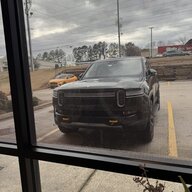
Look at this Chinese made EV


The fact is the US is behind on tech. I was in the US Air Force for 20yrs and lived in Japan for 3 of those years 2003-2006. The fact is some tech I saw during that time STILL has not made it the USA.

We have got to start investing more into EV tech. I don't want a Red/Blue conversation but we are being left behind. The gap over the next 3-4 yrs may be too big to recover from.

Back to the mega watt charging-just because we can not use something now does not mean we should not invest into it. Example, the tires on your current vehicle were likely tested and raced in Formula One racing years ago. I'm sure they raced them at 200mph+ speeds for you to drive 70mph to your local grocery store.
Sponsored


Top