
Sponsored

Electric Rivilution

Well-Known Member
First Name
Bill
Joined
Mar 5, 2019
Threads
323
Messages
504
Reaction score
2,475
Location
Scottsdale
Vehicles
2016 Model X / 2022 R1T
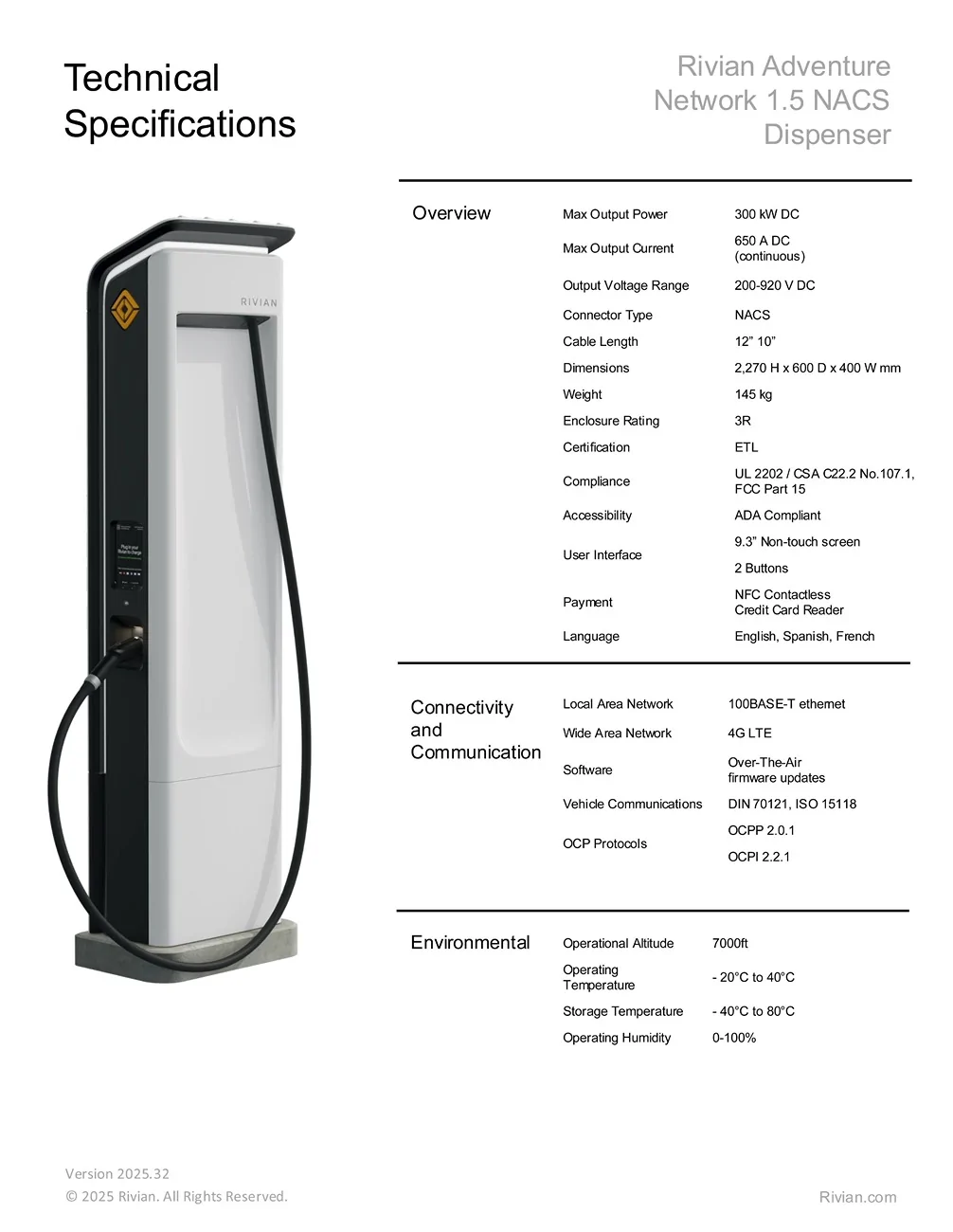
Rivian Adventure Network 1.5 NACS Dispenser

Technical Specifications


Overview
  • Max Output Power: 300 kW DC
  • Max Output Current: 650 A DC (continuous)
  • Output Voltage Range: 200–920 V DC
  • Connector Type: NACS
  • Cable Length: 12' 10"
  • Dimensions: 2,270 H × 600 D × 400 W mm
  • Weight: 145 kg
  • Enclosure Rating: 3R
  • Certification: ETL
  • Compliance: UL 2202 / CSA C22.2 No.107.1, FCC Part 15
  • Accessibility: ADA Compliant
  • User Interface: 9.3" Non-touch screen
  • Buttons: 2 Buttons
  • Payment: NFC Contactless, Credit Card Reader
  • Language: English, Spanish, French

Connectivity and Communication
  • Local Area Network: 100BASE-T Ethernet
  • Wide Area Network: 4G LTE
  • Software: Over-The-Air firmware updates
  • Vehicle Communications: DIN 70121, ISO 15118
  • OCPP Protocols: OCPP 2.0.1, OCPI 2.2.1

Environmental
  • Operational Altitude: 7000 ft
  • Operating Temperature: –20°C to 40°C
  • Storage Temperature: –40°C to 80°C
  • Operating Humidity: 0–100%


Rivian R1T R1S Gen 1.5 NACS Charging Dispenser Technical Specs (RAN Charger) G6oAYYwaMAA7ZKU
Sponsored


MountainBikeDude

Well-Known Member
First Name
Adam
Joined
Jun 20, 2019
Threads
54
Messages
3,331
Reaction score
7,083
Location
Vancouver
Vehicles
2023 El Cap Quad Motor R1T (Selling the Xterra)
Clubs
 
The operating temperature is a bit of a miss.

Environmental
  • Operational Altitude: 7000 ft
  • Operating Temperature: –20°C to 40°C
  • Storage Temperature: –40°C to 80°C
  • Operating Humidity: 0–100%
See the outofspec video from @OutofSpecKyle during a cold snap in Colorado a couple years back of - 20c down to - 40c. Almost every dispenser DCFC failed to initialize due to what seemed to be a cable cooling initiation issue, stopping the initialization process.

RIVIAN RAN chargers weren't tested, but I would assume similar results.


mkhuffman

Well-Known Member
First Name
Mike
Joined
Nov 9, 2020
Threads
14
Messages
2,828
Reaction score
3,191
Location
Virginia
Vehicles
2025 R1T Tri-Max, Jeep GC-L, VW Jetta
Good enough for the average 800V BEV!
 

shrink

Well-Known Member
Joined
Feb 16, 2021
Threads
101
Messages
1,380
Reaction score
2,695
Location
Phoenix, AZ and Kailua-Kona, HI
Vehicles
'23 R1S Quad x 2; '26 Gen 2 R1T Quad Launch; '25 Ioniq 5; '24 Jeep Cherokee
Clubs
 
So, my neighbor in Kona (another EV guy) was going to approach me about buying and running an L3 fast charging station on island. We’re both part time island residents with primary residences on the mainland.

Anyway, while not Rivian specific, the math on these L3’s don’t make much sense - without government subsidies, which IMO the government should be facilitating for infrastructure development (but becomes a loaded political issue).

Regardless, the cost of the unit my neighbor found was about $95K, but with government incentives, it was less than half that. But, one still needed to pay for a maintenance and repair plan, which was about $10-$15K annually.

i don’t see how people make money off these - even with government incentives.

All I really want to say (without making this a political statement) is that knowing the potential cost, I personally don’t complain about L3 charging station prices. The more the better and if someone is going to install one, by all means try to make some money off it. Also, for an emerging technology and infrastructure, IMO government incentives are badly needed.
 

mkhuffman

Well-Known Member
First Name
Mike
Joined
Nov 9, 2020
Threads
14
Messages
2,828
Reaction score
3,191
Location
Virginia
Vehicles
2025 R1T Tri-Max, Jeep GC-L, VW Jetta
So, my neighbor in Kona (another EV guy) was going to approach me about buying and running an L3 fast charging station on island. We’re both part time island residents with primary residences on the mainland.

Anyway, while not Rivian specific, the math on these L3’s don’t make much sense - without government subsidies, which IMO the government should be facilitating for infrastructure development (but becomes a loaded political issue).

Regardless, the cost of the unit my neighbor found was about $95K, but with government incentives, it was less than half that. But, one still needed to pay for a maintenance and repair plan, which was about $10-$15K annually.

i don’t see how people make money off these - even with government incentives.

All I really want to say (without making this a political statement) is that knowing the potential cost, I personally don’t complain about L3 charging station prices. The more the better and if someone is going to install one, by all means try to make some money off it. Also, for an emerging technology and infrastructure, IMO government incentives are badly needed.
There are various L3 options. What power service and delivery were you looking at? A 60 kW charger is a lot cheaper than a 400 kW charger. I am just curious to learn more about what you considered and the various costs involved.

Some stations rely on a battery to deliver a high charge rate while using slow AC service to replenish the battery. This reduces power service cost but the battery storage isn't cheap.
 

Sponsored

HaveBlue

Well-Known Member
Joined
Nov 22, 2022
Threads
41
Messages
2,926
Reaction score
2,234
Location
91107
Vehicles
R1S DMP Max, Lifted GX470, APR Audi A7, BMW 325Ci
Clubs
 
So, my neighbor in Kona (another EV guy) was going to approach me about buying and running an L3 fast charging station on island. We’re both part time island residents with primary residences on the mainland.

Anyway, while not Rivian specific, the math on these L3’s don’t make much sense - without government subsidies, which IMO the government should be facilitating for infrastructure development (but becomes a loaded political issue).

Regardless, the cost of the unit my neighbor found was about $95K, but with government incentives, it was less than half that. But, one still needed to pay for a maintenance and repair plan, which was about $10-$15K annually.

i don’t see how people make money off these - even with government incentives.

All I really want to say (without making this a political statement) is that knowing the potential cost, I personally don’t complain about L3 charging station prices. The more the better and if someone is going to install one, by all means try to make some money off it. Also, for an emerging technology and infrastructure, IMO government incentives are badly needed.
An Autel DC compact 50 is $15-20k needs a 3phase connect. Payment built into your account via stripe. 👍
 

azbill

Well-Known Member
First Name
Bill
Joined
Jun 8, 2020
Threads
17
Messages
1,695
Reaction score
1,976
Location
Arizona
Vehicles
Escalade IQ, Mach E, Hummer EV SUT
Occupation
Retired
The operating temperature is a bit of a miss.

Environmental
  • Operational Altitude: 7000 ft
  • Operating Temperature: –20°C to 40°C
  • Storage Temperature: –40°C to 80°C
  • Operating Humidity: 0–100%
See the outofspec video from @OutofSpecKyle during a cold snap in Colorado a couple years back of - 20c down to - 40c. Almost every dispenser DCFC failed to initialize due to what seemed to be a cable cooling initiation issue, stopping the initialization process.

RIVIAN RAN chargers weren't tested, but I would assume similar results.

The upper temp range is also a miss, only 104F. In the southwest 110+ is typical in the summer. Based on my experience in the summer at Tesla chargers, I think the NACS connectors may be the weak link.
 

therealcmj

Well-Known Member
First Name
Chris
Joined
Oct 5, 2024
Threads
3
Messages
187
Reaction score
239
Location
Boston, MA
Vehicles
2025 R1S
...the math on these L3’s don’t make much sense...

...the cost of the unit my neighbor found was about $95K... [and] pay for a maintenance and repair plan, which was about $10-$15K annually.
An Autel DC compact 50 is $15-20k needs a 3phase connect. Payment built into your account via stripe. 👍
I wondered how this compared to a gas pump so I did some quick searching . It looks like a basic pump costs about 20k plus a few thousand to install. And gas stations install 5 or 10 of them all the time. Add the storage tanks, permitting, and all the rest and you're at real money pretty quickly.

Gas stations generally make only a small amount of money on gas and they make money by having high volume combined with the much higher profit margins on their attached convenience stores.

On its surface it seems like it'd be a no brainer for newly built gas station + convenience stores to also install at least one EV charger as they are built or remodeled. But I bet most EV owners are charging at home and if you put the numbers in a spreadsheet it just doesn't pencil out to paying back in less than multiple years.


Semi-unrelated, I'm working on getting a single shared charging spot in my condo's underground parking garage. I spreadsheeted the $3,000 we got quoted by an electrician to install, $1,000 for the EVSE, marking up electricity by 10c per kWh, and someone charging every night for 6 hours at 10 kW. Even with a "membership" fee for every EV driver and that high markup it'll still take over 2 years to pay back.

EV charging seems like a terrible business.
 

bigsky

Banned
Well-Known Member
Joined
Jan 8, 2024
Threads
12
Messages
1,098
Reaction score
740
Location
MUM
Vehicles
MUM
With the outlandish and absurd prices that RAN apparently charges, I wonder if the yellow color on Rivian dispensers is actually gold.
RAN charger near me, $0.62 per kWh. 5 miles away, a certain charging company has dispensers also putting out as much as 300 kW; it costs $0.42 per kWh to charge there. Or 48% higher cost at RAN for the same electrons coming from the same utility. My nearest and glorious/mighty Tesla supercharger too costs $0.42 per kWh. I could not care less that it may output even half as much as RAN chargers. Thank you so much, Tesla!!

I always find it amazing (putting it very nicely) how many go out of their way to justify away and so gladly accept such ridiculous and absurd prices.

I guess it is all about the basic law of supply and demand. Companies supply DCFC dispensers; some companies demand absurd prices; others demand lower prices.

No doubt, that great truism is up there in the business decision-making by some of these charging networks: "a fool and his money are soon parted." Sad.
 

VandalSibs

Well-Known Member
First Name
Andrew
Joined
Dec 27, 2023
Threads
15
Messages
1,376
Reaction score
2,382
Location
Eastern Washington State
Website
www.sibulskymusic.com
Vehicles
R1T Dual Motor Large Pack
Occupation
Composer, IT Service Desk Analyst
Clubs
 
With the outlandish and absurd prices that RAN apparently charges, I wonder if the yellow color on Rivian dispensers is actually gold.
RAN charger near me, $0.62 per kWh. 5 miles away, a certain charging company has dispensers also putting out as much as 300 kW; it costs $0.42 per kWh to charge there. Or 48% higher cost at RAN for the same electrons coming from the same utility. My nearest and glorious/mighty Tesla supercharger too costs $0.42 per kWh. I could not care less that it may output even half as much as RAN chargers. Thank you so much, Tesla!!

I always find it amazing (putting it very nicely) how many go out of their way to justify away and so gladly accept such ridiculous and absurd prices.

I guess it is all about the basic law of supply and demand. Companies supply DCFC dispensers; some companies demand absurd prices; others demand lower prices.

No doubt, that great truism is up there in the business decision-making by some of these charging networks: "a fool and his money are soon parted." Sad.
As Rivian is rolling out the version 1.5 DCFCs, in some places the pricing structure changes. The one nearest me was the same price you mention. Now that it's been upgraded, it's on a time-of-use pay plan, with comparable rates to the Tesla Supercharger a few miles away.
 

Sponsored

HaveBlue

Well-Known Member
Joined
Nov 22, 2022
Threads
41
Messages
2,926
Reaction score
2,234
Location
91107
Vehicles
R1S DMP Max, Lifted GX470, APR Audi A7, BMW 325Ci
Clubs
 
I wondered how this compared to a gas pump so I did some quick searching . It looks like a basic pump costs about 20k plus a few thousand to install. And gas stations install 5 or 10 of them all the time. Add the storage tanks, permitting, and all the rest and you're at real money pretty quickly.

Gas stations generally make only a small amount of money on gas and they make money by having high volume combined with the much higher profit margins on their attached convenience stores.

On its surface it seems like it'd be a no brainer for newly built gas station + convenience stores to also install at least one EV charger as they are built or remodeled. But I bet most EV owners are charging at home and if you put the numbers in a spreadsheet it just doesn't pencil out to paying back in less than multiple years.


Semi-unrelated, I'm working on getting a single shared charging spot in my condo's underground parking garage. I spreadsheeted the $3,000 we got quoted by an electrician to install, $1,000 for the EVSE, marking up electricity by 10c per kWh, and someone charging every night for 6 hours at 10 kW. Even with a "membership" fee for every EV driver and that high markup it'll still take over 2 years to pay back.

EV charging seems like a terrible business.
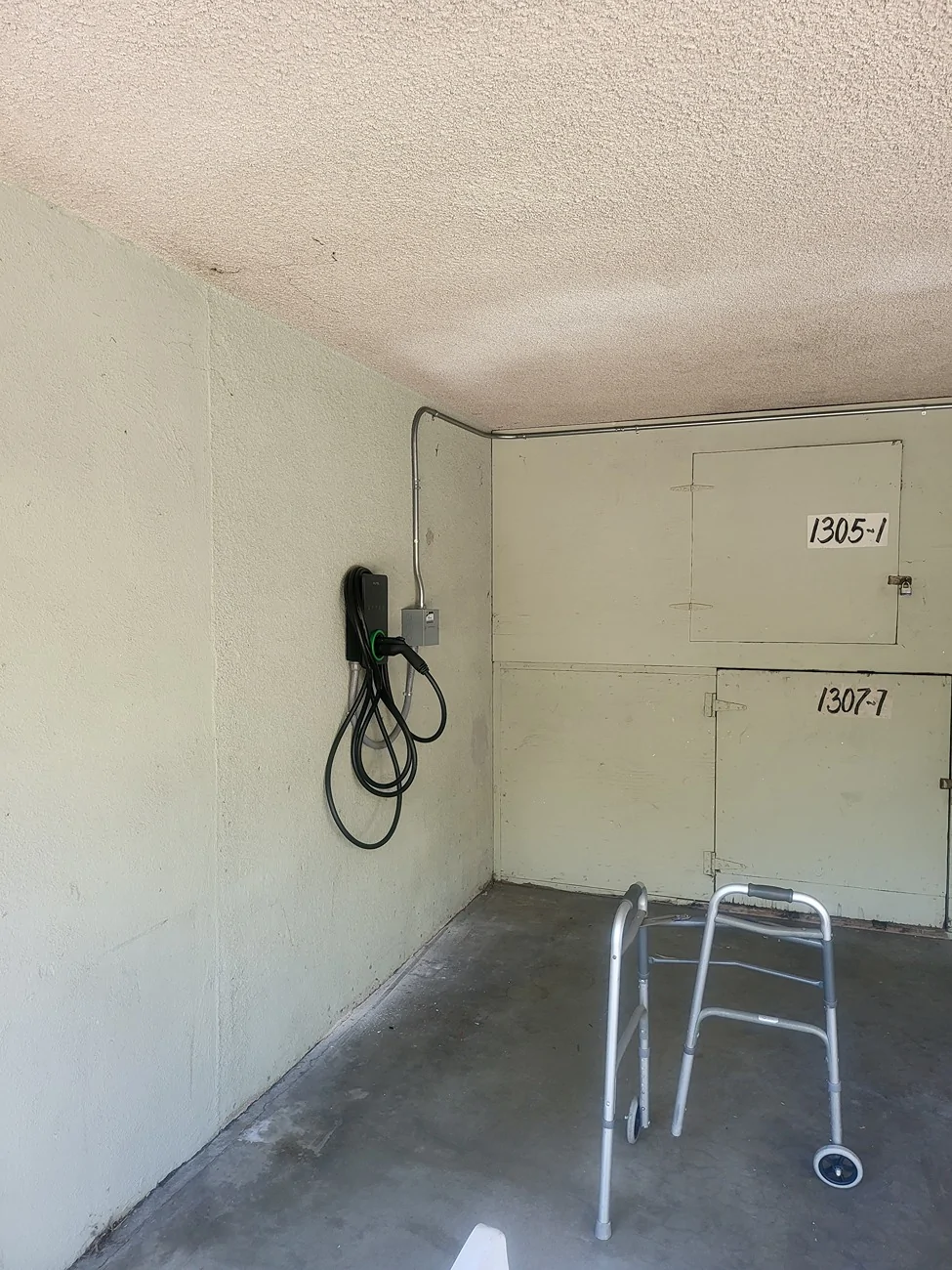
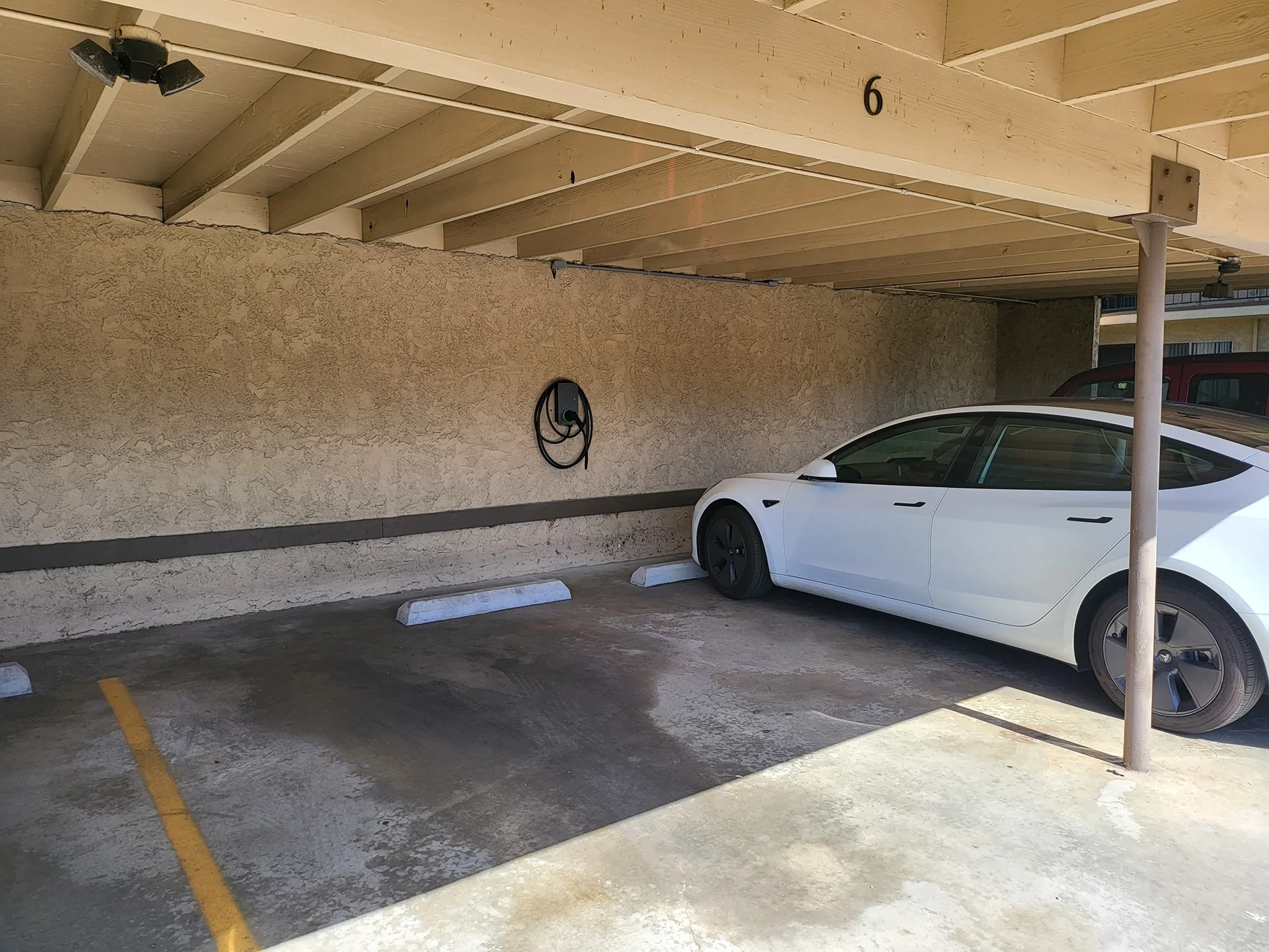
Two year payback is pretty good. I've installed a few apartment ones. Any $600 Autel Maxicharger has everything built in for third party billing and direct deposit of funds monthly. No monthly fees. Just a bank fee of $.30 for each transaction you can pass along to the user as a connection fee. Comes as J1772 or NACS. If placed properly, it can reach four vehicles (spots) or even eight if they are opposing. If you add more stations, they can do load balancing.

Rivian R1T R1S Gen 1.5 NACS Charging Dispenser Technical Specs (RAN Charger) 2025-08-26 16.07.33

Rivian R1T R1S Gen 1.5 NACS Charging Dispenser Technical Specs (RAN Charger) 2024-06-21 09.39.47
 
Last edited:

therealcmj

Well-Known Member
First Name
Chris
Joined
Oct 5, 2024
Threads
3
Messages
187
Reaction score
239
Location
Boston, MA
Vehicles
2025 R1S
Two year payback is pretty good. ... Any $600 Autel Maxicharger has everything built in for third party billing and direct deposit of funds monthly. No monthly fees. Just a bank fee of $.30 for each transaction you can pass along to the user as a connection fee.
Unfortunately there are ~200 spots and only 10 EV owners. And I can't use condo association money to pay for the install without going to a vote of all 200 spots. Yes, even though it's only $5,000. So it has to pay itself back based on usage.

I actually bought a Wallbox Pulsar Pro that can do all of that as well. It has no charge at all - just bring your own Stripe account and they send the charges off to them.
 

MountainBikeDude

Well-Known Member
First Name
Adam
Joined
Jun 20, 2019
Threads
54
Messages
3,331
Reaction score
7,083
Location
Vancouver
Vehicles
2023 El Cap Quad Motor R1T (Selling the Xterra)
Clubs
 
I wondered how this compared to a gas pump so I did some quick searching . It looks like a basic pump costs about 20k plus a few thousand to install. And gas stations install 5 or 10 of them all the time. Add the storage tanks, permitting, and all the rest and you're at real money pretty quickly.

Gas stations generally make only a small amount of money on gas and they make money by having high volume combined with the much higher profit margins on their attached convenience stores.

On its surface it seems like it'd be a no brainer for newly built gas station + convenience stores to also install at least one EV charger as they are built or remodeled. But I bet most EV owners are charging at home and if you put the numbers in a spreadsheet it just doesn't pencil out to paying back in less than multiple years.


Semi-unrelated, I'm working on getting a single shared charging spot in my condo's underground parking garage. I spreadsheeted the $3,000 we got quoted by an electrician to install, $1,000 for the EVSE, marking up electricity by 10c per kWh, and someone charging every night for 6 hours at 10 kW. Even with a "membership" fee for every EV driver and that high markup it'll still take over 2 years to pay back.

EV charging seems like a terrible business.
I would say half or more of my DCFC use is at a gas station. Petro Canada has typically 1-2 at various gas stations. They partnered recently with ChargePoint+ for app control and billing. Pricing used to be $0.50/minute, but since the partnership, it's been promotionally free, but no idea what the new rate will be and how it will be rated, by minute, or by kWh.

The other two main players are Chevron and their Journie chargers and Shell which has several ABB 180kW units at various locations and both by kWh pricing.

Tesla, BCHydro, and Electrify Canada are really the only main outliers that build away from gas stations, at least in BC with respect to DCFC units.
 

HaveBlue

Well-Known Member
Joined
Nov 22, 2022
Threads
41
Messages
2,926
Reaction score
2,234
Location
91107
Vehicles
R1S DMP Max, Lifted GX470, APR Audi A7, BMW 325Ci
Clubs
 
Unfortunately there are ~200 spots and only 10 EV owners. And I can't use condo association money to pay for the install without going to a vote of all 200 spots. Yes, even though it's only $5,000. So it has to pay itself back based on usage.

I actually bought a Wallbox Pulsar Pro that can do all of that as well. It has no charge at all - just bring your own Stripe account and they send the charges off to them.
I assume you need to use house power. So somebody has to pay someone back. One box won't be enough for ten vehicles but it is a place to start so consider where future ones will go. I have tenants sign a form that describes parking sharing for EV spaces. Pick a spot where there might be other reachable spots in case you get iced. You'll quickly need three stations it sounds like so spread those out with minimal overlap on spaces.

If the HOA doesn't have a budget line item in the reserve, then someone will have to commit for maintenance and maybe just reimburse the HOA for power from the funds.
 

DCFC

Well-Known Member
Joined
Jul 13, 2024
Threads
0
Messages
154
Reaction score
162
Location
SoCal
Vehicles
P2
The temp ratings should only relate to being able to operate at the continuous 650A rating. They will derate as the temps go down to -40C and up to 55C.
Sponsored


Top