

Sponsored
- Status
- Not open for further replies.
the long way downunder
Well-Known Member
right. an exercise in futility. the only part of the system that can be upgraded is the driver. but that would be political suicide – to ask people to vote for a competency test as a driver, requiring them to demonstrate actual skills … imagine trying to get voters to agree to being competent, not entitled with the right to drive.Worth keeping in mind:
- Less than 1% of the 250 million cars, SUVs and light-duty trucks on the road in the United States are electric.
- By 2035, about 45% of new car sales could be electric according to industry analysis IHS Markit.
source
the long way downunder
Well-Known Member
really?My nearly totally blind parents nor the visual impaired friends they had around while I was growing up aren't dead. However, I've also been with them when they haven't heard a vehicle like a Prius. They shouldn't need to rely upon me to pull them back, or be entirely reliant on the driver being perfect.
I can get as annoyed by nanny State discussions as the next guy, but putting a little noise in a car so people who otherwise would struggle to keep themselves safe isn't unreasonable. Do you also bitch about direct sound cross walk sounds? Wheelchair ramps on corners?
if you can read "already dead … Prius" and not see the point …
the long way downunder
Well-Known Member
A solution would be collision avoidance technology (which is part of vehicle autonomy) using beacons.
In short, every pedestrian and every vehicle (from skateboards and rollerblades to delivery vans, buses and trucks) operates a beacon transponder (the size of a smartwatch) that signals any nearby relay (e.g. traffic lights, pedestrian crossings, the doors of public buildings) and communicates directly between each other (like a "mesh" network.) A driver approaching a pedestrian would be alerting if there were a risk of their paths crossing.
Even if you were out on a country road without a blink of technology within 10 miles, if a kid on a mountain bike came racing out of the forrest, the beacon on his bike and the beacon on his wrist and the beacon in his phone would all ask your Rivian to slow down a smidge, the kid would sail by as he ignores the twinge of electric wake-up tingling on his wrist and an email would reach his parents "Timmy needs to look for traffic." The driver of the R1 would see a head-up display of a thermal image showing the kid racing between the trees before he comes into direct view and understand why the car intervened and slowed down.
That technology exists today and would cost peanuts to implement, making L5 autonomy possible, from city buses and commuter vans to making it practically impossible to abduct a child or assault a person or even dine-n-dash. Even police would have trouble breaking the law. But a flying saucer noise from a speaker is what we get … 99.99% annoying, 0.01% effective. The USA is a technological third world country paying first world premiums for second rate politicians to send the money to the corporations. Everyone creates the thing they dread: the activists wanting a safer world, only make it a place where people cannot cope.
In short, every pedestrian and every vehicle (from skateboards and rollerblades to delivery vans, buses and trucks) operates a beacon transponder (the size of a smartwatch) that signals any nearby relay (e.g. traffic lights, pedestrian crossings, the doors of public buildings) and communicates directly between each other (like a "mesh" network.) A driver approaching a pedestrian would be alerting if there were a risk of their paths crossing.
Even if you were out on a country road without a blink of technology within 10 miles, if a kid on a mountain bike came racing out of the forrest, the beacon on his bike and the beacon on his wrist and the beacon in his phone would all ask your Rivian to slow down a smidge, the kid would sail by as he ignores the twinge of electric wake-up tingling on his wrist and an email would reach his parents "Timmy needs to look for traffic." The driver of the R1 would see a head-up display of a thermal image showing the kid racing between the trees before he comes into direct view and understand why the car intervened and slowed down.
That technology exists today and would cost peanuts to implement, making L5 autonomy possible, from city buses and commuter vans to making it practically impossible to abduct a child or assault a person or even dine-n-dash. Even police would have trouble breaking the law. But a flying saucer noise from a speaker is what we get … 99.99% annoying, 0.01% effective. The USA is a technological third world country paying first world premiums for second rate politicians to send the money to the corporations. Everyone creates the thing they dread: the activists wanting a safer world, only make it a place where people cannot cope.
Johny
Member
- Joined
- Nov 14, 2021
- Threads
- 0
- Messages
- 11
- Reaction score
- 21
- Location
- Wallingford PA
- Vehicles
- 06 Corvette Z06, 19 Chevy Volt
- Occupation
- Electrician
Good point, I'd prefer they'd be injured or killed by someone who didn't disable this feature. /SIf one of YOUR loved ones was injured or killed by an EV with a muffled/defeated PWS, would you be cool with it?
What senario does it help. It only active at speeds below 20 iirc, so presumably resident streets, parking garage and heavy traffic. If I see a blind person or any one with a disability for that matter walked out in front of me I'm not going to charge ahead assuming they'd move out of my way. Pedestrian accidents are not a new thing unfortunately, it's a matter of driver awareness. I just think this people noticing how quiet evs are and assuming it's a safety issue. I've had people not notice me in a loud parking garage. I just don't drive like a maniac. Genuinely let me know of a senario where it is needed, I would think if it was so important cars would have been required to have a minimum decibel long ago.
Sponsored
lostpacket
Well-Known Member
I will say I still do someday want to modify the speakers to play the Benny Hill theme song.
SeaGeo
Well-Known Member
You implied minimal risk. I am saying I have observed risk in the population of concern with a very small same size of multiple high skilled individuals. I'm not saying it's the highest risk item we have, but it is a very low convenience solution for urban environments that will likely deserve to be reevaluated in the future.really?
if you can read "already dead … Prius" and not see the point …
lostpacket
Well-Known Member
The law passed in 2010 when EVs accounted for like 0.1% of cars on the road. The NHTSA has been working for awhile to get the law right and finally implemented it for 2020 when EVs account for about 1% of all vehicles.Good point, I'd prefer they'd be injured or killed by someone who didn't disable this feature. /S
What senario does it help. It only active at speeds below 20 iirc, so presumably resident streets, parking garage and heavy traffic. If I see a blind person or any one with a disability for that matter walked out in front of me I'm not going to charge ahead assuming they'd move out of my way. Pedestrian accidents are not a new thing unfortunately, it's a matter of driver awareness. I just think this people noticing how quiet evs are and assuming it's a safety issue. I've had people not notice me in a loud parking garage. I just don't drive like a maniac. Genuinely let me know of a senario where it is needed, I would think if it was so important cars would have been required to have a minimum decibel long ago.
The scenarios were well studied and they show actual data that this is a problem. Driver awareness wouldn't explain a 40% increase in pedestrian incidents with EV over ICE.
If you do genuinely want to know at the very least start here: https://en.wikipedia.org/wiki/Electric_vehicle_warning_sounds
lostpacket
Well-Known Member
The part of the system we can easily upgrade is to put a little device on cars that makes a noise.right. an exercise in futility. the only part of the system that can be upgraded is the driver. but that would be political suicide – to ask people to vote for a competency test as a driver, requiring them to demonstrate actual skills … imagine trying to get voters to agree to being competent, not entitled with the right to drive.
I posted the EV adoption numbers because a big part of your position seems to be this isnt a priority. But the numbers show they mostly got out ahead of something for once.
I know effective government is so rare as to be unrecognizable -- it sometimes seems like a magical unicorn or a fairy tale we tell children, but once in a blue moon, against all odds, it happens.
There are lots of things I would love to see get more priority but personally I call this a win.
kizamybute'
Well-Known Member
- Joined
- Oct 17, 2021
- Threads
- 84
- Messages
- 1,195
- Reaction score
- 2,034
- Location
- Los Angeles
- Vehicles
- This one, that one and the other one.
I can see where it is useful. Having driven Tesla's without it for years, there are many occasions where I pull up behind someone choosing to walk down the middle of the street. In a car, I would just rev the engine to get their attention as I that seems better than sounding like an ass by honking at them. With the Tesla, I generally just patiently wait for them to get the F#*$ out of the way! LOL
Sponsored
AdamsFan1983
Well-Known Member
- First Name
- Silence Dogood
- Joined
- Jun 22, 2021
- Threads
- 73
- Messages
- 1,063
- Reaction score
- 3,821
- Location
- Pennsylvania
- Vehicles
- Rivian R1T LE in GW
- Occupation
- Public Relations
well, not to quibble but let’s approach this from a perspective of simple physics:Reading your pdf. I haven't made it through all 300 pages yet, but I am not seeing anything explaining why quiet ICE vehicles are less dangerous than an EV making the same amount of noise. Can you point me to that section? I'm genuinely very curious. Please point me to it if it exists.
But I do see this right up front: "The PSEA requires NHTSA to establish performance requirements for an alert sound that is recognizable as a motor vehicle in operation that allows blind and other pedestrians to detect a nearby electric vehicles or hybrid vehicles operating at lower speeds."
The PSEA was written by politicians, not scientists/engineers. When politicians tell you what the outcome of the study must be it's not really a study. It is reverse engineering a justification for what you are going to do whether the evidence backs the plan or not.
Or are you saying that the NTSA could have fulfilled the requirements of the PSEA by saying that silent vehicles are better/safer? Because that's certainly not how I interpret it.
Electric vehicles are consistently more massive than their ICE counterparts and therefore present a more serious crush hazard; to say nothing that a 6,000 pound truck traveling at 20mph, is obviously capable of more damage than 3,000 pound truck traveling at 20mph.
Ive got no problem with the government doings it’s thang and my advice to people looking to circumvent their vehicles federally mandated safety features is to seek legal council. A court may let it slide in a pinch; but your insurance carrier will never pay out a claim if it’s determined you purposefully disabled safety feature like this leaving you personally liable.
Zoidz
Well-Known Member
Joggers and Bicyclists. When I am riding my bicycle on a residential street, I pay attention to the sounds of cars approaching from behind, moving over to the right as much as possible.Good point, I'd prefer they'd be injured or killed by someone who didn't disable this feature. /S
What senario does it help. It only active at speeds below 20 iirc, so presumably resident streets, parking garage and heavy traffic. If I see a blind person or any one with a disability for that matter walked out in front of me I'm not going to charge ahead assuming they'd move out of my way. Pedestrian accidents are not a new thing unfortunately, it's a matter of driver awareness. I just think this people noticing how quiet evs are and assuming it's a safety issue. I've had people not notice me in a loud parking garage. I just don't drive like a maniac. Genuinely let me know of a senario where it is needed, I would think if it was so important cars would have been required to have a minimum decibel long ago.
eggpaul
Well-Known Member
- First Name
- Paul
- Joined
- May 4, 2021
- Threads
- 4
- Messages
- 626
- Reaction score
- 1,003
- Location
- Sierra Madre, CA
- Vehicles
- 2017 Chevy Volt, 2021 Acura TLX
- Occupation
- Business Owner
I don't remember hearing the artificial sound at the Agua dulce test drive. I recall such a quiet driving experience. Or am I wrong?I know there are countless adults with perfect vision walking around as if everyone else should value their safety more that they do and I understand your frustration with them. I also find the artificial noises to be annoying, especially while in a natural setting far from other people.
However, there are a lot of people out there with vision problems which cause them to rely on sound to at least augment their ability to detect threats in addition to the folks who are legally blind and who will rely entirely on sound. Plus, kids can get pretty engrossed in whatever captures their imagination not noticing anything going on around them and they are not as easily seen by drivers. We need to consider all of these folks, too.
I can’t speak for anyone else but I’d be devastated if I injured or killed someone because I disabled a safety feature which could have saved their life. I cannot imagine the guilt I’d feel for the rest of my life over having prioritized eliminating a noise which which I found annoying over the welfare of someone else.
gombater
Well-Known Member
- First Name
- Rick
- Joined
- Nov 23, 2019
- Threads
- 8
- Messages
- 65
- Reaction score
- 76
- Location
- Apex, North Carolina
- Vehicles
- R1T FE/FG
- Occupation
- Engineering Manager
As someone who used to be a member [technical] of one of the associations listed above, do not assume making comments equates to 'acceptance' or 'agreement'. In some cases, it means 'let's propose something technically valid, but less cost before the politician mandates something impossible to technically achieve or costs 10x what it should for the same result' I do believe safety is critical, but if not done properly, can actually do more harm than good. I have seen consultants 'fix' 1 safety issue and add 5 more without them realizing it. I think a pedestrian alert system and a alternative 'nature' temp mode could work, but it sounds like NTSHA never considered this use case, probably because at the time this requirement was drafted, no off road EV applications existed. The problem with big regulations is they never catch all use cases, especially when the people who draft them are not experts. I am betting at the time this requirement was drafted, Rivian was not at the table.What? You are *really* spinning this to attempt to justify defeating the PWS. The document explicitly references the organizations involved in providing input. These are not politicians, nor is the NHTSA.
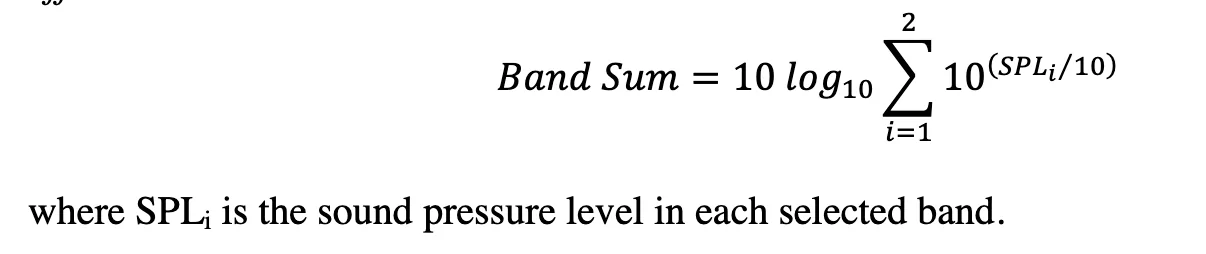
Which politician developed this formula?

"The trade associations representing manufacturers that submitted comments included the International Motorcycle Manufacturers Association (IMMA), the Truck and Engine Manufacturers Association (EMA), the Electric Drive Transportation Association (EDTA), the Motorcycle Industry Council (MIC) and the Organization Internationale DES Constructeurs d' Automobiles (OICA). The Alliance of Automobile Manufacturers and Global Automakers submitted a joint comment that is referenced here as the “Alliance/Global” comment.
Such as Toyota Motor North America (Toyota), Volkswagen Group of America (Volkswagen), Porsche Cars North America (Porsche), Ford Motor Company (Ford), American Honda Motor Co. (Honda), Mercedes-Benz USA (Mercedes), General Motors Company (General Motors), Mitsubishi Motors R&D of America (Mitsubishi), Chrysler Group LLC (Chrysler), Navistar, Inc. (Navistar), Nissan North America, Inc. (Nissan) and BMW of North America, LLC (BMW).
The public safety advocacy groups submitting comments to the proposal included National Federal of the Blind (NFB), National Council of State Agencies of the Blind, the Advocates for Highway Safety (the Advocates), Noise Pollution Clearinghouse, the Insurance Institute for Highway Safety (IIHS), Safe Kids Worldwide, the World Blind Union, and American Council of the Blind (ACB).
Such as Denso International America, Inc. (Denso) and Hear for Yourself, LLC.
Such as the Mercatus Center at George Mason University, Western Michigan University (Western Michigan), and Accessible Designs for the Blind (ADB).
SAE International
The European Commission Enterprise and Industry Directorate-General (DG Enterprise), and the Disability and Communication Access Board of Hawaii."
dduffey
Well-Known Member
The Tesla reverse PWS is louder than any other vehicle on my block except a neighbor's turbo diesel. It's ridiculously loud, I don't know if that is due to regulation.
I wouldn't mind if it started loud for the first second or two or adjusted to the ambient noise level but not 100% the entirety of reversing out of the driveway. We can hear it from our backyard and two houses over.
Honestly it is a bit embarrassing.
I wouldn't mind if it started loud for the first second or two or adjusted to the ambient noise level but not 100% the entirety of reversing out of the driveway. We can hear it from our backyard and two houses over.
Honestly it is a bit embarrassing.
Sponsored
- Status
- Not open for further replies.
Similar threads

- Replies
- 35
- Views
- 2,477

- Replies
- 6
- Views
- 707


