
Sponsored

Charge to level

electrictaco

Well-Known Member
Joined
Apr 2, 2021
Threads
0
Messages
267
Reaction score
467
Location
California
Vehicles
R1S
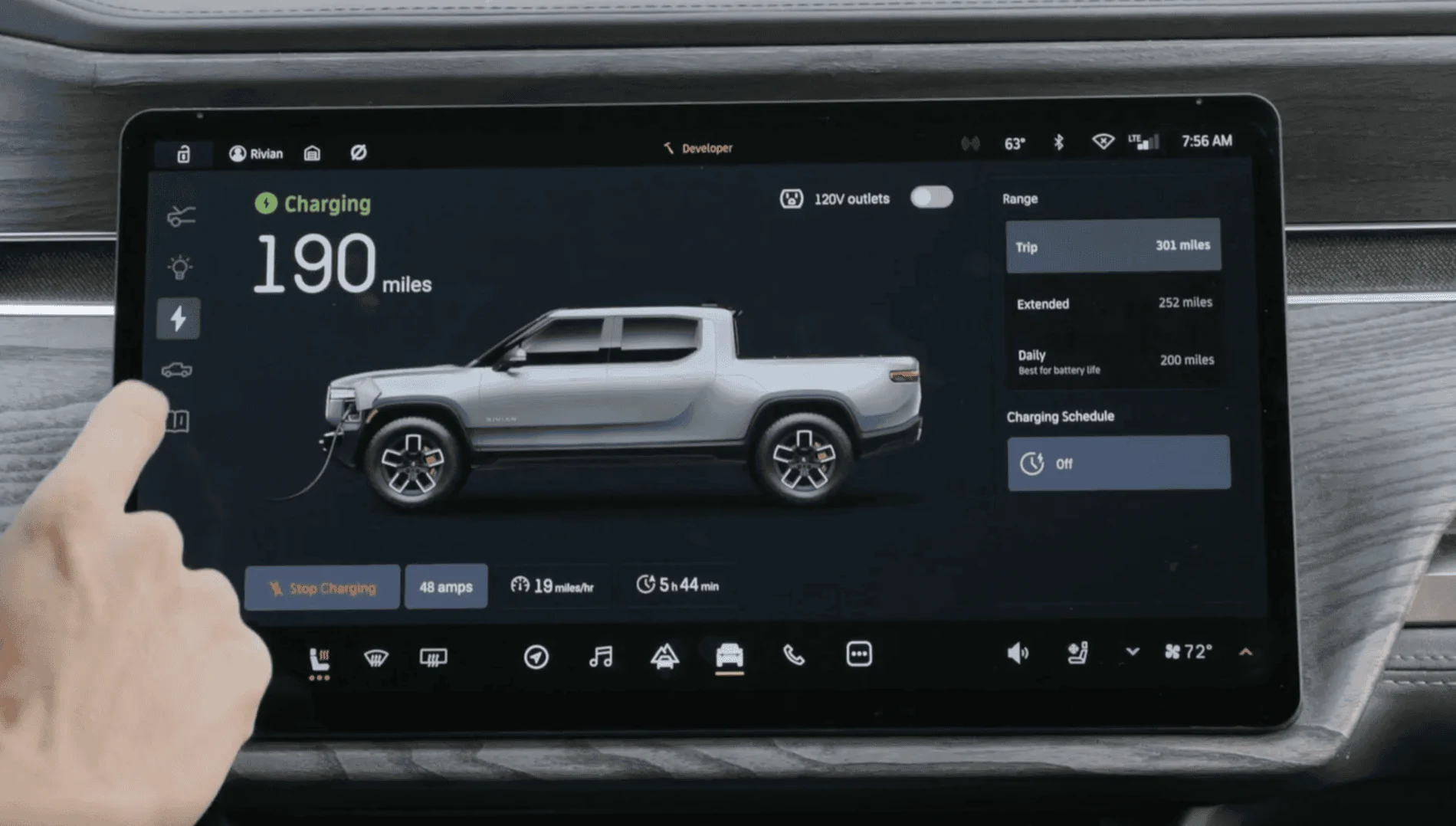
Great details on the Charge to Level from the MotorTrend article on the R1T interior.

Rivian R1T R1S Charge to level Screen Shot 2021-08-31 at 11.43.41 AM


On the right is a selectable range that you can charge to. Trip is 301 miles (I think this is the max range/EPA rated range), Extended is 252 miles (83.7% of Trip), and Daily is 200 miles (66.4% of Trip, "Best for battery life").

On the left you can see the current range at SOC is 190 miles and below that you see the charge rate and miles/hour added along with the remaining charge time (this is correct because 19 miles/hr * 5.75 hrs = 109.25 miles, the remaining to get to ~301 miles).

I think these charge to levels are interesting, being quite conservative compared to most other EVs.
Sponsored
 

DucRider

Well-Known Member
First Name
Gary
Joined
Oct 21, 2019
Threads
17
Messages
1,690
Reaction score
3,188
Location
ORegon
Vehicles
Polestar 2, Ioniq, R1S
OK, so it's not that "user selectable" is always a problem. It's that the user can't be allowed to select a amperage that would exceed what's allowed under the code. (32A on a 40A circuit, for example) That makes much more sense!
It's even more restrictive - only hardwired units can be adjustable. If it plugs in, it's a no-no.
An EVSE manufacturer that wants to sell a unit with a 14-50 or 6-50 plug would need to offer two different models of each if they wanted to offer both 32A and 40A units (40A and 50A circuits both must use 50A receptacles).

Although not called out, the portable units that adjusts itself based on the plug type fitted apparently meet code as there is no other adjustment setting.

The code does not always make sense and some inspectors will look to the intent and not get too caught up in the minutia. Sometimes the code even contradicts itself.

Currently, any selectable option to charge at a lower rate must come from the vehicle side.
 

ajdelange

Well-Known Member
First Name
A. J.
Joined
Aug 1, 2019
Threads
9
Messages
2,883
Reaction score
2,319
Location
Virginia/Quebec
Vehicles
Tesla XLR+2019, Lexus, Landcruiser, R1T
Occupation
EE Retired
OK, so it's not that "user selectable" is always a problem. It's that the user can't be allowed to select a amperage that would exceed what's allowed under the code. (32A on a 40A circuit, for example) That makes much more sense!
I guess I simply feel that this area is a bit unsettled at the moment. You can buy what Tesla calls a "corded connector" which is their UMC with a hardwired 14-50P. It allows the car to take 40A. Now that's fine if the 14-50R the thing is plugged into is wired behind a 50A breaker. But if it is wired behind a 40A breaker, as is quite legal, the non intermittent load rule is violated. Now consider the Tesla UMC - essentially the same EVSE but with adapters including one for 14-50R. With that piece of gear you can only get 32A from the wall.

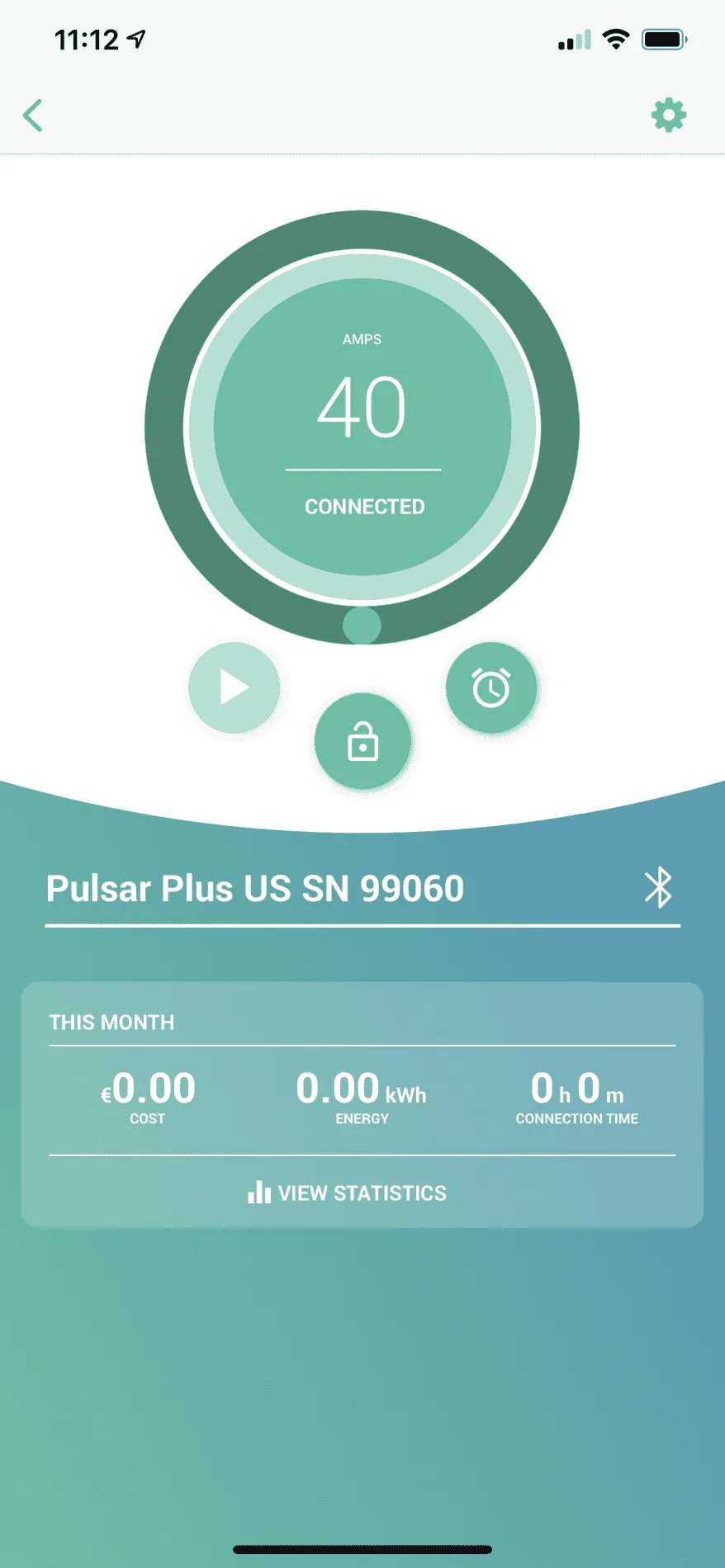
Here's a screen shot from a WallBox Pulsar which shipped with a 14-50RP wired to it

Rivian R1T R1S Charge to level IMG_1547


It's plain that it can be dialed up to 40A though it could be plugged into a 40A circuit.

If you legally install a Tesla Gen3 HPWC in a 50 A circuit the electrician will set it for 40A max charging. But if you decide you want 48 all you have to do is flip the breaker off and then back on. When the power comes on the HPWC launches a web site on which you can change the current limit to whatever you want. The password is on a sticker on the side of the unit.
 

ajdelange

Well-Known Member
First Name
A. J.
Joined
Aug 1, 2019
Threads
9
Messages
2,883
Reaction score
2,319
Location
Virginia/Quebec
Vehicles
Tesla XLR+2019, Lexus, Landcruiser, R1T
Occupation
EE Retired
It's even more restrictive - only hardwired units can be adjustable. If it plugs in, it's a no-no.
In #48 I posted a screen shot from a plug in unit that allows adjustment. Not saying the code doesn't prohibit that - just that at least one popular unit violates this. I put one in. The inspector didn't flunk it.


An EVSE manufacturer that wants to sell a unit with a 14-50 or 6-50 plug would need to offer two different models of each if they wanted to offer both 32A and 40A units (40A and 50A circuits both must use 50A receptacles).
Receptacles bigger than 50A are a no-no (for EVSE).


The code does not always make sense and some inspectors will look to the intent and not get too caught up in the minutia. Sometimes the code even contradicts itself.
Amen to that. Things are changing too fast for it to keep up. And too fast for the inspectors to keep up.

Currently, any selectable option to charge at a lower rate must come from the vehicle side.
I suppose that's true if you want to stay within the letter of the most current version of the code but it seems that at least one manufacturer is boldly selling plug in units that do allow adjustment and that people are buying and installing them and inspectors are passing these installations.
 
Last edited:

DucRider

Well-Known Member
First Name
Gary
Joined
Oct 21, 2019
Threads
17
Messages
1,690
Reaction score
3,188
Location
ORegon
Vehicles
Polestar 2, Ioniq, R1S
If you legally install a Tesla Gen3 HPWC in a 50 A circuit the electrician will set it for 40A max charging. But if you decide you want 48 all you have to do is flip the breaker off and then back on. When the power comes on the HPWC launches a web site on which you can change the current limit to whatever you want. The password is on a sticker on the side of the unit.
Many inspectors would deem that you cannot install that unit and meet code, even if hardwired, due the fact that amperage can be adjusted by the user.
Others would interpret it to meet the restricted access requirement and that only "qualified personnel" would think to look for a sticker on the unit to get the password.

Almost all (if not all) EVSE manufacturers sell at least some units that simply cannot be installed in a way that fully complies with code.

I am part of a pilot V1G program thru my utility and the ChargePoint Home Flex was the smart EVSE offered. I was asked to give feedback after the install and I pointed out how it could not meet code if plugged in (they all come with either a 14-50 or 6-50 that can be removed to hardwire the unit).
PGE went back and met with Chargepoint - the result was that PGE is only recommending hardwiring (ChargePoint admitted multiple code issues).
The Chargepoint can be hardwired on a 20A circuit (it has a 16A setting). The installation instructions are for the electrician to have the homeowner create an account on the ChargePoint app and finish the setup of the unit. Part of that process is selecting the amperage and there is nothing stopping a user -either intentionally or inadvertently - from setting it to the 50A max the unit supports (on 70A+ circuits).

Rivian may be struggling with whether to offer a plug-in option for their EVSE. CS has given differing answers (no real surprise).
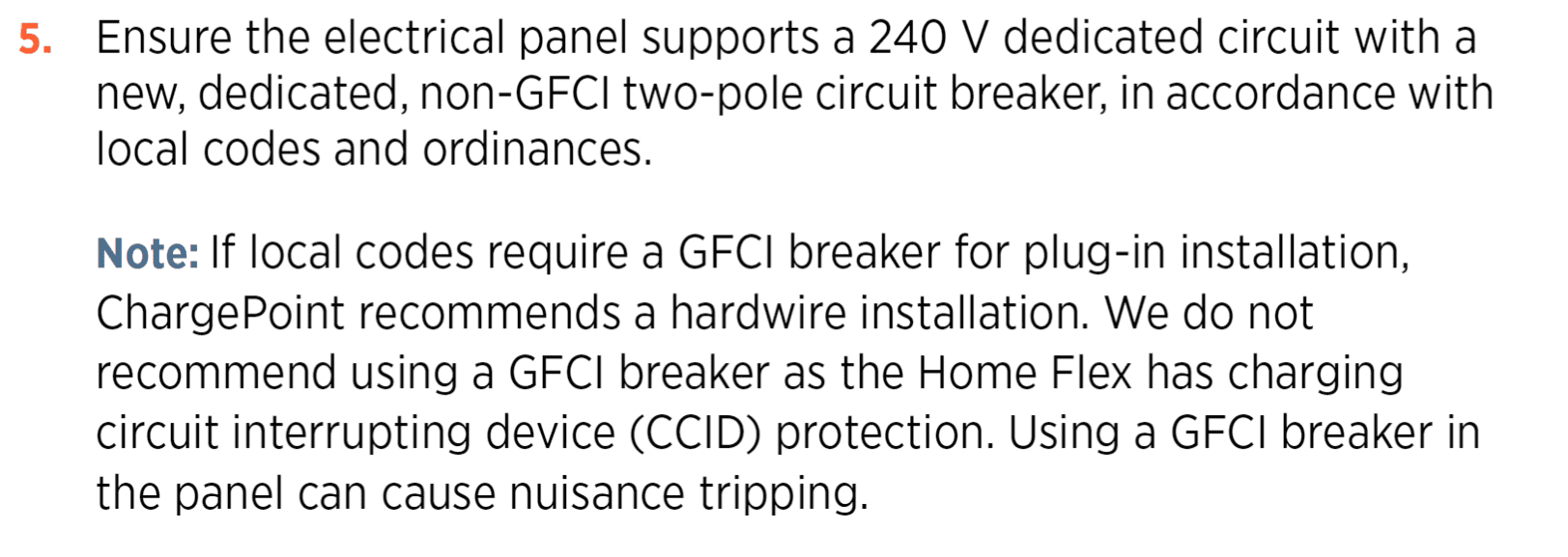
It is almost impossible to offer a plug-in unit that fully meets code without making it a set amperage with no internal protection circuitry and relying on it being installed on a GFCI protected circuit.
Typical instructions for a plug-in unit:
Rivian R1T R1S Charge to level 1630440525436

Rivian has to decide whether to offer an EVSE designed to be installed in a manner that does not meet code (like nearly every manufacturer out there) with disclaimers not to install it in a manner that violates those codes. This makes it hard for them to provide EVSE install services, and also goes a bit against the corporate culture we have seen from them.
It wouldn't surprise me to see their EVSE offered as hardwired only.
 

Sponsored

OP
OP
SeaGeo

SeaGeo

Well-Known Member
First Name
Brice
Joined
Jan 12, 2021
Threads
50
Messages
5,673
Reaction score
10,212
Location
Seattle
Vehicles
Xc60 T8
Occupation
Engineer
Great details on the Charge to Level from the MotorTrend article on the R1T interior.

Screen Shot 2021-08-31 at 11.43.41 AM.png


On the right is a selectable range that you can charge to. Trip is 301 miles (I think this is the max range/EPA rated range), Extended is 252 miles (83.7% of Trip), and Daily is 200 miles (66.4% of Trip, "Best for battery life").

On the left you can see the current range at SOC is 190 miles and below that you see the charge rate and miles/hour added along with the remaining charge time (this is correct because 19 miles/hr * 5.75 hrs = 109.25 miles, the remaining to get to ~301 miles).

I think these charge to levels are interesting, being quite conservative compared to most other EVs.
I really hope they don't pull a VW and only present charging rate as miles/hr or miles/minute...
 

Autolycus

Well-Known Member
Joined
May 2, 2021
Threads
15
Messages
2,234
Reaction score
3,430
Location
ATL
Vehicles
ICE only :(
Great details on the Charge to Level from the MotorTrend article on the R1T interior.

Screen Shot 2021-08-31 at 11.43.41 AM.png


On the right is a selectable range that you can charge to. Trip is 301 miles (I think this is the max range/EPA rated range), Extended is 252 miles (83.7% of Trip), and Daily is 200 miles (66.4% of Trip, "Best for battery life").

On the left you can see the current range at SOC is 190 miles and below that you see the charge rate and miles/hour added along with the remaining charge time (this is correct because 19 miles/hr * 5.75 hrs = 109.25 miles, the remaining to get to ~301 miles).

I think these charge to levels are interesting, being quite conservative compared to most other EVs.
Hmm... I'm guessing the 48 amps button is just setting the max the truck can pull, rather than what's actually being pulled? They've been touting their wall charger as being 48 amps and providing 25 mi/hr charge rate. If it's currently pulling 48 amps, then 19 mi/hr would suggest a different Wh/mile than we've been expecting, wouldn't it?

While I agree with @SeaGeo that I would personally like an option to show different units, I think the approach shown will probably make the most sense to most people. Battery % is really irrelevant to device usage. How long will the thing run is really what we care about.
 
OP
OP
SeaGeo

SeaGeo

Well-Known Member
First Name
Brice
Joined
Jan 12, 2021
Threads
50
Messages
5,673
Reaction score
10,212
Location
Seattle
Vehicles
Xc60 T8
Occupation
Engineer
Hmm... I'm guessing the 48 amps button is just setting the max the truck can pull, rather than what's actually being pulled? They've been touting their wall charger as being 48 amps and providing 25 mi/hr charge rate. If it's currently pulling 48 amps, then 19 mi/hr would suggest a different Wh/mile than we've been expecting, wouldn't it?

While I agree with @SeaGeo that I would personally like an option to show different units, I think the approach shown will probably make the most sense to most people. Battery % is really irrelevant to device usage. How long will the thing run is really what we care about.
I'm guessing it is a bit different for DC charging and they swap in kw for the 48 amps selector. The only reason this even popped into my head is VW does this with all charging on the ID.4. They only report some nonsense "miles/min" value that literally changes for a given kw based on recent driving history. So you have to go tap the DCFC to see what your actual charging rate is. Which is really frustrating for a not-insignificant number of people.
 

ajdelange

Well-Known Member
First Name
A. J.
Joined
Aug 1, 2019
Threads
9
Messages
2,883
Reaction score
2,319
Location
Virginia/Quebec
Vehicles
Tesla XLR+2019, Lexus, Landcruiser, R1T
Occupation
EE Retired
If you legally install a Tesla Gen3 HPWC in a 50 A circuit the electrician will set it for 40A max charging. But if you decide you want 48 all you have to do is flip the breaker off and then back on. When the power comes on the HPWC launches a web site on which you can change the current limit to whatever you want. The password is on a sticker on the side of the unit.
Many inspectors would deem that you cannot install that unit and meet code, even if hardwired, due the fact that amperage can be adjusted by the user.
It can't be too many as that's the only wall charger Tesla sells at the moment and there must be hundreds of thousands of them installed.

Others would interpret it to meet the restricted access requirement and that only "qualified personnel" would think to look for a sticker on the unit to get the password.
That's kind of a reach isn't it? I think the truth of the matter is that most inspectors don't even know about this requirement - as I said things are changing too fast for them to keep up.

Have you witnessed and electrical (or other) inspection recently? The site supervisor starts a Facetime chat with the inspector and wanders around the project waving his phone at various things.


Almost all (if not all) EVSE manufacturers sell at least some units that simply cannot be installed in a way that fully complies with code.
Quite. As I say, that section is a bit unsettled at this point.

Rivian may be struggling ...
I would be quite surprised if the Rivian EVSE isn't something made by one of the major Level 2 suppliers in a Rivian box. Seems this would be an easy buy/build decision. For the record I have no firm indication one way or the other that this is the case.
 

flabyboy

Well-Known Member
Joined
Jul 3, 2021
Threads
3
Messages
341
Reaction score
501
Location
Minnesota
Vehicles
Mazda 6
Occupation
Health Care
The advantage of the Rivian charger RE one of the generic ones is that it will have a nice Rivian logo badge on it and look really nice in your Rivian themed garage. It may have some bells and whistles that tell you, over the net (WiFi) how much energy you use, maintain a charging log, allow you to set timers etc. but these are all just that - bells and whistles - which are available from many of the 3rd party units too. Control of the charging process is done by the car.

What you can do is change what you tell the car it can have. If you are wired behind a 50A breaker the EVSE must tell the car it can take no more than 40A. CS told someone here that this is done by setting dip switches in the unit at installation so you cannot control it. In fact it is required that you, the user, be unable to control it but this requirement seems to be often ignored as several of the 3rd party units (WallBox) allow you to dial this in.

I am sure that the Rivian App will allow us to set the max SoC we want from a charge. What I am not sure is that they will allow us to control the rate but that is only because Tesla doesn't. A third party EVSE that allows the user to remotely control the maximum draw gets around that shortcoming.

It does. It charges at the max rate the truck will take (48A) but many of the 3rd party units do too.
I would say the preorder price of $500 is another advantage considering it’s WiFi connect and gives off 48 Amps
 

Sponsored

ajdelange

Well-Known Member
First Name
A. J.
Joined
Aug 1, 2019
Threads
9
Messages
2,883
Reaction score
2,319
Location
Virginia/Quebec
Vehicles
Tesla XLR+2019, Lexus, Landcruiser, R1T
Occupation
EE Retired
I really hope they don't pull a VW and only present charging rate as miles/hr or miles/minute...
Yes, me too. I am going to assume that there is another screen where one can select SoC in either miles or %.
Hmm... I'm guessing the 48 amps button is just setting the max the truck can pull, rather than what's actually being pulled?
I don't think so because that's not terribly useful information. The actual charging rate is and there also needs to be a display of the maximum desired charging rate. Clearaly both are not there.


They've been touting their wall charger as being 48 amps and providing 25 mi/hr charge rate.
That corresponds, with 91% efficiency, to 10.5 kW which with 25 mph implies 419 Wh/mi.

If it's currently pulling 48 amps, then 19 mi/hr would suggest a different Wh/mile than we've been expecting, wouldn't it?
Yes, 552 Wh/mi. Hope it's not that high.


While I agree with @SeaGeo that I would personally like an option to show different units, I think the approach shown will probably make the most sense to most people. Battery % is really irrelevant to device usage. How long will the thing run is really what we care about.
Can't agree with that sentiment. My advice to people starting out is to switch the fuel gauge to read percent and interpret it as you would the fuel gauge in an ICE car. There are, to my way of thinking, advantages to working in % and I think the more tech-savvy driver tends to prefer % but I'm not trying to convince anyone he should use % if he doesn't want to. By the same token it would be most disquieting if % displays were not made available for those who prefer them.

This picture suggests that one can only choose three charge levels. I hope we are not limited to only 3.

I find it interesting that they recommend 66% as best for battery life.
 

Autolycus

Well-Known Member
Joined
May 2, 2021
Threads
15
Messages
2,234
Reaction score
3,430
Location
ATL
Vehicles
ICE only :(
Yes, me too. I am going to assume that there is another screen where one can select SoC in either miles or %.
I don't think so because that's not terribly useful information. The actual charging rate is and there also needs to be a display of the maximum desired charging rate. Clearaly both are not there.
You pretty much have to be able to set the max charge rate somewhere, so it makes sense to have it on the charging screen. Since "48A" is shown in a bubble, I'm guessing that's it.

That corresponds, with 91% efficiency, to 10.5 kW which with 25 mph implies 419 Wh/mi.

Yes, 552 Wh/mi. Hope it's not that high.
If it's 552 Wh/mi, these trucks are going to have massive batteries to get the 300 mile range that is also shown here. By my calculation that would be a 165.6 kWh battery for the "large" pack. That efficiency would also require a 220.8 kWh "max" pack to get 400 miles. So it simply cannot be that this truck is currently drawing 48A and only charging at 19 mi/hr. I think someone also pulled a different screenshot that showed an even lower charging rate in mi/hr (13 or 15 maybe), and it still showed the same 48A. I'm more convinced now that the "48A" is a button where you select the max rate the truck can pull, and it's not showing the actual current at that moment.

Can't agree with that sentiment. My advice to people starting out is to switch the fuel gauge to read percent and interpret it as you would the fuel gauge in an ICE car. There are, to my way of thinking, advantages to working in % and I think the more tech-savvy driver tends to prefer % but I'm not trying to convince anyone he should use % if he doesn't want to. By the same token it would be most disquieting if % displays were not made available for those who prefer them.
I personally would like to see both at the same time, just like I prefer to see my laptop's battery showing % as well as a "time remaining" because both are useful to me. I'm on the tech-savvy side though. Many people are not, and might have a better mental transition to EVs if they're not constantly stressed about a "low" battery % but are, instead, only presented the miles remaining, which hopefully will show them a decent enough buffer for them to feel comfortable.

This picture suggests that one can only choose three charge levels. I hope we are not limited to only 3.

I find it interesting that they recommend 66% as best for battery life.
Definitely agree on both of these. I could make due with 3 settings just fine, and most drivers will likely never have a need for more than those 3 settings, but you and I are tech-y tinkerers, so we'd like as many fine adjustments as possible.
 

ajdelange

Well-Known Member
First Name
A. J.
Joined
Aug 1, 2019
Threads
9
Messages
2,883
Reaction score
2,319
Location
Virginia/Quebec
Vehicles
Tesla XLR+2019, Lexus, Landcruiser, R1T
Occupation
EE Retired
A point I wanted to make is that if we don't like what the displays show or how they are organized, want to see something else etc. we can always petition Rivian to chage things. The displays are drawn by software. As an example the single number 48 is being discussed here and there is obviously some uncertainty as to what it means. A display such as 39/48 in which 39 represents the current draw and 48 the max available would clearly be helpful in this regard. Seems there is plenty of real estate for such a display and I'm guessing that if enough people agitated for it they would give it to us.
 

Autolycus

Well-Known Member
Joined
May 2, 2021
Threads
15
Messages
2,234
Reaction score
3,430
Location
ATL
Vehicles
ICE only :(
A point I wanted to make is that if we don't like what the displays show or how they are organized, want to see something else etc. we can always petition Rivian to chage things. The displays are drawn by software. As an example the single number 48 is being discussed here and there is obviously some uncertainty as to what it means. A display such as 39/48 in which 39 represents the current draw and 48 the max available would clearly be helpful in this regard. Seems there is plenty of real estate for such a display and I'm guessing that if enough people agitated for it they would give it to us.
Yep, very much this. And it's also not out of the realm of possibility to have "standard" and "advanced" versions of the same screen if Rivian really believes most users would be better off with a specific set of information but wants to make additional data available to users like you and me. They can even bury the setting somewhere deep in the UI so most people never even know its an option. Hell, make us do "up-down-up-down-left-right-left-right-B-A" to enable it, and make it profile dependent, so if my wife is driving, she doesn't see it unless she also goes through that process.

To me, this particular screen should be showing the actual charging rate in kWh between the 48A button and the mi/hr info. As you say, there's plenty of room. But... Rivian seems very intent on hiding kW and kWh, at least for now. We don't know the actual battery capacity, and they seem to be hiding the charging rate as well. I'd be interested to see some of the other UI screens for things like charging at a DCFC and for the trip view or whatever we want to call the line graph that Tesla (and others) have.

I guess theoretically we might start seeing more and more of this UI at the end of this month, now that we're in September.
 

ajdelange

Well-Known Member
First Name
A. J.
Joined
Aug 1, 2019
Threads
9
Messages
2,883
Reaction score
2,319
Location
Virginia/Quebec
Vehicles
Tesla XLR+2019, Lexus, Landcruiser, R1T
Occupation
EE Retired
They are going to do everything they can to hide the battery capacity from us. Why? Lawyers. I once bought a 25" computer monitor. Years after the purchase I got a letter from a law firm asking me to join a class suing the manufacturer. Someone had measured the monitor and found it was in fact 24.8" and that advertising it as 25" was deceptive. Cases like this are designed to get the company to agree to a multimillion $ settlement with the wronged consumers' compensation being a discount certificate on the purchase of their next monitor while the law firm's contingency fee is millions of $ cash. The woods are full of lawyers with rulers. It shouldn't take too long to see that advertising the battery as being 180 kWh capacity is laden with opportunities for these scoundrels.
Sponsored


Top