
Sponsored

CharonPDX

Well-Known Member
First Name
Charon
Joined
Jul 12, 2021
Threads
31
Messages
2,516
Reaction score
4,204
Location
Cascadia
Vehicles
'22 R1T LE, '16 Model S, '19 Arcimoto FUV
Occupation
InfoSec Geek
Clubs
 
But what you're describing is V2L, not V2H. Different things.

And just to poke the bear ... y'all know that V2H is only available with CCS, right? The NACS specification doesn't have V2H.
NACS has in its specification "allows V2H/V2G", but it is left up to non-Tesla entities to figure that out. Presumably SAE J3400 working group

That said, Tesla offers V2H over their "Universal Wall Connector" when plugged in to a Cybertruck, so V2H is definitely possible over the connector.

Enphase (a maker of EVSEs that is working on a V2H unit) has released a white paper mentioning V2H/V2G for NACS: https://enphase.com/ev-chargers/whitepaper-nacs-ev-charging-technology
Sponsored

 

Supratachophobia

Well-Known Member
Joined
Apr 8, 2023
Threads
9
Messages
1,781
Reaction score
2,122
Location
Ohio
Vehicles
S
Clubs
 
Or, unless your whole house's breaker is only 100 Amps, use an "essential loads panel" - put the circuits you *NEED* on the battery-backed circuits, and leave the less important circuits unpowered during an outage.

I have a home battery now, and that's how I have it set up. The kitchen has power (to keep the fridge running, and be able to use natural gas stove's electric controls,) the furnace has power (to run the blower on the natural gas furnace,) the garage 120V circuit has power (to be able to use the garage door openers, and even trickle-charge an EV over 120V if we're producing plenty of extra solar,) the family room has power (because that's where our cable modem is, plus to provide a "common space" with power for people to hang out,) and the master bedroom has power (to run CPAP, and have the primary sleeping room have power.) The rest of the house doesn't get power during an outage. And when we do have outages, (about a once a year occurrence of a >5 hour outage, and multiple <1 hour outages per year,) we do try to minimize power use even in those spaces.
No, all the things must be backed up. Except for your charger. This is the way. Such an inconvenience when I can't cook a turkey or leave all the lights on in the empty bedrooms just because I can.
 

VSG

Well-Known Member
Joined
Oct 3, 2022
Threads
4
Messages
3,252
Reaction score
6,079
Location
WA
Vehicles
R1T LE/RB/OC/20
This was from an Enphase White Paper... should be a reliable source
https://enphase.com/ev-chargers/whitepaper-nacs-ev-charging-technology
Didn't say it wasn't reliable, just that it doesn't say that NACS currently can do V2H. It can't. Enphase is planning for future products, and implying they will support NACS with this product in the future. But Enphase still doesn't have their bidirectional charger on the market yet - it's been pending for a year or two. Currently they're "We are working with EV manufacturers and power utilities to bring this revolutionary technology to market starting in 2025."
https://enphase.com/ev-chargers/bidirectional

But the specs and price and everything else is still absent from their website. One thing we do know: It ain't gonna be cheap.
 

VSG

Well-Known Member
Joined
Oct 3, 2022
Threads
4
Messages
3,252
Reaction score
6,079
Location
WA
Vehicles
R1T LE/RB/OC/20
That said, Tesla offers V2H over their "Universal Wall Connector" when plugged in to a Cybertruck, so V2H is definitely possible over the connector.
That's not real V2H - it's a Tesla implementation where you charge a powerwall and the powerwall supplies power to the house. Ford has a similar proprietary implementation.

V2H is part of the CCS specifications, and defines a standardized way of an EV supplying power to a house which doesn't rely on any proprietary technology but is interoperable with all implementations of V2H.

I mean, anything is *possible* over NACS, that's not really the point is it? I could probably charge my cell phone over NACS with the right adapter. Or even communicate over the internet via NACS - it wouldn't be the strangest implementation of an Ethernet PHY layer ... https://www.rfc-editor.org/rfc/rfc1149
 

docwhiz

Well-Known Member
First Name
Mark
Joined
May 22, 2023
Threads
5
Messages
668
Reaction score
618
Location
Lake Tahoe, California
Vehicles
Tesla Model S LR (2022), Land Rover Discovery 2
Occupation
Retired
That's not real V2H - it's a Tesla implementation where you charge a powerwall and the powerwall supplies power to the house. Ford has a similar proprietary implementation.

V2H is part of the CCS specifications, and defines a standardized way of an EV supplying power to a house which doesn't rely on any proprietary technology but is interoperable with all implementations of V2H.

I mean, anything is *possible* over NACS, that's not really the point is it? I could probably charge my cell phone over NACS with the right adapter. Or even communicate over the internet via NACS - it wouldn't be the strangest implementation of an Ethernet PHY layer ... https://www.rfc-editor.org/rfc/rfc1149
Mark Twain
 

Sponsored

Davethadog

Well-Known Member
First Name
YaMa
Joined
Jul 15, 2021
Threads
21
Messages
807
Reaction score
1,503
Location
Denver
Vehicles
Trucks, bikes, excavators
It's 100 amps (24,000/240=100).

AC output is actually a much more elegant solution since it uses the on-board charger and allows you to use it at camp sites, work sites, etc. Compare that to the DC solution that requires an EVSE box+Inverter box+automatic transfer switch+dark start battery.
AC residential is 120a. It’s 200a. You only get 240 by combining two legs that are split phase by 180 degrees. You’ll never find 240v on a single wire in a residential application.

AC output will require a critical load panel and a transfer switch as well, you can’t just backfeed without safeguards. As to which is superior, that’s situation dependent but neither are minimally invasive.
 

Revelation

Well-Known Member
Joined
Nov 28, 2018
Threads
4
Messages
288
Reaction score
500
Location
North Carolina
Vehicles
Rivian Blue R1T
Occupation
IT Solutions Architect
AC residential is 120a. It’s 200a. You only get 240 by combining two legs that are split phase by 180 degrees. You’ll never find 240v on a single wire in a residential application.

AC output will require a critical load panel and a transfer switch as well, you can’t just backfeed without safeguards. As to which is superior, that’s situation dependent but neither are minimally invasive.
Residential is 120v/240v. When talking about powering a house you talk in split phase 240v.

There’s no electric company that I am aware of that will provide one-leg 120v service to a residence in the US.

When you talk residential you do, in fact, talk in 240v unless you are speaking of individual loads.

The only time I see anyone talk about 120v as their “power source” is when folks are off-grid with inverters that can only power one leg. Their load centers (electrical panels) are still 240v split phase with one unused leg.
 

MilliM

Well-Known Member
Joined
Jul 14, 2019
Threads
13
Messages
133
Reaction score
151
Location
OC
Vehicles
R1S, Polestar 2
That's not real V2H - it's a Tesla implementation where you charge a powerwall and the powerwall supplies power to the house. Ford has a similar proprietary implementation.

V2H is part of the CCS specifications, and defines a standardized way of an EV supplying power to a house which doesn't rely on any proprietary technology but is interoperable with all implementations of V2H.

I mean, anything is *possible* over NACS, that's not really the point is it? I could probably charge my cell phone over NACS with the right adapter. Or even communicate over the internet via NACS - it wouldn't be the strangest implementation of an Ethernet PHY layer ... https://www.rfc-editor.org/rfc/rfc1149
I’ll admit I didn’t read this entire thread, but I just had my V2H PowerShare installed by a Tesla certified installer for my Cybertruck and I don’t have a powerwall anywhere in my setup. They would have the smallest of batteries in the gateway *if* there really was a battery in the middle.

I’m here because I would love for the Rivian to ultimately work with my new PowerShare setup.
 

SANZC02

Well-Known Member
First Name
Bob
Joined
Feb 11, 2021
Threads
50
Messages
7,437
Reaction score
12,731
Location
California
Vehicles
Tesla Model S, LE - R1S
Occupation
Retired
I’ll admit I didn’t read this entire thread, but I just had my V2H PowerShare installed by Tesla for my Cybertruck and I don’t have a powerwall anywhere in my setup. They would have the smallest of batteries in the gateway *it* there really was a battery in the middle.

I’m here because I would love for the Rivian to ultimately work with my new PowerShare setup.
Do you mind sharing the quote you have for that work? Probably help a lot of people get an idea of the cost for a VtoH setup.
 

MilliM

Well-Known Member
Joined
Jul 14, 2019
Threads
13
Messages
133
Reaction score
151
Location
OC
Vehicles
R1S, Polestar 2
Do you mind sharing the quote you have for that work? Probably help a lot of people get an idea of the cost for a VtoH setup.
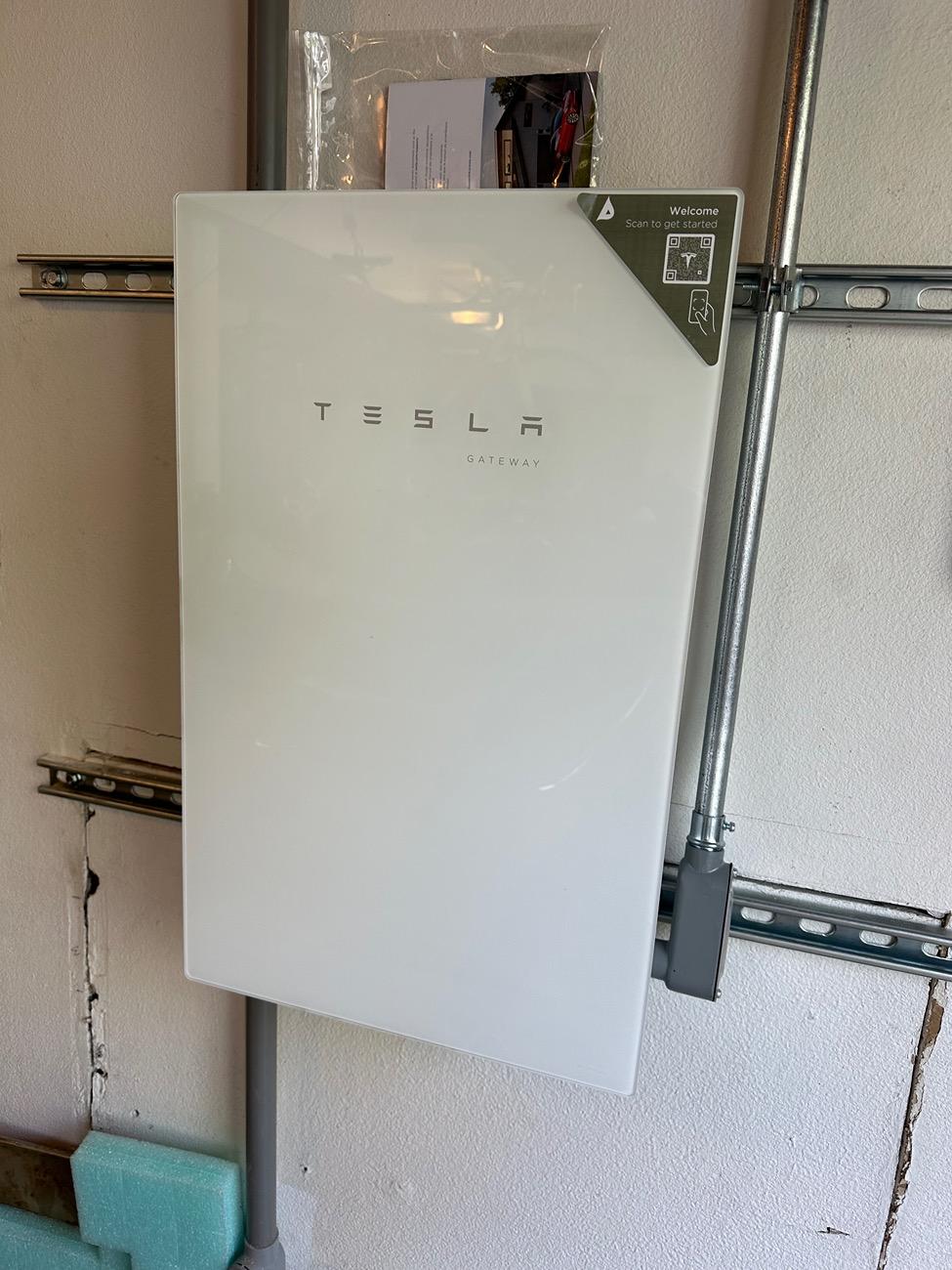
In SoCal and my job was about $5,300 less the $4k Foundation Series/CyberBeast credit, so about $1,200 out of pocket. Already had a 400amp panel, space for the new subpanel/gateway, and my panel was close to the garage, so minimal wiring from a distance perspective (just a small run of conduit inside my garage).

Rivian R1T R1S Rivian preparing in-house V2H charger IMG_5586
 

Sponsored

SANZC02

Well-Known Member
First Name
Bob
Joined
Feb 11, 2021
Threads
50
Messages
7,437
Reaction score
12,731
Location
California
Vehicles
Tesla Model S, LE - R1S
Occupation
Retired
In SoCal and my job was about $5,300 less the $4k Foundation Series/CyberBeast credit, so about $1,200 out of pocket. Already had a 400amp panel, space for the new subpanel/gateway, and my panel was close to the garage, so minimal wiring from a distance perspective (just a small run of conduit inside my garage).

IMG_5586.jpeg
Thank you, is that the same gateway they use for the Powerwall?
 

MilliM

Well-Known Member
Joined
Jul 14, 2019
Threads
13
Messages
133
Reaction score
151
Location
OC
Vehicles
R1S, Polestar 2
I don’t think so but honestly don’t know. AFAIK it’s new hardware, but maybe it’ll replace the former Powerwall gateways going forward. Inside it has 8 circuits, so it’s not a whole house backup, just 8 circuits. Fortunately that covered most of what I wanted/needed. No AC or pool equipment, but I did get both of my whole house fans and most of the important living areas.
 

SANZC02

Well-Known Member
First Name
Bob
Joined
Feb 11, 2021
Threads
50
Messages
7,437
Reaction score
12,731
Location
California
Vehicles
Tesla Model S, LE - R1S
Occupation
Retired
I don’t think so but honestly don’t know. AFAIK it’s new hardware, but maybe it’ll replace the former Powerwall gateways going forward. Inside it has 8 circuits, so it’s not a whole house backup, just 8 circuits. Fortunately that covered most of what I wanted/needed. No AC or pool equipment, but I did get both of my whole house fans and most of the important living areas.
Thanks, that is what I did with my Powerwall. I’m hoping to get the VtoH to tie into the same gateway if possible.
 

VSG

Well-Known Member
Joined
Oct 3, 2022
Threads
4
Messages
3,252
Reaction score
6,079
Location
WA
Vehicles
R1T LE/RB/OC/20
I’ll admit I didn’t read this entire thread, but I just had my V2H PowerShare installed by a Tesla certified installer for my Cybertruck and I don’t have a powerwall anywhere in my setup. They would have the smallest of batteries in the gateway *if* there really was a battery in the middle.

I’m here because I would love for the Rivian to ultimately work with my new PowerShare setup.
That's very interesting - that wasn't what I understood from documentation the on the Tesla site where it talked about all you needed was the UWC and a Powerwall. I guess I have to go back and read the updated documentation.
 

MilliM

Well-Known Member
Joined
Jul 14, 2019
Threads
13
Messages
133
Reaction score
151
Location
OC
Vehicles
R1S, Polestar 2
I seem to recall that with a new generation charger they were going to try to enable V2H for (certain?) existing powerwall/gateways, but last I read somewhere that wasn’t working.
Sponsored


Top