Sponsored

Charging on a 3 prong 240 outlet

HaveBlue

Well-Known Member
Joined
Nov 22, 2022
Threads
41
Messages
2,929
Reaction score
2,237
Location
91107
Vehicles
R1S DMP Max, Lifted GX470, APR Audi A7, BMW 325Ci
Clubs
 
Another consideration is that a 3 prong outlet means there may be no ground, and there have been reports of failure to charge (especially from the Rivian EVSE) when there isn't a stable ground potential.
For that matter a 4 prong may also not have a ground. In both cases the outlet would be defective.
Sponsored


racekarl

Well-Known Member
Joined
Jan 5, 2023
Threads
9
Messages
567
Reaction score
853
Location
MA
Vehicles
2023 R1T
For that matter a 4 prong may also not have a ground. In both cases the outlet would be defective.
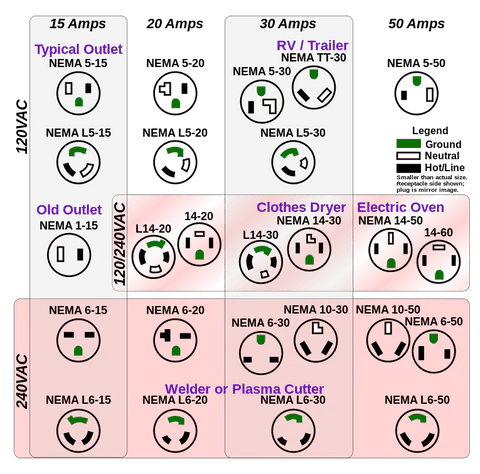
No, older outlets like 10-30 had no ground by design. They were intended for appliances like dryers that were never unplugged and never moved and were grounded (sometimes) by a wire screwed to the outlet box. These outlets have two hot 120v legs and a neutral leg but no ground. This can be a problem for some EVSEs like the Rivian one if the neutral potential fluctuates relative to ground.
 

HaveBlue

Well-Known Member
Joined
Nov 22, 2022
Threads
41
Messages
2,929
Reaction score
2,237
Location
91107
Vehicles
R1S DMP Max, Lifted GX470, APR Audi A7, BMW 325Ci
Clubs
 
No, older outlets like 10-30 had no ground by design. They were intended for appliances like dryers that were never unplugged and never moved and were grounded (sometimes) by a wire screwed to the outlet box. These outlets have two hot 120v legs and a neutral leg but no ground. This can be a problem for some EVSEs like the Rivian one if the neutral potential fluctuates relative to ground.
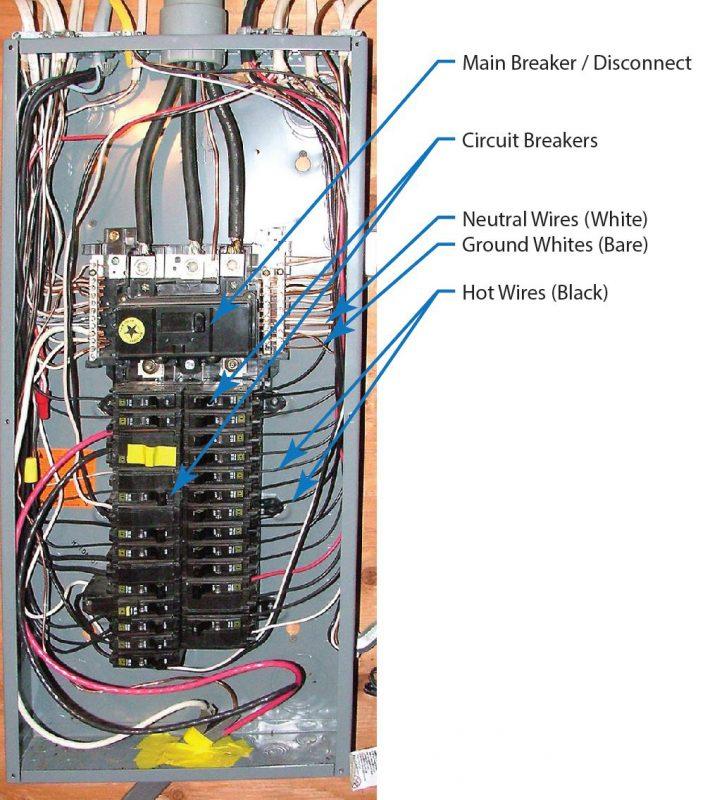
Neutral wires return to the same bar in a main panel as ground wires. The only difference being that this lead will never be bonded to the outlet box or conduit. Assuming no other code violations exist in the wiring of the outlet such as shared breakers or shared neutrals, the pin effectively is a ground for the purposes of an EV. An appliance, however cannot utilize it as a chassis ground because it is likely also using it as a 120V neutral to operate accessories like a clock. Such use could energize the chassis. An EV does not use a neutral when two hots are present.
Rivian R1T R1S Charging on a 3 prong 240 outlet Understanding-Your-Electrical-Panel-1
 
Last edited:

Herb

Well-Known Member
First Name
Herbert
Joined
Oct 17, 2023
Threads
0
Messages
163
Reaction score
134
Location
Ohio
Vehicles
911, John Deere, R1T max DMP
Get a NEMA plug installed on a 50 amp breaker and get a charge point flex. 25 miles of recharge per hour. Easy to overnight charge from zero if you really need to.
should be 60 Amp breaker if charging at 48 Amp (which is Rivian max). NEC requires 20% reserve, or things can overheat. => with a 50 Amp breaker, charging must be limited to 40Amp=8.8kW (about 21m/hr for Rivian efficiency). Always make sure wire size supports breaker size.
 

MountainBikeDude

Well-Known Member
First Name
Adam
Joined
Jun 20, 2019
Threads
54
Messages
3,337
Reaction score
7,095
Location
Vancouver
Vehicles
2023 El Cap Quad Motor R1T (Selling the Xterra)
Clubs
 
We need more info. What type of 3 prong plug? Can you post a pic of it?

1710329616532-0r.png


You need to know if its a 30 amp or 50 amp circuit. Also, I would still have an electrician inspect this plug to make sure it is safe for a continuous load for many hours.

As I always say, if this is a permanent home charging install the best and safest way to do it is to hard wire a quality home charger.

I have two videos on my website showing my home charging setup & showing how I installed my Tesla Wall Connector. https://www.electrifiedoutdoors.com/ev-charging
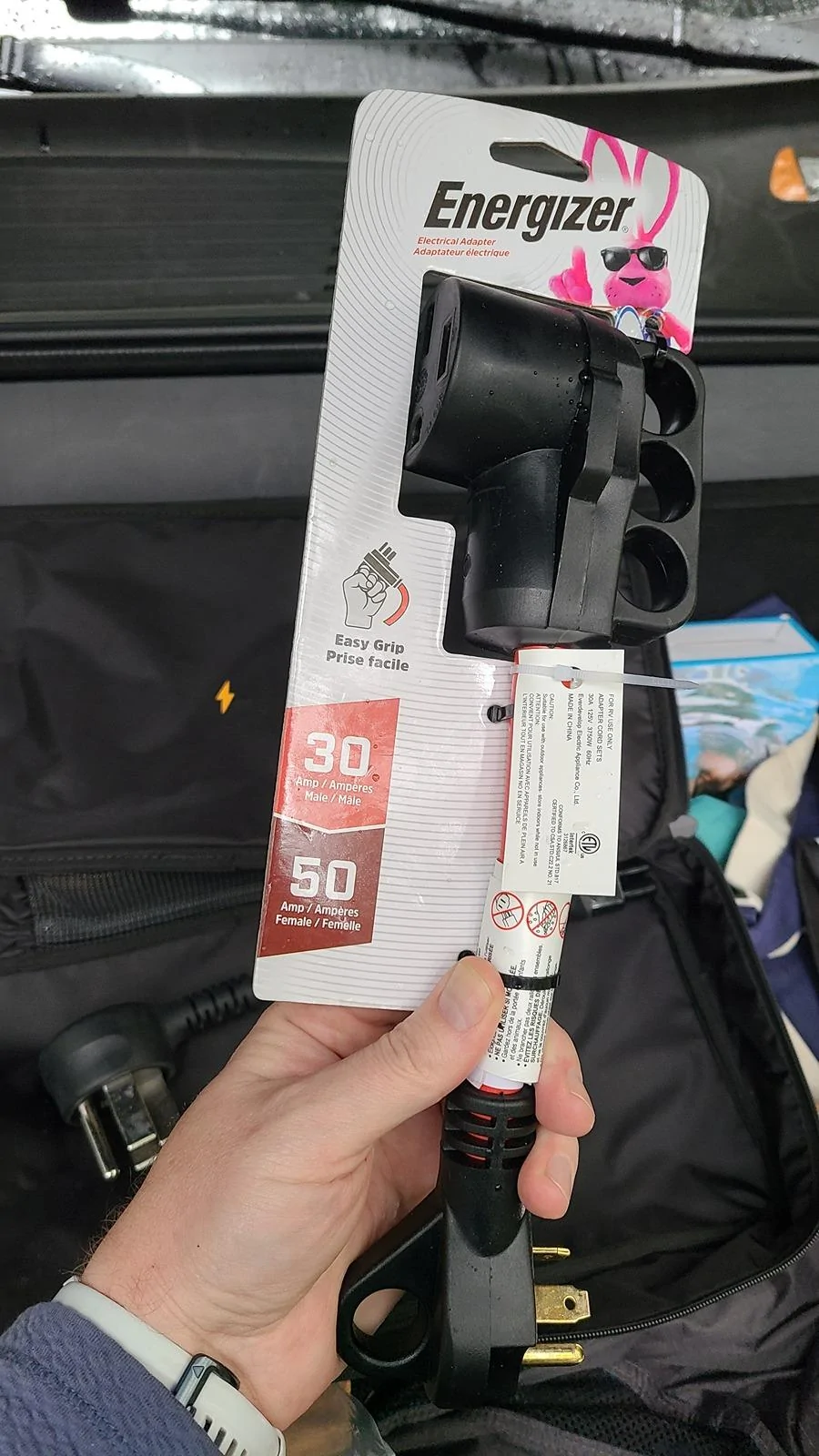
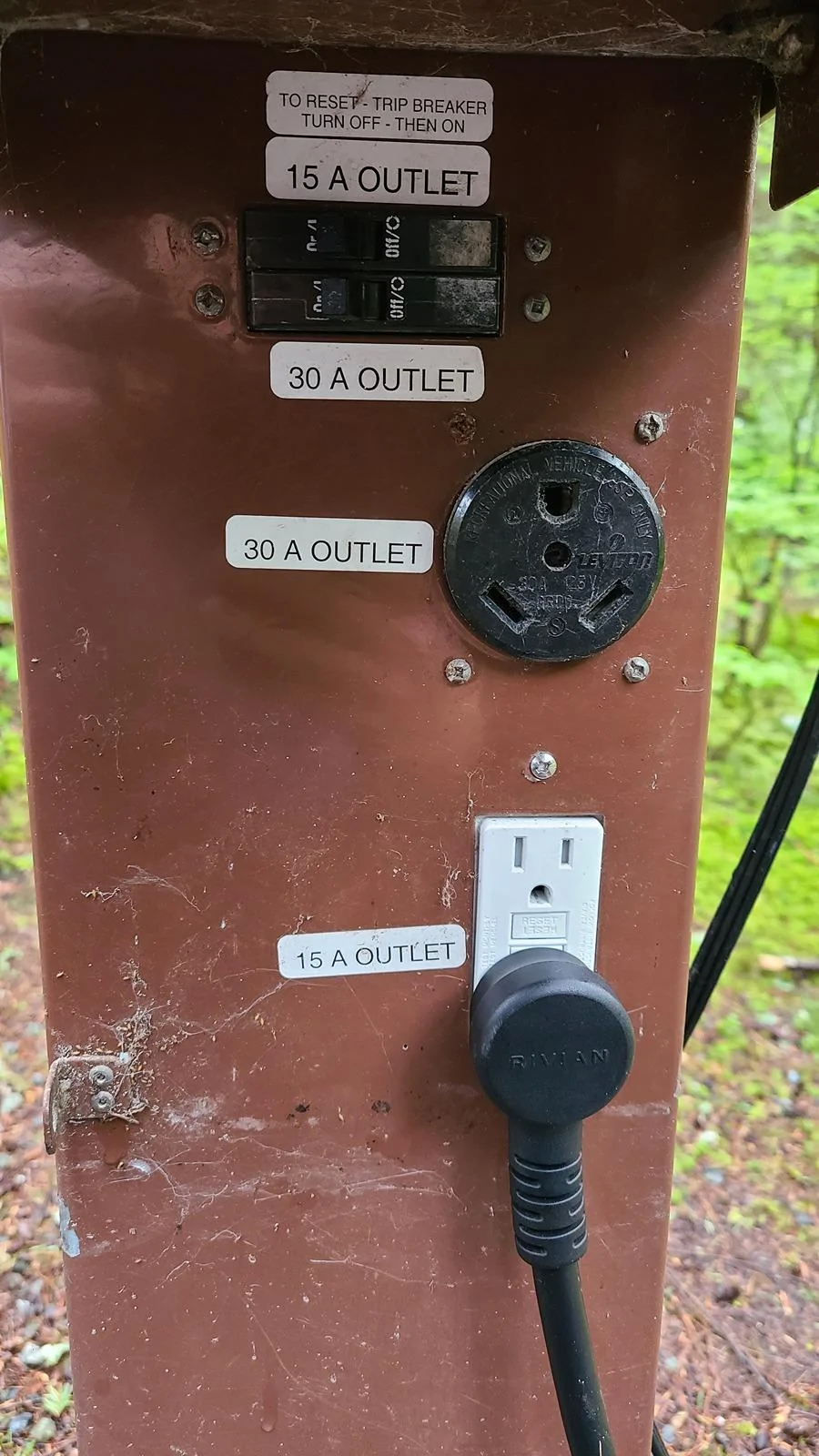
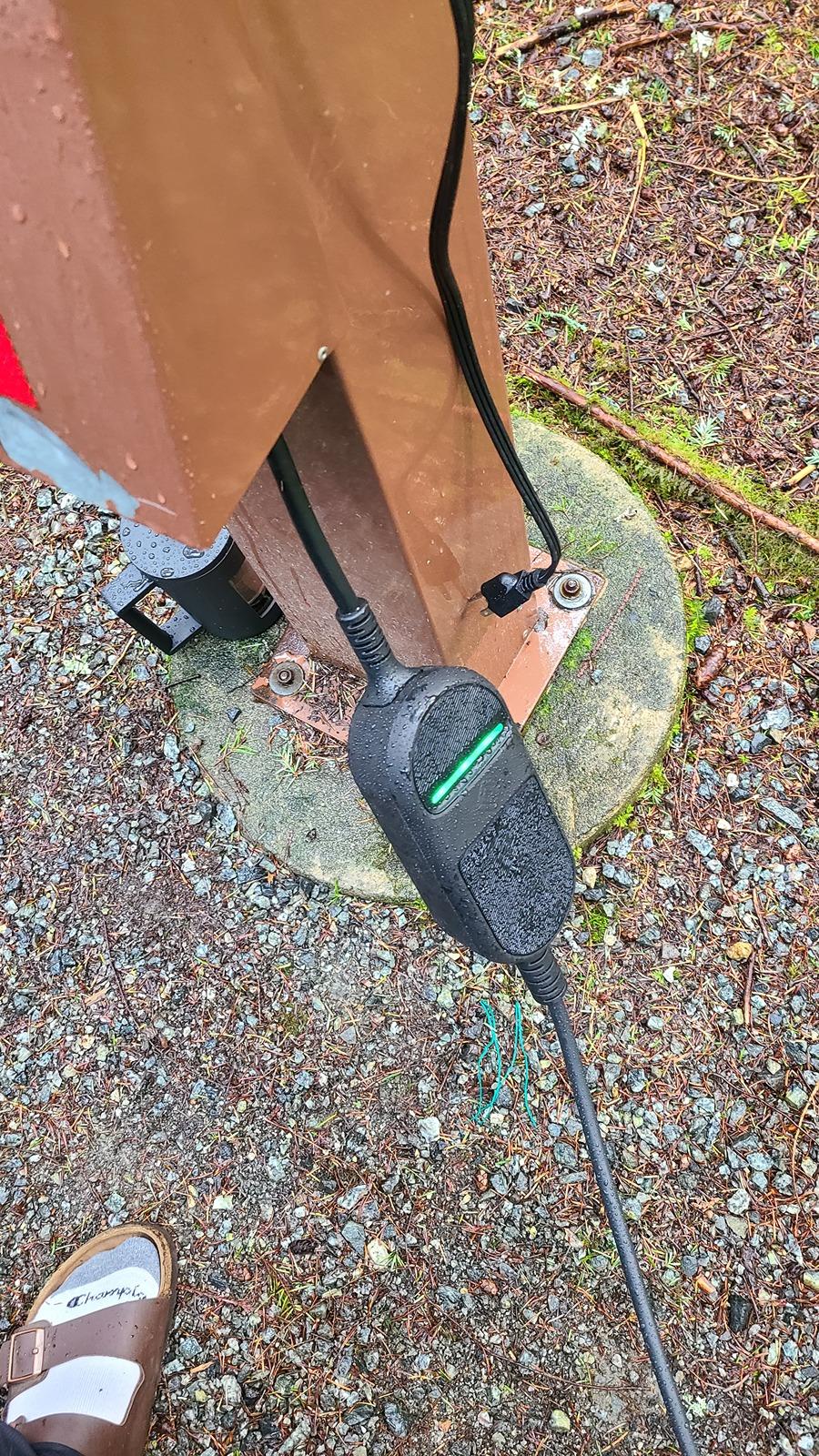
Currently at a Campground, bought a TT-30(RV Plug/Nema 14-50 and the mobile charger won't power up. I've used the 14-50 plug that comes with the mobile charger with no issue at home, I've also used the 120v regular household plug on the Campground power outlet with no issue.

Either every 30amp outlet is not working on these sites (tried a few) or the adapter is bunk... Or the mobile charger is having issue with the 3-4 prong connection?

Anyone have any thoughts?

Also, I'm obviously going to lower the draw in the vehicle to closer to 20amps once this does work.

Rivian R1T R1S Charging on a 3 prong 240 outlet 20240426_090346
 

Sponsored

Count Orlok

Well-Known Member
Joined
May 17, 2022
Threads
185
Messages
2,562
Reaction score
5,342
Location
Wisconsin & New Mexico
Vehicles
2022 R1S/ 2024 INEOS Grenadier/ 1969 Ford / etc.
Occupation
retired
Clubs
 
Currently at a Campground, bought a TT-30(RV Plug/Nema 14-50 and the mobile charger won't power up. I've used the 14-50 plug that comes with the mobile charger with no issue at home, I've also used the 120v regular household plug on the Campground power outlet with no issue.

Either every 30amp outlet is not working on these sites (tried a few) or the adapter is bunk... Or the mobile charger is having issue with the 3-4 prong connection?

Anyone have any thoughts?

Also, I'm obviously going to lower the draw in the vehicle to closer to 20amps once this does work.
might it be they aren't grounded?
 

MountainBikeDude

Well-Known Member
First Name
Adam
Joined
Jun 20, 2019
Threads
54
Messages
3,337
Reaction score
7,095
Location
Vancouver
Vehicles
2023 El Cap Quad Motor R1T (Selling the Xterra)
Clubs
 
might it be they aren't grounded?
Could well be the case, but I have no means to test. The household 15amp outlets have a gfci so I'd assume both are grounded?

Edit added a photo of the outlets

Rivian R1T R1S Charging on a 3 prong 240 outlet 20240426_091937


Rivian R1T R1S Charging on a 3 prong 240 outlet 20240426_091944
 

VSG

Well-Known Member
Joined
Oct 3, 2022
Threads
4
Messages
3,257
Reaction score
6,099
Location
WA
Vehicles
R1T LE/RB/OC/20
Currently at a Campground, bought a TT-30(RV Plug/Nema 14-50 and the mobile charger won't power up. I've used the 14-50 plug that comes with the mobile charger with no issue at home, I've also used the 120v regular household plug on the Campground power outlet with no issue.

Either every 30amp outlet is not working on these sites (tried a few) or the adapter is bunk... Or the mobile charger is having issue with the 3-4 prong connection?
You bought the wrong adapter. The one you bought is only for RVs. Adapters made for RVs won't work with an EV - you need to buy an EV-specific TT-30 to NEMA 14-50 adapter. I use this one, and it works: https://www.amazon.com/Parkworld-885378-Adapter-TT-30P-14-50R/dp/B07G2MT4T6
 

HaveBlue

Well-Known Member
Joined
Nov 22, 2022
Threads
41
Messages
2,929
Reaction score
2,237
Location
91107
Vehicles
R1S DMP Max, Lifted GX470, APR Audi A7, BMW 325Ci
Clubs
 
^ What he said. Don't use an RV adapter with an EV and don't use and EV adapter with an RV. They look the same from the outside but are wired different.

These adapters aren't really UL certified. Generally no UL certified device will come with a plug that can over load a circuit. An adapter allows you to attach a higher draw to a lower outlet necessitating adjusting the vehicle appropriately before plugging in each time.

This is why many people recommend the Tesla mobile charger and adapter suite as they adjust appropriately to the plug. No extra thought is needed. Rivian only supplies two that perform this function.
 

BeanEW

Well-Known Member
First Name
Eugene
Joined
Nov 16, 2020
Threads
20
Messages
495
Reaction score
599
Location
SF California
Vehicles
R1S
Occupation
Retired
I had a similar setup before. I had an electrician installed a 240v outlet in my garage; however, since he could only find 40amp from the breaker box and my old EV charger had three prong, he used a NEMA 10-30 outlet for me. I had been setting both my charger and car to 32amp.

Time passed and my old charger die, I bought a 4 prong EV charger but required to use an adapter cable since the outlet was NEMA 10-30. A few months ago, I found out that some EV chargers were erroring out because a 4-prong was required. So, I bought a Bryant NEMA 14-50 and replaced the 10-30; it was good that the receptacle had 4 wires. However, since the breaker box can only supply 40amp, I still set my charger and car to 32amp max.
 

Sponsored

jeeden

Well-Known Member
First Name
Jeremy
Joined
Oct 27, 2020
Threads
57
Messages
1,087
Reaction score
1,636
Location
Northern VA
Vehicles
Rivian R1S, 2016 Ford Escape, 2015 Ford Mustang GT
Occupation
Project Manager
Clubs
 
As was said above there is a special adapter for the TT fitting..

For the OP and anyone else there is a pretty good discussion in the Airbnb charging adapter thread here with links to adapters and discussion about using them in different situations:

https://www.rivianforums.com/my-airbnb-charging-kit/
 

MountainBikeDude

Well-Known Member
First Name
Adam
Joined
Jun 20, 2019
Threads
54
Messages
3,337
Reaction score
7,095
Location
Vancouver
Vehicles
2023 El Cap Quad Motor R1T (Selling the Xterra)
Clubs
 
You bought the wrong adapter. The one you bought is only for RVs. Adapters made for RVs won't work with an EV - you need to buy an EV-specific TT-30 to NEMA 14-50 adapter. I use this one, and it works: https://www.amazon.com/Parkworld-885378-Adapter-TT-30P-14-50R/dp/B07G2MT4T6
Cheers!

I'm returning the adapter I just bought for one EV specific. Thanks those that responded so promptly btw. Forums for the win ??

PS as I'm in Canada, this is what I went with. Another R1T owner commented he was able to pull 4kW no issues.
https://www.amazon.ca/ONETAK-Charge...B07XNSXWM4/ref=cm_cr_arp_mb_bdcrb_top?ie=UTF8
 

VSG

Well-Known Member
Joined
Oct 3, 2022
Threads
4
Messages
3,257
Reaction score
6,099
Location
WA
Vehicles
R1T LE/RB/OC/20
PS as I'm in Canada, this is what I went with. Another R1T owner commented he was able to pull 4kW no issues.
https://www.amazon.ca/ONETAK-Charge...B07XNSXWM4/ref=cm_cr_arp_mb_bdcrb_top?ie=UTF8
That one does look like it will work.

BTW, the most you're going to get from it is 2.88 kW.
A TT-30 is a 120V 30A circuit. Because EV charging is a "continuous use" application, meaning you will be drawing full power at a steady rate for a long time, you must not use more than 80% of the circuit capacity. In this case, 80% of 30A is 24A. The "30A" rating is really only a peak rating, for intermittent use.

So 120V * 30A * 80% = 2.88 kW
This is twice as much as a normal household 120V outlet, so it will add *about* 5 miles of range for every hour you charge. Not great, but better than nothing.

(Even at 100%, 120V * 30A = 3.6 kW. You should never charge at that rate, and 4kW is not possible unless the breaker is bad, in which case you'll probably start a fire.)

IMPORTANT
Remember, if you are using an adapter like this (any adapter), your portable charger will not know that you are connected to a 120V 30A outlet so you have to MANUALLY reduce the charge rate on the center screen of your Rivian to draw no more than 24A. You can do this after you plug in, when you first start to charge. But remember to always do it. IMO it doesn't hurt to attach a tag to the adapter with a note to remind you to reduce the current to 20A. That way you will always see this reminder when you plug in.
 

Hercules10

Well-Known Member
First Name
Gregory
Joined
Aug 8, 2023
Threads
2
Messages
85
Reaction score
79
Location
San Antonio
Vehicles
R1S
Occupation
Retired
Clubs
 
I run my truck with the mobiil charger on my 30a welder / dryer outlet no issues. If you run at full amps "which you shouldn't" the breaker will start getting warm. I tested this for science ;)
Yes, but most of these outlets are not designed for a 6-8 hours draw. Lowering the amps is a good idea..
 

MountainBikeDude

Well-Known Member
First Name
Adam
Joined
Jun 20, 2019
Threads
54
Messages
3,337
Reaction score
7,095
Location
Vancouver
Vehicles
2023 El Cap Quad Motor R1T (Selling the Xterra)
Clubs
 
That one does look like it will work.

BTW, the most you're going to get from it is 2.88 kW.
A TT-30 is a 120V 30A circuit. Because EV charging is a "continuous use" application, meaning you will be drawing full power at a steady rate for a long time, you must not use more than 80% of the circuit capacity. In this case, 80% of 30A is 24A. The "30A" rating is really only a peak rating, for intermittent use.

So 120V * 30A * 80% = 2.88 kW
This is twice as much as a normal household 120V outlet, so it will add *about* 5 miles of range for every hour you charge. Not great, but better than nothing.

(Even at 100%, 120V * 30A = 3.6 kW. You should never charge at that rate, and 4kW is not possible unless the breaker is bad, in which case you'll probably start a fire.)

IMPORTANT
Remember, if you are using an adapter like this (any adapter), your portable charger will not know that you are connected to a 120V 30A outlet so you have to MANUALLY reduce the charge rate on the center screen of your Rivian to draw no more than 24A. You can do this after you plug in, when you first start to charge. But remember to always do it. IMO it doesn't hurt to attach a tag to the adapter with a note to remind you to reduce the current to 20A. That way you will always see this reminder when you plug in.
I had planned to drop it to 20amps or less. Just needed something a bit faster than a 15amp running at 8 or 9
Sponsored


Top