DuoRivians
Well-Known Member
- Joined
- Dec 30, 2022
- Threads
- 258
- Messages
- 3,818
- Reaction score
- 9,101
- Location
- California
- Vehicles
- R1T, R1S
- Thread starter
- #1
TLDR:
Dynamic Glass Roof blocks 60% of sun's power v. regular panoramic roof. But, tint windows first. After window tints, DGR may block additional 15% of total heat into cabin.
Details:
We currently have a Gen 1 R1T and a Gen 2 R1S with Dynamic Glass Roof (DGR).
To measure the sun’s heat that comes through the cabin, I purchased a solar power meter to measure it. All units below are in Watts/m^2.
*Measurements*
R1S:
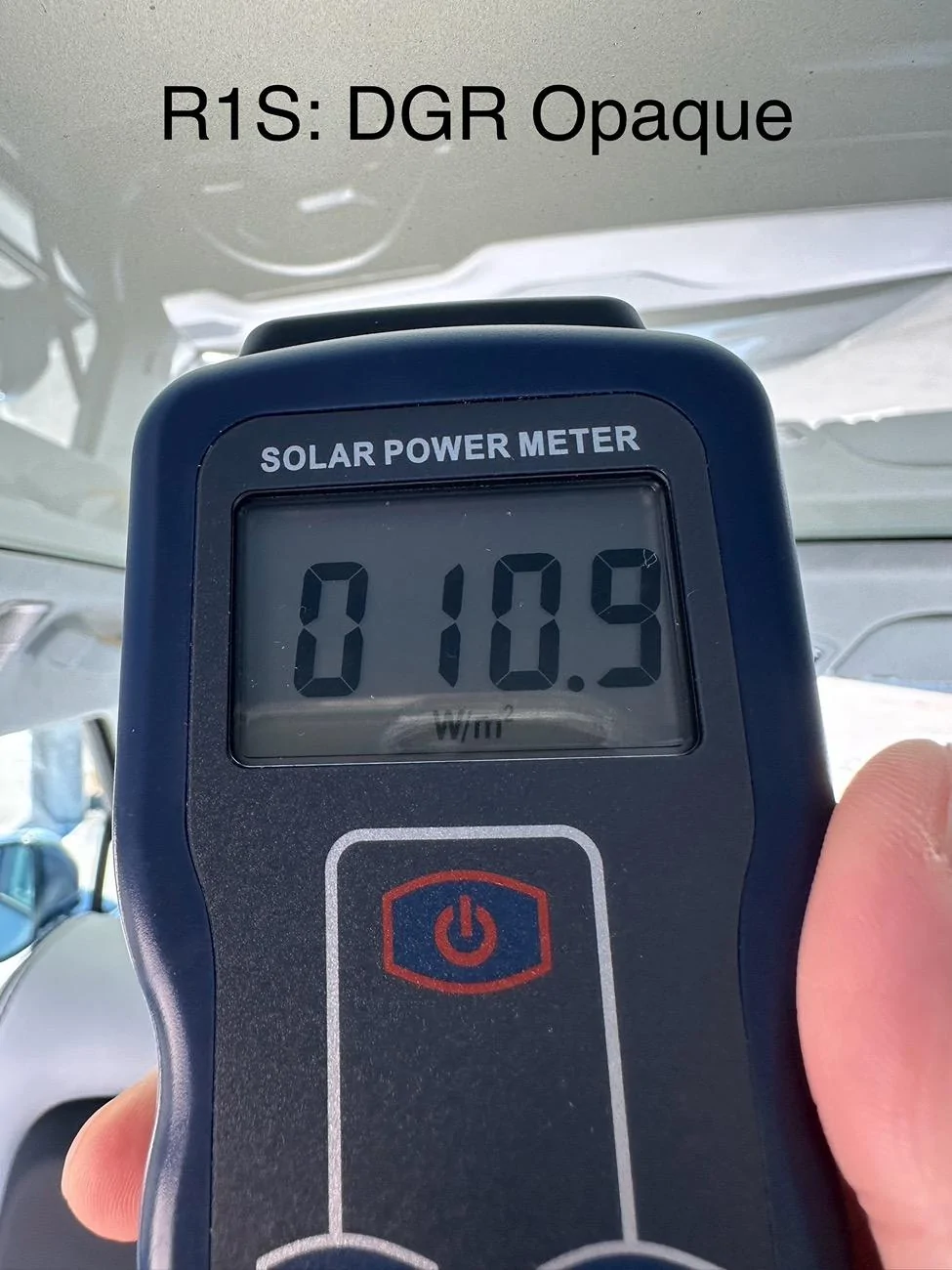
- DGR opaque: 10.9
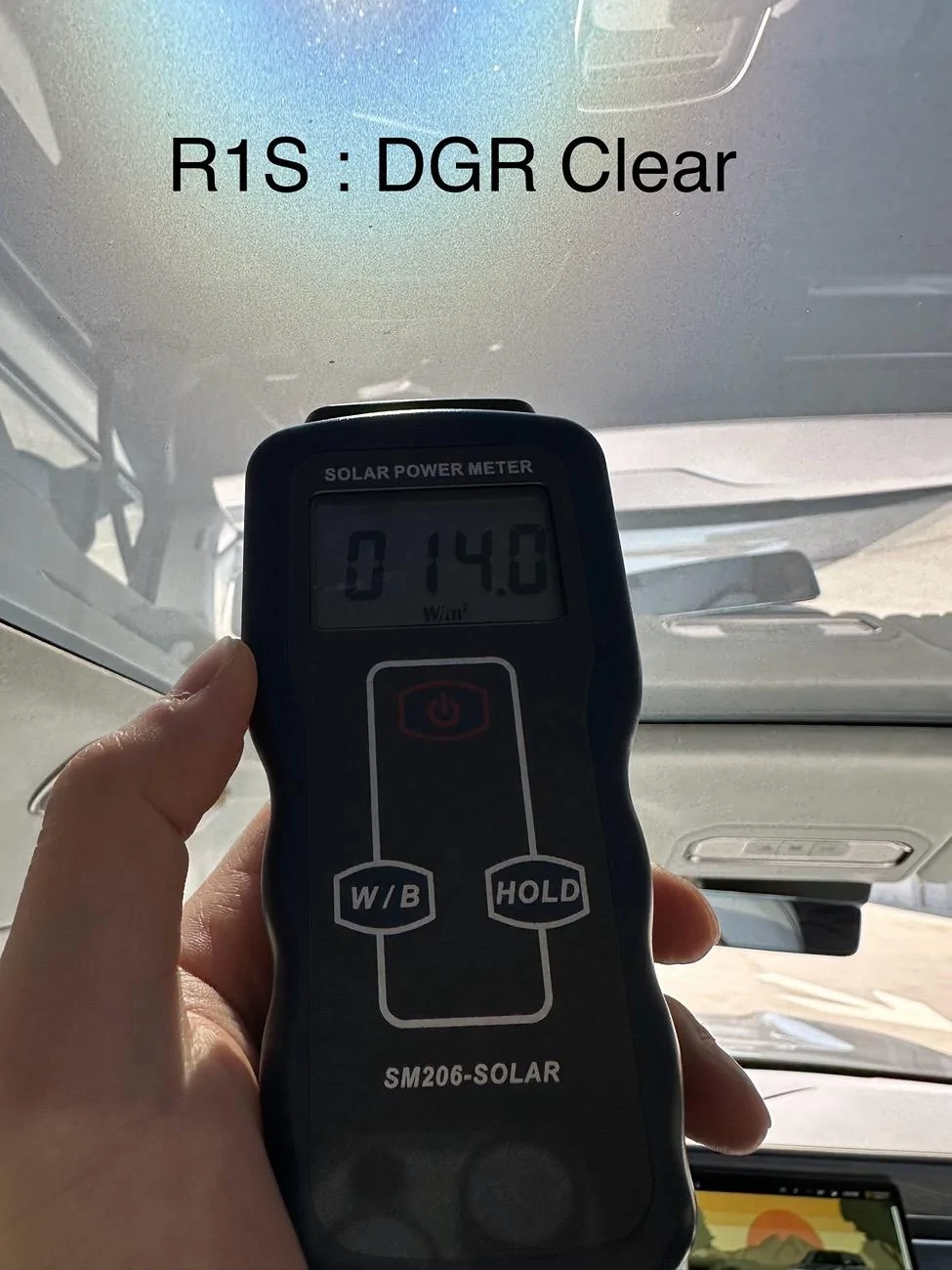
- DGR clear: 14.0
- Windshield: 530.6
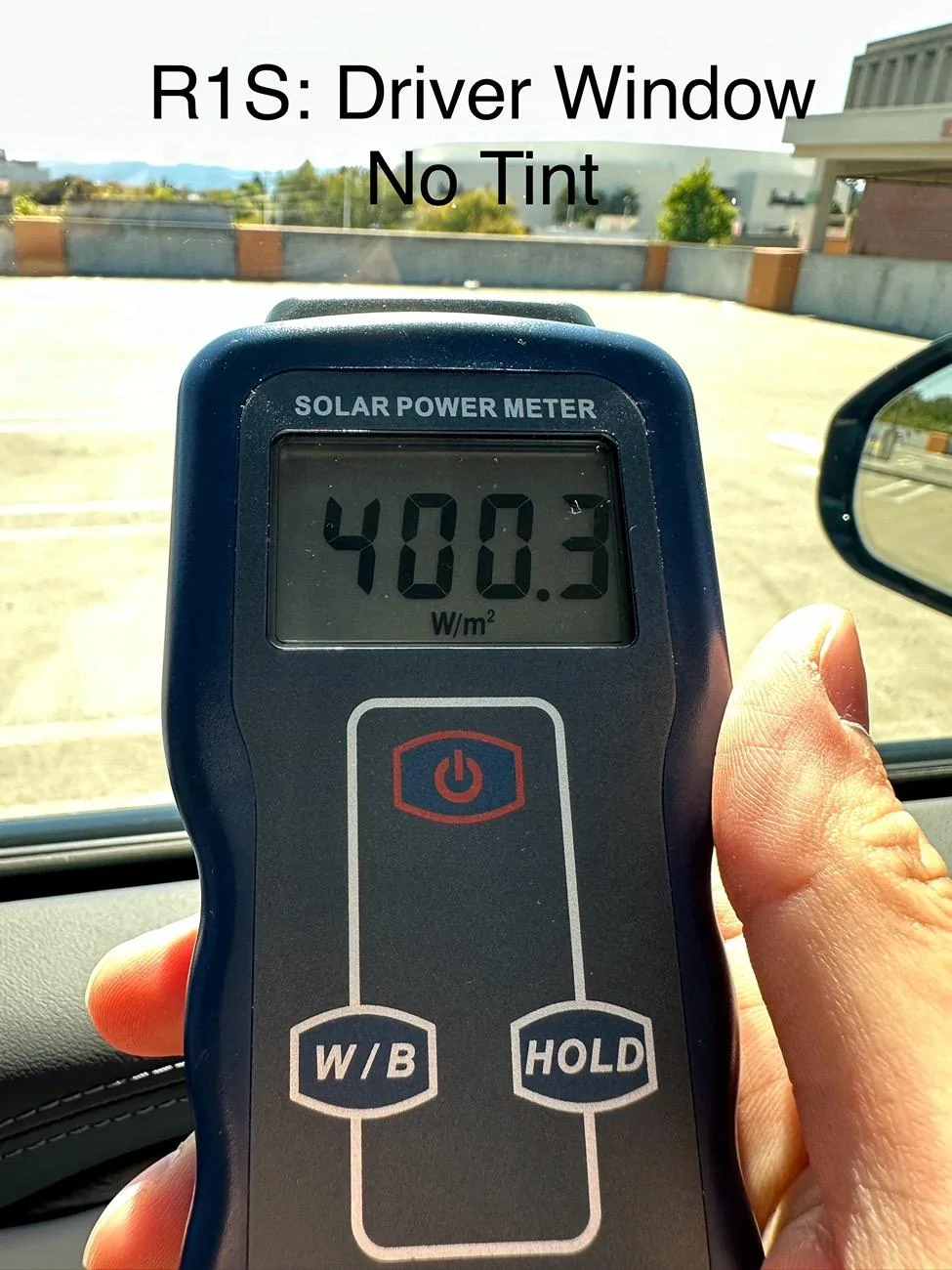
- Front window No Tint: 400.3
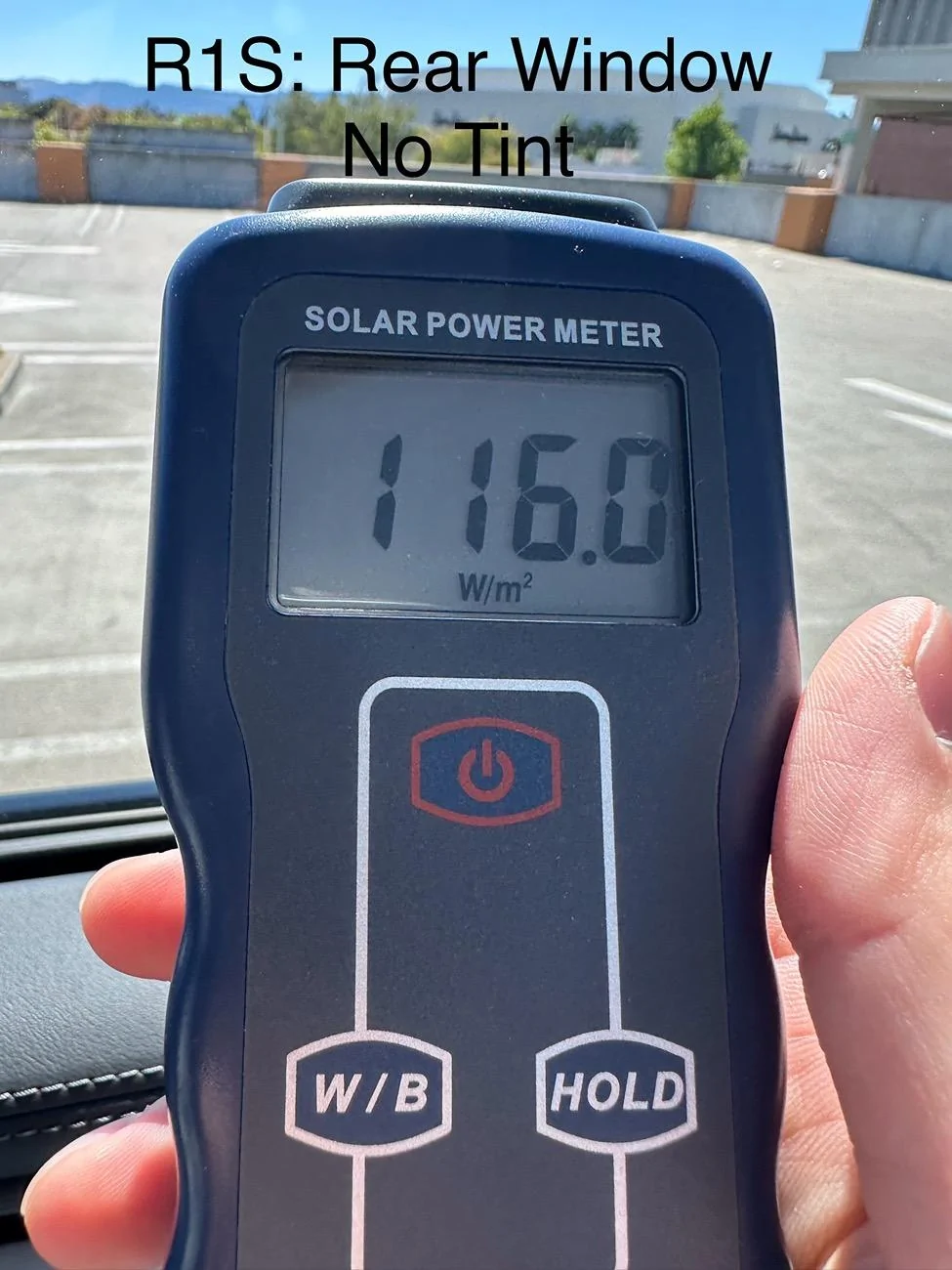
- Rear window No Tint: 116.0
R1T:
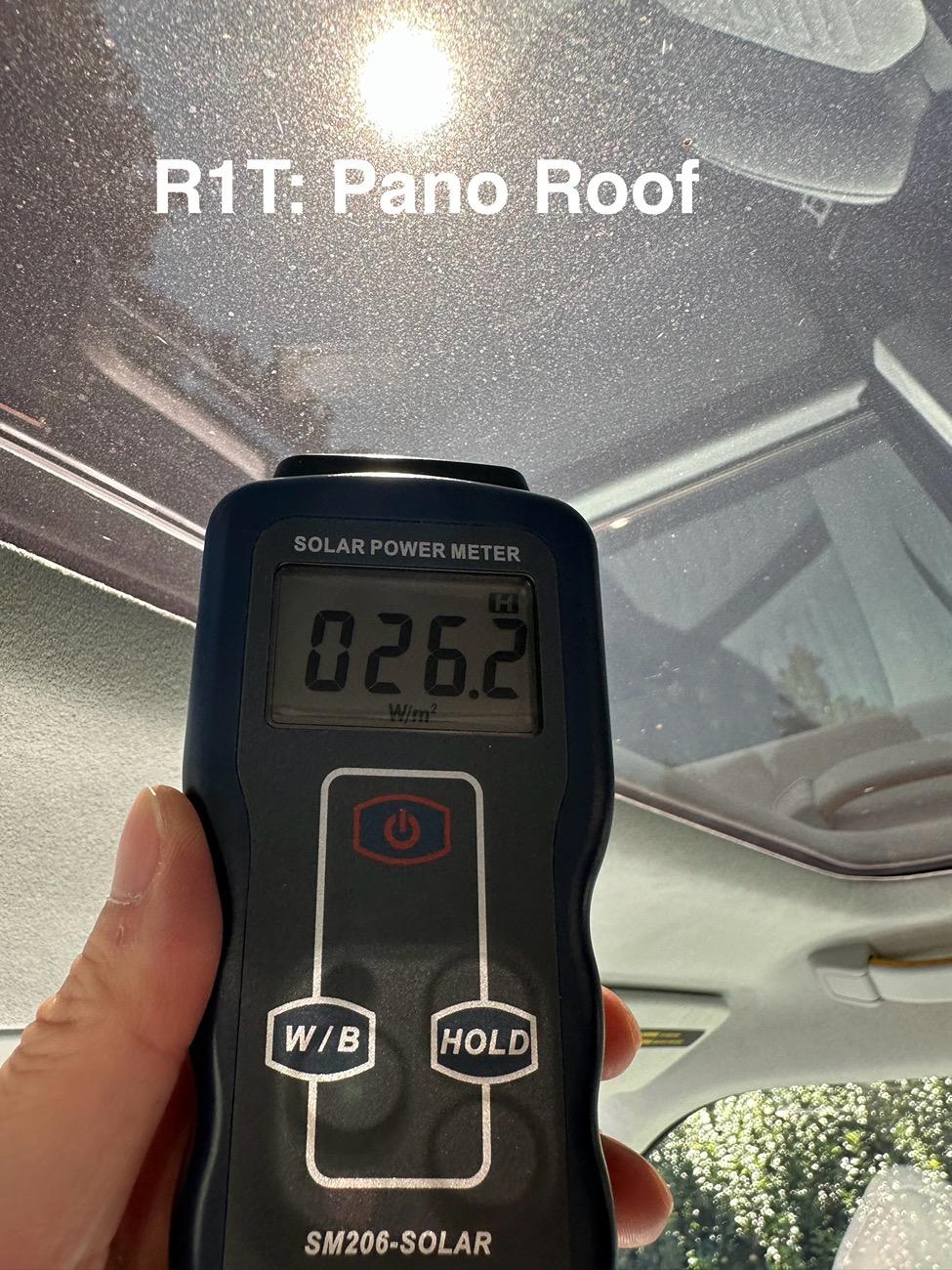
- Panoramic roof: 26.2
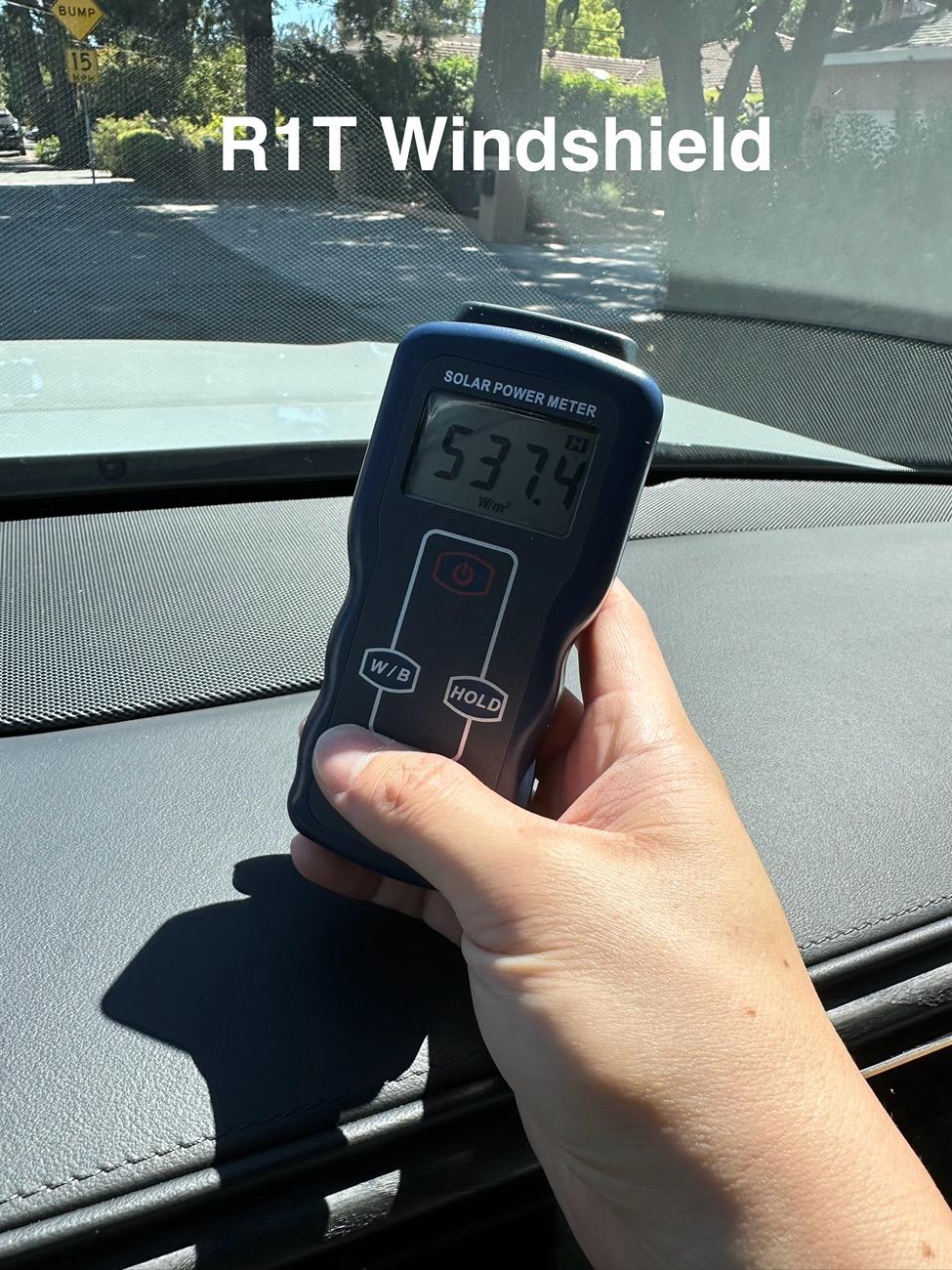
- Windshield: 537.4 (no difference w/ R1S windshield)
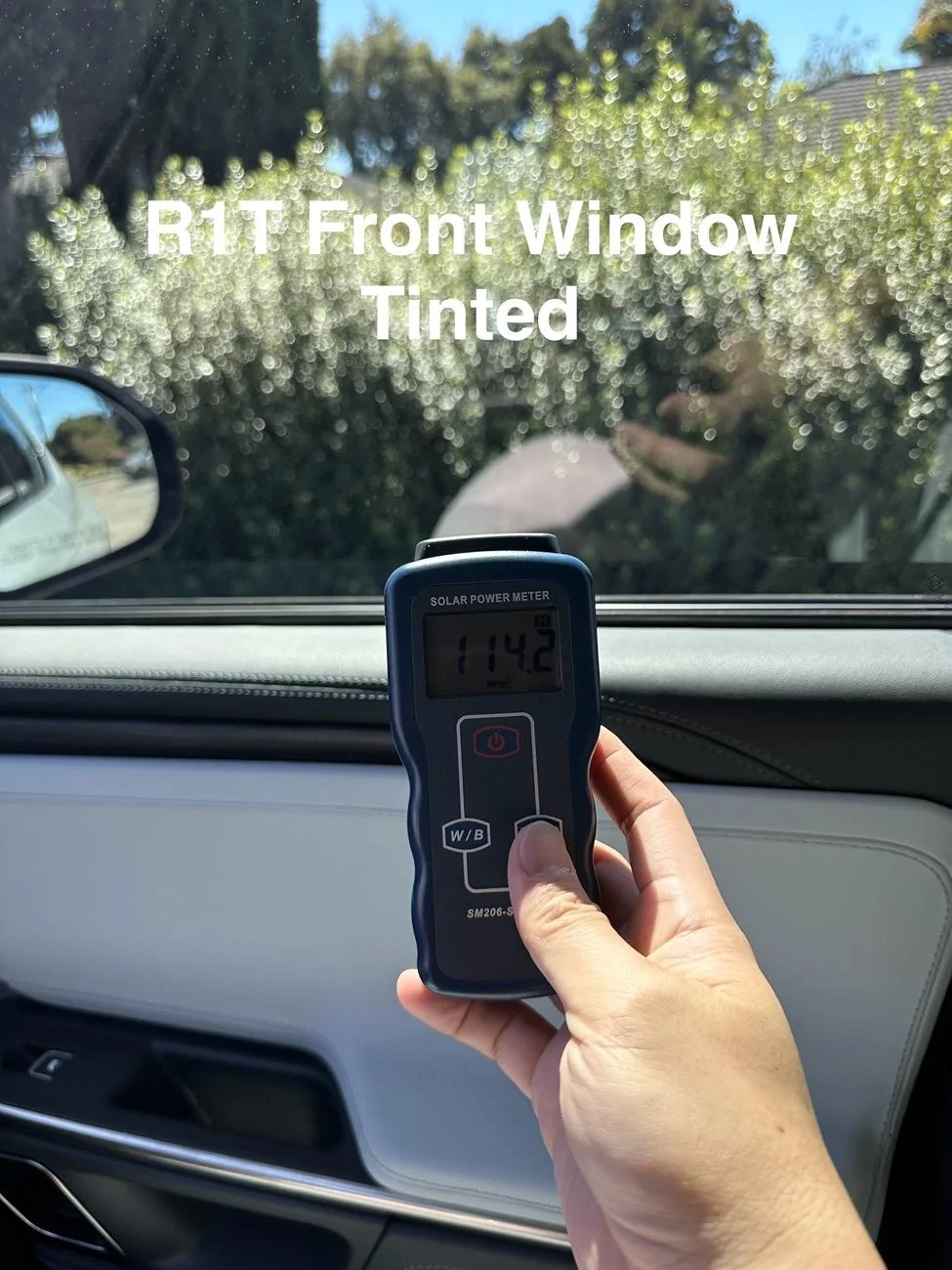
- Front window Tinted with 35% film: 114.2
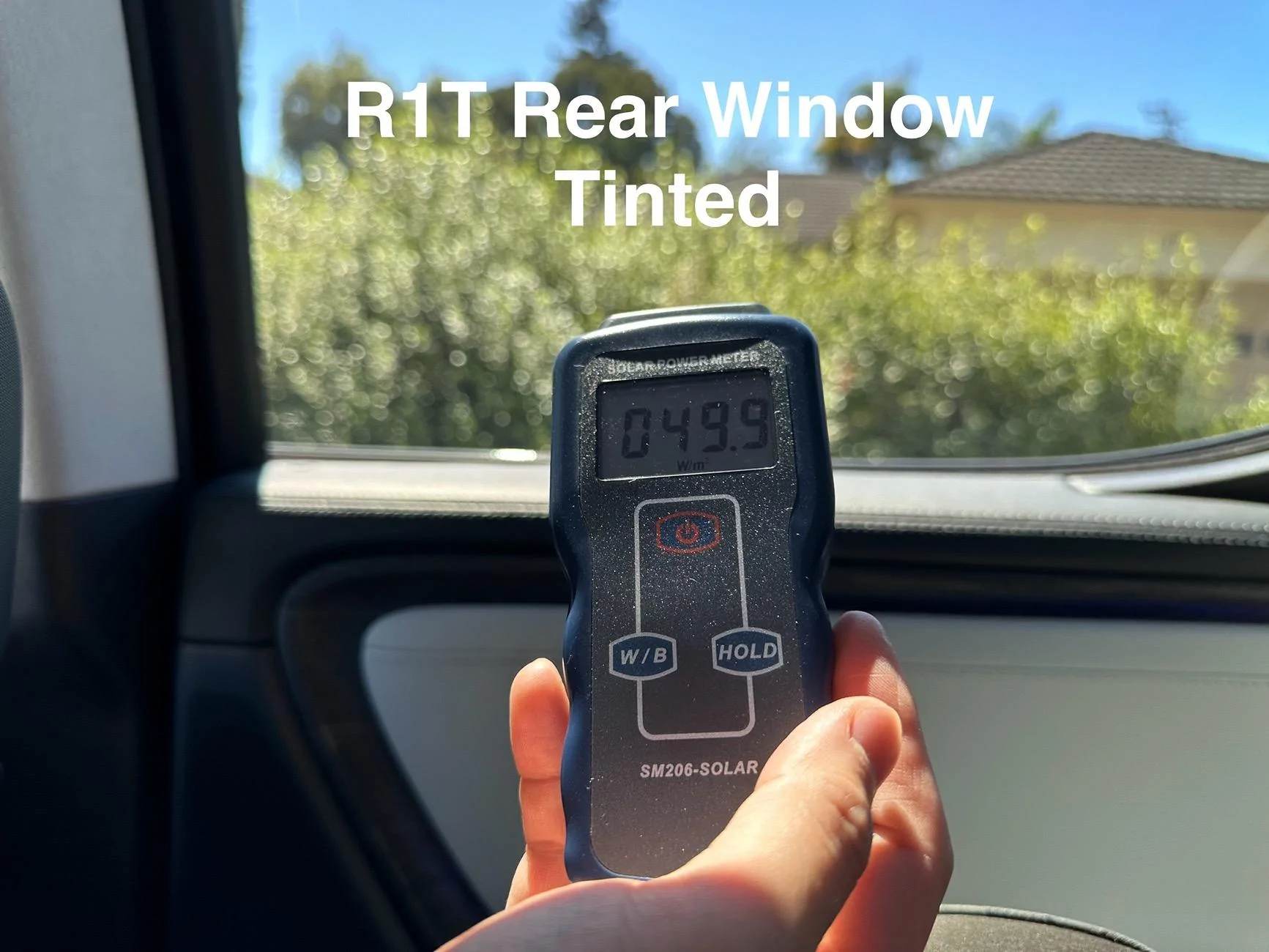
- Rear window Tinted with 50% film: 49.9
Baseline:
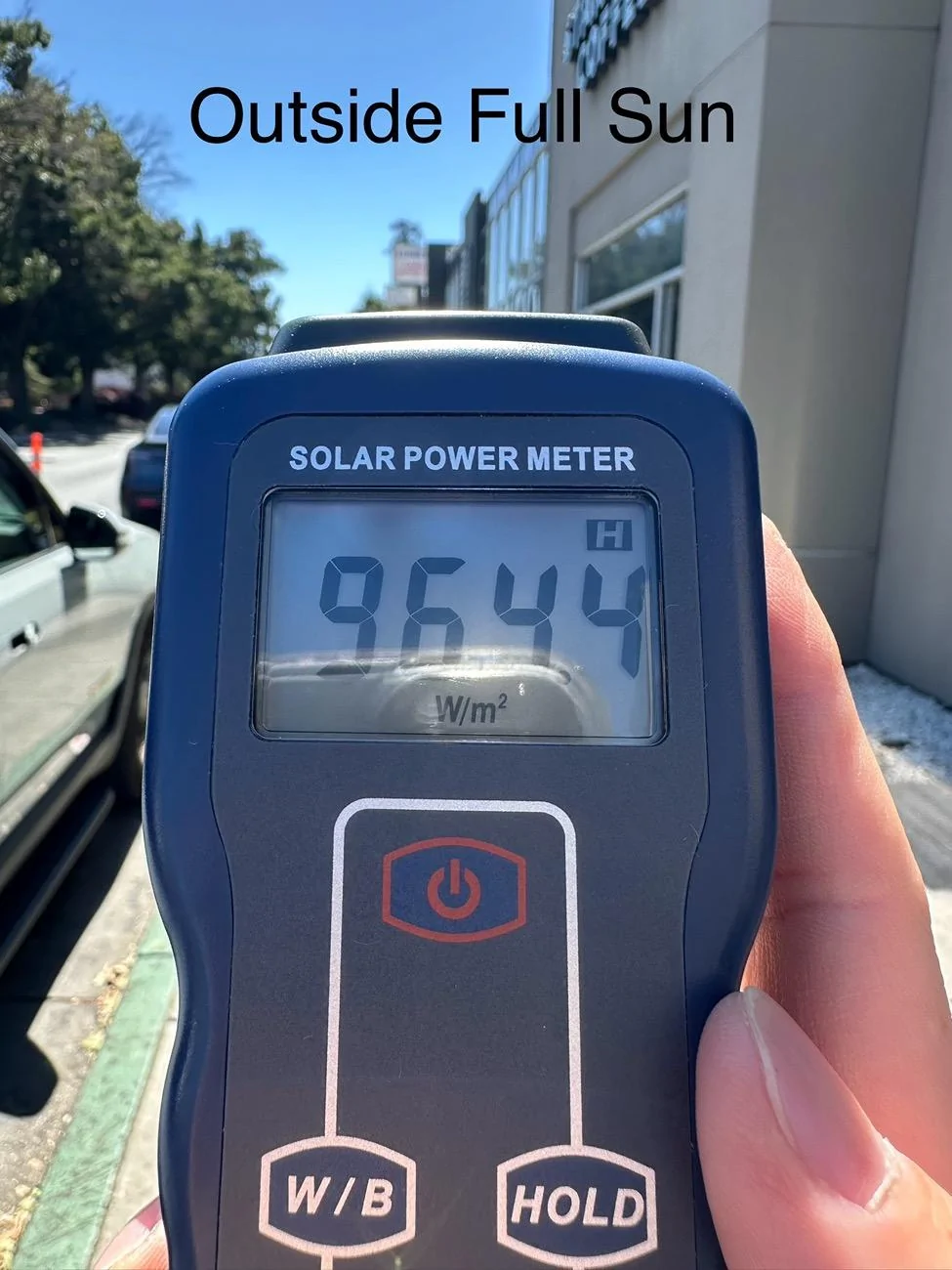
- Full sun outside: 964.4
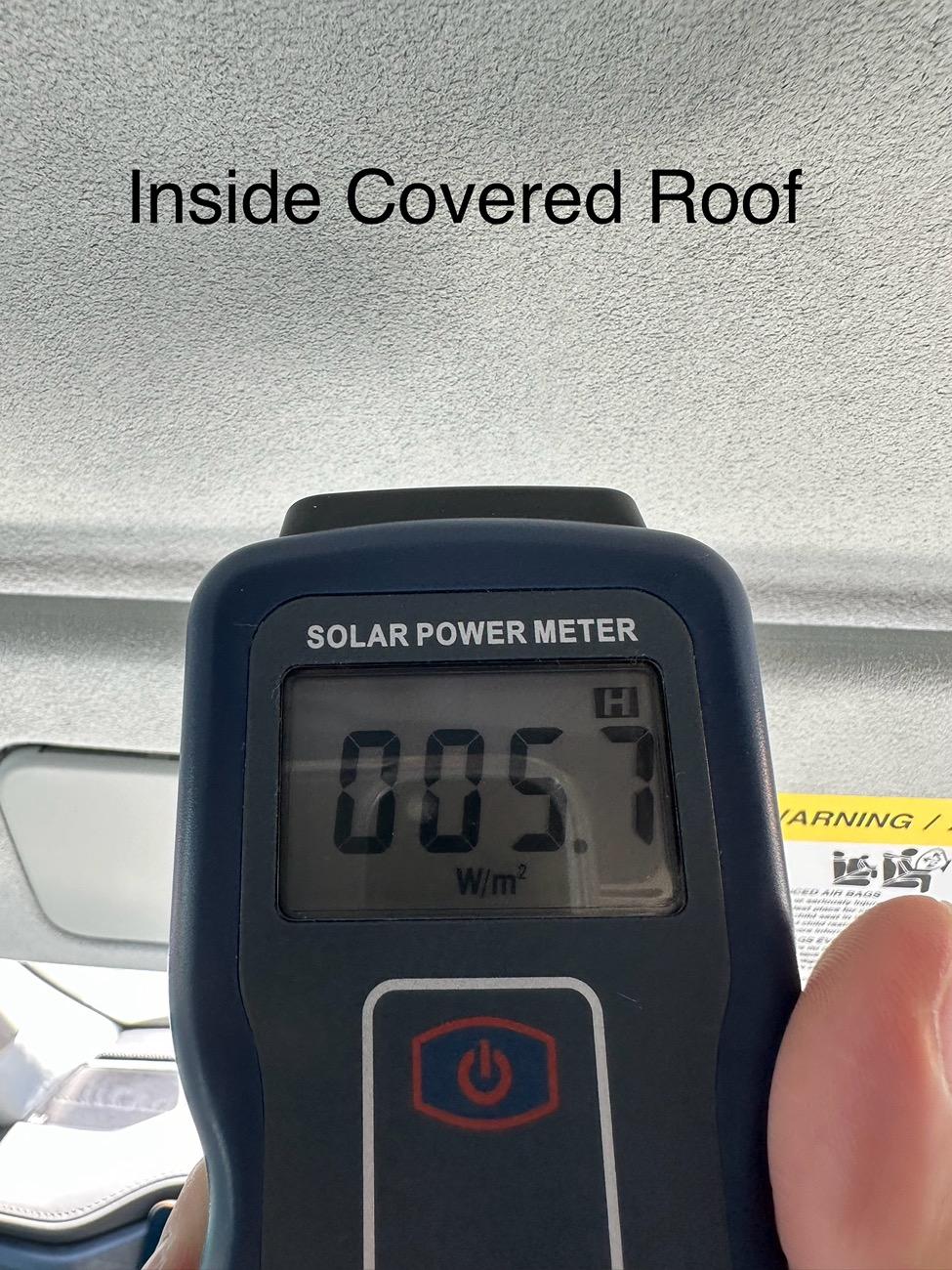
- Inside Rivian cabin roof: 5.7
DGR opaque v. R1T’s panoramic roof is 10.9 v. 26.2. So, DGR opaque lets in 40% of the sun’s power, ie blocks 60%.
When comparing DGR opaque to the baseline roof cabin (no glass part), it’s 10.9 v 5.7. So, it’s very minimally different. DGR opaque is really close to having a solid roof.
*Analysis*
In comparison to all the windows, however, I think the most effective way to reduce total cabin heat from the sun is to tint the passenger windows with quality IR rejecting properties.
(Next might be to consider tinting the windshield. Personally, my tint shop won’t tint the front windshield or panoramic roof for liability reasons. I also don’t like the low angle haze that’s present in all tints to some extent, which makes the windows look hazy at low sun angles—don’t want this for the windshield’s visibility.)
Here’s the math:
- DGR v Pano Roof Watts difference = 15.3 W/m^2 difference * Surface area of glass roof (~2m^2) = 30W blocked with DGR
- Front Window Tint v No Tint difference = 286 W/m^2 * Surface area of front window (~0.25m^2) * 2 front windows = 143W blocked with tint
- Rear Window Tint v No Tint difference = 66 W/m^2 * Surface area of rear window (~0.25m^2) * 2 rear windows = 33W blocked with tint
By getting the DGR, you can block 30W.
By getting the passenger windows tinted, you can block 176W (perhaps more with the other rear windows in the R1S)
Let’s say the total cabin heat rejection potential in our case is 30W + 176W = 206W.
You can capture 85% of the total potential by tinting the passenger windows. Low hanging fruit.
Then, you can capture 15% of the total potential by getting the DGR.
So, is another 15% heat rejection worth it? Your call, and also YMMV depending on your tints.


Dynamic Glass Roof blocks 60% of sun's power v. regular panoramic roof. But, tint windows first. After window tints, DGR may block additional 15% of total heat into cabin.
Details:
We currently have a Gen 1 R1T and a Gen 2 R1S with Dynamic Glass Roof (DGR).
To measure the sun’s heat that comes through the cabin, I purchased a solar power meter to measure it. All units below are in Watts/m^2.
*Measurements*
R1S:
- DGR opaque: 10.9
- DGR clear: 14.0
- Windshield: 530.6
- Front window No Tint: 400.3
- Rear window No Tint: 116.0
R1T:
- Panoramic roof: 26.2
- Windshield: 537.4 (no difference w/ R1S windshield)
- Front window Tinted with 35% film: 114.2
- Rear window Tinted with 50% film: 49.9
Baseline:
- Full sun outside: 964.4
- Inside Rivian cabin roof: 5.7
DGR opaque v. R1T’s panoramic roof is 10.9 v. 26.2. So, DGR opaque lets in 40% of the sun’s power, ie blocks 60%.
When comparing DGR opaque to the baseline roof cabin (no glass part), it’s 10.9 v 5.7. So, it’s very minimally different. DGR opaque is really close to having a solid roof.
*Analysis*
In comparison to all the windows, however, I think the most effective way to reduce total cabin heat from the sun is to tint the passenger windows with quality IR rejecting properties.
(Next might be to consider tinting the windshield. Personally, my tint shop won’t tint the front windshield or panoramic roof for liability reasons. I also don’t like the low angle haze that’s present in all tints to some extent, which makes the windows look hazy at low sun angles—don’t want this for the windshield’s visibility.)
Here’s the math:
- DGR v Pano Roof Watts difference = 15.3 W/m^2 difference * Surface area of glass roof (~2m^2) = 30W blocked with DGR
- Front Window Tint v No Tint difference = 286 W/m^2 * Surface area of front window (~0.25m^2) * 2 front windows = 143W blocked with tint
- Rear Window Tint v No Tint difference = 66 W/m^2 * Surface area of rear window (~0.25m^2) * 2 rear windows = 33W blocked with tint
By getting the DGR, you can block 30W.
By getting the passenger windows tinted, you can block 176W (perhaps more with the other rear windows in the R1S)
Let’s say the total cabin heat rejection potential in our case is 30W + 176W = 206W.
You can capture 85% of the total potential by tinting the passenger windows. Low hanging fruit.
Then, you can capture 15% of the total potential by getting the DGR.
So, is another 15% heat rejection worth it? Your call, and also YMMV depending on your tints.
Sponsored