Keith909man
New Member
- Thread starter
- #1
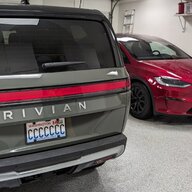
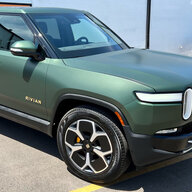
Tesla Model X vs. Rivian R1S from a real owner of both.
Owning both vehicles and having placed a significant number of miles on each, I believe I am able to make a fair comparison between the two.
* 2022 Model X Long Range: ~70k miles currently
* 2024 R1S Dual Motor Performance: ~10k miles currently
I've seen several posts claiming that "Rivian is better in every way," which I find far from reality. I will address the differences in multiple categories while trying to remain unbiased.
SOFTWARE:
Rivian: Without discussing software features I wish it had, such as Apple CarPlay, I'll focus exclusively on the software it does have as it was intended to be used. The software can be a bit frustrating in terms of ease and performance. The absence of a default Home Screen is something I realized might not be ideal but is still usable, as this is just an adjustment I had to make due to Rivian's design choice not being an industry standard. The hidden slide up manual at the bottom dock was hard to find on my own; YouTube helped with that. The software's performance in terms of speed/snappiness is laggy and delayed at times, averaging 1-2 seconds from press to action. It's unclear if the slow transitions are by design to optimize for hardware limitations or if it's intended to be quicker but is lagging due to hardware constraints. It's still very usable either way.
The navigation system is an area needing improvement. Long-distance route planning often fails, requiring repeated attempts until a route is provided. Searching an area of interest, like Walmart, only shows locations in a small radius,rather than a wider range. Missing a turn results in slow detection of missed turn slow and slow to rerouting. The addition of multiple third-party chargers on the navigation system is great. Graphics and fonts are fun, easy to see and read. The Spotify user layout is workable but could be improved for ease of use. Overall, the UI is good, but software optimization for ease of use is needed. Slower performance could be due to the processing chip running the software.
Tesla software:
One word comes to mind when operating Tesla's UI: speed. It performs like an iPad, with quick and immediate responses to taps. This wasn't always the case with Tesla's early models, but now the software experience is so quick that further performance improvements would be hardly noticeable. Maps are set as the Home Screen, with every manual overlaying on top until you exit out. Most features are easy to find in the UI, though some require searching. The maps system is user-friendly and quick to provide new routes when a turn is missed, offering a wider range of options for points of interest. The Spotify UI is effective and easy to navigate. Graphics are vibrant and bright. Overall, it's a solid UI with room for improvements but not hindered by performance. Tesla's software has an Apple product feel, making it easy to learn and use.
FEATURES:
Rivian: Heated and cooled seats work well. The camera system offers different viewpoints, especially useful for off-roading, with a very effective bird's eye view. The recent addition of a blind spot camera is welcome, though the picture quality is below industry standards. Gen2 vehicles have improved this area, but the low-resolution cameras in Gen1 are disappointing.
The dash cam has poor image quality, and live camera feed and remote playback are unavailable through the phone app.
Camp and dog modes are present but untested. The onboard air compressor is a clever and useful addition for off-roading. The included Bluetooth speaker and flashlight feel like exclusive perks of the Rivian experience.
Autowipers work well without needing manual override. Video streaming is currently unavailable, pending a software update. Spotify is the only built-in third-party music app and works well but more options are needed.
Driver assist features are limited, restricted to pre-mapped highways with basic lane-keeping and distance-following functionality. There is no clear path forward for new features due to hardware limitations.
Tesla features:
Heated and cooled seats work well. The camera system is good but lacks a bird's eye view, uses backup and side cameras when in reverse is still effective. Camera quality is high, possibly the best available. Blind spot cameras are good, with the ability to move the display around the UI. The dash cam has good quality, and live camera feed and remote playback through the phone app are great. Camp and dog modes are excellent. Autowipers often need manual override, posing a safety concern. Entertainment features include streaming options like YouTube, TikTok, Netflix, and a recently removed Disney+. The arcade of games and fun extras like karaoke, light shows, and Whoopie cushions enhance the experience. Music streaming options include Spotify and Apple Music, with good layouts.
Driver assist features are great, with slow but clear development for improvements and full self-driving capabilities. The system performs well on highways and in city driving, often better than most drivers on the road at its current state.
UTILITY:
Rivian: The vehicle's design provides more usable space for both passengers and cargo. The boxy shape and large hood offer more cubic space than the Tesla Model X. The large frunk with auto open and close is convenient. The second and third-row seats fold flat, and the no-slope roofline makes loading large items easier. The third row is comfortable, with ample leg and headroom for both second and third-row passengers. Off-road functions with high ground clearance make it the electric Land Rover I always wanted. Off road capabilities is a win but I can’t do a comparison as Tesla doesn’t have the capabilities. The split tailgate is practical for daily use, providing a work station with overhead cover. Overall, utility is a huge win for Rivian.
Tesla utility:
The sloping roofline limits cargo loading, and only the third row can lay flat due to the six-seat configuration. (Can be configured to 7 seat that all lay flat) The frunk is a good size, and the deeper trunk storage is suitable for suitcases and bags. The falcon wing doors are functional for loading kids and large people, and for accessing the back in tight spaces. Headroom in the second row is great, but the third row is suitable only for shorter passengers. Off-road capabilities are limited but decent on easy trails and unpaved roads. Overall, the Model X is good for people hauling but leaves heavier work to the Rivian.
DRIVING DYNAMICS:
Rivian: The R1S has a truck-like feel compared to the car-like feel of the Model X. It is less forgiving over harsh road conditions, with a more reactive body in terms of weight balancing around during turns and bumps. Recent software updates have improved this but it remains true in many ways. The strong regen braking promotes one-pedal driving but can tire the foot on long drives. What I’ve found the most interesting, is the mapping of the accelerator. Heavy, with control. Definitely one of the heaviest pressing accelerators on an EV I’ve experienced, especially compared to a Tesla. There’s also this very slight delay from paddle command to power delivered. It’s like less than half a second delay. Doesn’t feel instantaneously to your foot’s command. Handling/steering is is a bit more on the looser side, with softer steering and some road feedback in the steering. The turning radius is tight for a vehicle of this size.
Tesla driving dynamics:
The Model X feels light and car-like, with instantaneous power delivery from foot commands. It is responsive with minimal body movement through turns and bumps, resulting in a comfortable ride. Handling/steering is more direct with minimal road feedback. Adjustable steering stiffness through software allows for more play in steering for a looser feel. The air suspension with active dampers I imagine is contributes to the car-like feel. The turning radius is average, requiring a few 2-point U-turns.
In conclusion,
both vehicles have their strengths and weaknesses. The Rivian excels in utility and off-road capabilities, while Tesla's software performance and driver assist features are superior. Each vehicle caters to different needs and preferences. Not one is better in every way, but one may be better to that fits your needs in most ways.
Owning both vehicles and having placed a significant number of miles on each, I believe I am able to make a fair comparison between the two.
* 2022 Model X Long Range: ~70k miles currently
* 2024 R1S Dual Motor Performance: ~10k miles currently
I've seen several posts claiming that "Rivian is better in every way," which I find far from reality. I will address the differences in multiple categories while trying to remain unbiased.
SOFTWARE:
Rivian: Without discussing software features I wish it had, such as Apple CarPlay, I'll focus exclusively on the software it does have as it was intended to be used. The software can be a bit frustrating in terms of ease and performance. The absence of a default Home Screen is something I realized might not be ideal but is still usable, as this is just an adjustment I had to make due to Rivian's design choice not being an industry standard. The hidden slide up manual at the bottom dock was hard to find on my own; YouTube helped with that. The software's performance in terms of speed/snappiness is laggy and delayed at times, averaging 1-2 seconds from press to action. It's unclear if the slow transitions are by design to optimize for hardware limitations or if it's intended to be quicker but is lagging due to hardware constraints. It's still very usable either way.
The navigation system is an area needing improvement. Long-distance route planning often fails, requiring repeated attempts until a route is provided. Searching an area of interest, like Walmart, only shows locations in a small radius,rather than a wider range. Missing a turn results in slow detection of missed turn slow and slow to rerouting. The addition of multiple third-party chargers on the navigation system is great. Graphics and fonts are fun, easy to see and read. The Spotify user layout is workable but could be improved for ease of use. Overall, the UI is good, but software optimization for ease of use is needed. Slower performance could be due to the processing chip running the software.
Tesla software:
One word comes to mind when operating Tesla's UI: speed. It performs like an iPad, with quick and immediate responses to taps. This wasn't always the case with Tesla's early models, but now the software experience is so quick that further performance improvements would be hardly noticeable. Maps are set as the Home Screen, with every manual overlaying on top until you exit out. Most features are easy to find in the UI, though some require searching. The maps system is user-friendly and quick to provide new routes when a turn is missed, offering a wider range of options for points of interest. The Spotify UI is effective and easy to navigate. Graphics are vibrant and bright. Overall, it's a solid UI with room for improvements but not hindered by performance. Tesla's software has an Apple product feel, making it easy to learn and use.
FEATURES:
Rivian: Heated and cooled seats work well. The camera system offers different viewpoints, especially useful for off-roading, with a very effective bird's eye view. The recent addition of a blind spot camera is welcome, though the picture quality is below industry standards. Gen2 vehicles have improved this area, but the low-resolution cameras in Gen1 are disappointing.
The dash cam has poor image quality, and live camera feed and remote playback are unavailable through the phone app.
Camp and dog modes are present but untested. The onboard air compressor is a clever and useful addition for off-roading. The included Bluetooth speaker and flashlight feel like exclusive perks of the Rivian experience.
Autowipers work well without needing manual override. Video streaming is currently unavailable, pending a software update. Spotify is the only built-in third-party music app and works well but more options are needed.
Driver assist features are limited, restricted to pre-mapped highways with basic lane-keeping and distance-following functionality. There is no clear path forward for new features due to hardware limitations.
Tesla features:
Heated and cooled seats work well. The camera system is good but lacks a bird's eye view, uses backup and side cameras when in reverse is still effective. Camera quality is high, possibly the best available. Blind spot cameras are good, with the ability to move the display around the UI. The dash cam has good quality, and live camera feed and remote playback through the phone app are great. Camp and dog modes are excellent. Autowipers often need manual override, posing a safety concern. Entertainment features include streaming options like YouTube, TikTok, Netflix, and a recently removed Disney+. The arcade of games and fun extras like karaoke, light shows, and Whoopie cushions enhance the experience. Music streaming options include Spotify and Apple Music, with good layouts.
Driver assist features are great, with slow but clear development for improvements and full self-driving capabilities. The system performs well on highways and in city driving, often better than most drivers on the road at its current state.
UTILITY:
Rivian: The vehicle's design provides more usable space for both passengers and cargo. The boxy shape and large hood offer more cubic space than the Tesla Model X. The large frunk with auto open and close is convenient. The second and third-row seats fold flat, and the no-slope roofline makes loading large items easier. The third row is comfortable, with ample leg and headroom for both second and third-row passengers. Off-road functions with high ground clearance make it the electric Land Rover I always wanted. Off road capabilities is a win but I can’t do a comparison as Tesla doesn’t have the capabilities. The split tailgate is practical for daily use, providing a work station with overhead cover. Overall, utility is a huge win for Rivian.
Tesla utility:
The sloping roofline limits cargo loading, and only the third row can lay flat due to the six-seat configuration. (Can be configured to 7 seat that all lay flat) The frunk is a good size, and the deeper trunk storage is suitable for suitcases and bags. The falcon wing doors are functional for loading kids and large people, and for accessing the back in tight spaces. Headroom in the second row is great, but the third row is suitable only for shorter passengers. Off-road capabilities are limited but decent on easy trails and unpaved roads. Overall, the Model X is good for people hauling but leaves heavier work to the Rivian.
DRIVING DYNAMICS:
Rivian: The R1S has a truck-like feel compared to the car-like feel of the Model X. It is less forgiving over harsh road conditions, with a more reactive body in terms of weight balancing around during turns and bumps. Recent software updates have improved this but it remains true in many ways. The strong regen braking promotes one-pedal driving but can tire the foot on long drives. What I’ve found the most interesting, is the mapping of the accelerator. Heavy, with control. Definitely one of the heaviest pressing accelerators on an EV I’ve experienced, especially compared to a Tesla. There’s also this very slight delay from paddle command to power delivered. It’s like less than half a second delay. Doesn’t feel instantaneously to your foot’s command. Handling/steering is is a bit more on the looser side, with softer steering and some road feedback in the steering. The turning radius is tight for a vehicle of this size.
Tesla driving dynamics:
The Model X feels light and car-like, with instantaneous power delivery from foot commands. It is responsive with minimal body movement through turns and bumps, resulting in a comfortable ride. Handling/steering is more direct with minimal road feedback. Adjustable steering stiffness through software allows for more play in steering for a looser feel. The air suspension with active dampers I imagine is contributes to the car-like feel. The turning radius is average, requiring a few 2-point U-turns.
In conclusion,
both vehicles have their strengths and weaknesses. The Rivian excels in utility and off-road capabilities, while Tesla's software performance and driver assist features are superior. Each vehicle caters to different needs and preferences. Not one is better in every way, but one may be better to that fits your needs in most ways.
Sponsored