
ksurfier
Well-Known Member
- Thread starter
- #1
I did a two-part highway-efficiency test (both round trip) in the Rivian R2 (21”) to get a better feel for how it performs both in real-world Los Angeles freeway conditions and during a more controlled 70 mph cruise.
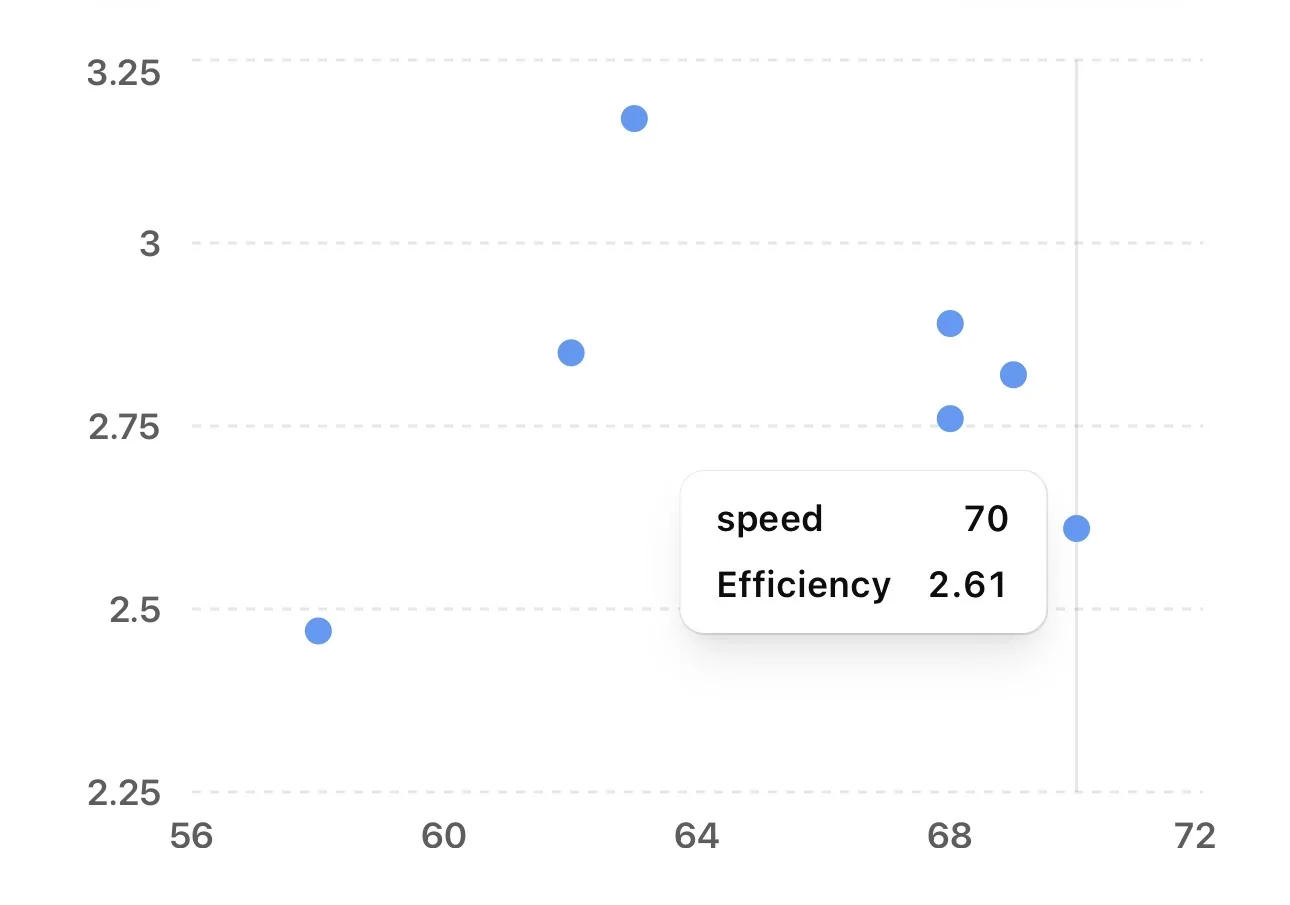
Phase 1 - 12.5 miles - 63 - 3.17
Phase 2 - 10.1 - 62 - 2.86
Total
22.6 miles - 62.5 mph - 3.0 MPK
Phase 1: Rivian Van Nuys to Skirball Center Drive
The first portion was designed to reflect normal LA freeway driving—which, of course, means a mix of high speeds, sudden congestion, elevation changes, and at least a little chaos.
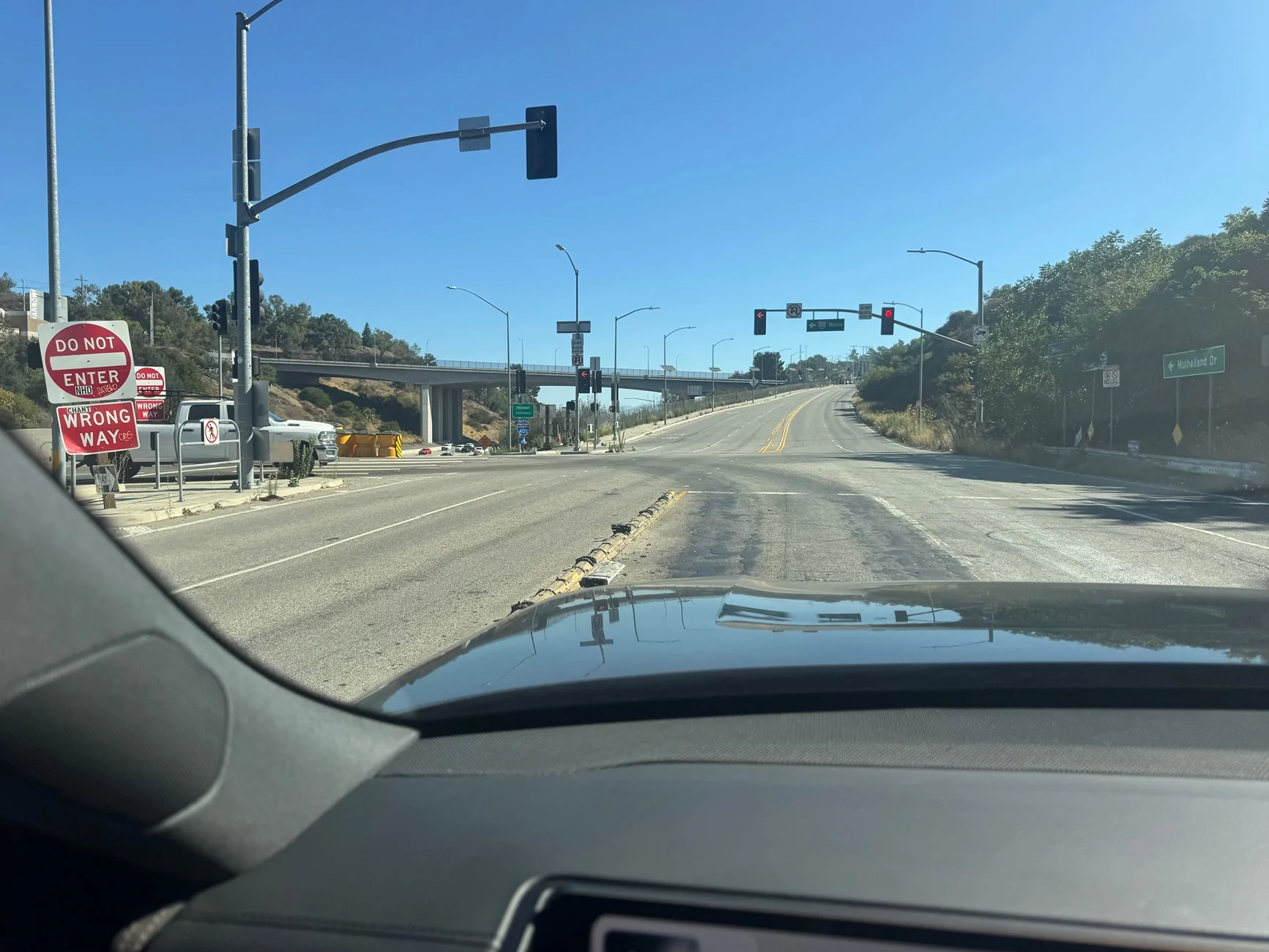
I started at Rivian Van Nuys and headed south toward Skirball Center Drive. The route includes a meaningful climb through the Sepulveda Pass. I drove approximately 75–80 mph whenever traffic allowed, but traffic slowed to around 30 mph for roughly a mile while climbing the grade.
Because of the uphill climb, changing speeds, congestion, and repeated acceleration, this was not intended to be a precise constant-speed test. It was more of a real-world highway-efficiency check under relatively demanding conditions.
Despite the elevation gain and faster cruising speeds, the R2 returned approximately 2.85 mi/kWh over the roughly 10-mile segment.
The lower average speed shown for the trip reflects the traffic slowdown and should not be mistaken for a steady 62 mph test. The R2 was not quietly loafing along in the slow lane.
Phase 2: Controlled 70 mph Test
For the second phase, I tried to isolate efficiency at a true 70 mph.
I used a freeway segment on the 118, made a quick off-and-on turnaround at Woodley Avenue, and returned in the opposite direction. The goal was to reduce the effects of elevation, wind, and any suspiciously helpful downhill advantage.
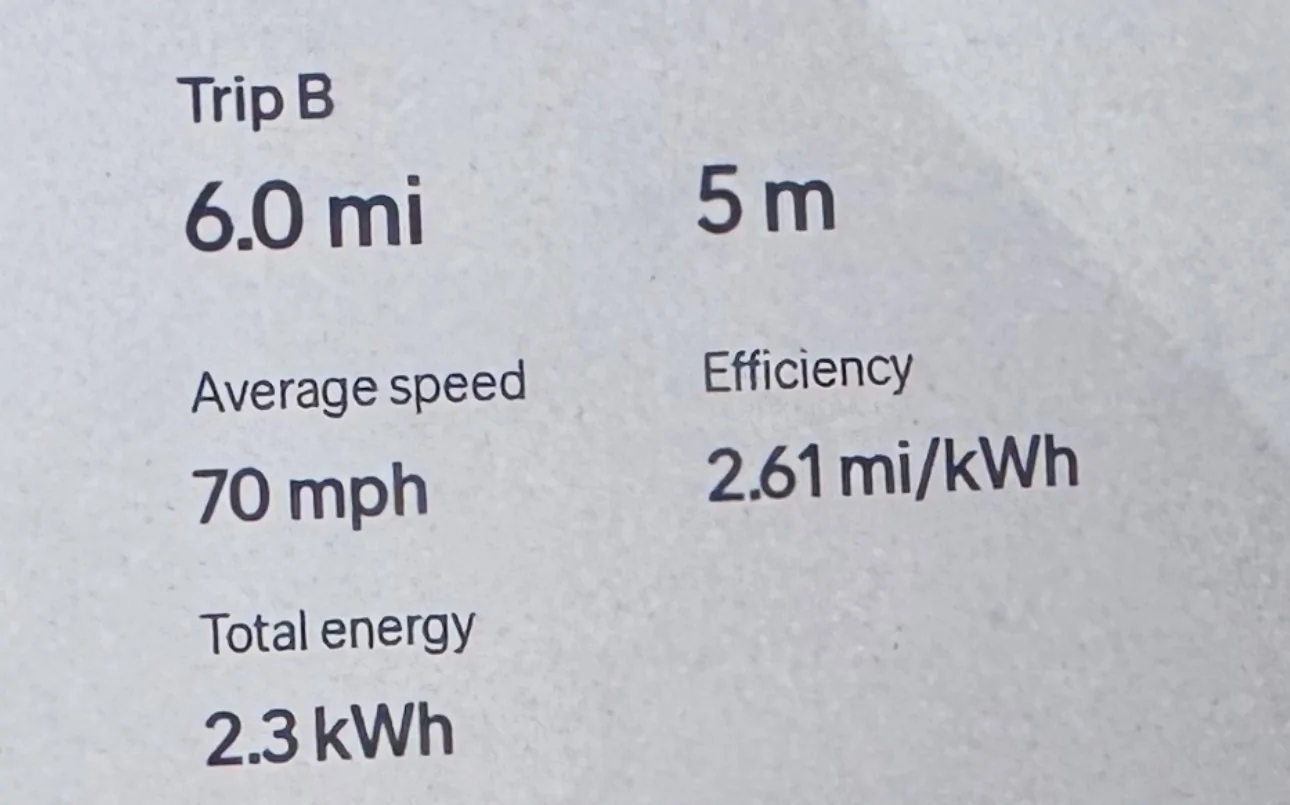
The most representative 70 mph segment was:
Takeaway
The first test suggests that the R2 can produce surprisingly strong efficiency during a mixed, uphill freeway run, even at 75–80 mph when traffic permits.
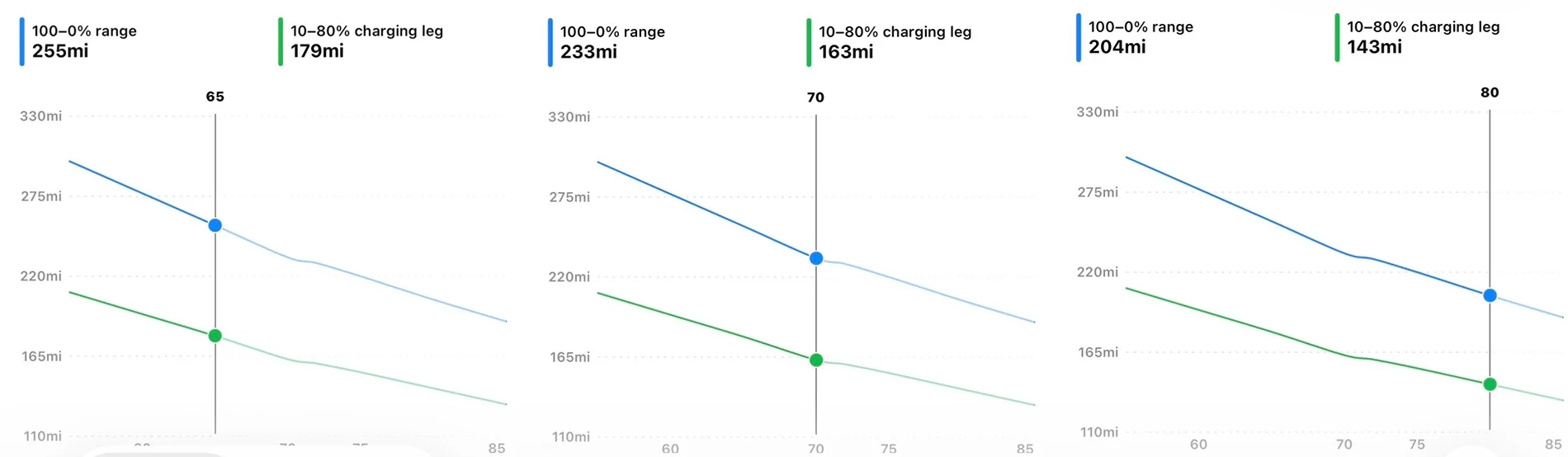
The more representative steady-speed result, however, appears to be approximately 2.6 mi/kWh at a true 70 mph in warm-weather conditions.
With an assumed 88-kWh usable battery, that would translate to approximately:


Phase 1 - 12.5 miles - 63 - 3.17
Phase 2 - 10.1 - 62 - 2.86
Total
22.6 miles - 62.5 mph - 3.0 MPK
Phase 1: Rivian Van Nuys to Skirball Center Drive
The first portion was designed to reflect normal LA freeway driving—which, of course, means a mix of high speeds, sudden congestion, elevation changes, and at least a little chaos.
I started at Rivian Van Nuys and headed south toward Skirball Center Drive. The route includes a meaningful climb through the Sepulveda Pass. I drove approximately 75–80 mph whenever traffic allowed, but traffic slowed to around 30 mph for roughly a mile while climbing the grade.
Because of the uphill climb, changing speeds, congestion, and repeated acceleration, this was not intended to be a precise constant-speed test. It was more of a real-world highway-efficiency check under relatively demanding conditions.
Despite the elevation gain and faster cruising speeds, the R2 returned approximately 2.85 mi/kWh over the roughly 10-mile segment.
The lower average speed shown for the trip reflects the traffic slowdown and should not be mistaken for a steady 62 mph test. The R2 was not quietly loafing along in the slow lane.
Phase 2: Controlled 70 mph Test
For the second phase, I tried to isolate efficiency at a true 70 mph.
I used a freeway segment on the 118, made a quick off-and-on turnaround at Woodley Avenue, and returned in the opposite direction. The goal was to reduce the effects of elevation, wind, and any suspiciously helpful downhill advantage.
The most representative 70 mph segment was:
- 6.0 miles
- 70 mph average speed
- 2.61 mi/kWh
- Approximately 84°F
Takeaway
The first test suggests that the R2 can produce surprisingly strong efficiency during a mixed, uphill freeway run, even at 75–80 mph when traffic permits.
The more representative steady-speed result, however, appears to be approximately 2.6 mi/kWh at a true 70 mph in warm-weather conditions.
With an assumed 88-kWh usable battery, that would translate to approximately:
- 230 miles of theoretical 100–0% highway range
- 160 miles between charging stops using a 10–80% window
Sponsored
Last edited: