
Sponsored

‘World’s first’ DC-to-DC solar-powered EV charger - by Enteligent

UnsungZero_OldTimeAdMan

Well-Known Member
First Name
Barnum
Joined
Mar 20, 2023
Threads
68
Messages
8,697
Reaction score
11,936
Location
SoCal
Vehicles
'23 GW Quad-Large R1T "Ghost"
Occupation
Advertising Circus
Since solar charging has been discussed in a recent thread, thought article on Electrek (updated today) might be of interest to some.

https://electrek.co/2024/08/21/dc-to-dc-solar-powered-ev-charger/

Check out the ‘world’s first’ DC-to-DC solar-powered EV charger

California-based Enteligent is accepting pre-orders for what it claims is the world’s first DC-to-DC solar-powered EV charger.

August 21, 2024 update: Enteligent has raised $6 million in capital from investors to scale the commercialization of its DC-to-DC solar-powered EV chargers. Taronga Ventures led the funding round. This latest funding round brings the company’s total fundraising to $19 million since 2021.

The company also announced that it’s supplying a long-dwell-time 25kW DC-to-DC EV charger to a large logistics company to power its newly electrified delivery fleet.

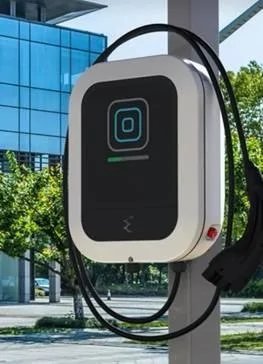
May 8, 2024: The solar EV charging tech company launched its product in February 2023 at Intersolar North America in Long Beach, California, and now it’s ready to take pre-orders. The TLCEV T1 solar EV charger can supply up to 12.5 kW of DC charging – twice as fast as many AC EV chargers – and it allows at-home, at-work, and at-store charging powered directly by existing solar panels.

EV owners usually plug their cars into home chargers that are powered by an alternating current (AC) flow of energy generated from the electric grid. However, EV batteries operate on a direct current (DC), requiring the power to be converted from AC to DC in the charging process. Enteligent says its charger’s DC-to-DC conversion results in 20% energy savings and bypasses the EV’s internal conversion electronics, shortening charge time.

Rivian R1T R1S ‘World’s first’ DC-to-DC solar-powered EV charger - by Enteligent enteligent-EV-charger

The TLCEV T1 charger’s design integrates EV charging directly into solar canopies and carports. (It can be connected to an existing home PV string inverter solar installation, but not to a microinverter installation.)

Since the charger doesn’t rely on the grid, lengthy permitting processes are bypassed. The TLCEV T1 charger provides NACS and CCS-1 options and a 25-foot cable.

Enteligent announced in February 2023 that it had raised $7 million in capital from strategic and institutional investors to commercialize its DC-to-DC solar EV charger.

Enteligent is taking a pre-order deposit of $250, and its early-bird price of the TLCEV T1 is $2,249. Pre-orders can be placed here.
Sponsored

 
Last edited:

agame32

Well-Known Member
First Name
Aaron
Joined
Oct 19, 2021
Threads
9
Messages
325
Reaction score
324
Location
CA
Vehicles
R1T, Model Y
Very interesting!
 

Billyt1963

Well-Known Member
First Name
William
Joined
Feb 13, 2024
Threads
19
Messages
213
Reaction score
151
Location
Tennessee
Vehicles
Acura MDX, R1T
Occupation
Retired
Sounds like a good idea, save some energy on the AC/DC inverter. Would be good to have it direct connect to a external battery for storage when the vehicle doesn’t need a charge.
 

KBabione

Well-Known Member
First Name
Kevin
Joined
Sep 11, 2023
Threads
48
Messages
1,480
Reaction score
2,018
Location
Lititz, PA
Vehicles
2023 R1S Quad (8/23)
Occupation
Consultant
This is great! Thanks for posting - I may have an application for this in the spring.
 

docwhiz

Well-Known Member
First Name
Mark
Joined
May 22, 2023
Threads
5
Messages
668
Reaction score
618
Location
Lake Tahoe, California
Vehicles
Tesla Model S LR (2022), Land Rover Discovery 2
Occupation
Retired
I don't understand how this works as "pure DC charging"
Solar PV generates DC at some random (and variable) voltage.
DC level 3 charging provides a certain voltage to the car which must be higher than the battery voltage (400 volts) in order for current to flow to the battery.
So, there must be some adjustment of the input solar DC to raise it to above the battery voltage. The only way I know to do this is with DC-AC-DC conversion.
(I guess you could design it so that your solar string generation peaks above 400 volts but then you would miss a lot of power when clouds, etc. dropped the voltage.)
 

Sponsored

ohseedee

Well-Known Member
Joined
Mar 1, 2022
Threads
15
Messages
735
Reaction score
1,728
Location
California
Vehicles
R1T
I don't understand how this works as "pure DC charging"
Solar PV generates DC at some random (and variable) voltage.
DC level 3 charging provides a certain voltage to the car which must be higher than the battery voltage (400 volts) in order for current to flow to the battery.
So, there must be some adjustment of the input solar DC to raise it to above the battery voltage. The only way I know to do this is with DC-AC-DC conversion.
(I guess you could design it so that your solar string generation peaks above 400 volts but then you would miss a lot of power when clouds, etc. dropped the voltage.)
In the FAQ it says "As long as the strings are within the 340-600V and maximum 20A range." My assumption is if the solar voltage happens to drop below 340 and/or below the pack voltage it stops charging.. If that’s the case, where does that energy go and are there situations where you are losing solar energy with this solution that you would have gotten with the traditional grid tie approach?
 

COdogman

Well-Known Member
First Name
Brian
Joined
Jan 21, 2022
Threads
33
Messages
11,641
Reaction score
34,494
Location
CO
Vehicles
2023 R1T
Occupation
Cyber defender
Clubs
 
Very cool!
 

moosetags

Well-Known Member
First Name
SuEllyn & Brian
Joined
Dec 25, 2021
Threads
110
Messages
1,940
Reaction score
3,219
Location
Santa Rosa Beach, Florida
Vehicles
2023 R1T; 2020 Chevy Duramax; 1956 Ford Tbird
Occupation
Retired
Clubs
 
Sounds like a good idea, save some energy on the AC/DC inverter. Would be good to have it direct connect to a external battery for storage when the vehicle doesn’t need a charge.
That's a great idea.

Brian
 

docwhiz

Well-Known Member
First Name
Mark
Joined
May 22, 2023
Threads
5
Messages
668
Reaction score
618
Location
Lake Tahoe, California
Vehicles
Tesla Model S LR (2022), Land Rover Discovery 2
Occupation
Retired
In the FAQ it says "As long as the strings are within the 340-600V and maximum 20A range." My assumption is if the solar voltage happens to drop below 340 and/or below the pack voltage it stops charging.. If that’s the case, where does that energy go and are there situations where you are losing solar energy with this solution that you would have gotten with the traditional grid tie approach?
The direct DC charger would be more efficient when it is operating.
However, if the solar pv isn't generating enough voltage or if there are no cars connected then the energy is wasted and this could be a significant loss.
It would probably be good to have some alternative such as a battery or grid connection which could use this power which would otherwise be wasted.
 

Sponsored

Billyt1963

Well-Known Member
First Name
William
Joined
Feb 13, 2024
Threads
19
Messages
213
Reaction score
151
Location
Tennessee
Vehicles
Acura MDX, R1T
Occupation
Retired
I don't understand how this works as "pure DC charging"
Solar PV generates DC at some random (and variable) voltage.
DC level 3 charging provides a certain voltage to the car which must be higher than the battery voltage (400 volts) in order for current to flow to the battery.
So, there must be some adjustment of the input solar DC to raise it to above the battery voltage. The only way I know to do this is with DC-AC-DC conversion.
(I guess you could design it so that your solar string generation peaks above 400 volts but then you would miss a lot of power when clouds, etc. dropped the voltage.)
There are such things as dc step up transformers. Looks like the voltage range is pretty limited (right now). I am sure if there is a need some electrical engineer will figure out a way. This will increase losses, but hopefully not as much as dc/ac/dc conversion.
 

pricedm

Well-Known Member
First Name
Adam
Joined
Oct 22, 2022
Threads
1
Messages
247
Reaction score
331
Location
Denver, CO near Rivian and Tesla service centers
Vehicles
Tesla
In the FAQ it says "As long as the strings are within the 340-600V and maximum 20A range." My assumption is if the solar voltage happens to drop below 340 and/or below the pack voltage it stops charging.. If that’s the case, where does that energy go and are there situations where you are losing solar energy with this solution that you would have gotten with the traditional grid tie approach?
Agree. Seems like battery for energy storage is necessary.

Great concept for "off-grid" situations.
 

docwhiz

Well-Known Member
First Name
Mark
Joined
May 22, 2023
Threads
5
Messages
668
Reaction score
618
Location
Lake Tahoe, California
Vehicles
Tesla Model S LR (2022), Land Rover Discovery 2
Occupation
Retired
There are such things as dc step up transformers. Looks like the voltage range is pretty limited (right now). I am sure if there is a need some electrical engineer will figure out a way. This will increase losses, but hopefully not as much as dc/ac/dc conversion.
DC step up transformers work by changing the DC to AC, running it through a transformer then changing it back to DC. So... there are efficiency losses.
You can drop DC voltage down to a lower voltage through resistance (very inefficient) or pulse modulation but we need to increase the voltage, not decrease it so you're stuck with DC-AC-DC.
(I am an EE)
 

docwhiz

Well-Known Member
First Name
Mark
Joined
May 22, 2023
Threads
5
Messages
668
Reaction score
618
Location
Lake Tahoe, California
Vehicles
Tesla Model S LR (2022), Land Rover Discovery 2
Occupation
Retired
Agree. Seems like battery for energy storage is necessary.

Great concept for "off-grid" situations.
I have something similar at my office building. It's a solar canopy with battery storage. (Beamforall.com)
It doesn't attempt to do direct DC charging. It takes the solar PV and stores it in a battery (40 kWh) (with the option for a grid connection for surplus) then turns it into AC charging (5 kW). Works well (and probably more efficient overall).
 

Billyt1963

Well-Known Member
First Name
William
Joined
Feb 13, 2024
Threads
19
Messages
213
Reaction score
151
Location
Tennessee
Vehicles
Acura MDX, R1T
Occupation
Retired
DC step up transformers work by changing the DC to AC, running it through a transformer then changing it back to DC. So... there are efficiency losses.
You can drop DC voltage down to a lower voltage through resistance (very inefficient) or pulse modulation but we need to increase the voltage, not decrease it so you're stuck with DC-AC-DC.
(I am an EE)
I also have an electrical engineering degree (it has been 36 years since I studied and I have worked in ac utilities for my entire career), but this is what I was referencing:

https://www.monolithicpower.com/en/...re a type,voltage conversion is made possible.

This doesn’t sound like they are using an inverter to go to ac, but maybe I am reading it wrong.
Sponsored


Top