
Sponsored
Charging a Rivian from various outlets (tried 120v through the 14-50 mobile charger too)

SwaziCAR
Well-Known Member
- First Name
- Tom
- Joined
- Oct 15, 2021
- Threads
- 1
- Messages
- 175
- Reaction score
- 177
- Location
- Portland, Oregon
- Vehicles
- 1996 Subaru Legacy Brighton, 2023 Rivian R1T
- Occupation
- Retired Office Boy
Question: Do you ever run into a "that's too much extension cord" (length) problem? For example, if you have an extension cord on one leg of the input side of your Quick 220 and your 75-footer on the outlet end, do things still work?I also got a 75 foot, 10 gauge extension cord and put 6-20 plugs on each end (240v @ 20 amps) to reach to where the outlet(s) might be....This cord also plugs right into the Quick 220's outlet.
Thanks for any clarification/speculation.
rpo
Well-Known Member
- First Name
- Ryan
- Joined
- Feb 28, 2023
- Threads
- 8
- Messages
- 140
- Reaction score
- 202
- Location
- Bellingham, WA
- Vehicles
- R1S
- Occupation
- Finance
- Thread starter
- #48
I have plugged the quick 220 with one leg straight into the outlet and the other on a 100 foot 10 gauge extension cord. No issues at all. When charging on 240v, the total voltage is what matters.Question: Do you ever run into a "that's too much extension cord" (length) problem? For example, if you have an extension cord on one leg of the input side of your Quick 220 and your 75-footer on the outlet end, do things still work?
Thanks for any clarification/speculation.
As an example, think of one plug getting 118 volts on a short extension cord and the other getting 109 volts because of voltage loss over a long extension cord. The total is 227 volts which is what the car can use to charge. If you had a bigger gauge wire or shorter cord (or both), you might get that low leg up to 118 volts which means 236 volts in total. That simply means about 3% more power getting to the car instead of being lost to heat/impedance in the extension cord.
Is that worth it for a temporary charging situation? Probably not. If using a quick220 is a permanent charging system, then it probably is.
Autolycus
Well-Known Member
I hadn't seen this thread, and I have to say the geek in me absolutely loves it. The attorney in me absolutely hates it though! ? ?
I'm super intrigued by the idea of plugging into a hotel parking lot's lamp post. So many hotels are lacking chargers!
I'm super intrigued by the idea of plugging into a hotel parking lot's lamp post. So many hotels are lacking chargers!
SwaziCAR
Well-Known Member
- First Name
- Tom
- Joined
- Oct 15, 2021
- Threads
- 1
- Messages
- 175
- Reaction score
- 177
- Location
- Portland, Oregon
- Vehicles
- 1996 Subaru Legacy Brighton, 2023 Rivian R1T
- Occupation
- Retired Office Boy
Regarding the TT-30 receptacle found at many campgrounds:
The RV-centric websites I've checked seem to view the 30-amp threshold (rather than the 80% of 30 amps threshold) as the line not to cross when plugging in. (One example: https://www.gorving.com/tips-inspiration/how-tos/rv-living-30-amps )
1) Are campground TT-30s typically able to provide 30 amps continuously, or are these RV sites such as the one linked above just wrong?
(The only TT-30 I've used is at a friend's house, with the receptacle clearly wired to a 30-amp breaker, so we did dial down the Rivian to 24 amps.)
2) Assuming one should not exceed 80% of 30 amps on a TT-30, and assuming a 15-amp outlet also is available, it seems something like this might be useful: https://www.jbtools.com/sportsman-c...OulX4sh9LAzqyTy_eoY7XsEDo0j33IpxoCVQgQAvD_BwE
Has anyone used such an adapter and, if so, how did it go?
Thanks in advance for any comments.
The RV-centric websites I've checked seem to view the 30-amp threshold (rather than the 80% of 30 amps threshold) as the line not to cross when plugging in. (One example: https://www.gorving.com/tips-inspiration/how-tos/rv-living-30-amps )
1) Are campground TT-30s typically able to provide 30 amps continuously, or are these RV sites such as the one linked above just wrong?
(The only TT-30 I've used is at a friend's house, with the receptacle clearly wired to a 30-amp breaker, so we did dial down the Rivian to 24 amps.)
2) Assuming one should not exceed 80% of 30 amps on a TT-30, and assuming a 15-amp outlet also is available, it seems something like this might be useful: https://www.jbtools.com/sportsman-c...OulX4sh9LAzqyTy_eoY7XsEDo0j33IpxoCVQgQAvD_BwE
Has anyone used such an adapter and, if so, how did it go?
Thanks in advance for any comments.
Sponsored
rpo
Well-Known Member
- First Name
- Ryan
- Joined
- Feb 28, 2023
- Threads
- 8
- Messages
- 140
- Reaction score
- 202
- Location
- Bellingham, WA
- Vehicles
- R1S
- Occupation
- Finance
- Thread starter
- #51
The Rivian (and all other EVs too) will try to pull an equal # of amps across both legs, so using this would mean you have to set it to 12 amps. 12 amps x 240 volts = 2880 watts. Using the TT-30 on its own would be 24 amps x 120 volts = 2880 watts. It does not end up netting you anything using this adapter with an EV.Regarding the TT-30 receptacle found at many campgrounds:
The RV-centric websites I've checked seem to view the 30-amp threshold (rather than the 80% of 30 amps threshold) as the line not to cross when plugging in. (One example: https://www.gorving.com/tips-inspiration/how-tos/rv-living-30-amps )
1) Are campground TT-30s typically able to provide 30 amps continuously, or are these RV sites such as the one linked above just wrong?
(The only TT-30 I've used is at a friend's house, with the receptacle clearly wired to a 30-amp breaker, so we did dial down the Rivian to 24 amps.)
2) Assuming one should not exceed 80% of 30 amps on a TT-30, and assuming a 15-amp outlet also is available, it seems something like this might be useful: https://www.jbtools.com/sportsman-c...OulX4sh9LAzqyTy_eoY7XsEDo0j33IpxoCVQgQAvD_BwE
Has anyone used such an adapter and, if so, how did it go?
Thanks in advance for any comments.

HaveBlue
Well-Known Member
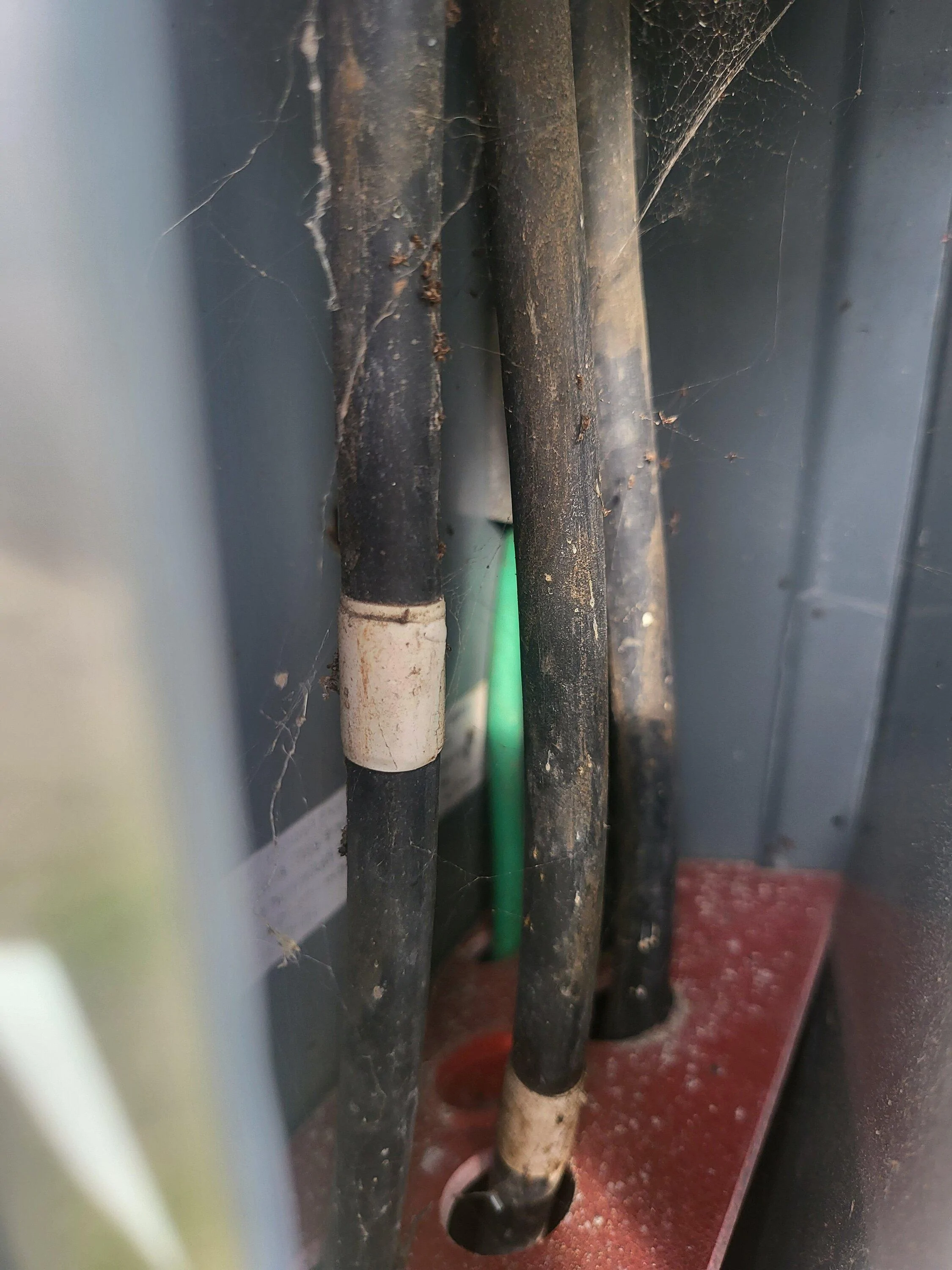
I don't understand your comment. The wattage and voltage do not determine the wire capacity. Some campgrounds only have a TT30 so you need an adapter. There is no 240v outlet present and if there were, you wouldn't need to dial it to 12A. The pedestals are often supplied with 1/0 cable. The limitation to amperage would be the 30A breaker and the outlet. Last time I used one I set it to 26A and nothing got hot but I didn't want anything tripping overnight. The actual outlet was pretty old as well and buzzed regardless of the setting indicating a poor plug connection when moved. I could see where people run them at 30A continuous though if they are in good shape. The prongs are similar in size to a 14-50.The Rivian (and all other EVs too) will try to pull an equal # of amps across both legs, so using this would mean you have to set it to 12 amps. 12 amps x 240 volts = 2880 watts. Using the TT-30 on its own would be 24 amps x 120 volts = 2880 watts. It does not end up netting you anything using this adapter with an EV.
rpo
Well-Known Member
- First Name
- Ryan
- Joined
- Feb 28, 2023
- Threads
- 8
- Messages
- 140
- Reaction score
- 202
- Location
- Bellingham, WA
- Vehicles
- R1S
- Occupation
- Finance
- Thread starter
- #53
Ah, I assumed that adapter was putting the 15 on one phase and the 30 on the other.I don't understand your comment. The wattage and voltage do not determine the wire capacity. Some campgrounds only have a TT30 so you need an adapter. There is no 240v outlet present and if there were, you wouldn't need to dial it to 12A. The pedestals are often supplied with 1/0 cable. The limitation to amperage would be the 30A breaker and the outlet. Last time I used one I set it to 26A and nothing got hot but I didn't want anything tripping overnight. The actual outlet was pretty old as well and buzzed regardless of the setting indicating a poor plug connection when moved. I could see where people run them at 30A continuous though if they are in good shape. The prongs are similar in size to a 14-50.

I believe this adapter is wired so the hot from the 15 goes to one hot in the 14-50 outlet, and the 30 goes to the other hot. If both are on the same phase, the Rivian won't be able to do anything with thisadapter as the neutral is not connected (on the 14-50 plug with the Rivian charger or other EVs for that matter) to finish the circuit. The Rivian will be looking for 240v across those two hots, and with them being on the same phase, it won't work.
HaveBlue
Well-Known Member
Ah I see what you are getting at. Yes, a 14-50 has both hot legs of the phase and a neutral. An EV ignores the neutral lead and uses the hots on the mobile charger 14-50 plug. A TT30 receptacle has one hot and the neutral. When you have an RV TT30 adapter, it connects the hot lead to one post on the 14-50 and the neutral to neutral. This means only one AirCon unit on the RV will work but you get 120V everywhere else. If you use that adapter for an EV you get no connection for power (because the EV ignores the 14-50 neutral lead). An EV specific adapter transposes the TT30 neutral to the other hot on the 14-50. This way there's power but only 120V albeit up to 30A. The car adapts to the 120V. The Rivian 5-15 adapter does this same trick but you are limited to 12A. The leads themselves have to be able to carry the current whether they are the supply or return, hot or neutral and have to all be sized large. The ground is permitted to be two sizes smaller under certain circumstances since it doesn't see continuous duty.
rpo
Well-Known Member
- First Name
- Ryan
- Joined
- Feb 28, 2023
- Threads
- 8
- Messages
- 140
- Reaction score
- 202
- Location
- Bellingham, WA
- Vehicles
- R1S
- Occupation
- Finance
- Thread starter
- #55
You nailed it. Now going back to the wire size feeding that panel, I used to do a lot of temporary power installs for outdoor concerts, and with a well fed panel, we often would tie into the busbars directly. Doing that and bypassing the breaker with that size feed could get you 50 amps (40 continuous) at 120v into the mobile charger. Ha!Ah I see what you are getting at. Yes, a 14-50 has both hot legs of the phase and a neutral. An EV ignores the neutral lead and uses the hots on the mobile charger 14-50 plug. A TT30 receptacle has one hot and the neutral. When you have an RV TT30 adapter, it connects the hot lead to one post on the 14-50 and the neutral to neutral. This means only one AirCon unit on the RV will work but you get 120V everywhere else. If you use that adapter for an EV you get no connection for power (because the EV ignores the 14-50 neutral lead). An EV specific adapter transposes the TT30 neutral to the other hot on the 14-50. This way there's power but only 120V albeit up to 30A. The car adapts to the 120V. The Rivian 5-15 adapter does this same trick but you are limited to 12A. The leads themselves have to be able to carry the current whether they are the supply or return, hot or neutral and have to all be sized large. The ground is permitted to be two sizes smaller under certain circumstances since it doesn't see continuous duty.
Sponsored
ksujeff99
Well-Known Member
- First Name
- Jeff
- Joined
- Feb 22, 2022
- Threads
- 23
- Messages
- 384
- Reaction score
- 822
- Location
- Kansas City
- Vehicles
- 2022 R1T
- Occupation
- Financial Services
I used a series of adapters this summer to let me charge at 16 amps on a 20a 110v circuit. I used a 5-20 to TT30 adapter and a TT30 to 14-50 EV-specific adapter. Then I plugged the mobile charger into that. It may seem like overkill but it was a third faster than charging at 12 amps.You nailed it. Now going back to the wire size feeding that panel, I used to do a lot of temporary power installs for outdoor concerts, and with a well fed panel, we often would tie into the busbars directly. Doing that and bypassing the breaker with that size feed could get you 50 amps (40 continuous) at 120v into the mobile charger. Ha!
I assume there is a 5-20 to 14-50 adapter out there somewhere but I already had the TT30 to 14-50 adapter in my arsenal so it was just a few bucks to buy the 5-20 to TT30 one (Amazon Warehouse FTW!).
rpo
Well-Known Member
- First Name
- Ryan
- Joined
- Feb 28, 2023
- Threads
- 8
- Messages
- 140
- Reaction score
- 202
- Location
- Bellingham, WA
- Vehicles
- R1S
- Occupation
- Finance
- Thread starter
- #57
There are some available from EVSE: https://www.evseadapters.com/shop/en/I used a series of adapters this summer to let me charge at 16 amps on a 20a 110v circuit. I used a 5-20 to TT30 adapter and a TT30 to 14-50 EV-specific adapter. Then I plugged the mobile charger into that. It may seem like overkill but it was a third faster than charging at 12 amps.
I assume there is a 5-20 to 14-50 adapter out there somewhere but I already had the TT30 to 14-50 adapter in my arsenal so it was just a few bucks to buy the 5-20 to TT30 one (Amazon Warehouse FTW!).
But...16 amps is actually 50% faster at charging vs 12 amps because of the charging overhead. It's even better than you thought!

Dark-Fx
Well-Known Member
Voltage drop will be much lower percentage in this situation though, assuming you actually have both legs of split phase available. Charging efficiency is also better when the vehicle doesn't have to step the voltage up as far. There's probably a measurable difference over the course of a day.The Rivian (and all other EVs too) will try to pull an equal # of amps across both legs, so using this would mean you have to set it to 12 amps. 12 amps x 240 volts = 2880 watts. Using the TT-30 on its own would be 24 amps x 120 volts = 2880 watts. It does not end up netting you anything using this adapter with an EV.
rpo
Well-Known Member
- First Name
- Ryan
- Joined
- Feb 28, 2023
- Threads
- 8
- Messages
- 140
- Reaction score
- 202
- Location
- Bellingham, WA
- Vehicles
- R1S
- Occupation
- Finance
- Thread starter
- #59
It turned out to be single phase after all, so can't use the adapter at all.Voltage drop will be much lower percentage in this situation though, assuming you actually have both legs of split phase available. Charging efficiency is also better when the vehicle doesn't have to step the voltage up as far. There's probably a measurable difference over the course of a day.
HaveBlue
Well-Known Member
It's a shame the 5-15 mobile adapter doesn't allow amperage adjustment but it's a safety thing for people who don't know a 5-15 from a 5-20. Using the TT30 to 5-15 adapters stacked is not a bad idea if you can support the plugs for a good connection. Going direct to the bus bar on the pedestal is really gutsy, LOL! Won't be long before EV charging gets banned then.
The TT30 does about 25% charge overnight which is fine. Here's how I use two TT30s. One for the EV into the actual TT30R and a 5-15 adapter for the trailer.
However, it's crossed my mind to wire a 60A BR/QP series breaker to a 14-50R with a ground clamp and throw it in the charge kit. If renting a B&B, just open the panel cover and pop the 60 into spare slots and charge off the panel at whatever the mobile unit will muster. Problem being there's no guarantee on what panel someone will have and dangling wires out the front of the panel are less than optimal.
The TT30 does about 25% charge overnight which is fine. Here's how I use two TT30s. One for the EV into the actual TT30R and a 5-15 adapter for the trailer.
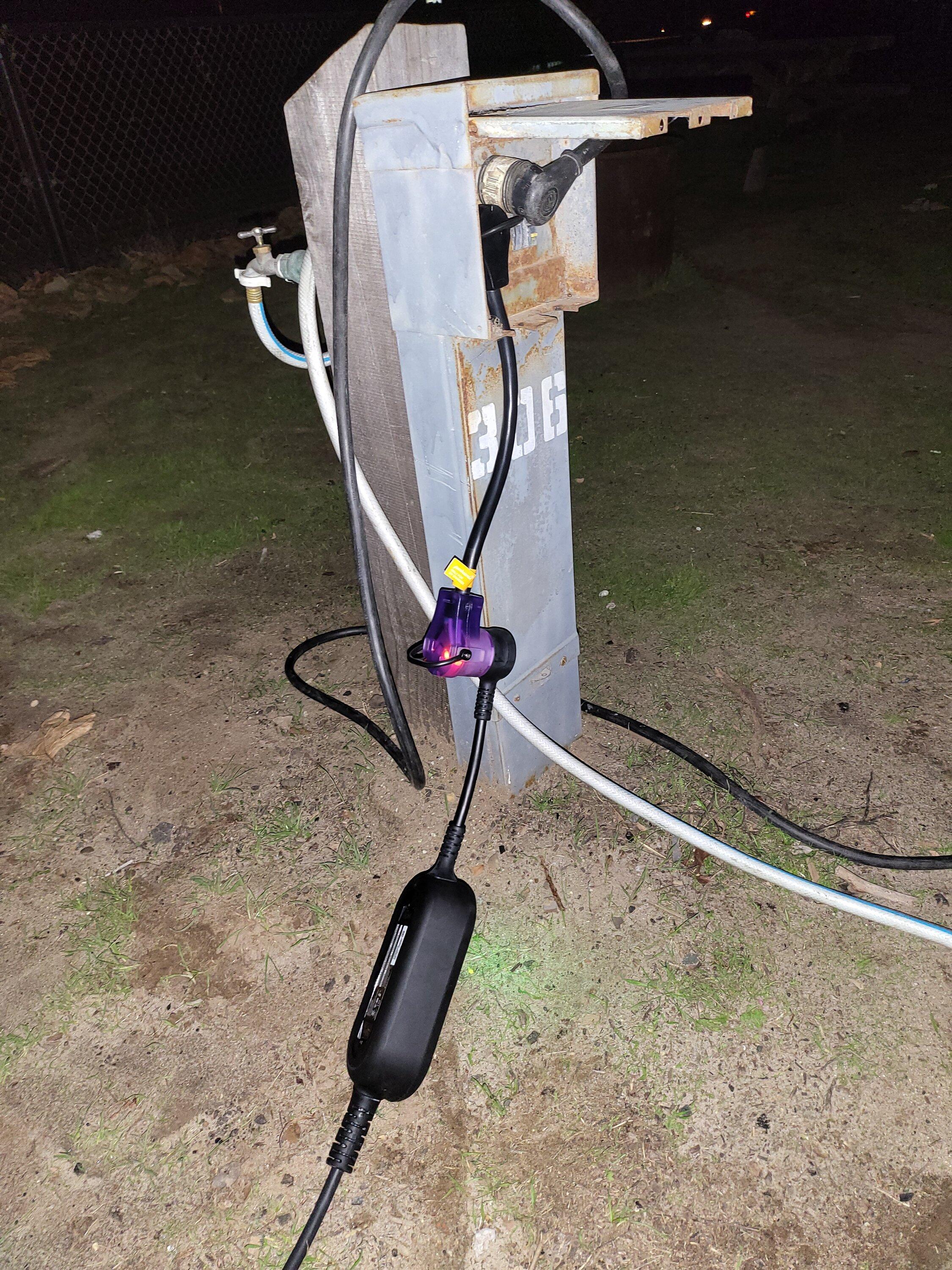
However, it's crossed my mind to wire a 60A BR/QP series breaker to a 14-50R with a ground clamp and throw it in the charge kit. If renting a B&B, just open the panel cover and pop the 60 into spare slots and charge off the panel at whatever the mobile unit will muster. Problem being there's no guarantee on what panel someone will have and dangling wires out the front of the panel are less than optimal.
Sponsored
Similar threads
- Replies
- 2,291
- Views
- 631,274

- Replies
- 95
- Views
- 10,549


- Replies
- 21
- Views
- 1,024
