
Sponsored

Electrify America pricing (per minute vs. per kW)

mkennedy1996

Well-Known Member
First Name
Max
Joined
Nov 18, 2020
Threads
41
Messages
437
Reaction score
744
Location
North Georgia
Vehicles
R1S, Model X, Model Y
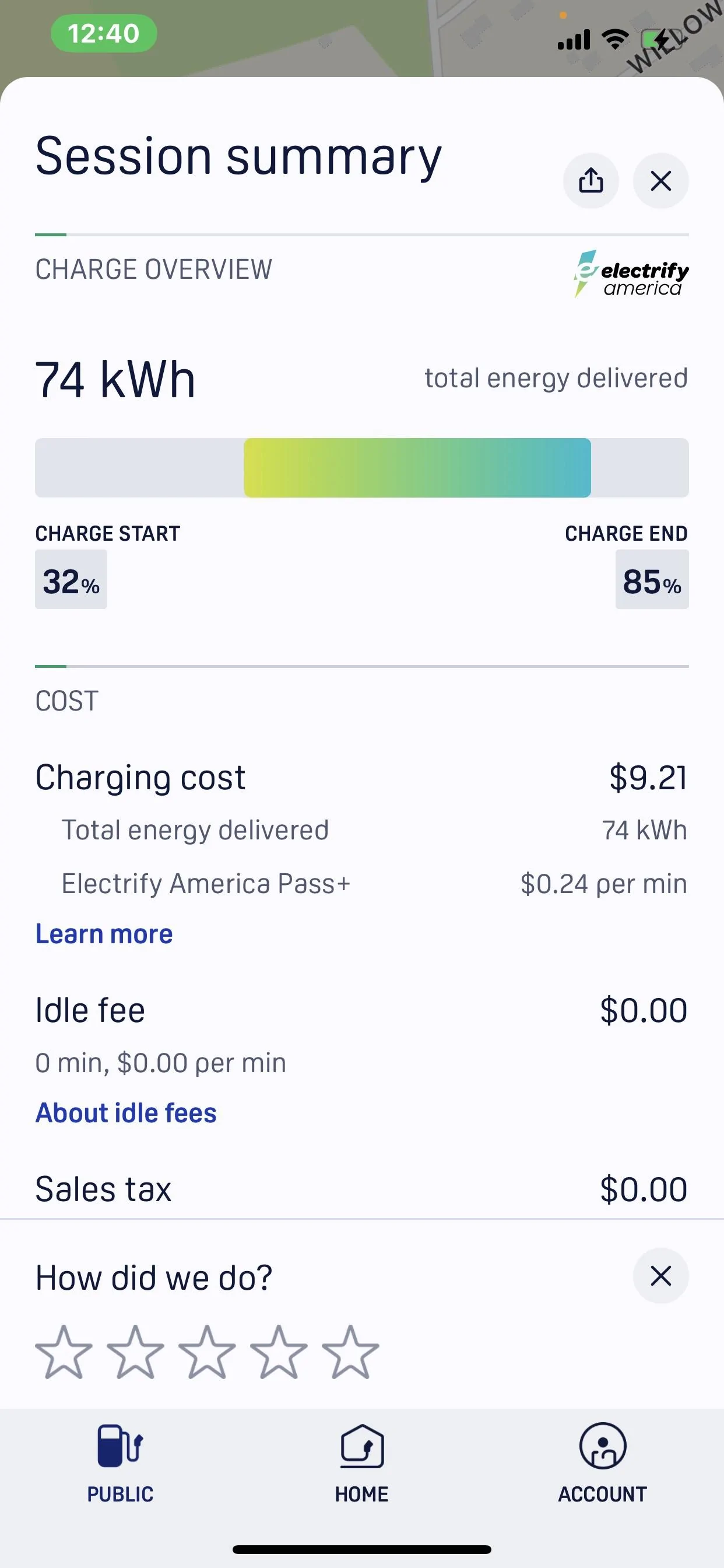
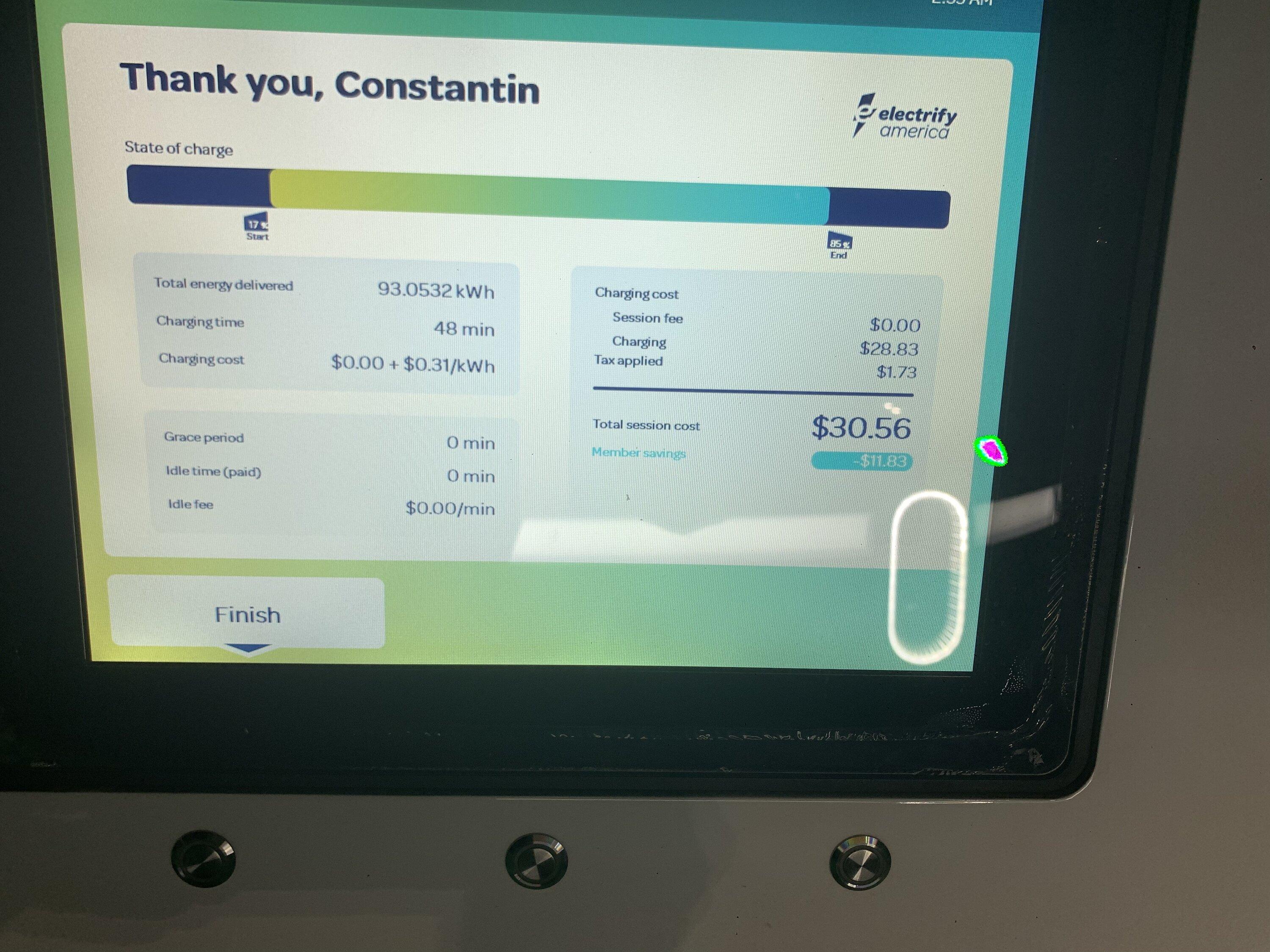
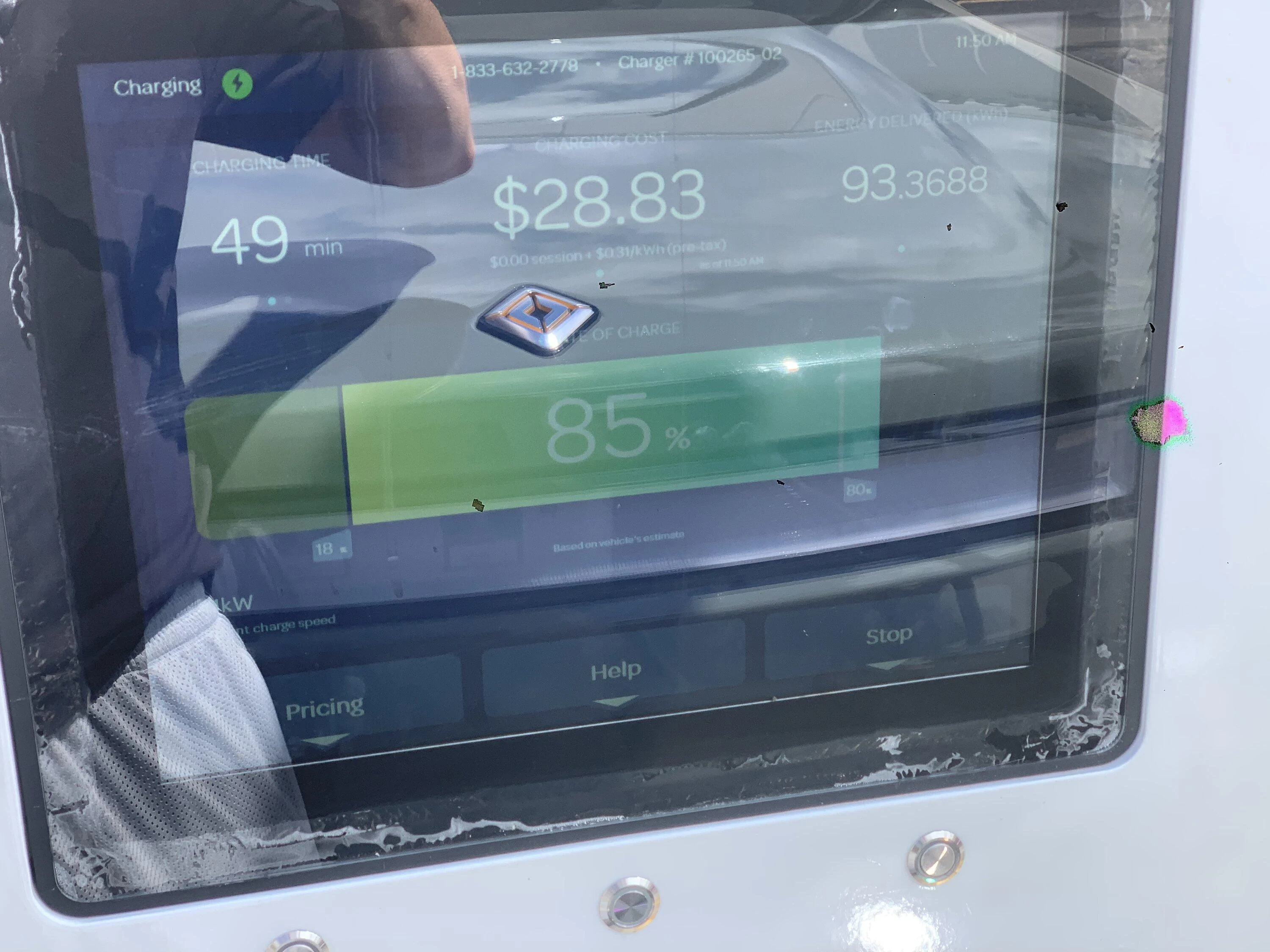
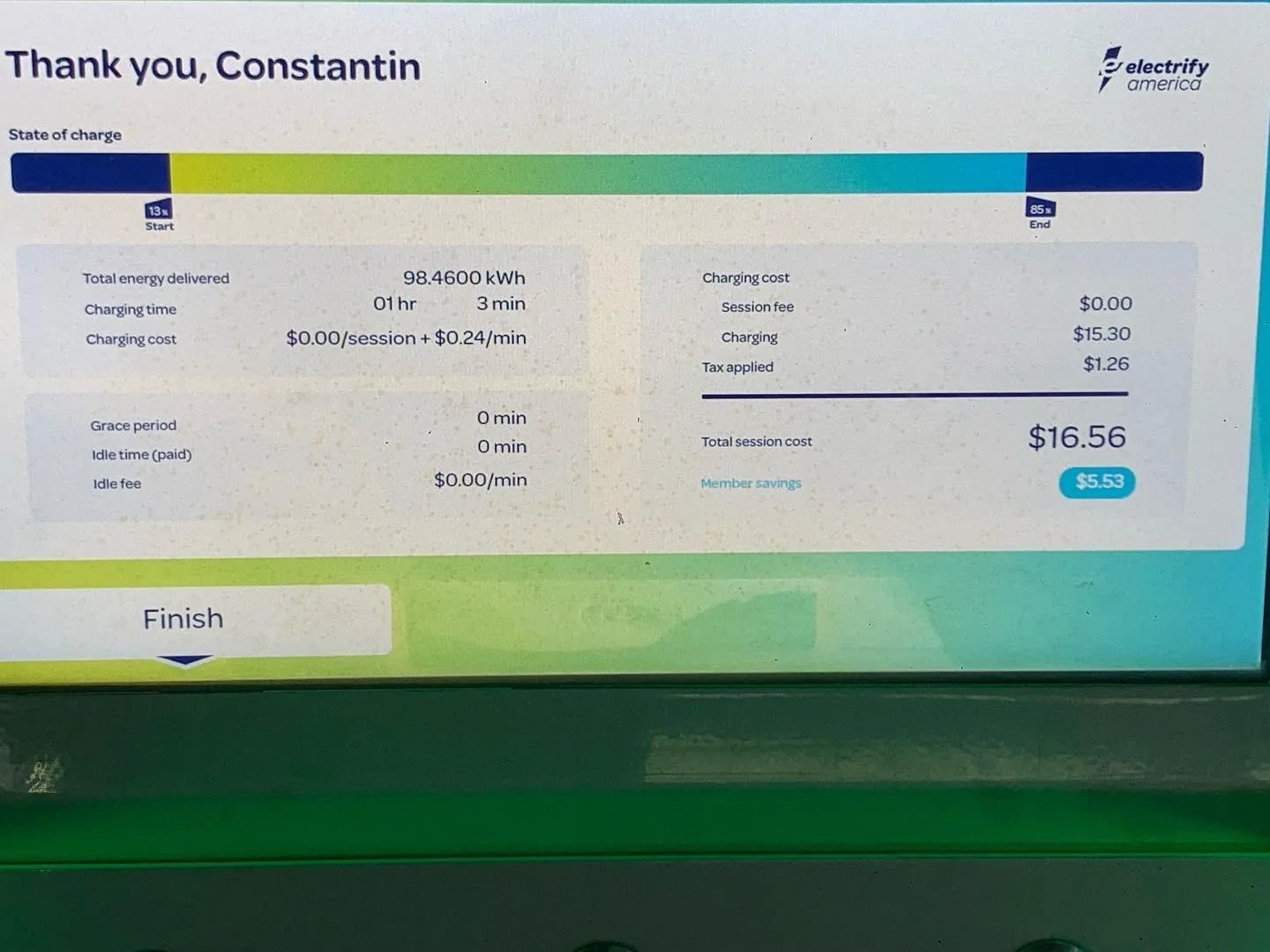
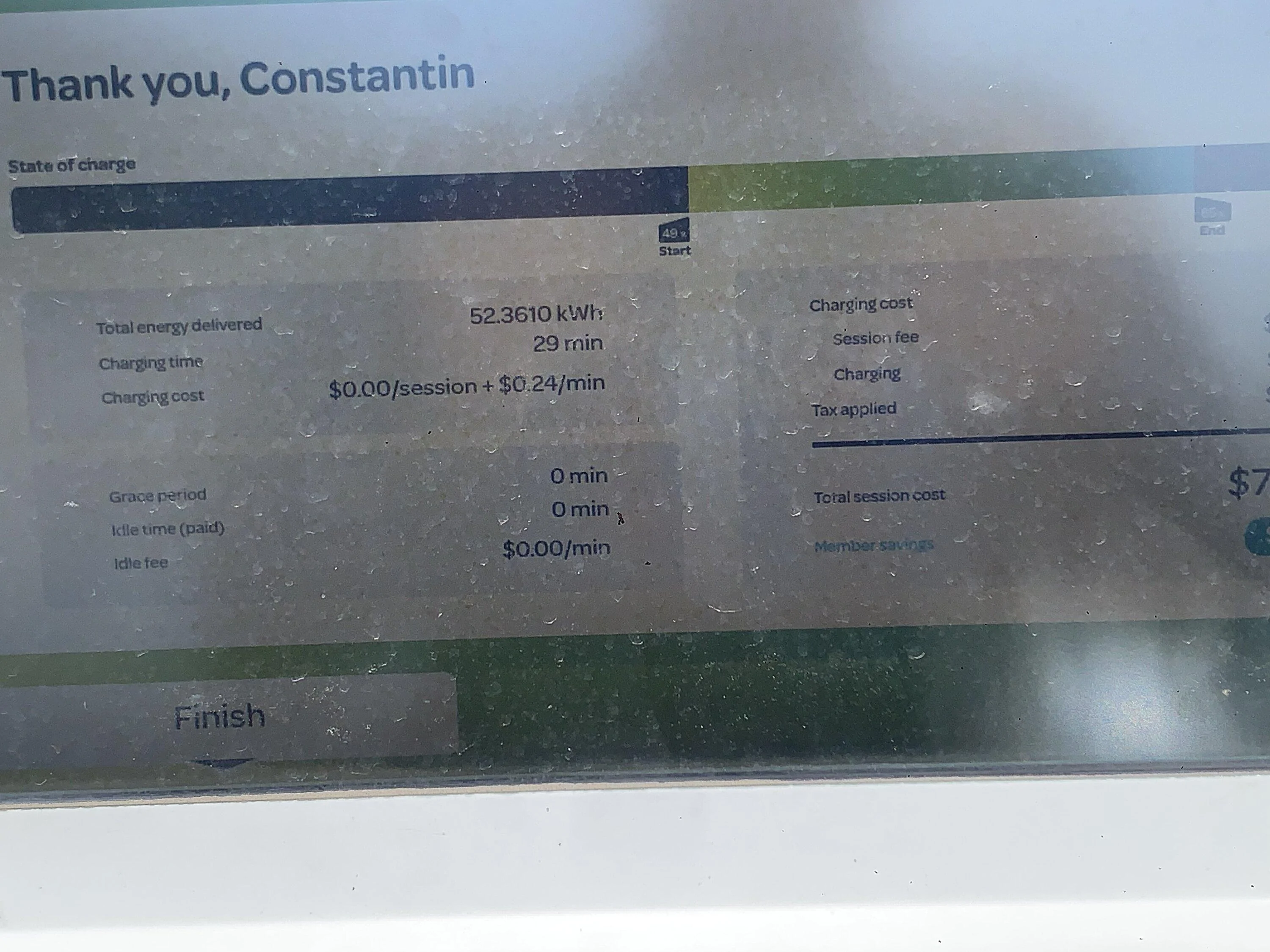
I have limited experience with EA for charging. I have about 600 Tesla Supercharger charges and the price usually slightly better when billed by the minute.

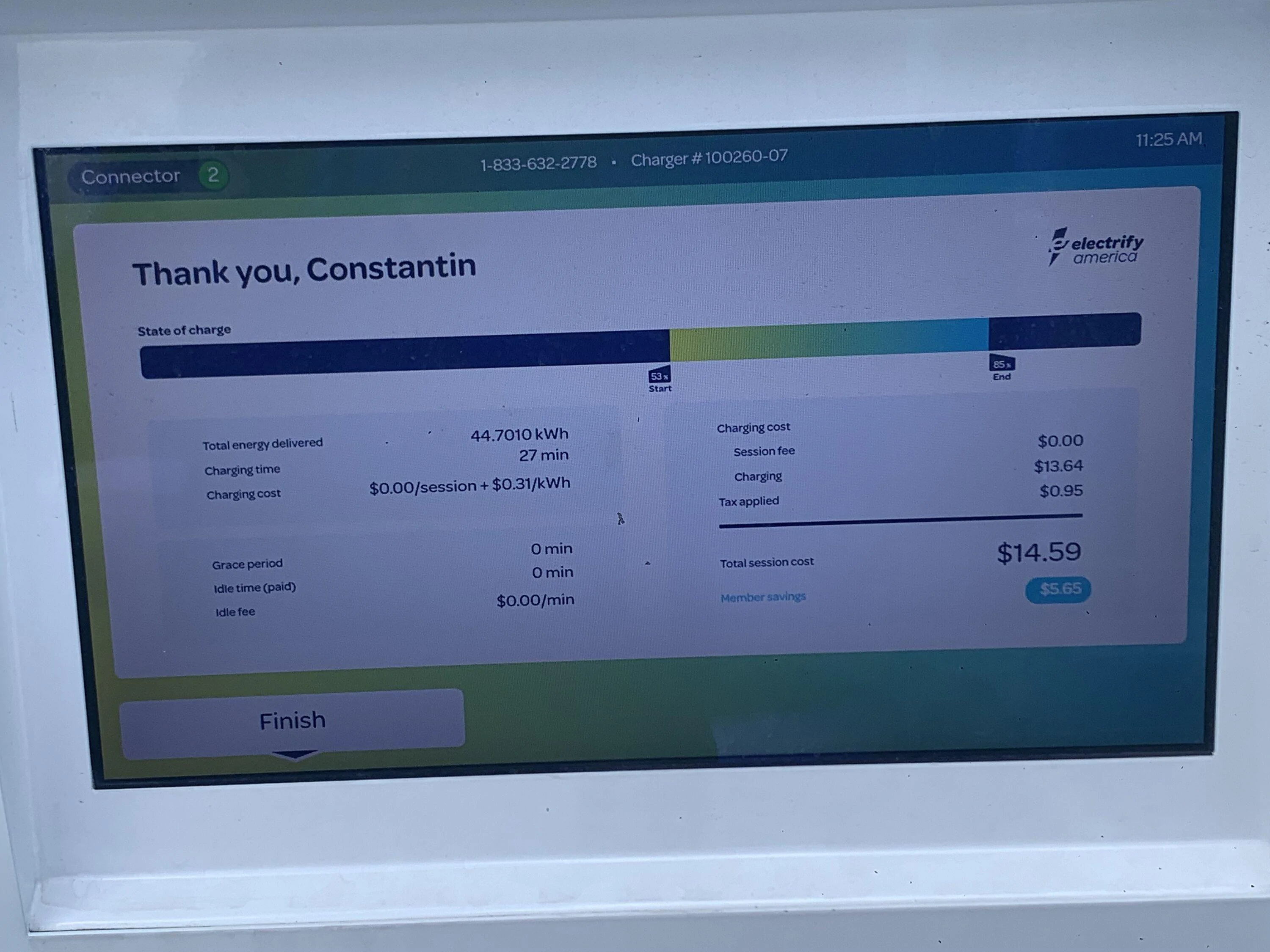
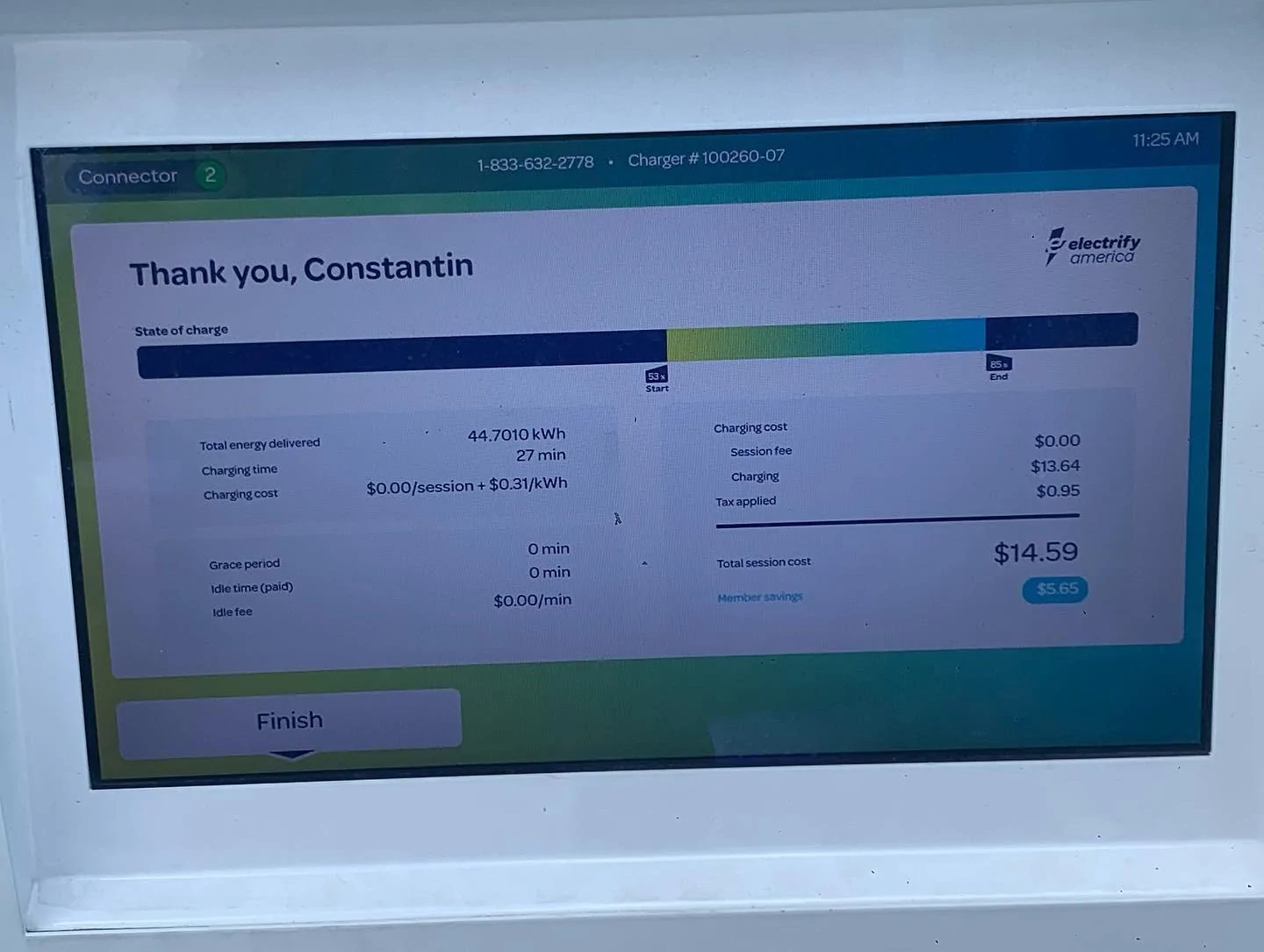
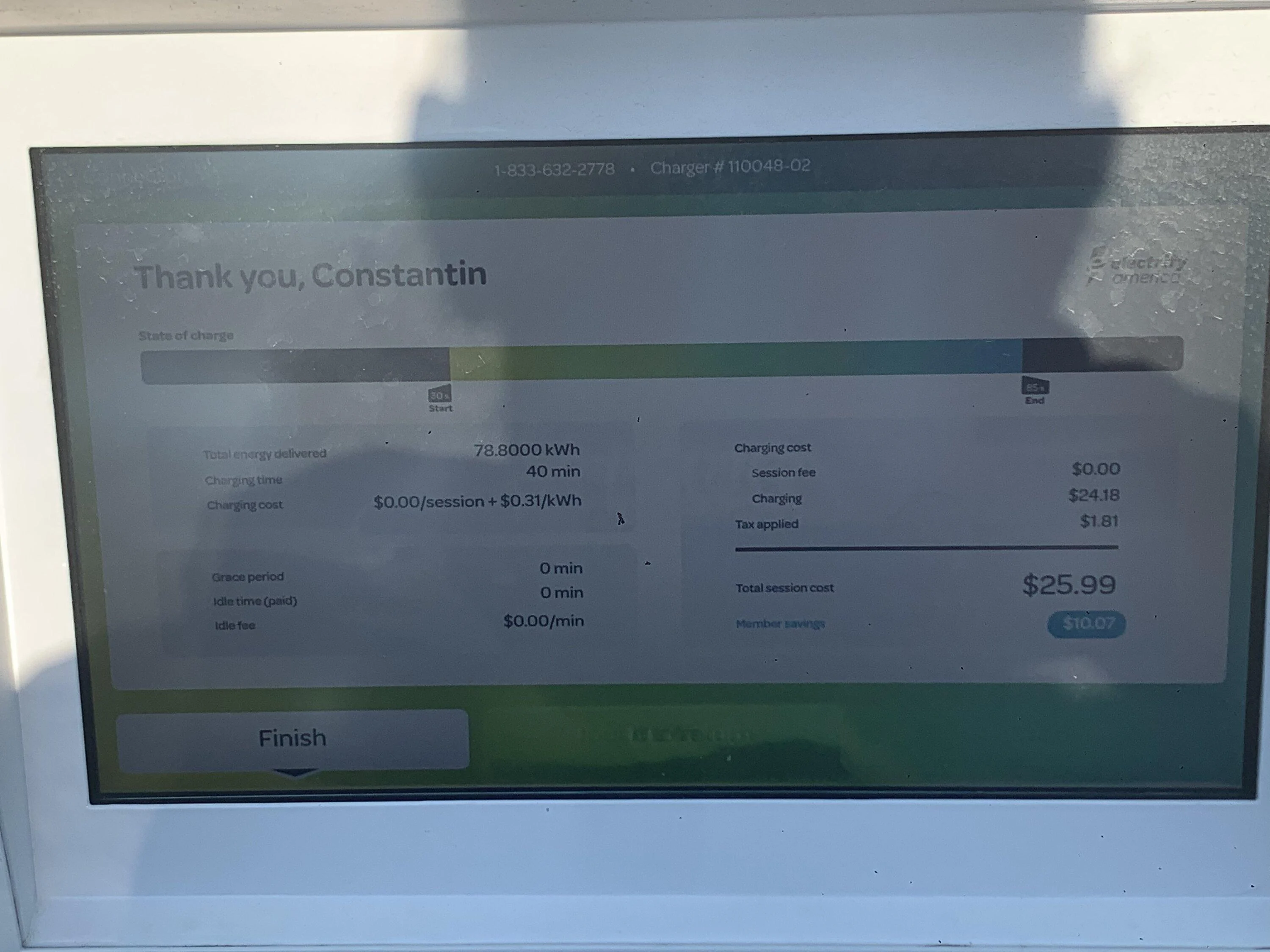
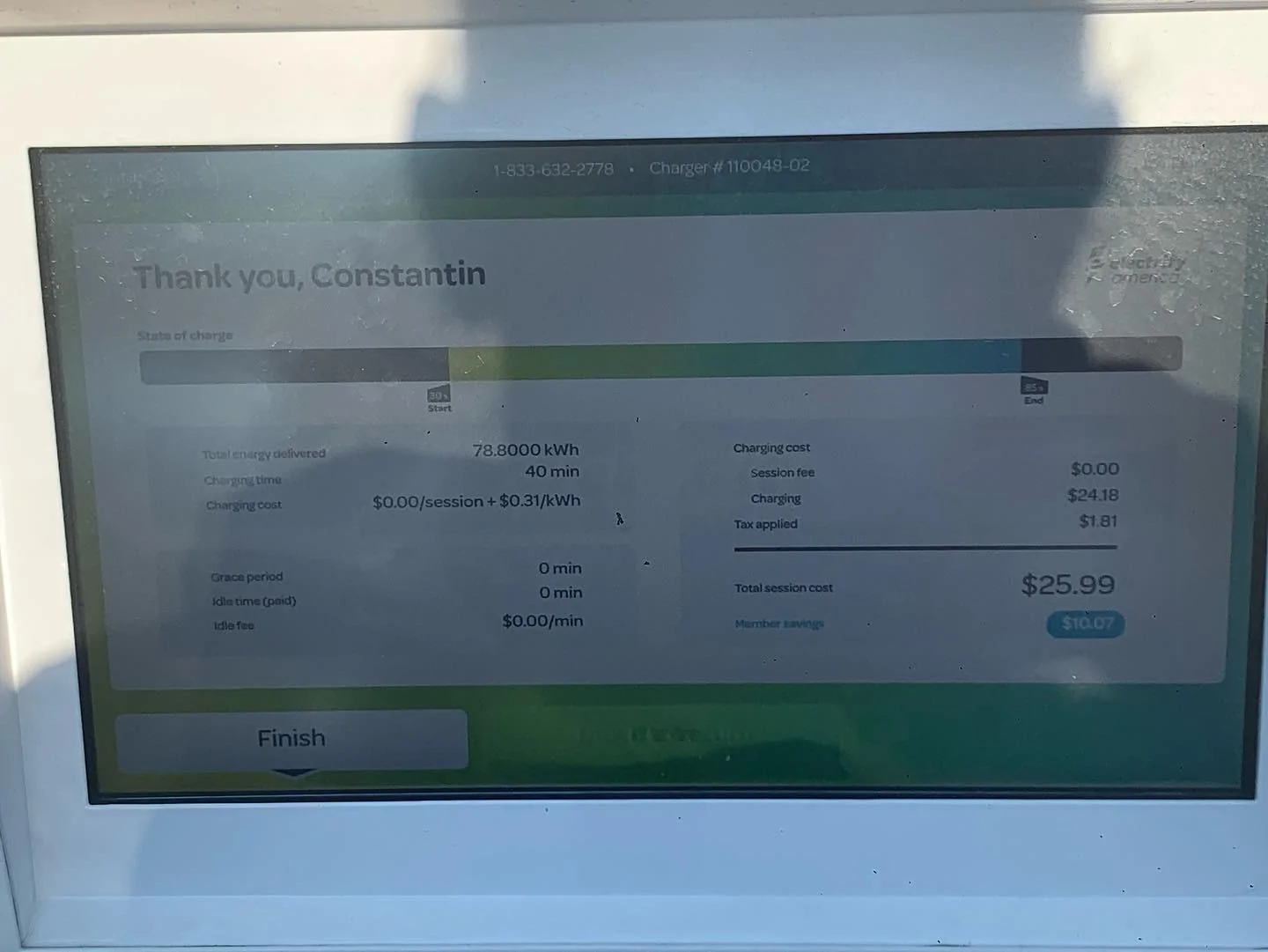
However, the EA difference seems to be dramatic:
Electrify America Data (Bold is the billing method)
DateNetworkLocationEnergy DeliveredMinutesAvg kW/MinCostBattery StartBattery Finish$/kW$/Min
6-Jan-2023Electrify AmericaEffingham, IL57.0147202.85$17.6631%69%$0.31$0.88
6-Jan-2023Electrify AmericaMount Vernon, IL40.4192182.25$11.7845%74%$0.29$0.65
6-Jan-2023Electrify AmericaPaducah, KY31.0005152.07$3.9841%61%$0.13$0.27
7-Jan-2023Electrify AmericaChattanooga, TN55.8335202.79$5.4630%68%$0.10$0.27

Does anyone else have a similar / different experience? I often have a choice in how I plan charging on my trips and will take this HUGE difference into account.
Sponsored

 

Dark-Fx

Well-Known Member
First Name
Brian
Joined
Jul 15, 2020
Threads
148
Messages
13,610
Reaction score
27,519
Location
Michigan
Vehicles
R1T, R1S, Livewire One, Sierra EV, R1S
Occupation
Engineering
Clubs
 
I have limited experience with EA for charging. I have about 600 Tesla Supercharger charges and the price usually slightly better when billed by the minute.

However, the EA difference seems to be dramatic:
Electrify America Data (Bold is the billing method)
DateNetworkLocationEnergy DeliveredMinutesAvg kW/MinCostBattery StartBattery Finish$/kW$/Min
6-Jan-2023Electrify AmericaEffingham, IL57.0147202.85$17.6631%69%$0.31$0.88
6-Jan-2023Electrify AmericaMount Vernon, IL40.4192182.25$11.7845%74%$0.29$0.65
6-Jan-2023Electrify AmericaPaducah, KY31.0005152.07$3.9841%61%$0.13$0.27
7-Jan-2023Electrify AmericaChattanooga, TN55.8335202.79$5.4630%68%$0.10$0.27

Does anyone else have a similar / different experience? I often have a choice in how I plan charging on my trips and will take this HUGE difference into account.
It's definitely a huge difference for vehicles that actually charge fast. It's also encouragement to only charge as much as you need to get to the next station. We were paying under 5 cents/kwh in the Hummer on our trip in states that charged by the minute. If we lollygagged it was easily double.
 

rivian1800

Well-Known Member
Joined
Apr 7, 2022
Threads
6
Messages
138
Reaction score
170
Location
Nlg
Vehicles
R1T
I have limited experience with EA for charging. I have about 600 Tesla Supercharger charges and the price usually slightly better when billed by the minute.

However, the EA difference seems to be dramatic:
Electrify America Data (Bold is the billing method)
DateNetworkLocationEnergy DeliveredMinutesAvg kW/MinCostBattery StartBattery Finish$/kW$/Min
6-Jan-2023Electrify AmericaEffingham, IL57.0147202.85$17.6631%69%$0.31$0.88
6-Jan-2023Electrify AmericaMount Vernon, IL40.4192182.25$11.7845%74%$0.29$0.65
6-Jan-2023Electrify AmericaPaducah, KY31.0005152.07$3.9841%61%$0.13$0.27
7-Jan-2023Electrify AmericaChattanooga, TN55.8335202.79$5.4630%68%$0.10$0.27

Does anyone else have a similar / different experience? I often have a choice in how I plan charging on my trips and will take this HUGE difference into account.
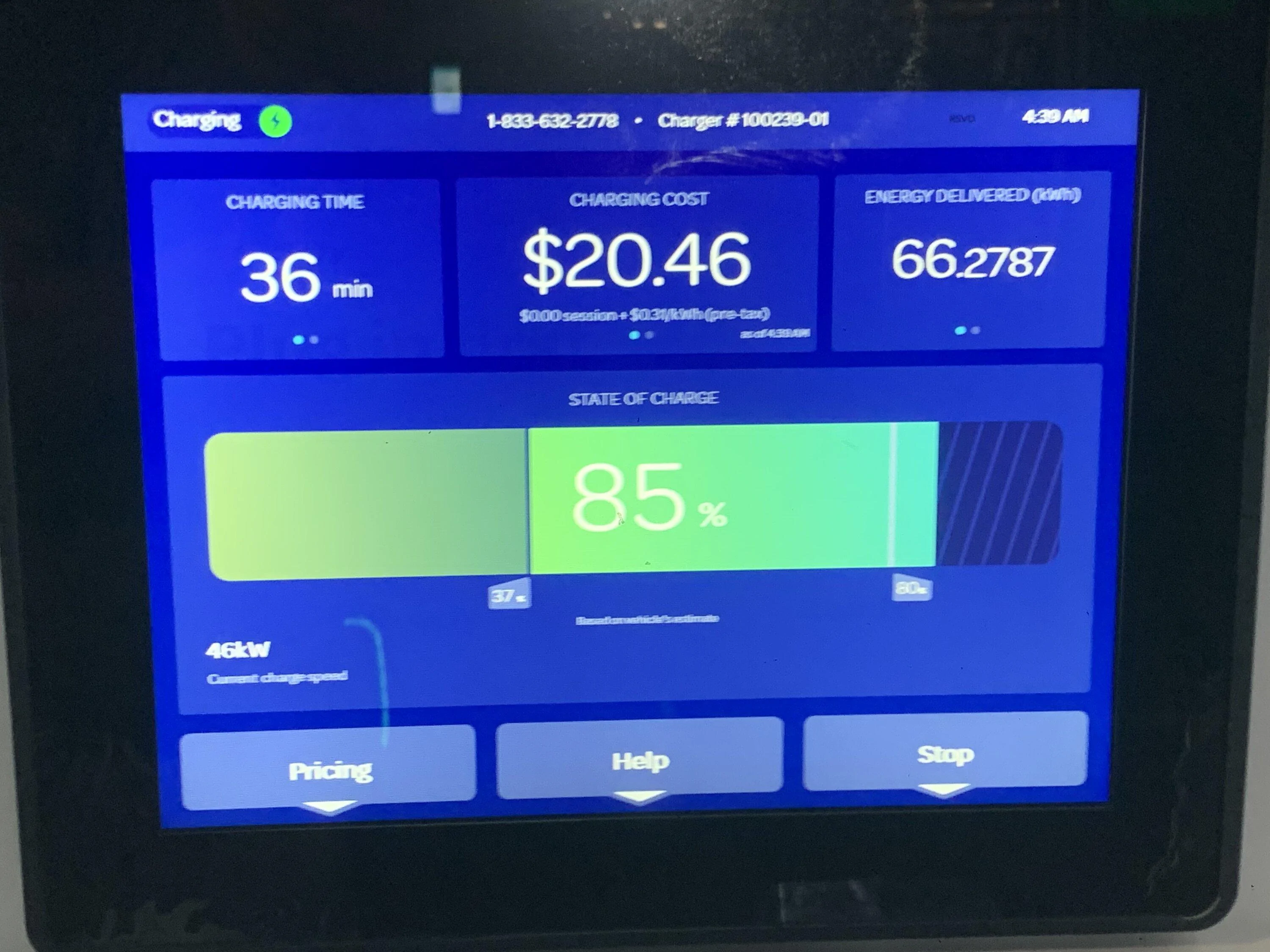
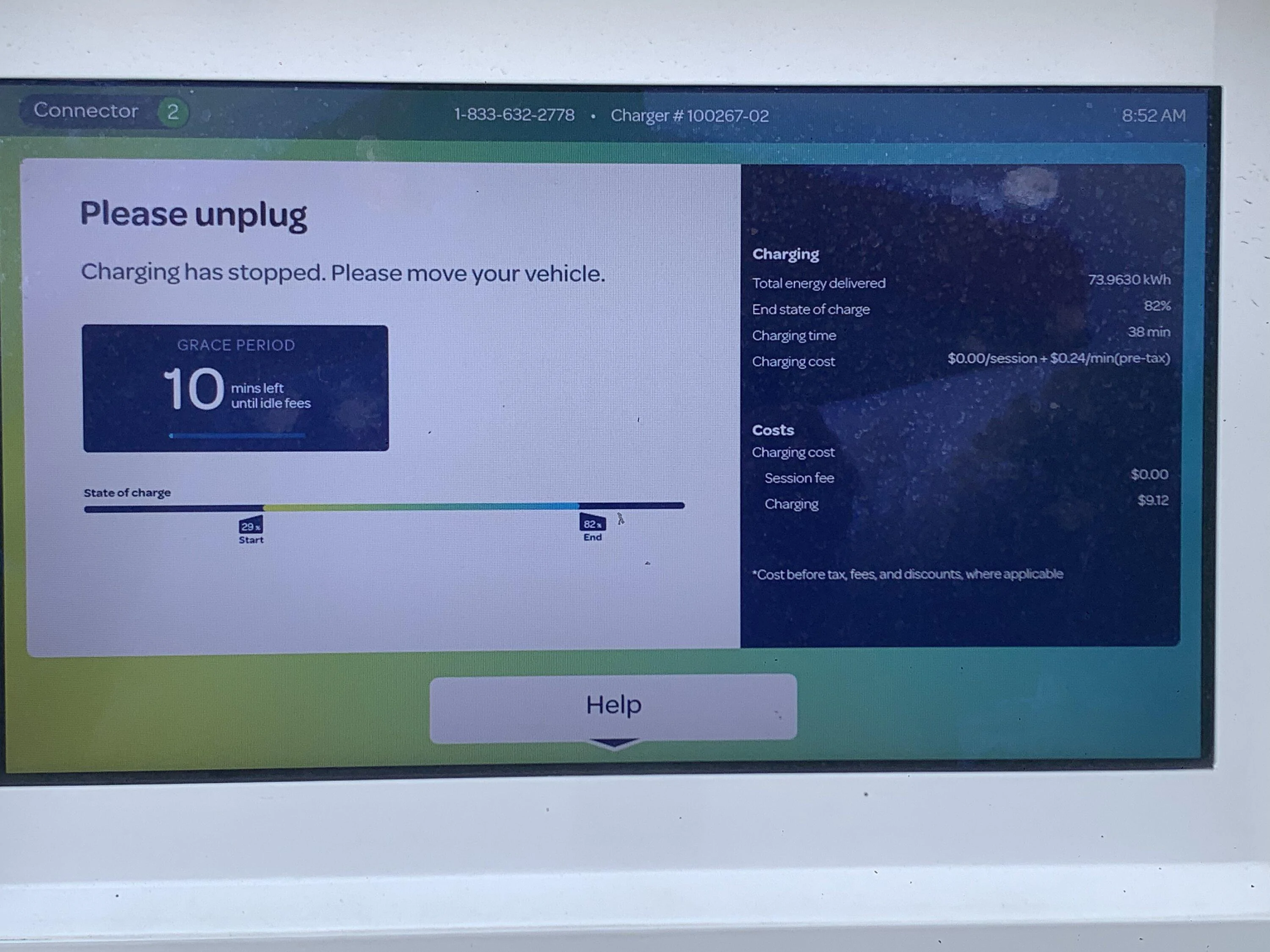
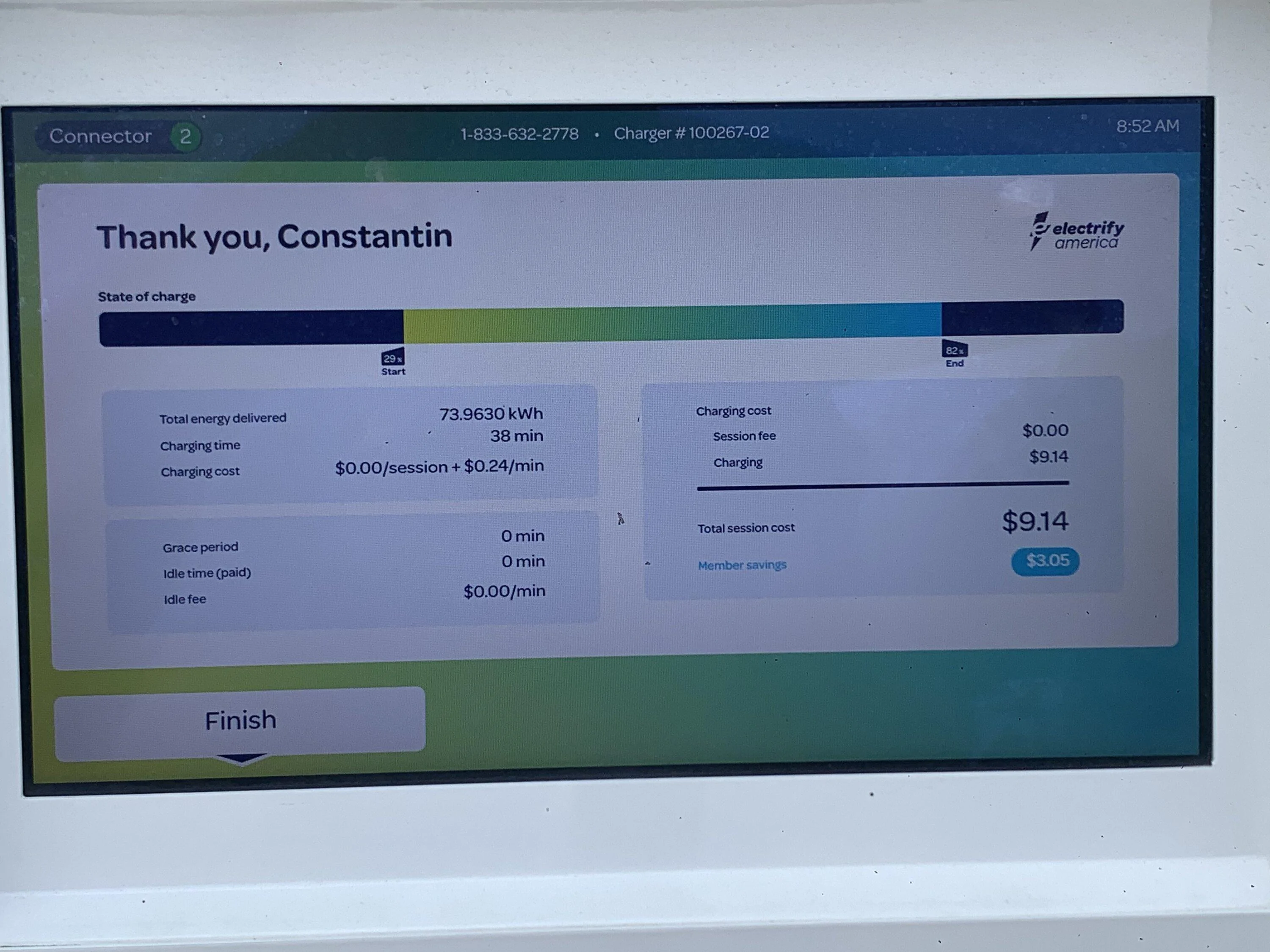
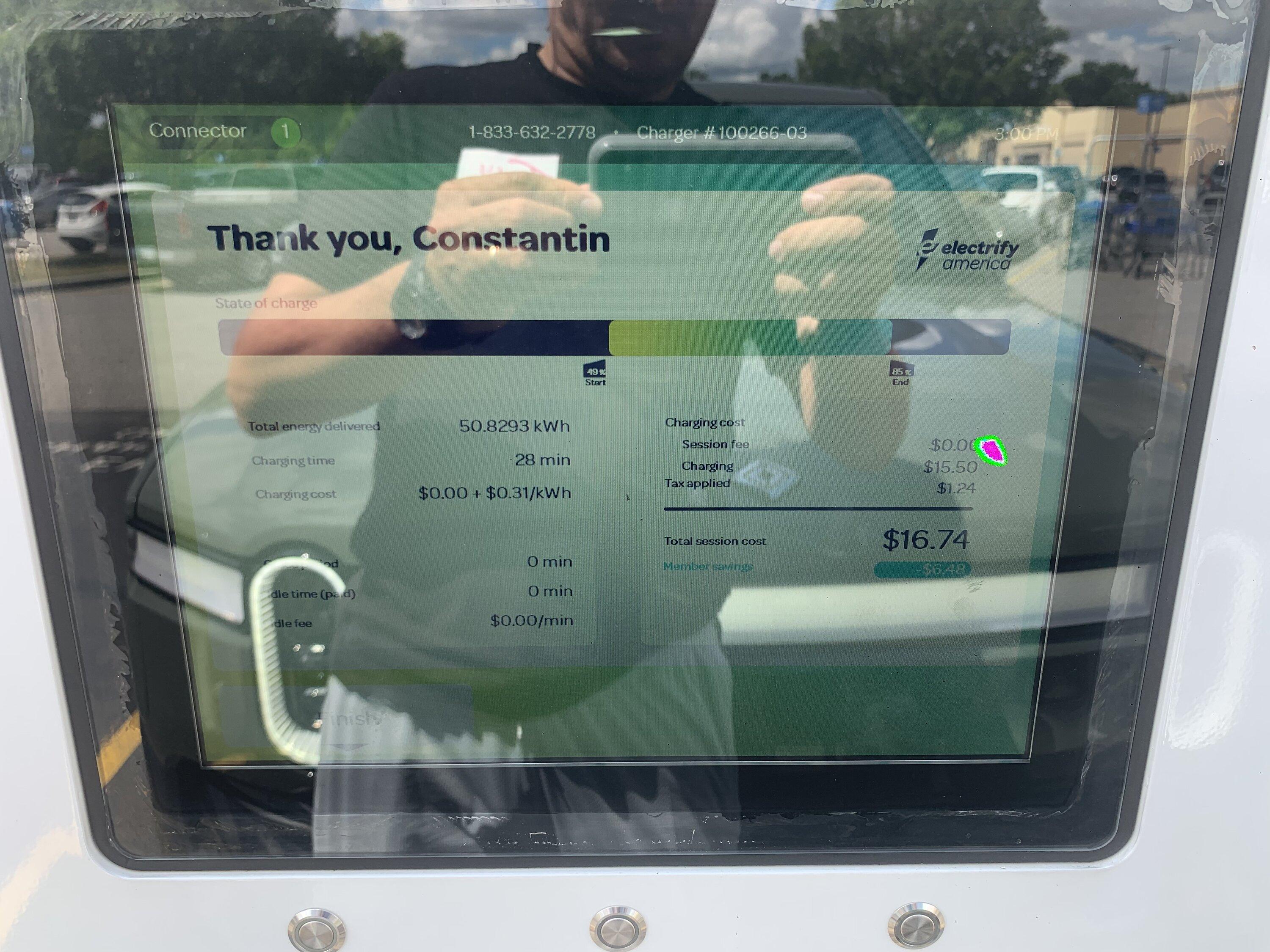
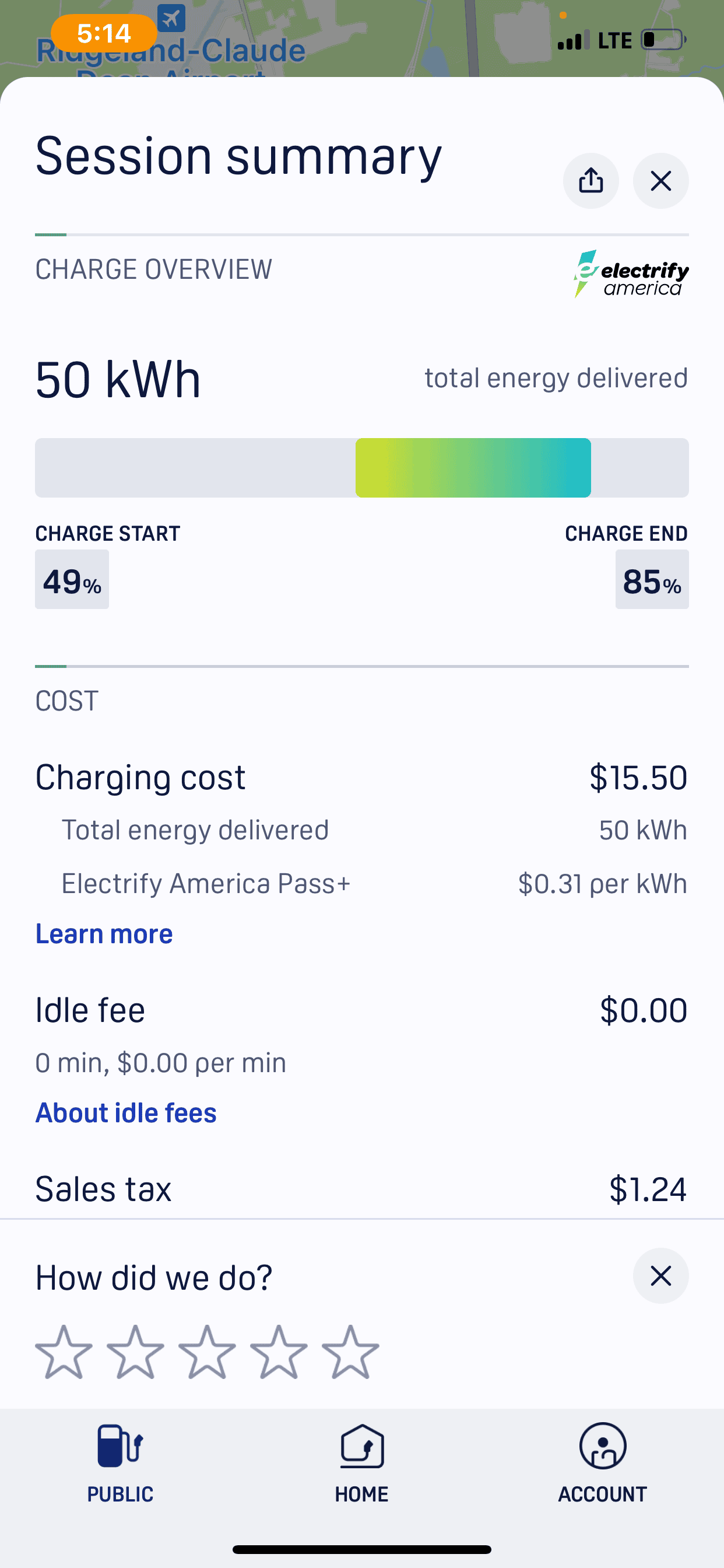
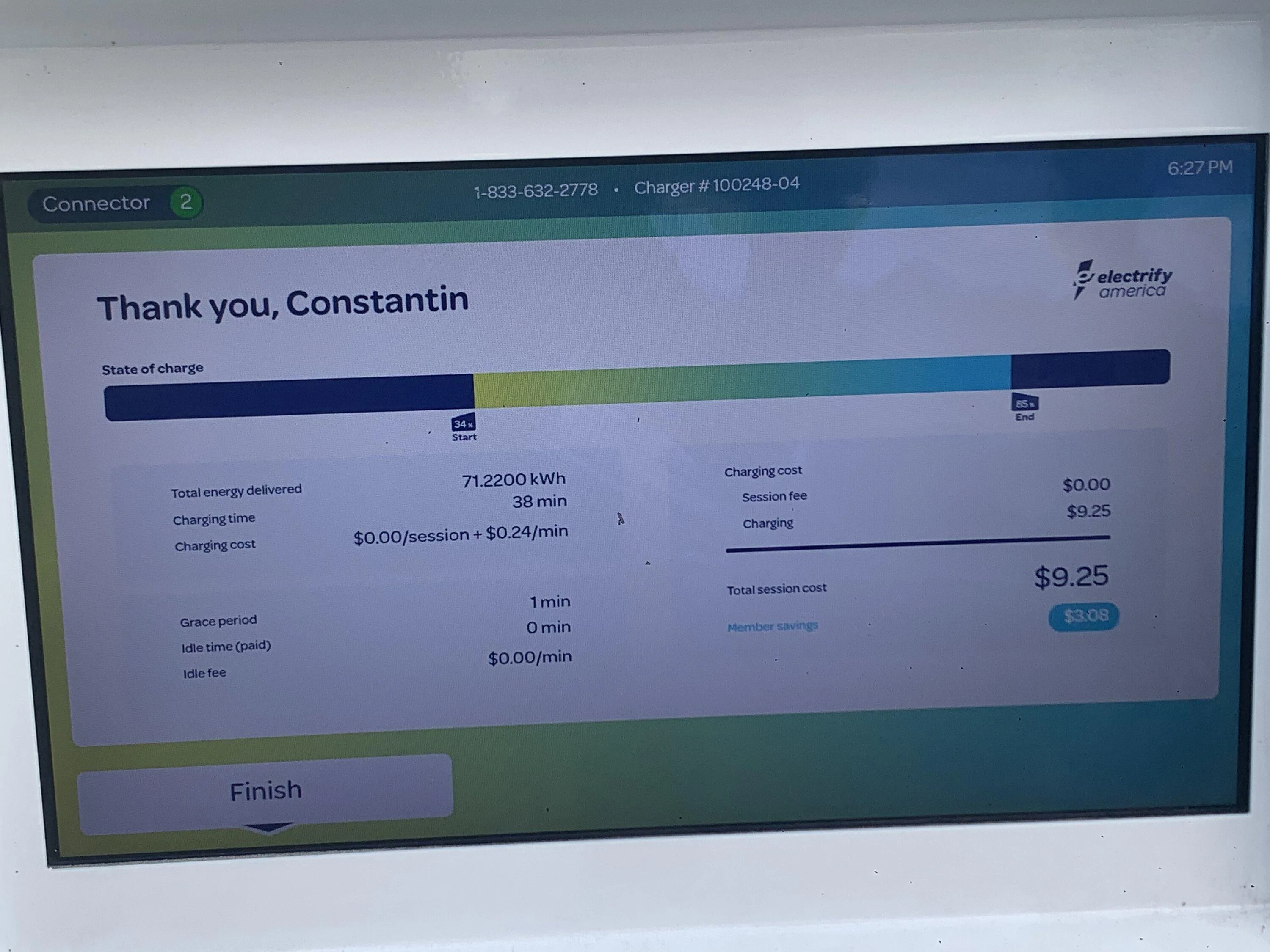
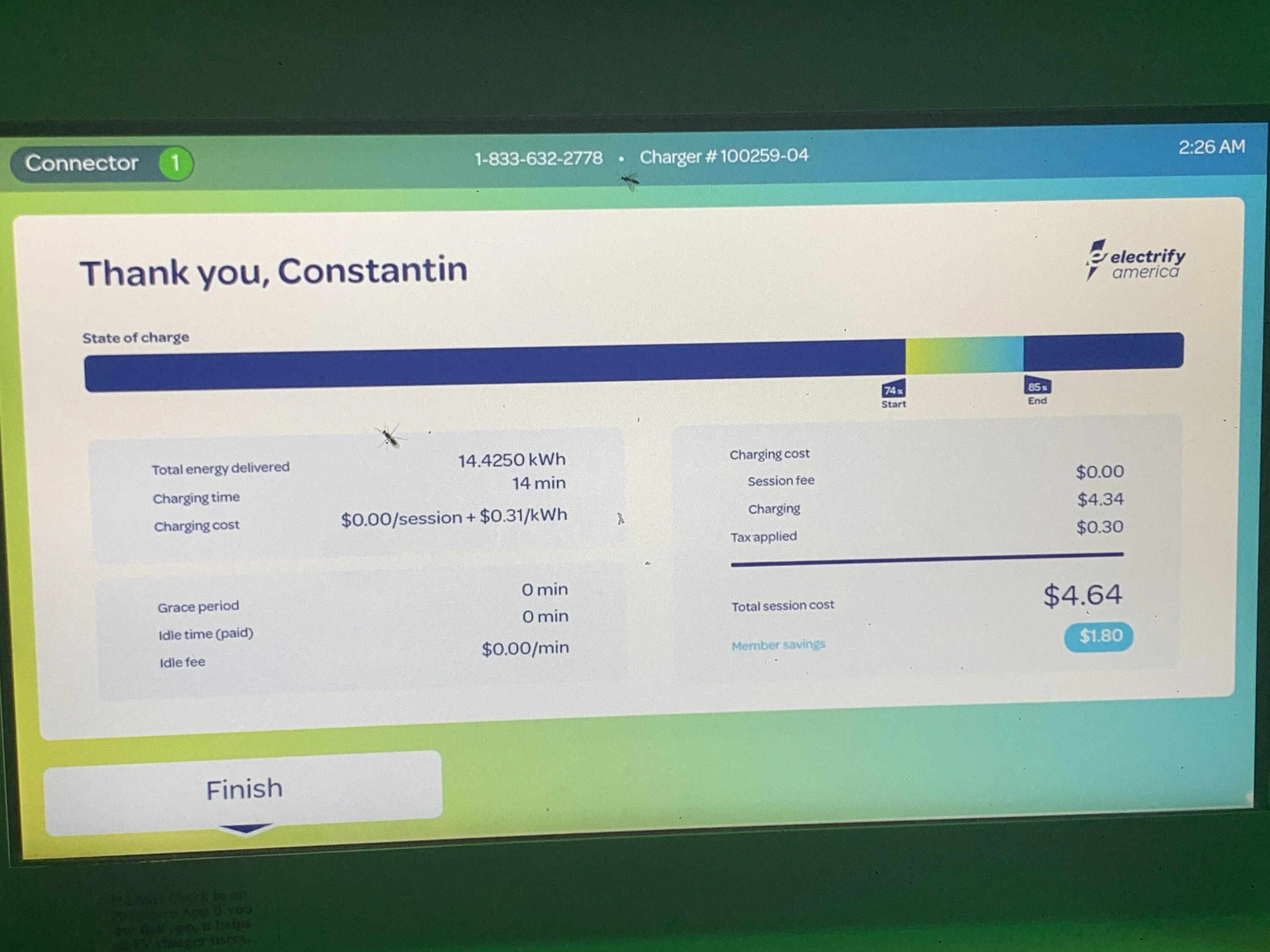
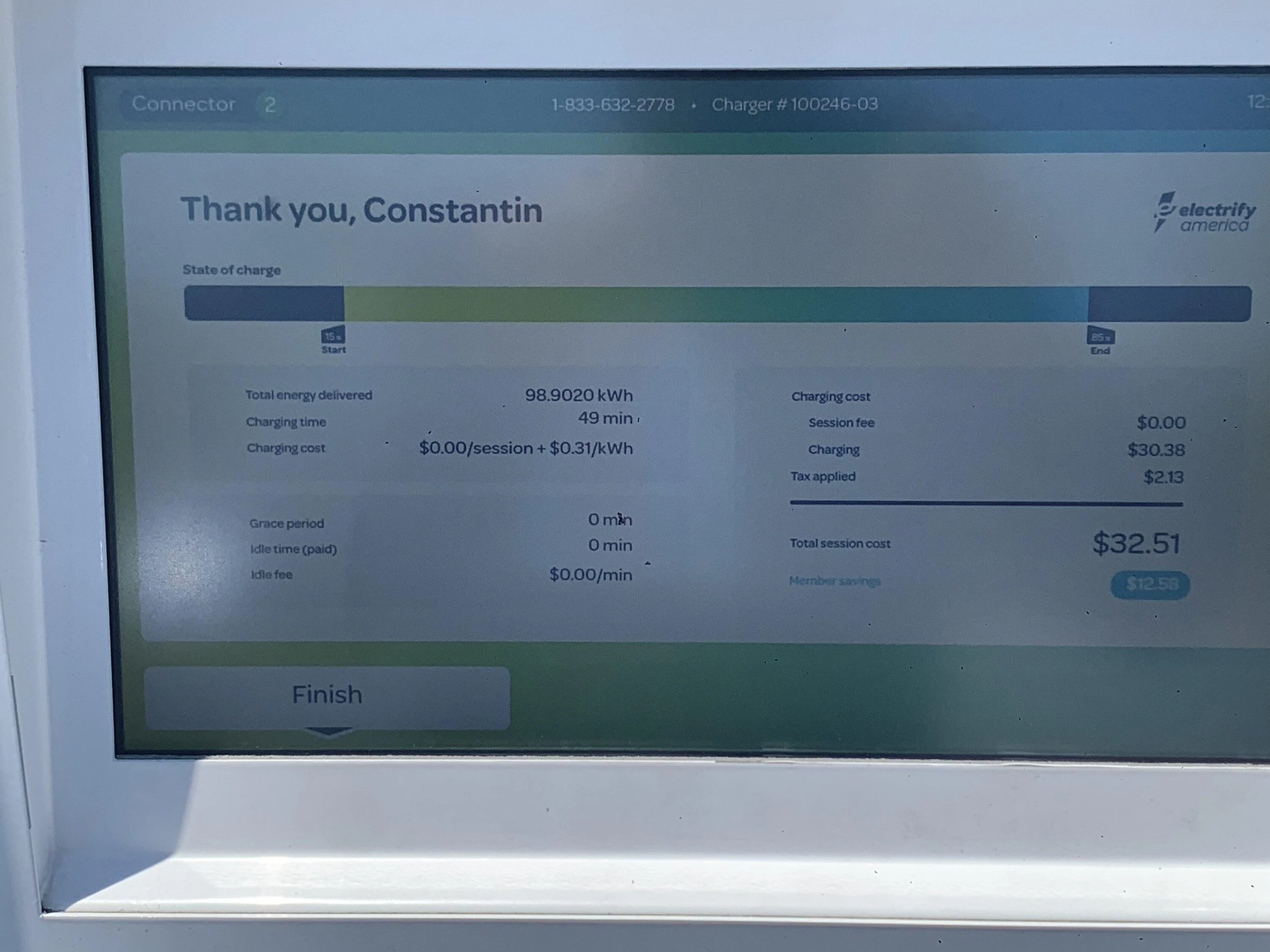
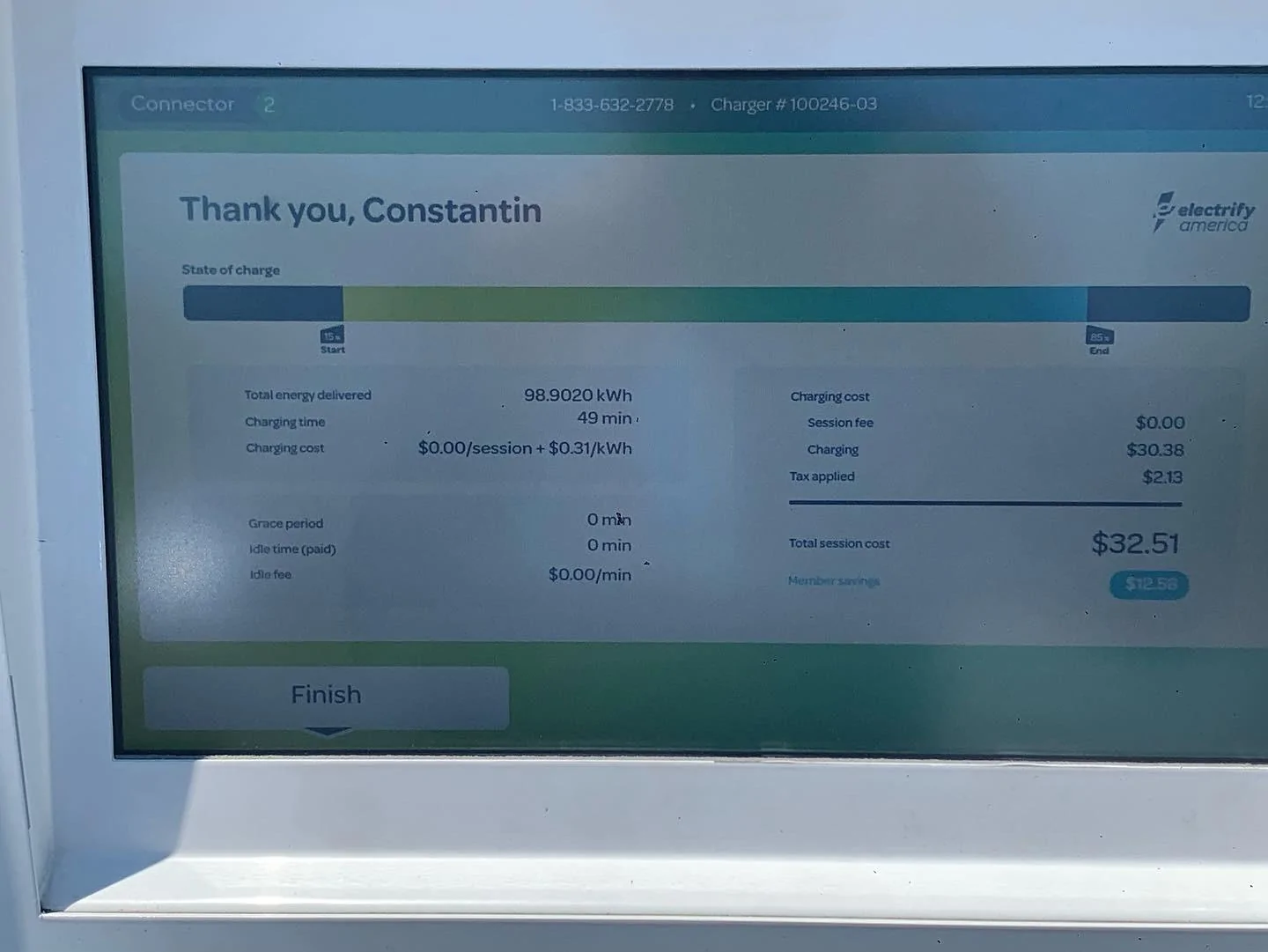
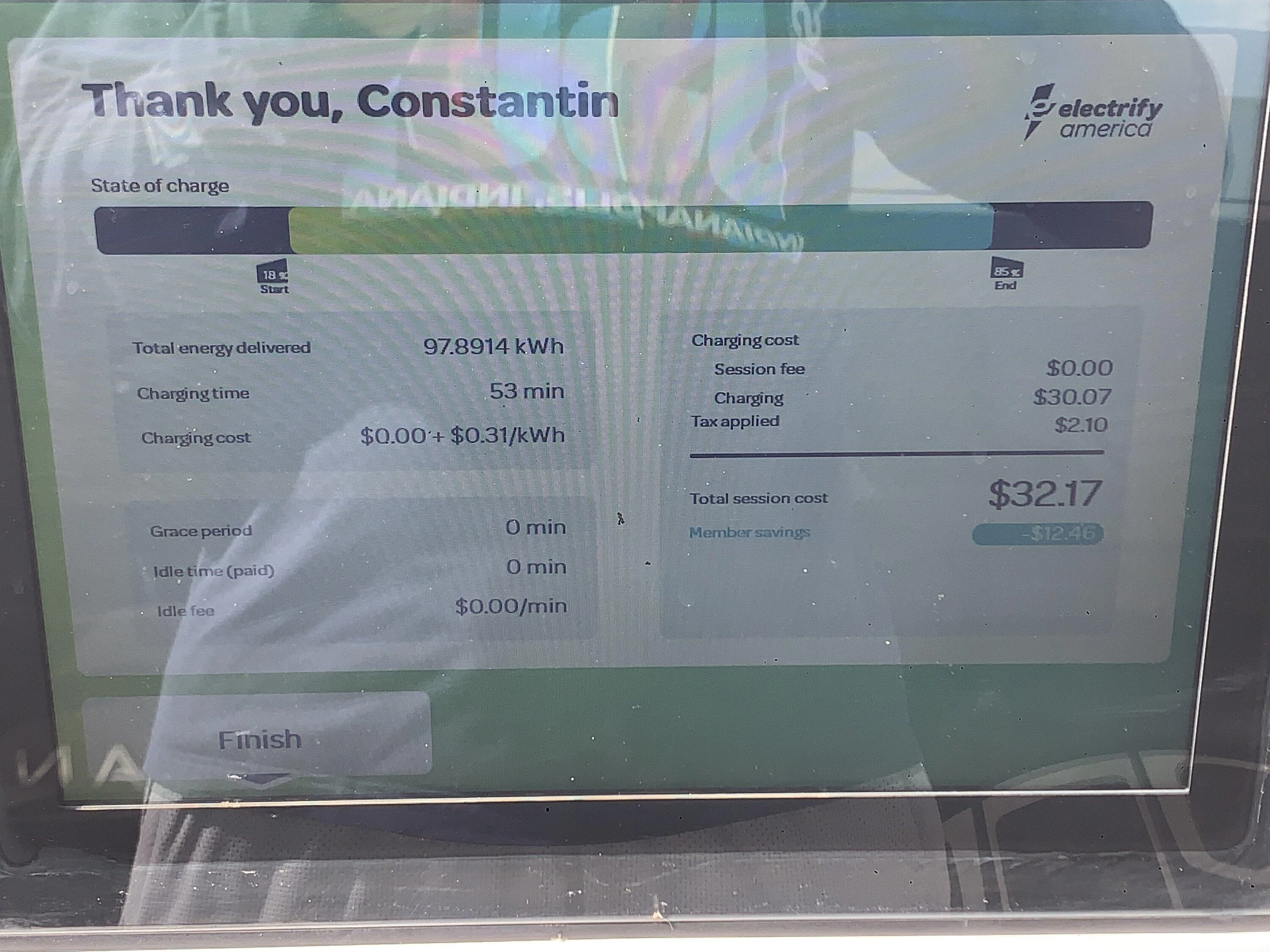
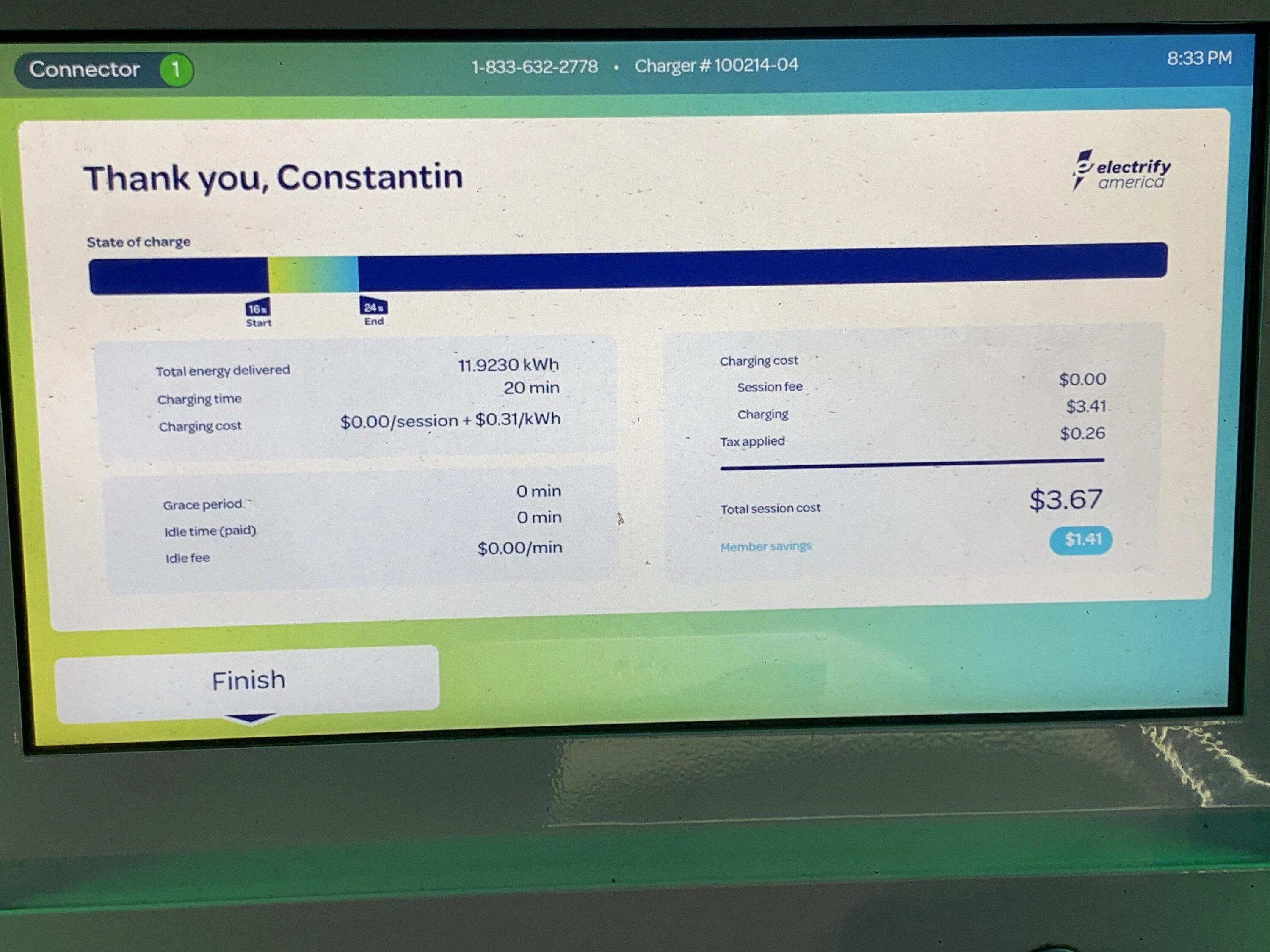
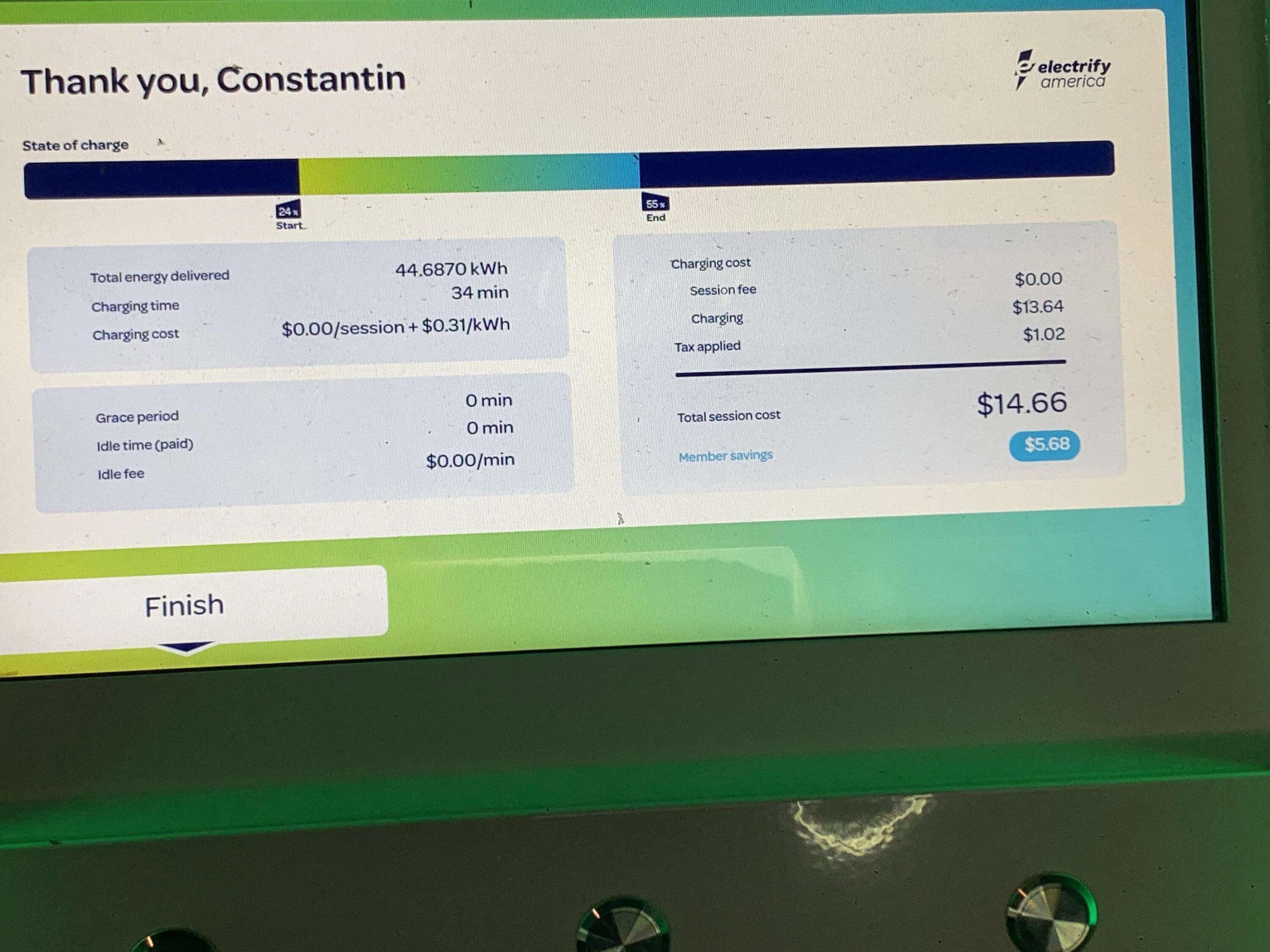
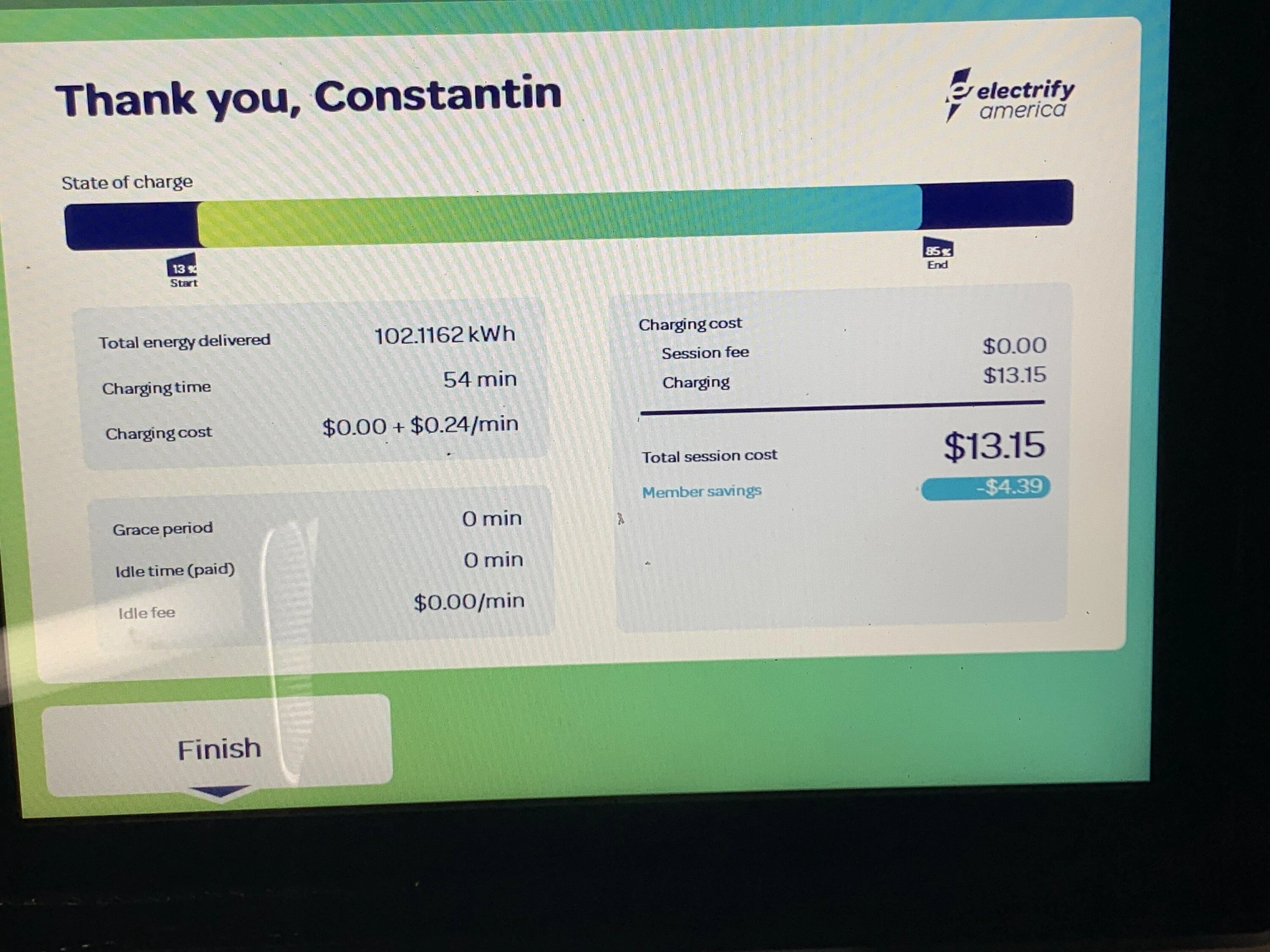
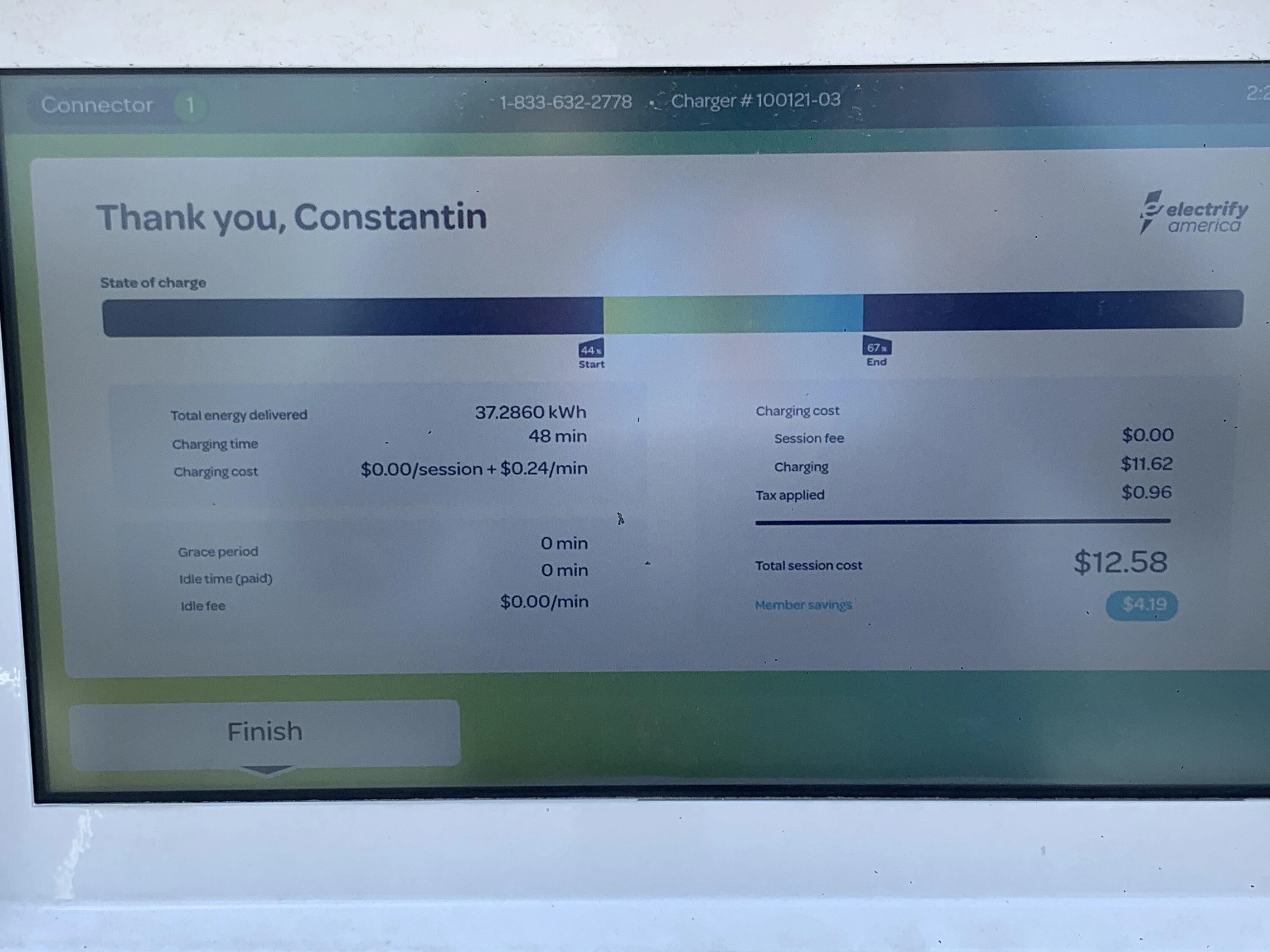
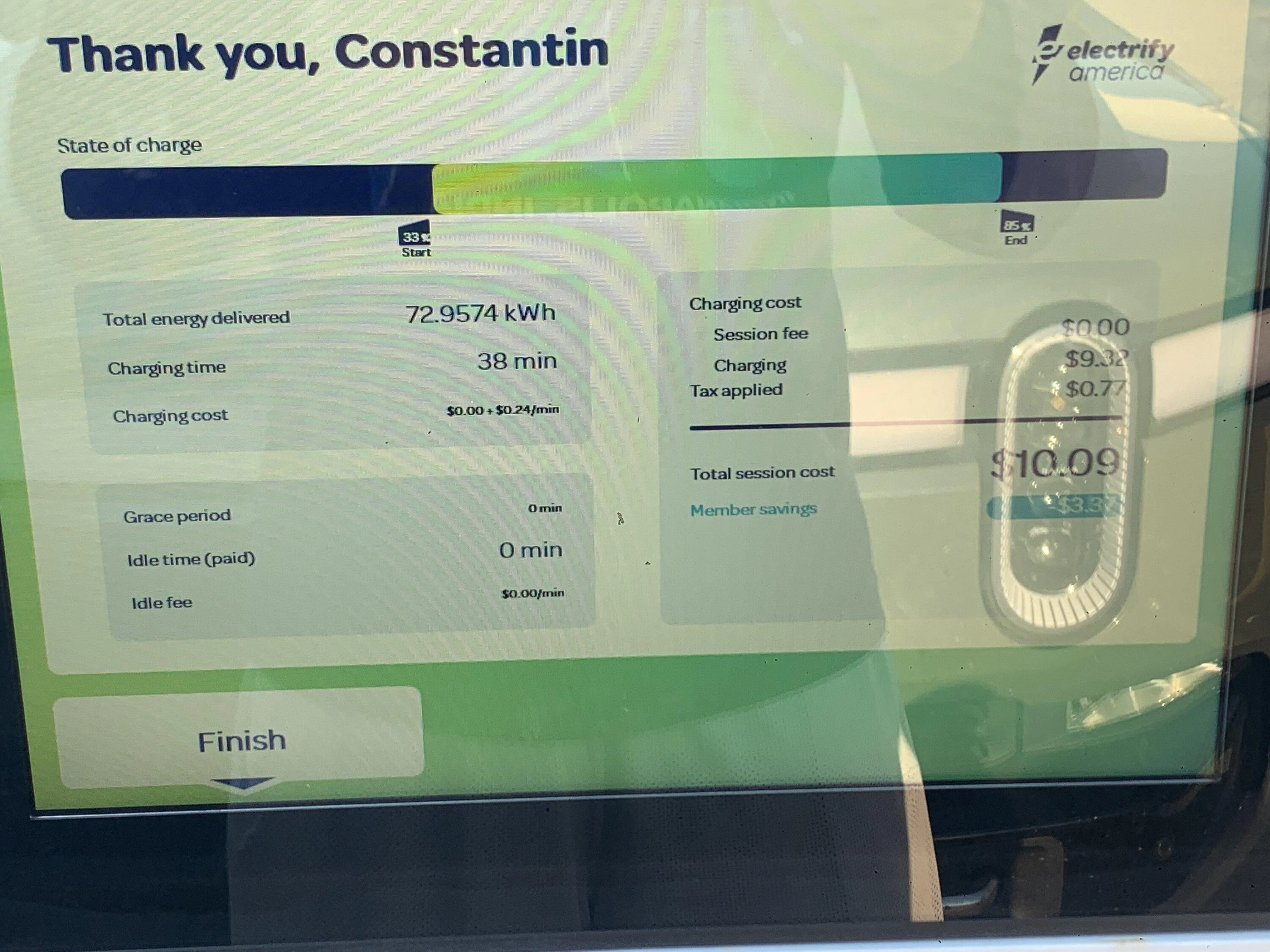
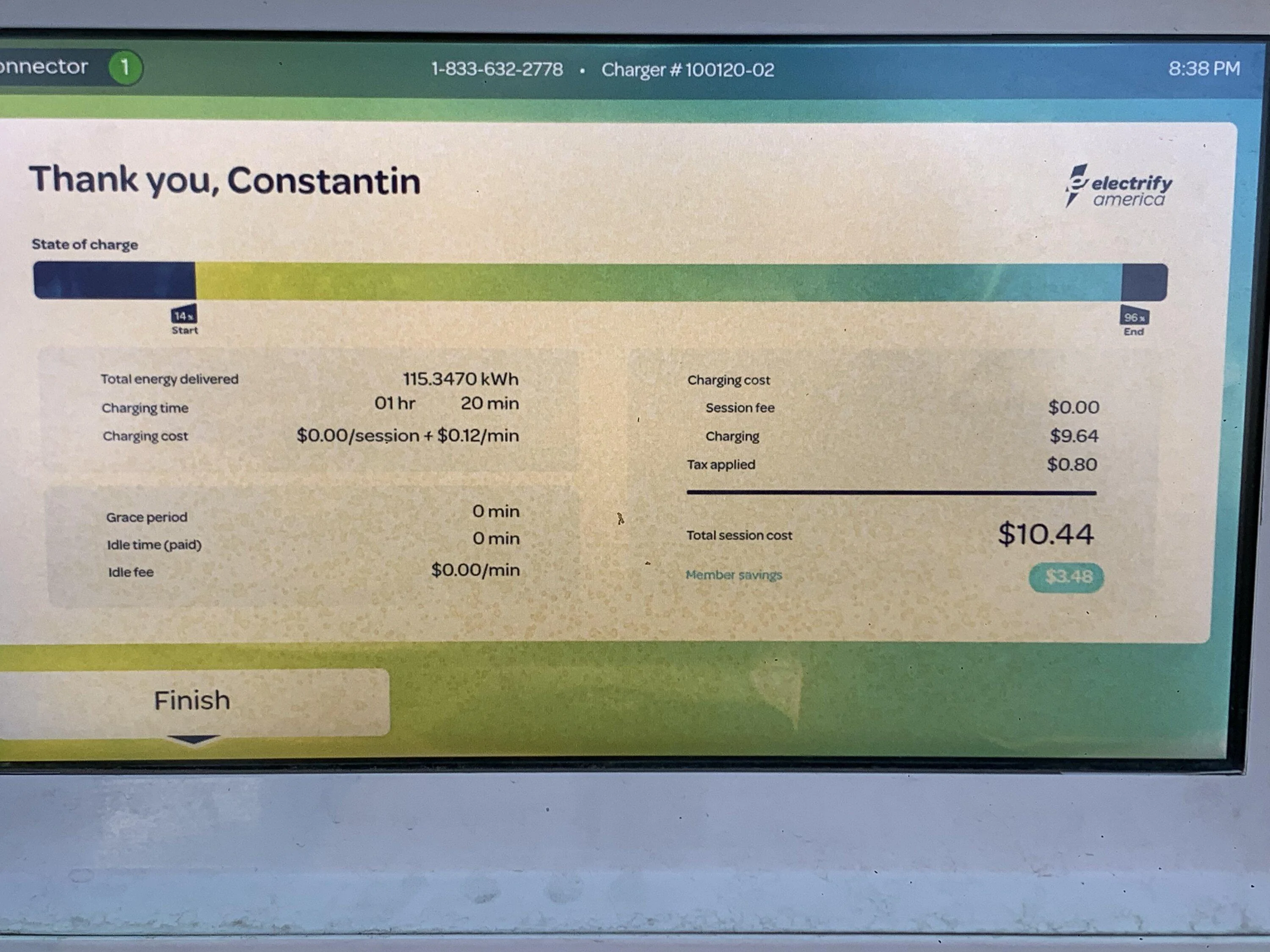
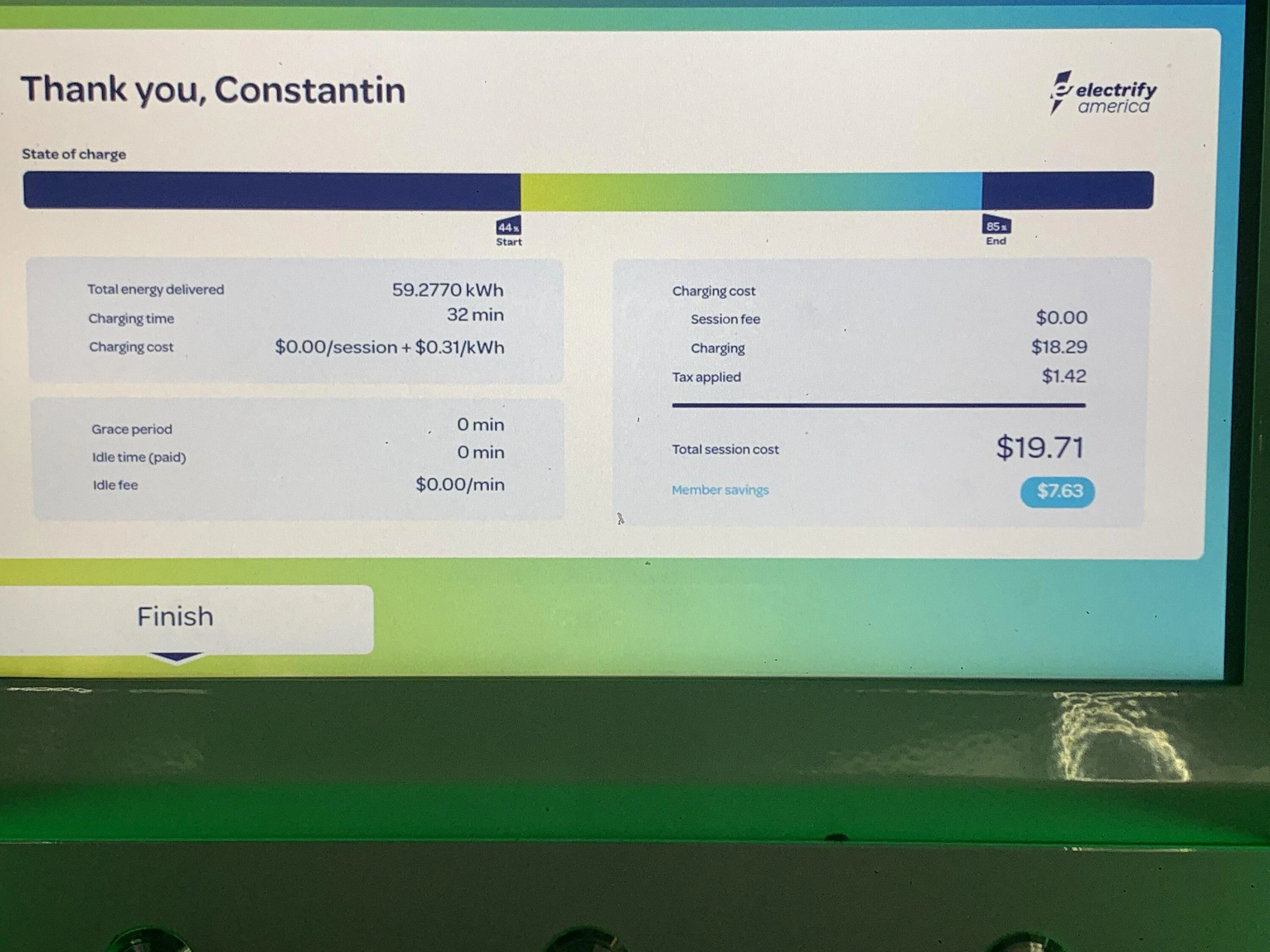
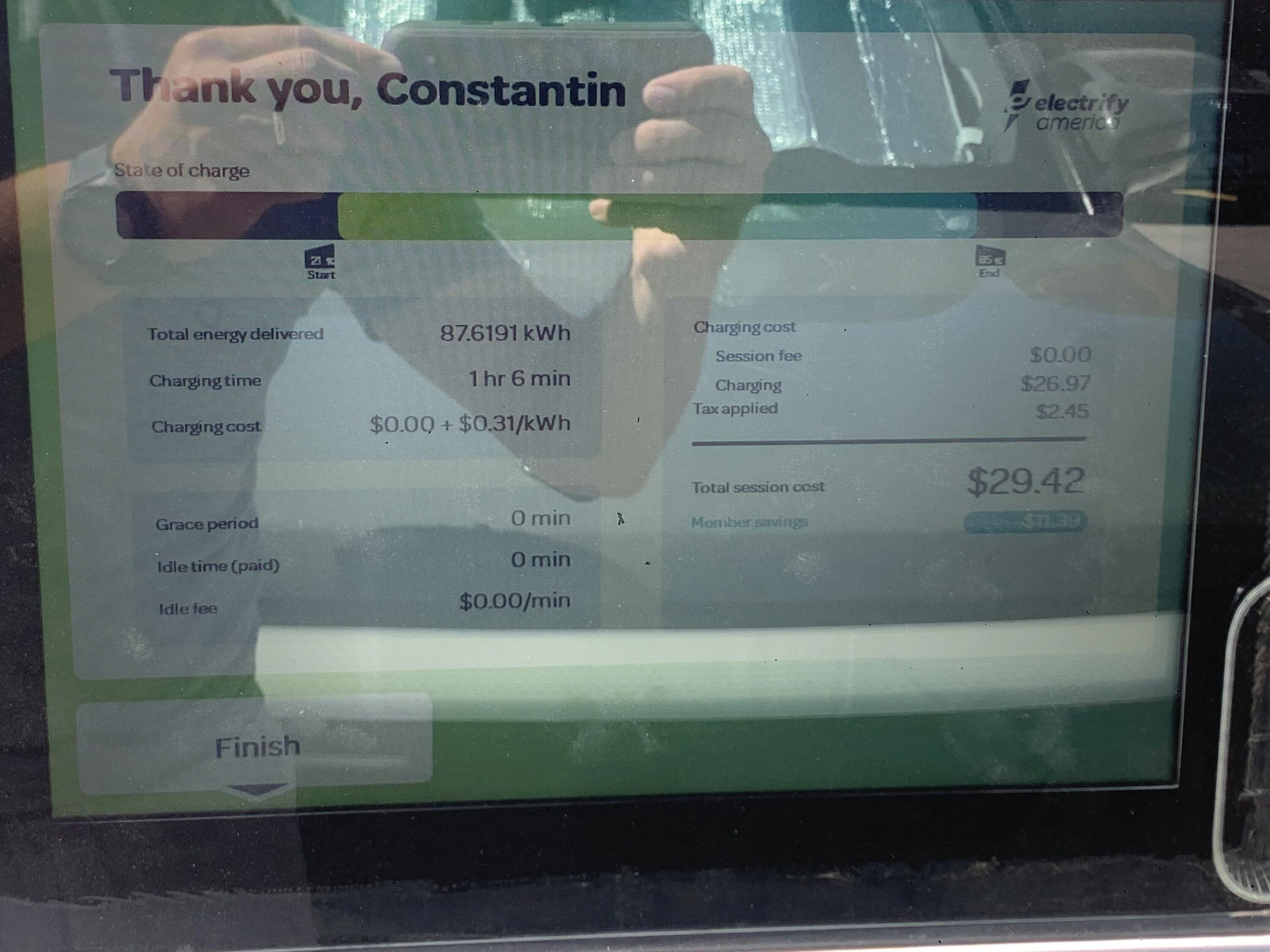
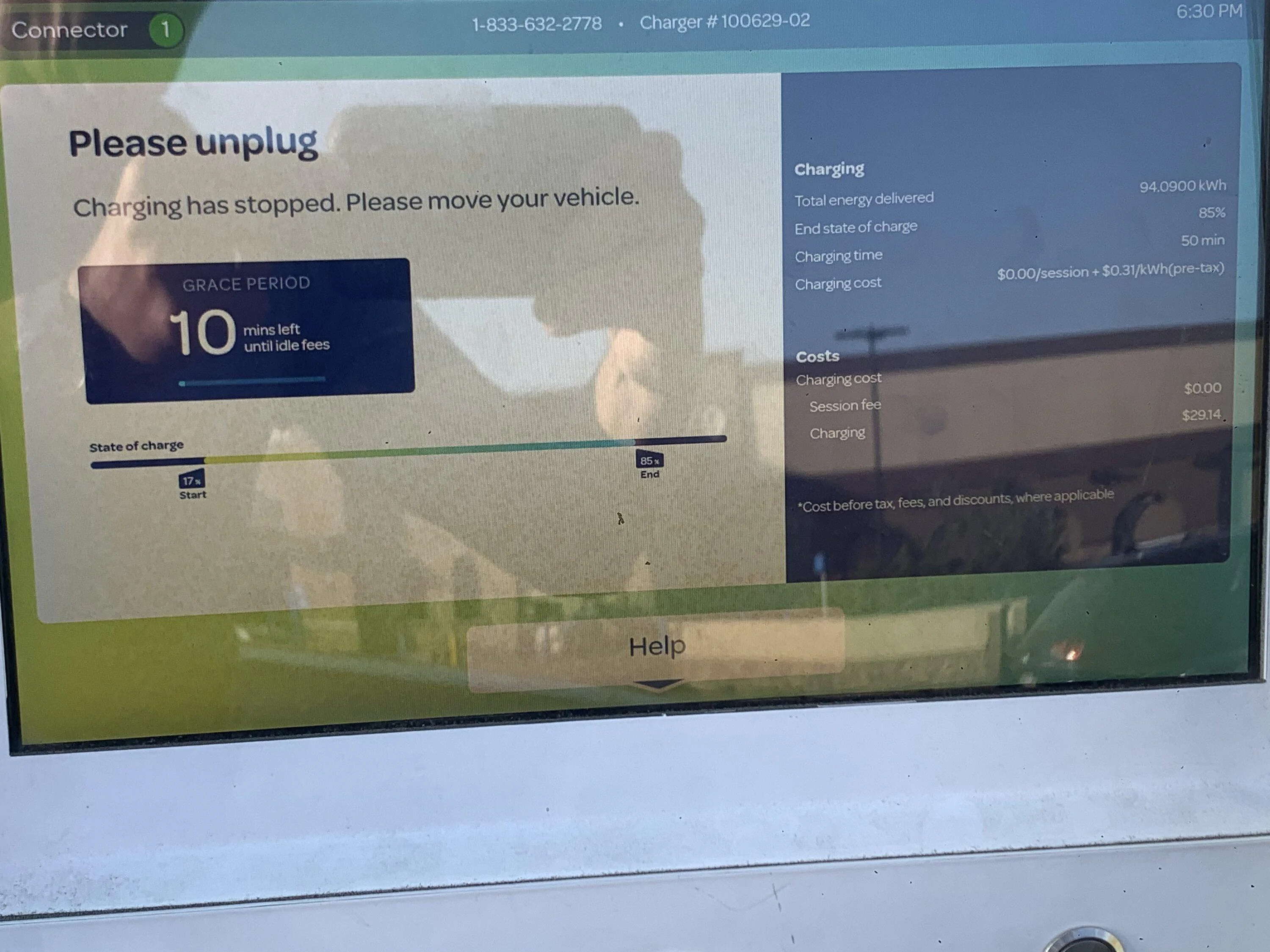
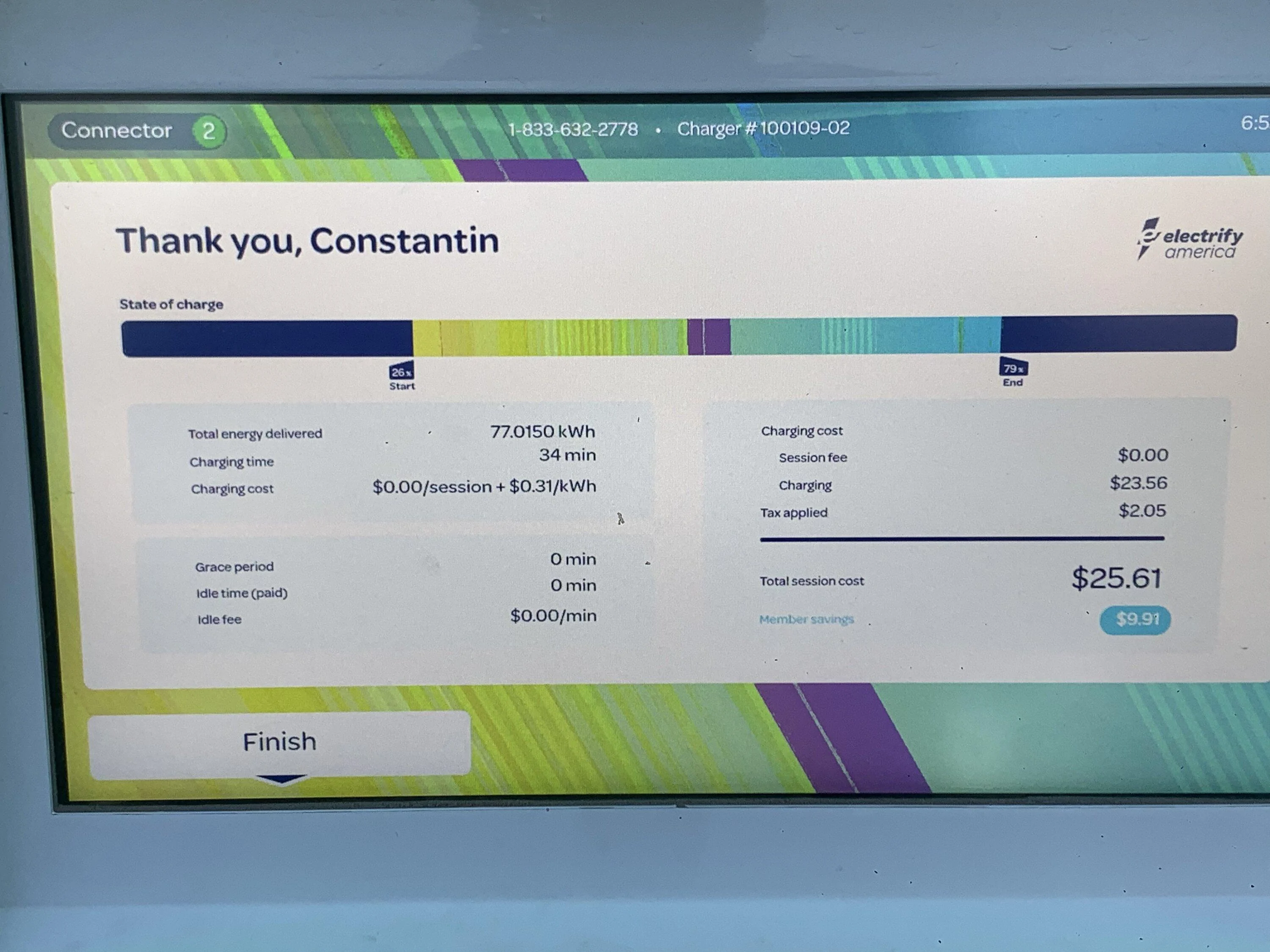
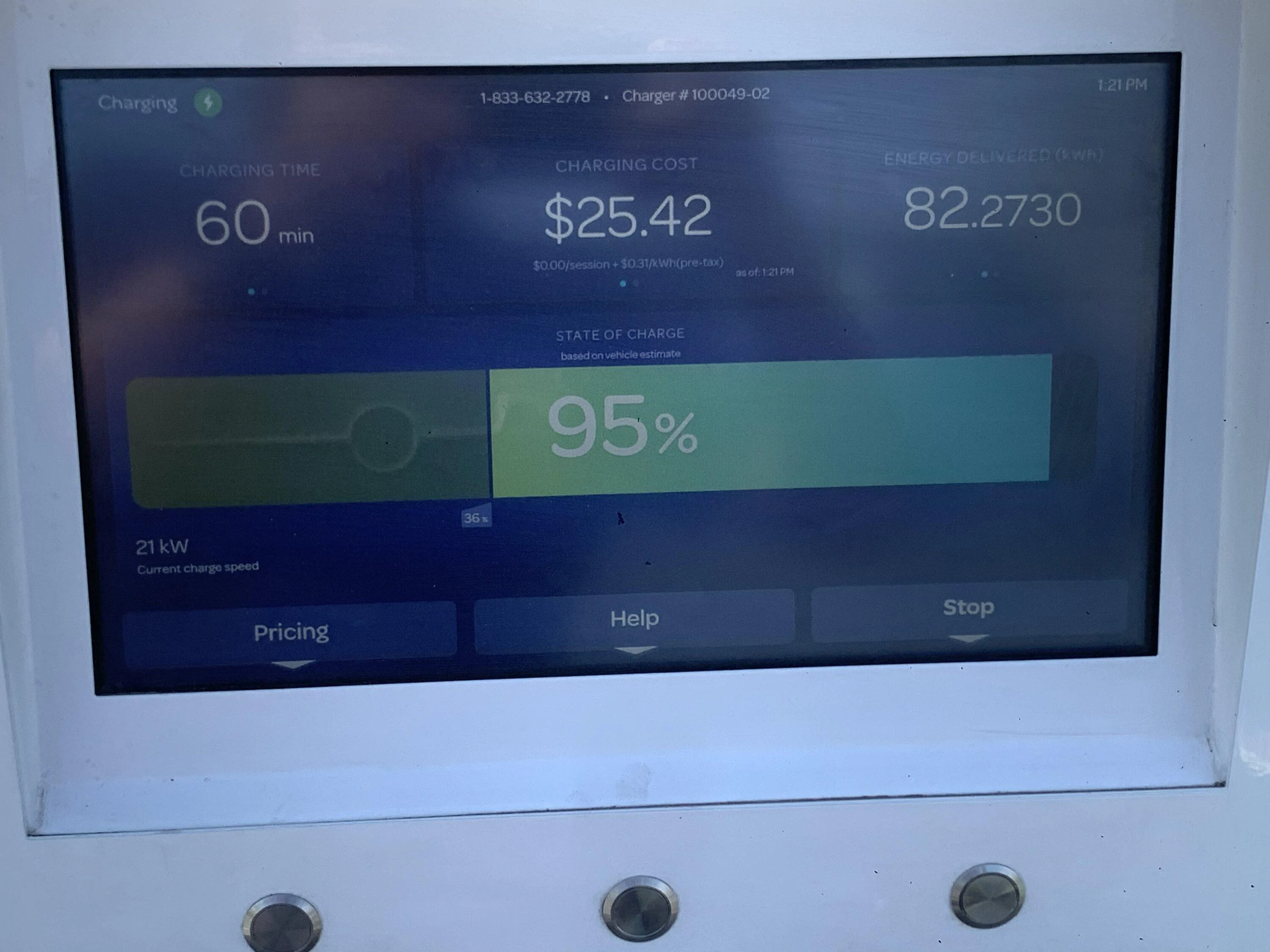
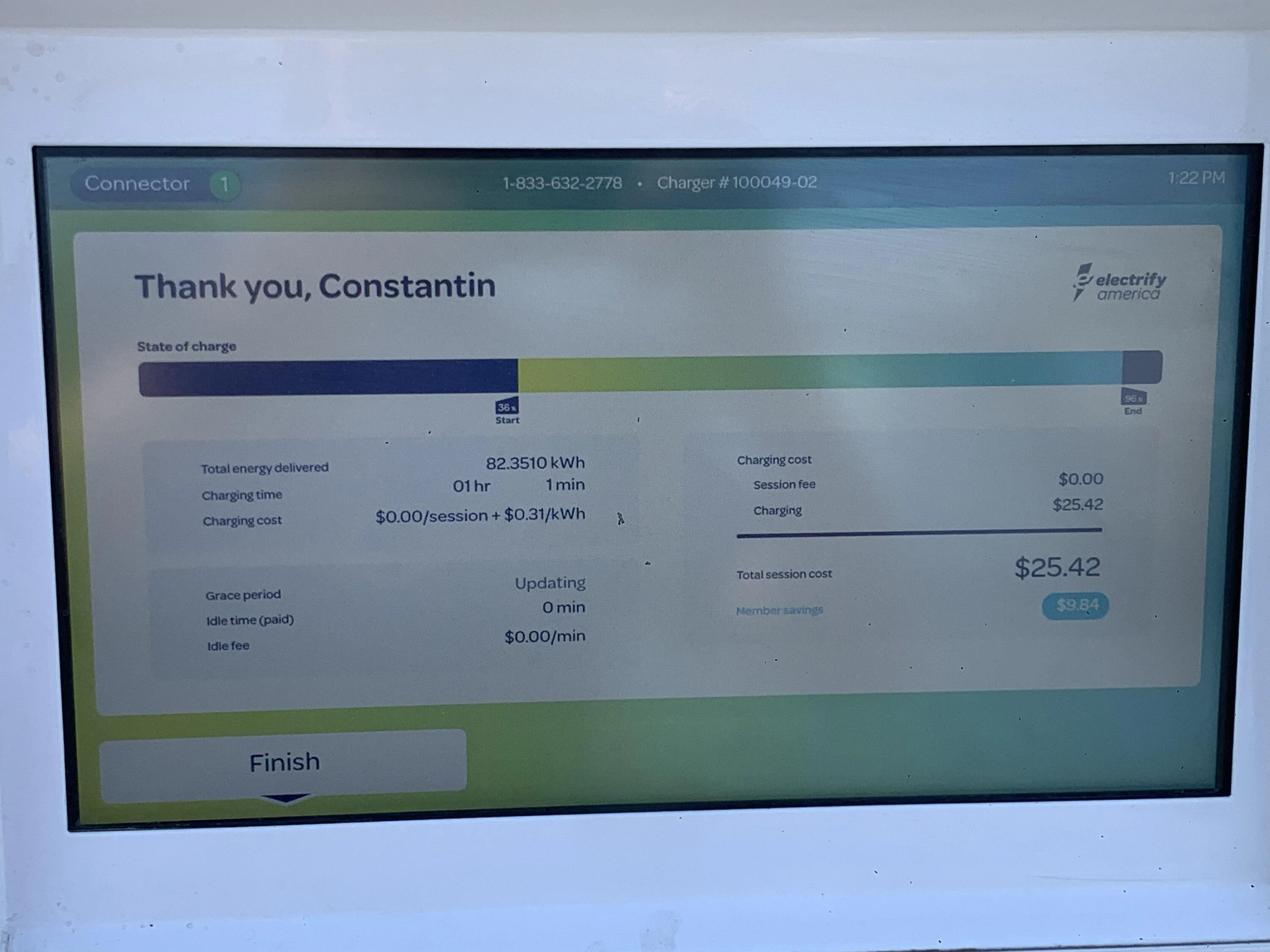
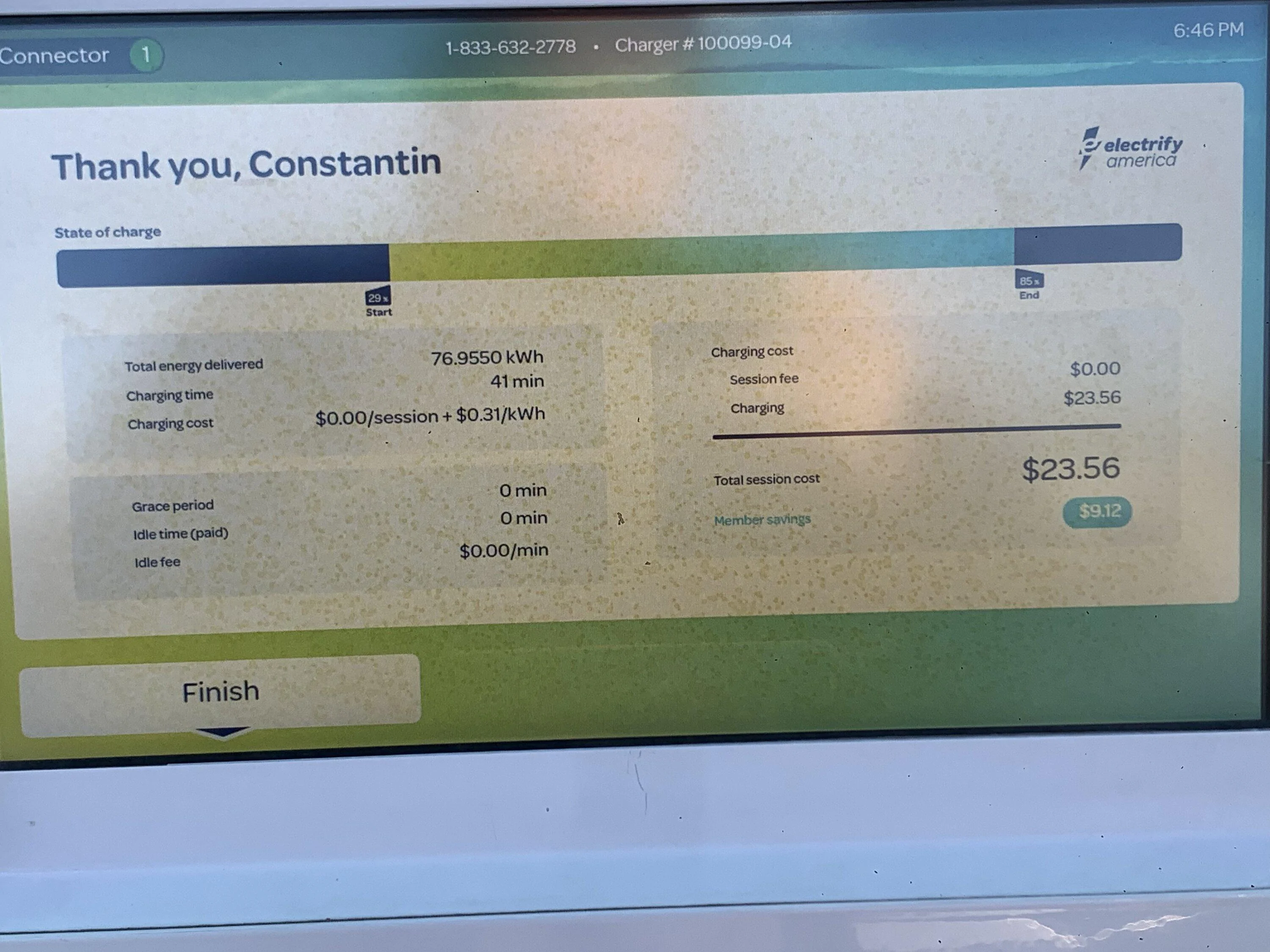
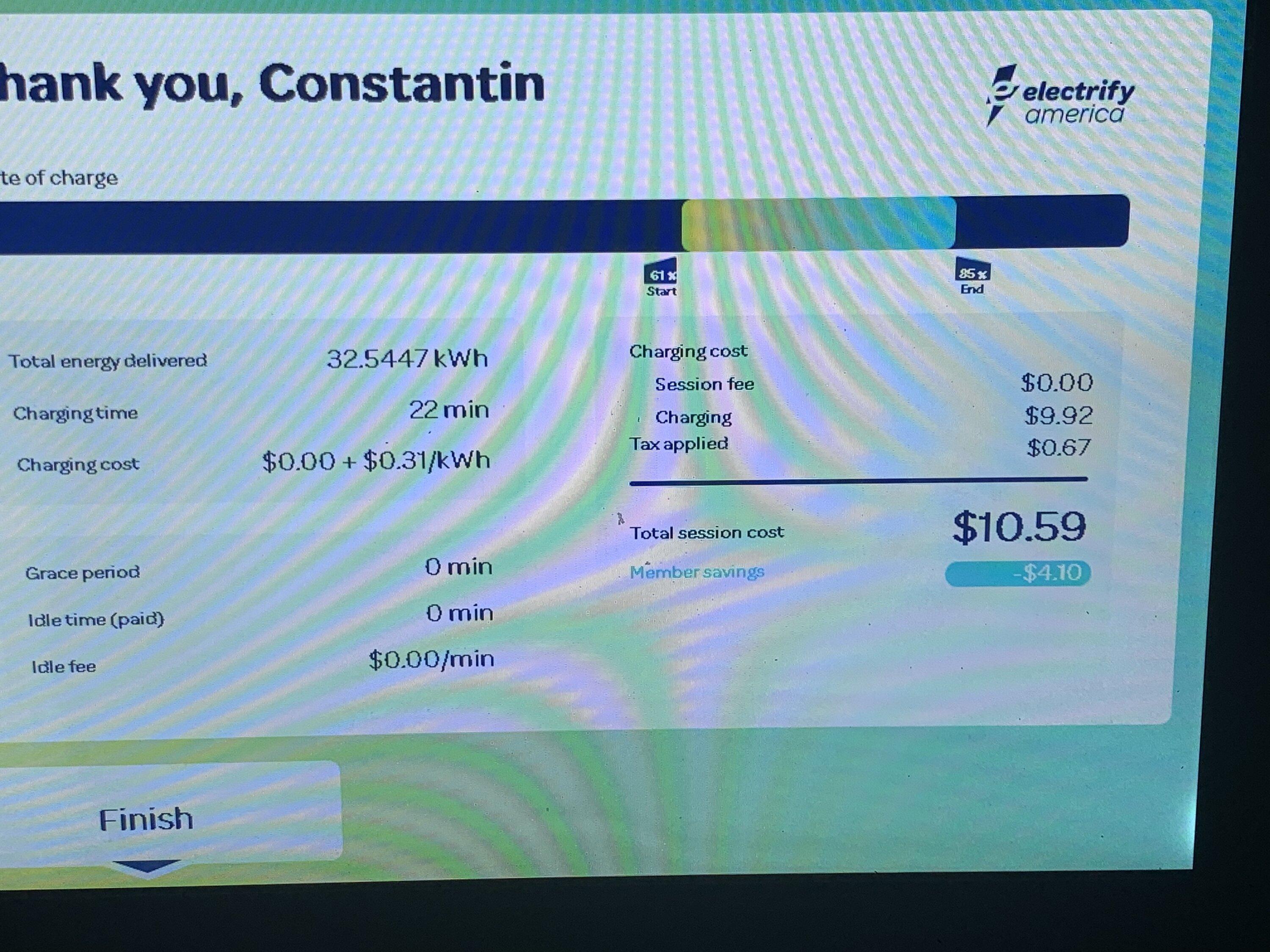
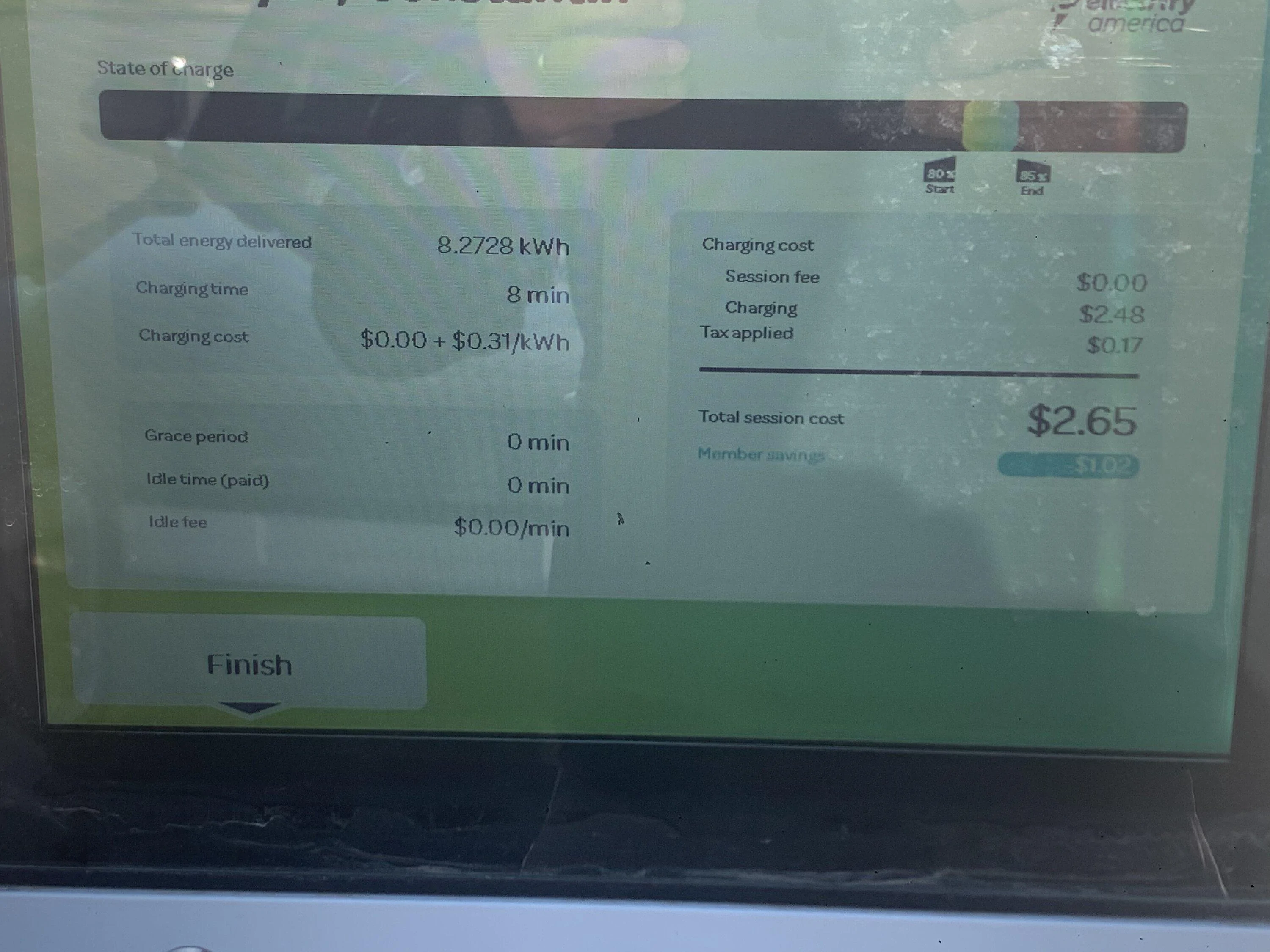
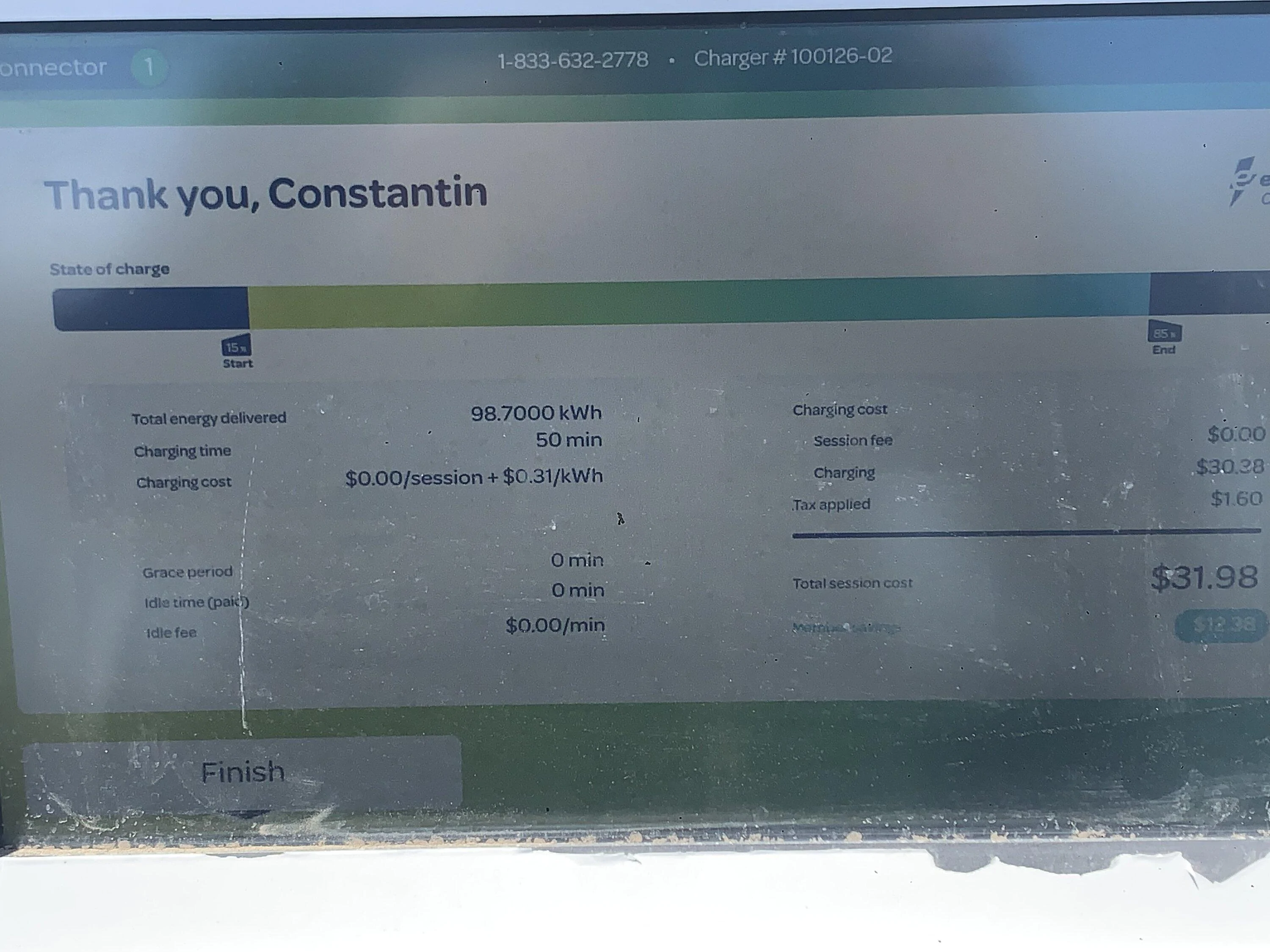
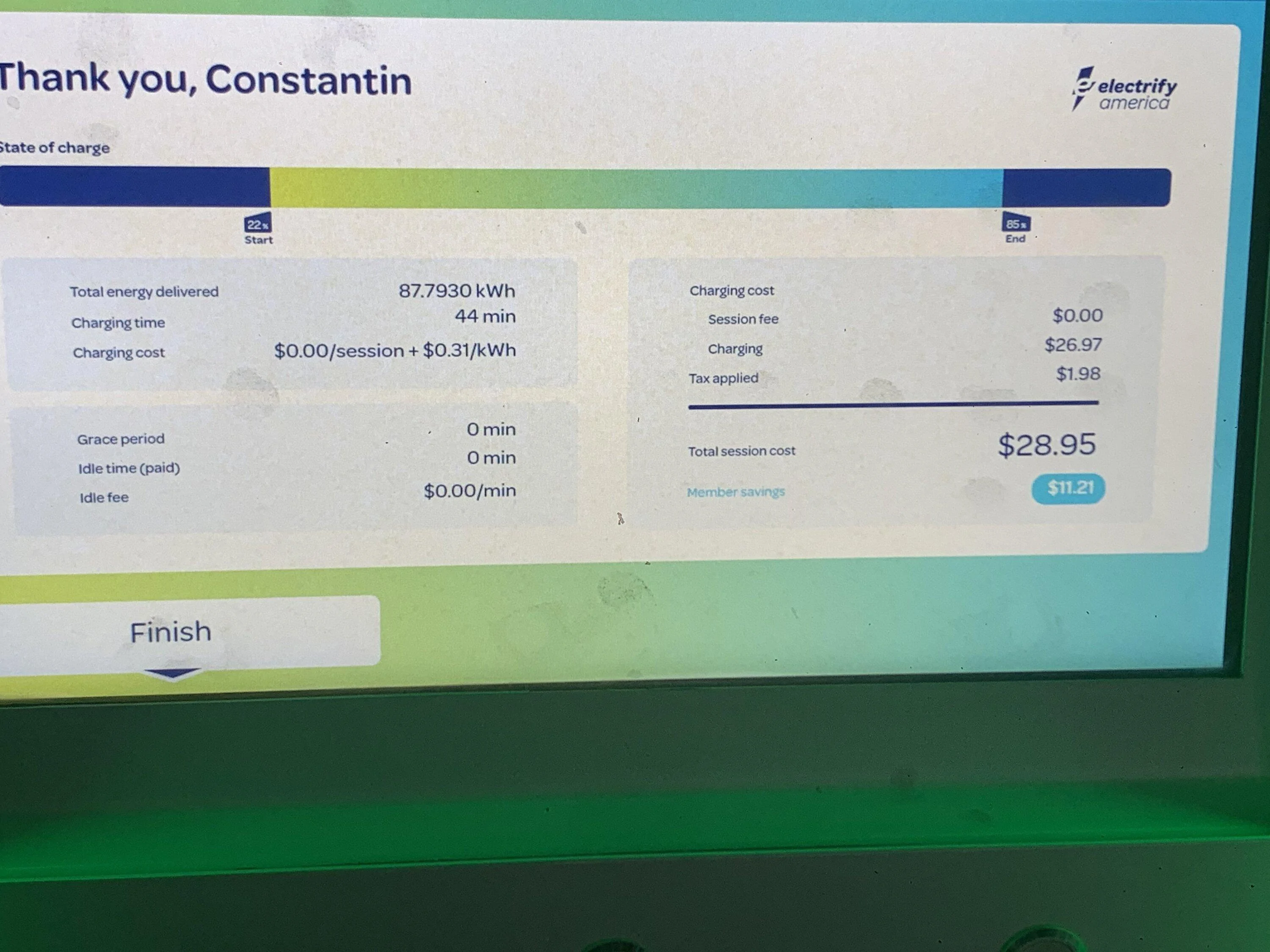
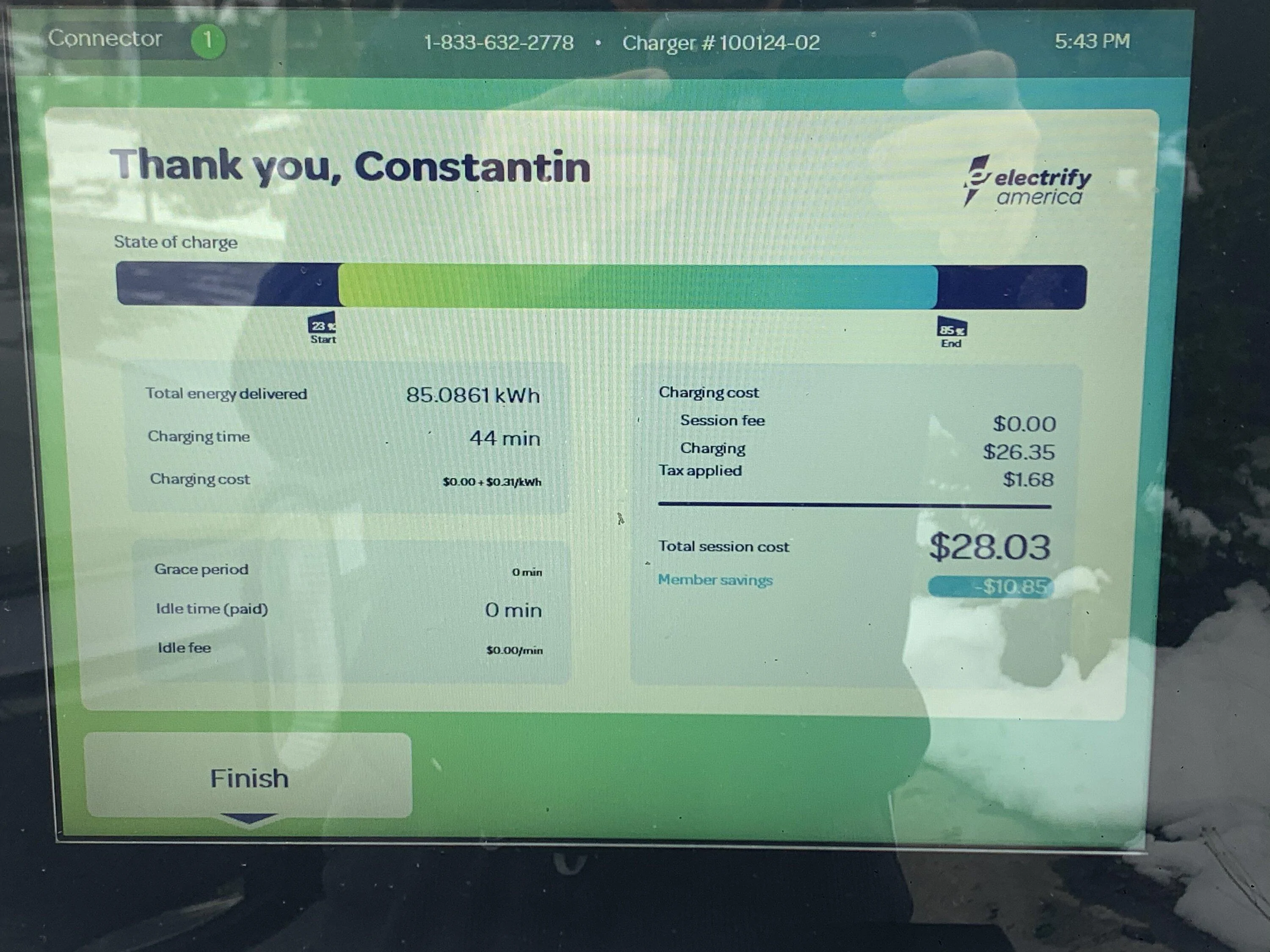
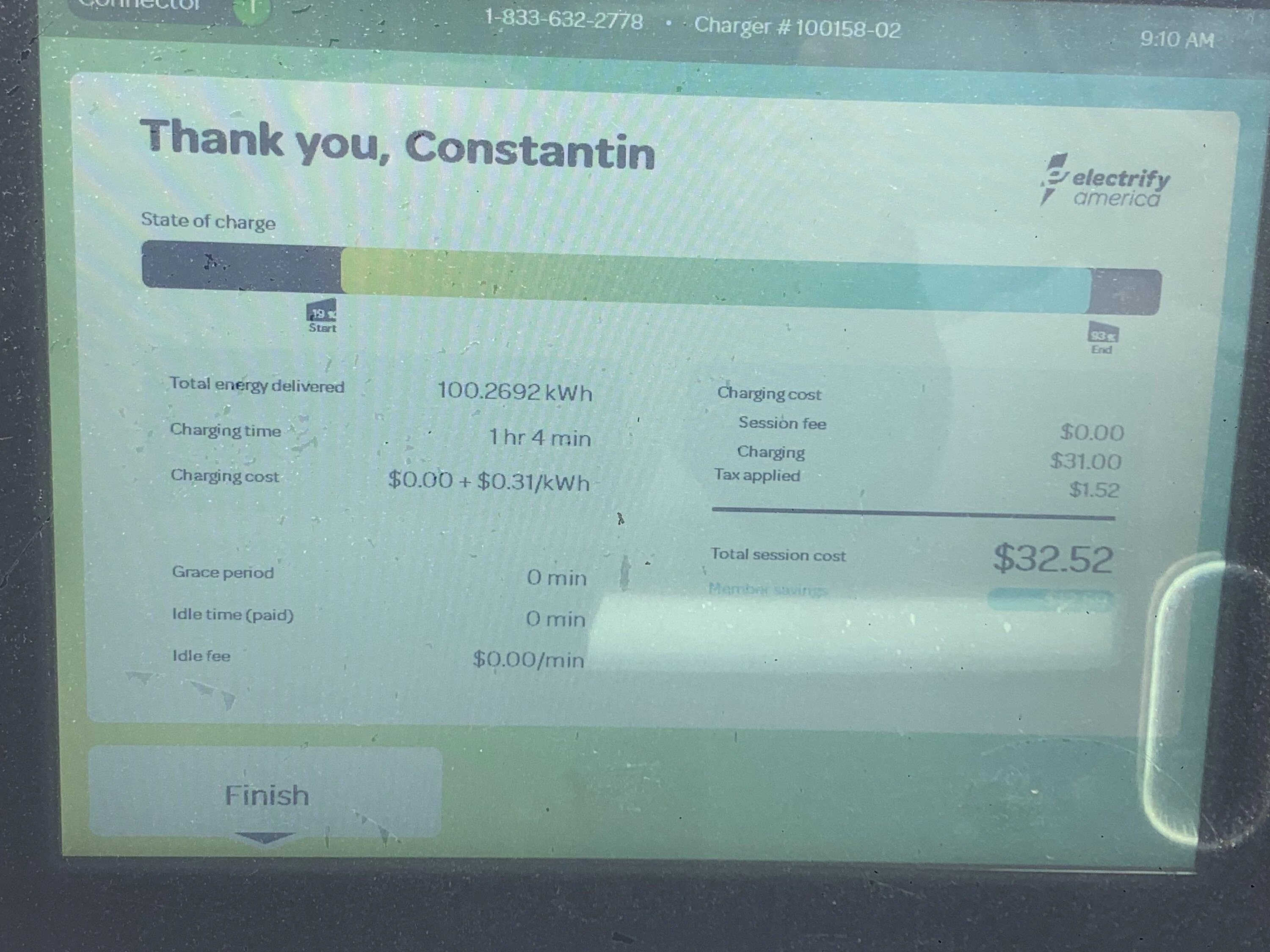
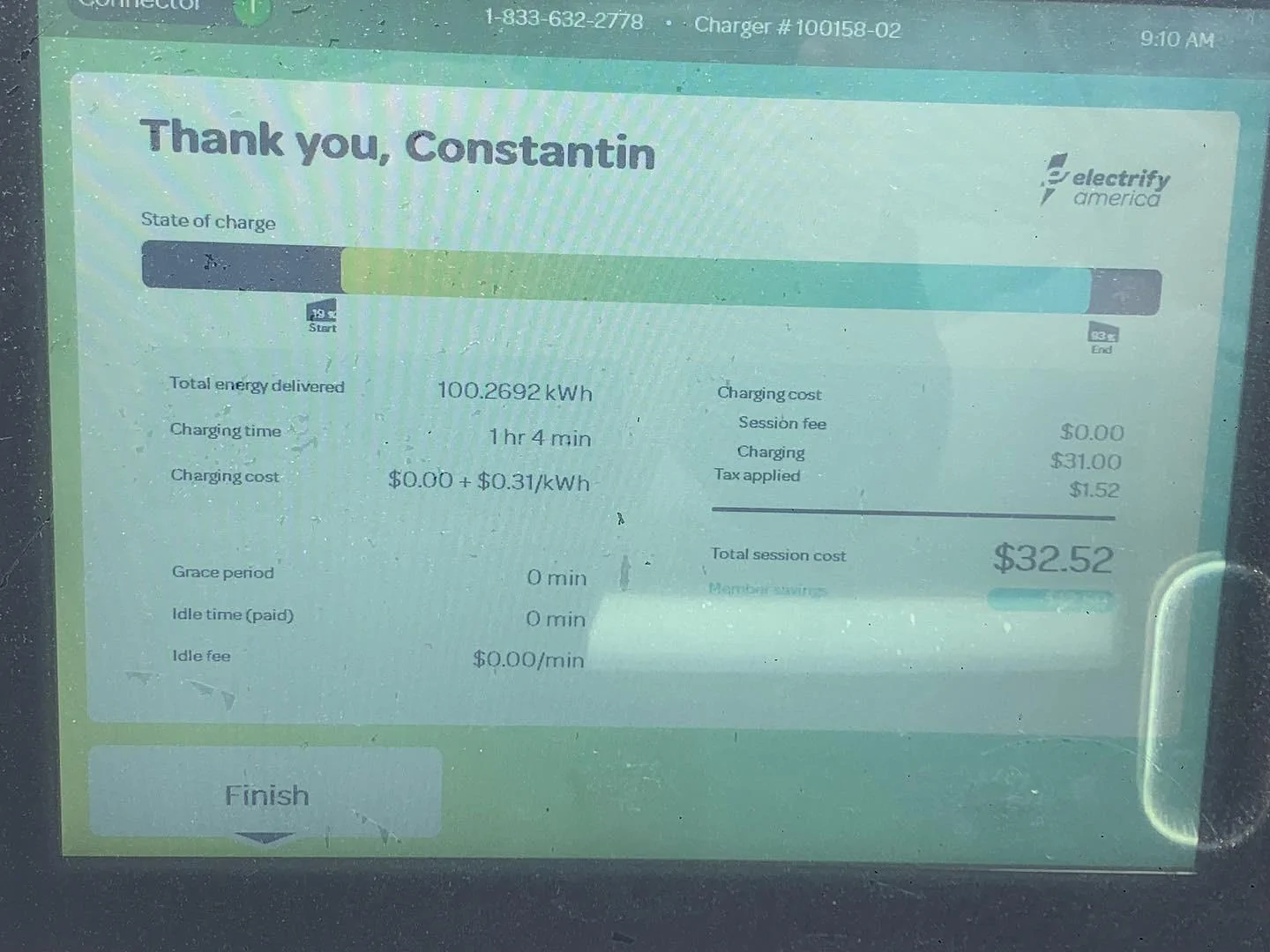
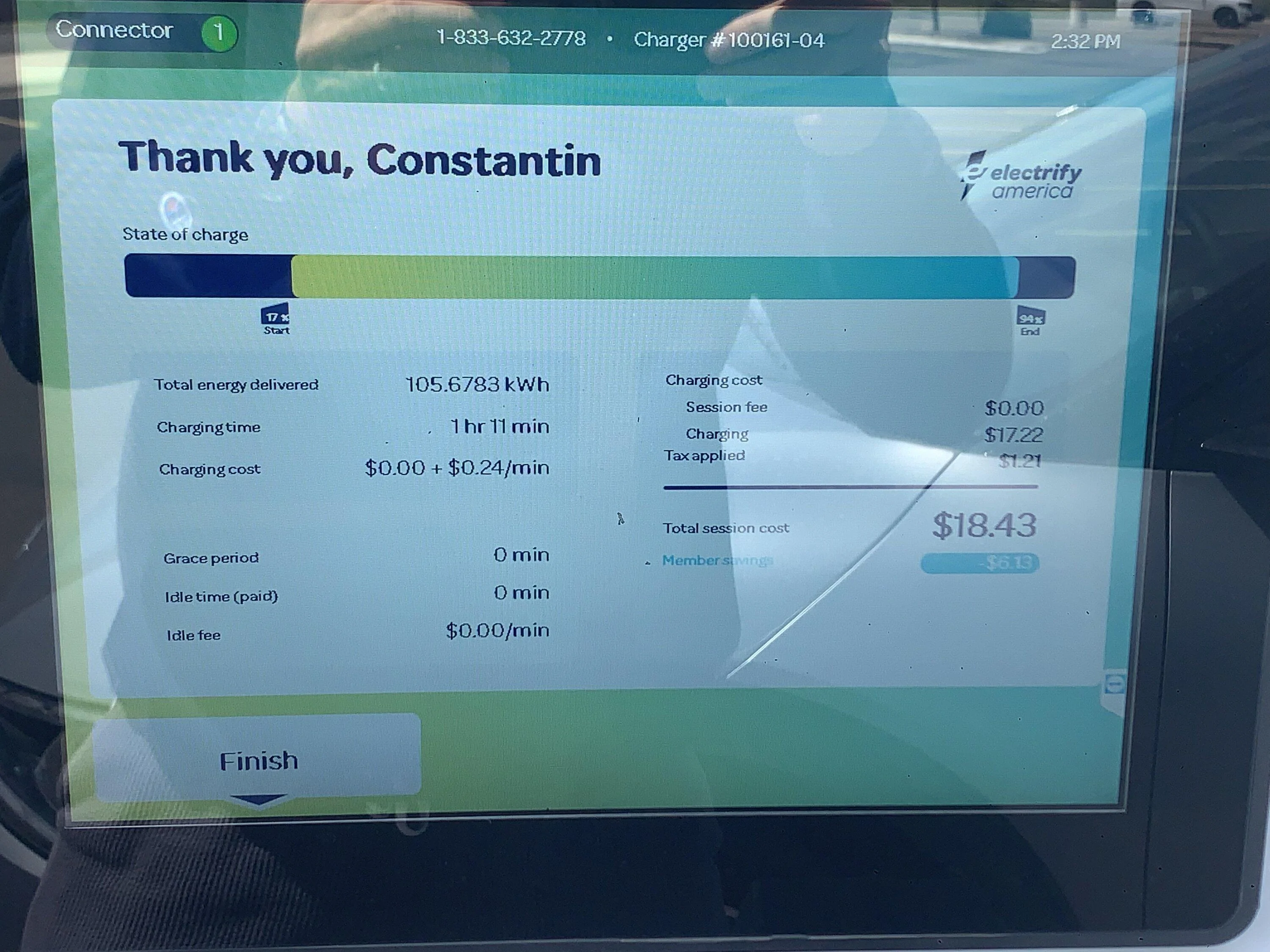
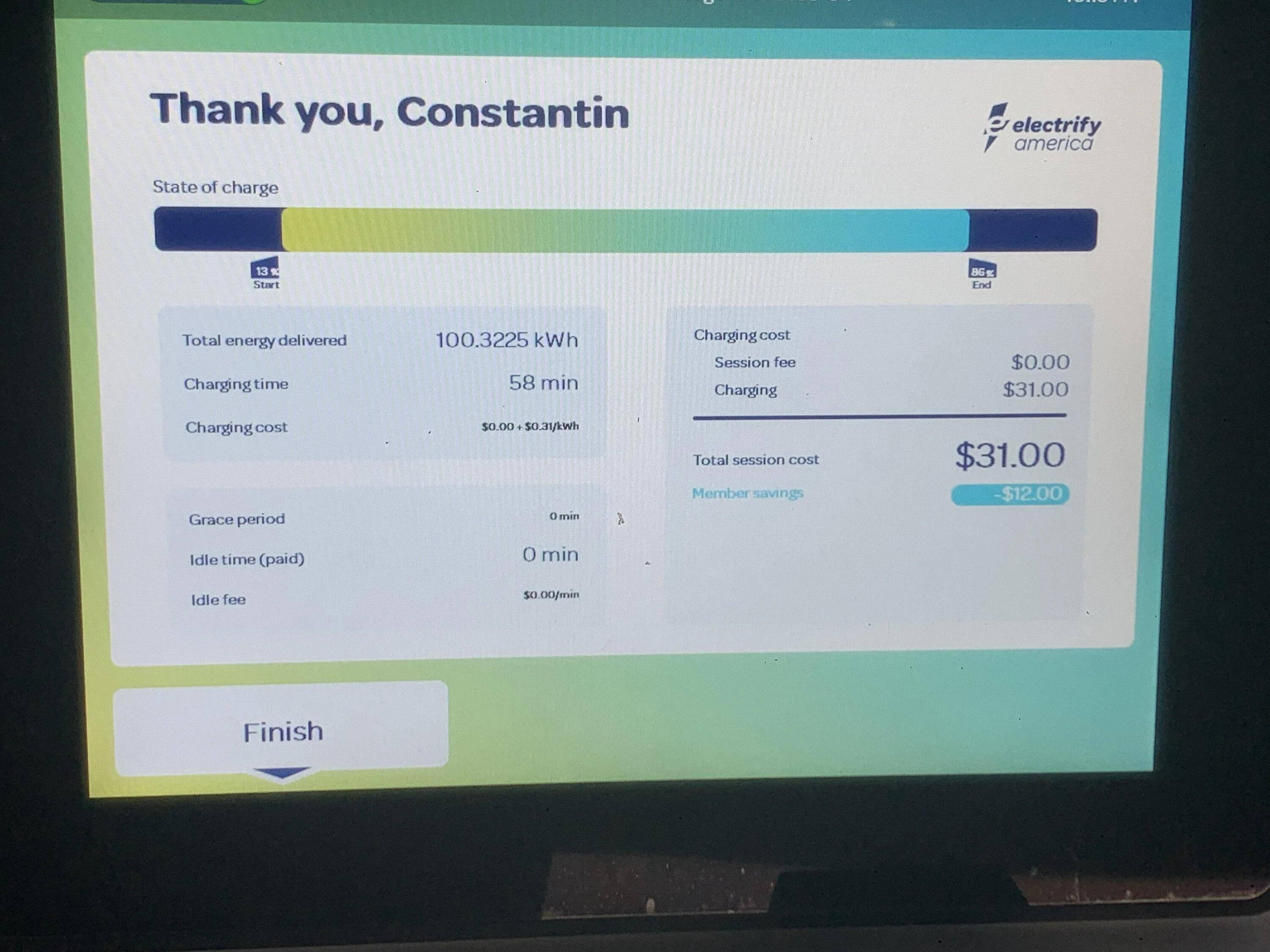
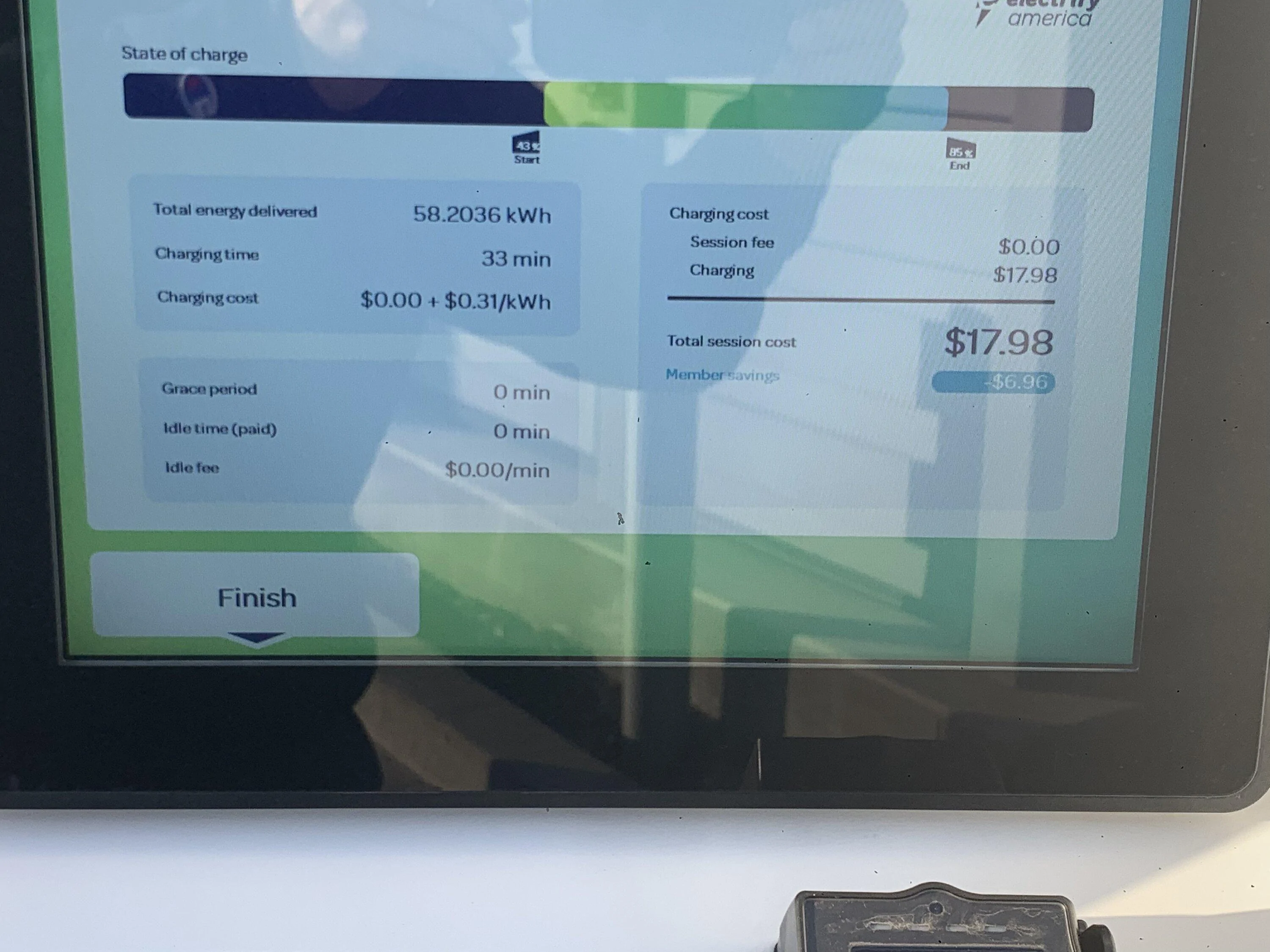
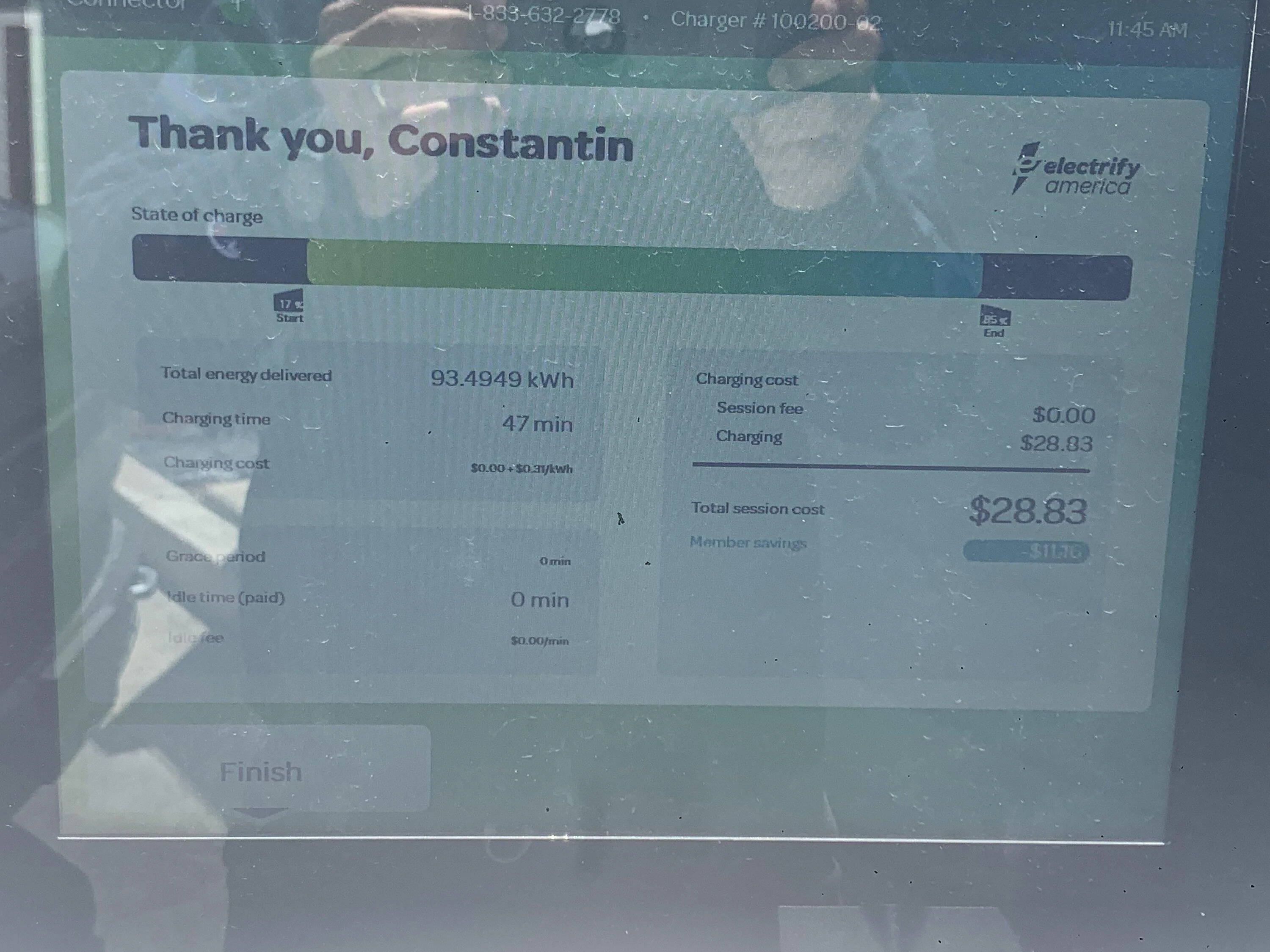
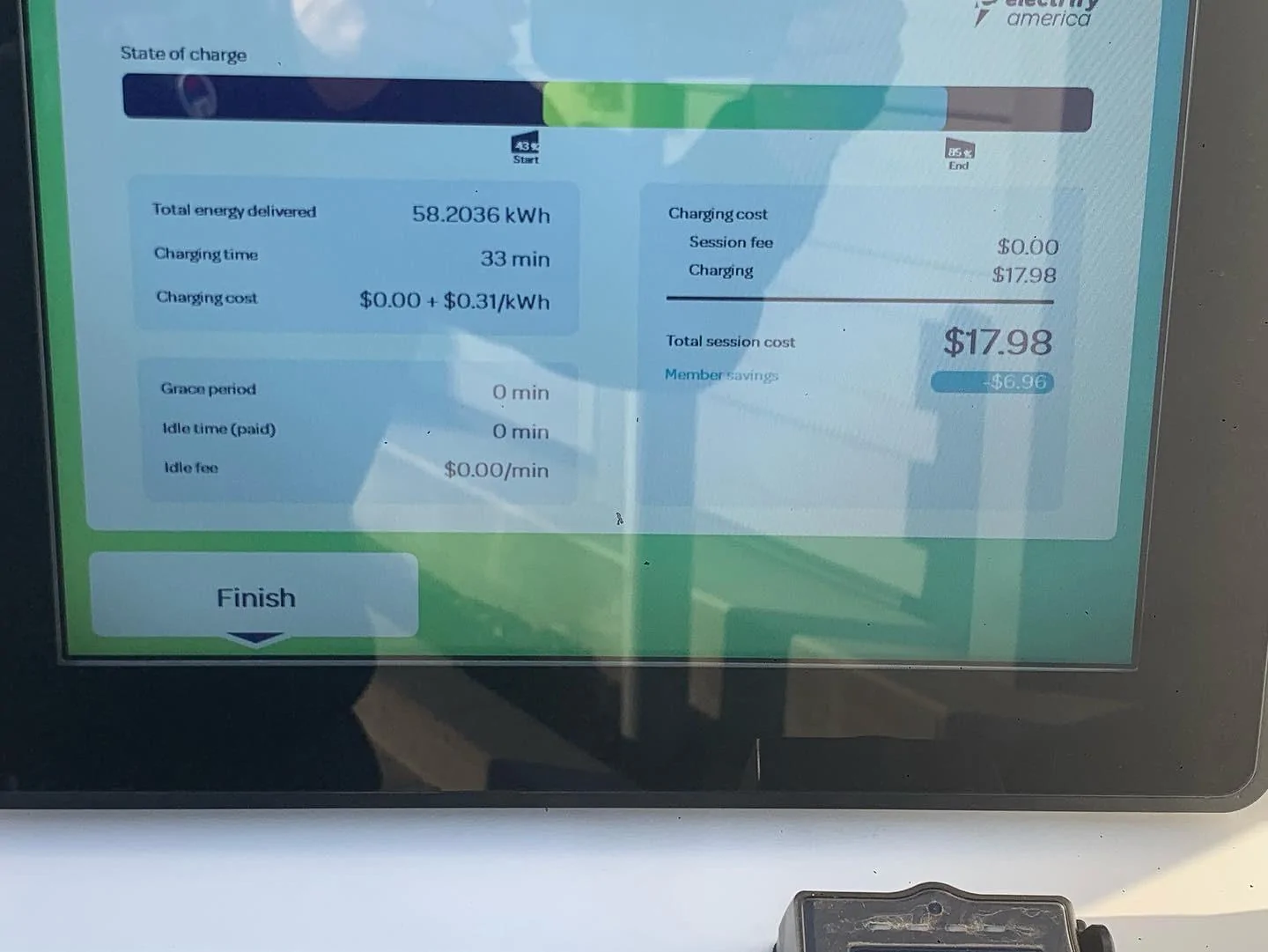
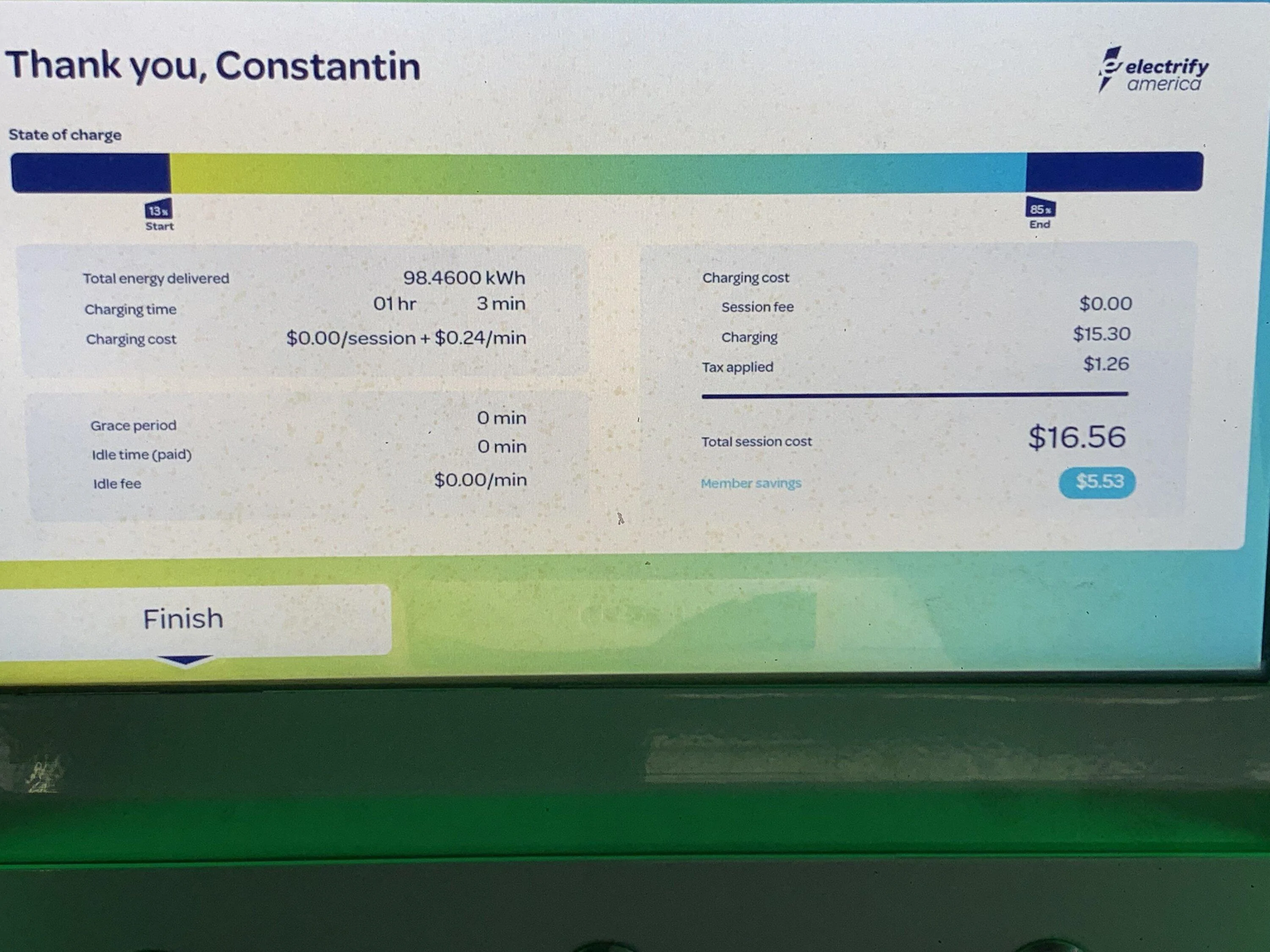
On my cross country trip, I took screenshots of the charging numbers and I used only EA for 7400+ miles journey. If you want, I can upload them to take a look. If I remember correctly, the cheapest one was in Mississippi (9 cents/KWh) and the expensive one was in California.
It’s worth to mention that I have a subscription with EA
 
OP
OP
mkennedy1996

mkennedy1996

Well-Known Member
First Name
Max
Joined
Nov 18, 2020
Threads
41
Messages
437
Reaction score
744
Location
North Georgia
Vehicles
R1S, Model X, Model Y
On my cross country trip, I took screenshots of the charging numbers and I used only EA for 7400+ miles journey. If you want, I can upload them to take a look. If I remember correctly, the cheapest one was in Mississippi (9 cents/KWh) and the expensive one was in California.
It’s worth to mention that I have a subscription with EA
I would be interested to see the numbers.
 

Sponsored
DJG

Well-Known Member
Joined
Apr 13, 2022
Threads
12
Messages
1,006
Reaction score
1,108
Location
TX
Vehicles
Various
I did the breakeven math once and want to say it was something like 100kw or less where anything faster and it was cheaper per minute than per kwh (I only did it for EA because that's all we have). For the Rivian, charging in the typical part of the curve that you would at a DCFC, it's 3-4x cheaper in per minute states than per kwh states. Here in TX, it's only slightly more expensive than home charging.
 

zefram47

Well-Known Member
First Name
Aaron
Joined
Feb 6, 2022
Threads
18
Messages
2,752
Reaction score
4,515
Location
Denver, CO
Vehicles
Rivian R1T, Alfa Romeo 4C
Occupation
Software Engineer
Per minute is great if your vehicle can charge at high rates, but the charger has to actually be working correctly. If your car can do 200+ kW and the charger only gives you 36 kW, then per minute sucks. Likewise, per minute sucks when your car is only capable of 50 kW. Until chargers reliably give you the charge rates they should, I'd rather see per kWh because it's at least consistent. But to extend that, even the per kWh rates that vary based on charge power capability of a vehicle, you could still get charged a rate for a 200+ kW vehicle and the charger itself may not deliver anywhere near that amount.
 

DJG

Well-Known Member
Joined
Apr 13, 2022
Threads
12
Messages
1,006
Reaction score
1,108
Location
TX
Vehicles
Various
EA charges half the rate for vehicles only capable of charging at less than 90kw, so the math holds a similar end result.

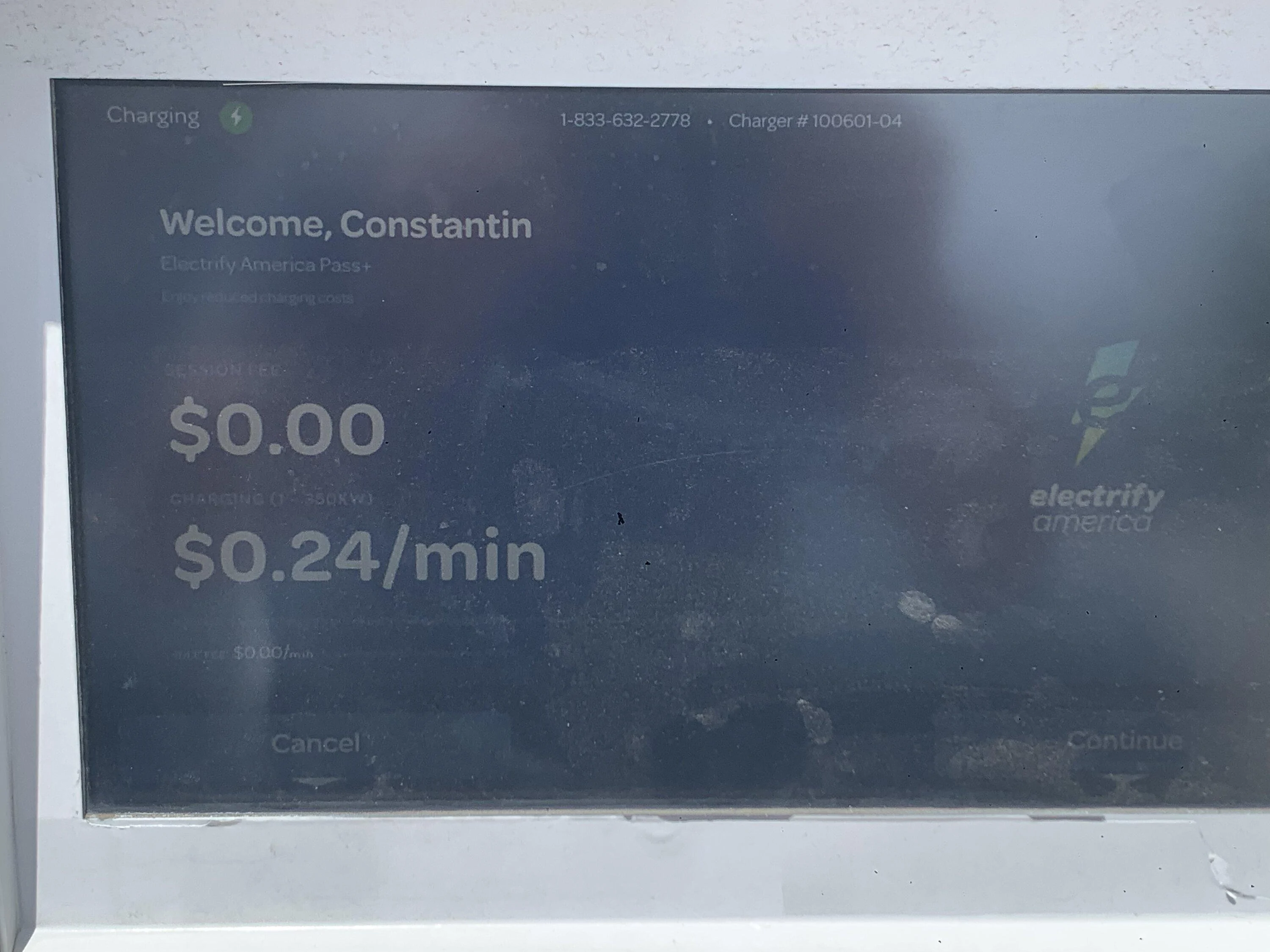
For example, in TX the rate would be $0.16/min (non pass pricing) for a vehicle that can only charge at 50kw. That's 0.833 kwh/min, or 1.2 minutes to get 1kwh. That works out to $0.19/kwh, which is less than half what it would cost in a per unit state ($0.43/kwh).

For what it's worth, even a Rivian only able to pull 50kw, they would pay double the rate ($0.32/min), so the per kwh would be double, $0.38, still less than paying per unit. So I was wrong, the breakeven is actually less than 50kw, about 45kw to be precise. When I had my eTron, it pulled 150kw flat up to 80%, and at that rate I was paying almost EXACTLY the same rate per kwh as I did at home ($0.128/kwh).

FWIW, the Chargepoint 250 units (125kw split, or up to about 80kw if your alone) charge $0.21/min. That works out to $0.16/kwh when pulling 80kw, or $0.20/kwh when sharing it and only getting 62.5kw.

You will virtually always pay less for energy in a per minute state, and certainly will on average, by a large margin. It's this simple math that begs the question of why EA doesn't charge the appropriate price in those states, or perhaps there is some hidden regulation that prevents them from doing so. Imagine what the extra revenue could do for reinvesting in reliability.

I will say though, that per minute does give a perverse disincentive for reliably working chargers putting out the power they should be. Whether that's an actual conspiracy or not, I can't say.
 

Guy

Well-Known Member
First Name
Guy
Joined
Nov 6, 2021
Threads
12
Messages
1,607
Reaction score
1,518
Location
Philadelphia suburbs
Vehicles
Mazda 6, Toyota Sienna
Occupation
Scientist
Clubs
 
EA charges half the rate for vehicles only capable of charging at less than 90kw, so the math holds a similar end result.

For example, in TX the rate would be $0.16/min (non pass pricing) for a vehicle that can only charge at 50kw. That's 0.833 kwh/min, or 1.2 minutes to get 1kwh. That works out to $0.19/kwh, which is less than half what it would cost in a per unit state ($0.43/kwh).

For what it's worth, even a Rivian only able to pull 50kw, they would pay double the rate ($0.32/min), so the per kwh would be double, $0.38, still less than paying per unit. So I was wrong, the breakeven is actually less than 50kw, about 45kw to be precise. When I had my eTron, it pulled 150kw flat up to 80%, and at that rate I was paying almost EXACTLY the same rate per kwh as I did at home ($0.128/kwh).

FWIW, the Chargepoint 250 units (125kw split, or up to about 80kw if your alone) charge $0.21/min. That works out to $0.16/kwh when pulling 80kw, or $0.20/kwh when sharing it and only getting 62.5kw.

You will virtually always pay less for energy in a per minute state, and certainly will on average, by a large margin. It's this simple math that begs the question of why EA doesn't charge the appropriate price in those states, or perhaps there is some hidden regulation that prevents them from doing so. Imagine what the extra revenue could do for reinvesting in reliability.

I will say though, that per minute does give a perverse disincentive for reliably working chargers putting out the power they should be. Whether that's an actual conspiracy or not, I can't say.
Some states prevent charging per KWhr. So that is why they are per minute.
 

WSea

Well-Known Member
First Name
Patrick
Joined
Mar 6, 2022
Threads
39
Messages
1,678
Reaction score
2,044
Location
West seattle
Vehicles
R1T, Outback
Occupation
Architect
In there some place that shows which states charge by the minute?
 

Sponsored
Guy

Well-Known Member
First Name
Guy
Joined
Nov 6, 2021
Threads
12
Messages
1,607
Reaction score
1,518
Location
Philadelphia suburbs
Vehicles
Mazda 6, Toyota Sienna
Occupation
Scientist
Clubs
 
Yes, I know, my point was just how much cheaper it is in those states and pondering why they don't charge more.

https://www.electrifyamerica.com/pricing/
Sorry, I assumed from your phrasing that it was a question:
It's this simple math that begs the question of why EA doesn't charge the appropriate price in those states, or perhaps there is some hidden regulation that prevents them from doing so.
 

DJG

Well-Known Member
Joined
Apr 13, 2022
Threads
12
Messages
1,006
Reaction score
1,108
Location
TX
Vehicles
Various
Sorry, I assumed from your phrasing that it was a question:
It's this simple math that begs the question of why EA doesn't charge the appropriate price in those states, or perhaps there is some hidden regulation that prevents them from doing so.
It was, albeit a rhetorical one, but the key part of it is the phrase "appropriate price" - which I meant to be the appropriate price per minute (it should be at least double), not the unit of measurement they are able to charge for. Two hypothetical stations on either side of a state border could have exactly the same utilization, energy use and operating cost, but one has several times the revenue than the other.

By the way, somewhat of a tangent, Kyle put out a good video about Freewire charging stations, which has a ton of good information about the business side of fast chargers. Including some enlightening details about how long it takes (and how costly) to get utility infrastructure to a site.

For those that want an anecdote that summarizes the takeaway - Freewire served a fleet client in SF that needed to add DC chargers to an old parking garage. The local utility told them it would take over a year just to get the infrastructure to the site (it would also be incredibly expensive, though not detailed). Freewire had them operational in 11 days because their system uses existing low power infrastructure.

Sponsored


Top