
-
👉 R2 Orders ➡ Add Your R2 Orders / VIN / Delivery Info 📊
Sponsored
R2 - Real world 259 mile round trip efficiency results (at 100+ degrees)
Thebandit
Well-Known Member
Just for fun, I asked Claude to estimate how long it would take to do a 2000 mile road trip in the R2 at various speeds.
Turns out that, taking charging into account, you're better off driving faster. Total travel time decreases steadily up to over 100 mph. Less efficiency at higher speed means more charging stops, but you make up for it in actual driving time.
So if you're doing a shortish trip and trying to just get there without having to charge, then go a bit slower. But if you really want to eat some miles, forget about the efficiency vs speed and just go as fast as you're comfortable.
Turns out that, taking charging into account, you're better off driving faster. Total travel time decreases steadily up to over 100 mph. Less efficiency at higher speed means more charging stops, but you make up for it in actual driving time.
So if you're doing a shortish trip and trying to just get there without having to charge, then go a bit slower. But if you really want to eat some miles, forget about the efficiency vs speed and just go as fast as you're comfortable.

Holler Wanderer
Well-Known Member
It may have only been 60 mph average, but if that's your normal use case on highways, that's great. Here in CO, the highways can be extremely hilly and windy, and you go 75-80 mph (if you're slow lol). Not great EV conditions for sure.
Holler Wanderer
Well-Known Member
Makes sense. Driving faster only really makes a difference in time for very long trips.Just for fun, I asked Claude to estimate how long it would take to do a 2000 mile road trip in the R2 at various speeds.
Turns out that, taking charging into account, you're better off driving faster. Total travel time decreases steadily up to over 100 mph. Less efficiency at higher speed means more charging stops, but you make up for it in actual driving time.
So if you're doing a shortish trip and trying to just get there without having to charge, then go a bit slower. But if you really want to eat some miles, forget about the efficiency vs speed and just go as fast as you're comfortable.

TexasBob
Well-Known Member
Worth noting that the hot temperature gives benefit (especially at highway speed) while also taking load on the AC.
Air density drops as temperature rises (at standard sea-level pressure):
Is baseline is 70 degrees / 70 miles, then 105 degree central valley drive with AC is 10% - 11% less efficient because of AC load.
OTOH, cutting to 60 mph is 5% more efficient than 70/70 despite the temps and AC. You might be surprised it is only 5% but remember you have to spend more time on the road at 60 mph and AC load is a matter of time not d
Air density drops as temperature rises (at standard sea-level pressure):
- At 68°F (20°C): $\approx 1.204 kg/m3
- At 105°F (40.5°C): $\approx 1.127 kg/m3
Is baseline is 70 degrees / 70 miles, then 105 degree central valley drive with AC is 10% - 11% less efficient because of AC load.
OTOH, cutting to 60 mph is 5% more efficient than 70/70 despite the temps and AC. You might be surprised it is only 5% but remember you have to spend more time on the road at 60 mph and AC load is a matter of time not d
Sponsored
TexasBob
Well-Known Member
You are always going to spend less time traveling by going faster and charging more often here is why:Just for fun, I asked Claude to estimate how long it would take to do a 2000 mile road trip in the R2 at various speeds.
Turns out that, taking charging into account, you're better off driving faster. Total travel time decreases steadily up to over 100 mph. Less efficiency at higher speed means more charging stops, but you make up for it in actual driving time.
So if you're doing a shortish trip and trying to just get there without having to charge, then go a bit slower. But if you really want to eat some miles, forget about the efficiency vs speed and just go as fast as you're comfortable.
Even at a super slow 100 kw charging speed and using the R2 85 mph range model (which btw is 210 miles at 85mph / 70 degrees) you are adding range at a rate of 240 miles per hour, right? You can always charge much faster than you can drive.
Thebandit
Well-Known Member
That's a good way to put it! I hadn't really thought of it that way, and it definitely helps.You are always going to spend less time traveling by going faster and charging more often here is why:
Even at a super slow 100 kw charging speed and using the R2 85 mph range model (which btw is 210 miles at 85mph / 70 degrees) you are adding range at a rate of 240 miles per hour, right? You can always charge much faster than you can drive.
Jeremy3292
Well-Known Member
- First Name
- Jeremy
- Joined
- Apr 27, 2026
- Threads
- 7
- Messages
- 1,172
- Reaction score
- 2,145
- Location
- South Carolina
- Vehicles
- R2
Especially with R2 charging performance at the bottom of the pack. Best to arrive at the charger as close to 0% as you can stomach. RivianTracker said it's 0% to 80% in 28 minutes. I recommend people quit around 73% as that's where the speed drops off sharply.You are always going to spend less time traveling by going faster and charging more often here is why:
Even at a super slow 100 kw charging speed and using the R2 85 mph range model (which btw is 210 miles at 85mph / 70 degrees) you are adding range at a rate of 240 miles per hour, right? You can always charge much faster than you can drive.
OP
OP
SANZC02
Well-Known Member
- First Name
- Bob
- Joined
- Feb 11, 2021
- Threads
- 52
- Messages
- 7,693
- Reaction score
- 13,268
- Location
- California
- Vehicles
- Tesla Model S, LE - R1S, LE - R2
- Occupation
- Retired

WoodChips
Well-Known Member
Correct, for straight interstate driving 70 mph is more normal, except in my area where it's usually 85.Agree not every test needs to be 70 which is why OoS did multiple speed tests. 70 though is one of the more common as people travel along the interstates (if not faster).
My original response to the OP was in reference to the lower limited highway limits which for me is more how I'll drive if I'm out "adventuring."
For longer road trips I'll be 70-80 mph and that will mean more charging stops as tested by OOS. I'm on with that but what got everyone fired up and me really worried was that it indicating my safe distance to a trailhead would be lower than I'm comfortable with, making me doubt my R2 reservation.
Seeing another test like this calmed many of my initial fears and has me looking forward to more range posting that might be similar to what I'll be doing on a normal weekend.
Sponsored
tivoboy
Well-Known Member
- First Name
- Paul
- Joined
- Nov 8, 2025
- Threads
- 3
- Messages
- 503
- Reaction score
- 645
- Location
- Palo Alto, CA
- Vehicles
- M3
For the OP and this tester, and ANYONE ELSE who wants to do a test like this, I would be really interested in what happened with that remaining 32 miles (10% SOC).. could they get something like that out of the pack at the end?
As the OOS showed in their 70 mph NON STOP NO SLOWING test, once the reported SOC hit ~ 10%, it dropped quickly and somewhat unexpectedly.. THAT is what really concerns me is if the reported remaining SOC in either % terms or miles is no longer accurate at the end.
So anyone doing any testing like this, more real world - if you can - maybe try and do that extra bit of driving of some combination and lets see really what happens as the tank gets down to the vapors.
As the OOS showed in their 70 mph NON STOP NO SLOWING test, once the reported SOC hit ~ 10%, it dropped quickly and somewhat unexpectedly.. THAT is what really concerns me is if the reported remaining SOC in either % terms or miles is no longer accurate at the end.
So anyone doing any testing like this, more real world - if you can - maybe try and do that extra bit of driving of some combination and lets see really what happens as the tank gets down to the vapors.
rvnxyz001
Well-Known Member
My only concern is that all the tests I’ve seen so far used Conserve mode, including the test in this thread. I’ve never driven an EV long term before. Is this how EV drivers usually drive? Why not use Normal mode? I’m not sure I’d want to buy a performance awd vehicle just to drive it in Eco two wheel drive modeSeeing another test like this calmed many of my initial fears and has me looking forward to more range posting that might be similar to what I'll be doing on a normal weekend

sparked
Well-Known Member
The difference shouldn't be much because the front motor is disconnected a lot of the time even in All Purpose mode. Worth people testing and putting up data though to back that up.My only concern is that all the tests I’ve seen so far used Conserve mode, including the test in this thread. I’ve never driven an EV long term before. Is this how EV drivers usually drive? Why not use Normal mode? I’m not sure I’d want to buy a performance awd vehicle just to drive it in Eco two wheel drive mode
You could put it into Sport mode and force it to use AWD all the time though.
Last edited:
iam1080
New Member
- First Name
- Bruno
- Joined
- Jul 16, 2026
- Threads
- 1
- Messages
- 2
- Reaction score
- 2
- Location
- Los Angeles
- Vehicles
- R1T CA Dune Edition
What wheels were you running on?
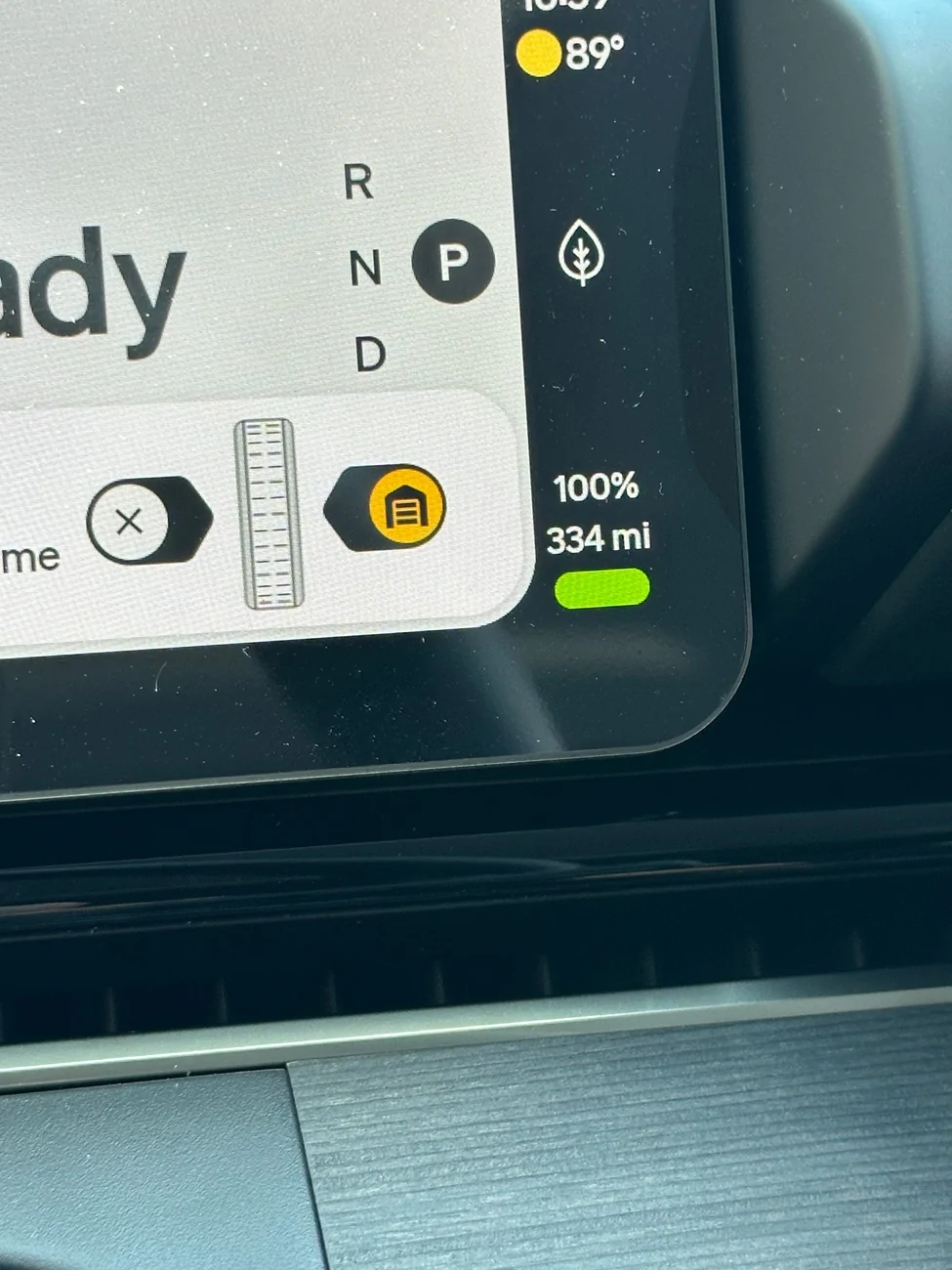
Charged my R2 to 100% and headed out to the desert to see what traveling in the real world would be like in the R2.
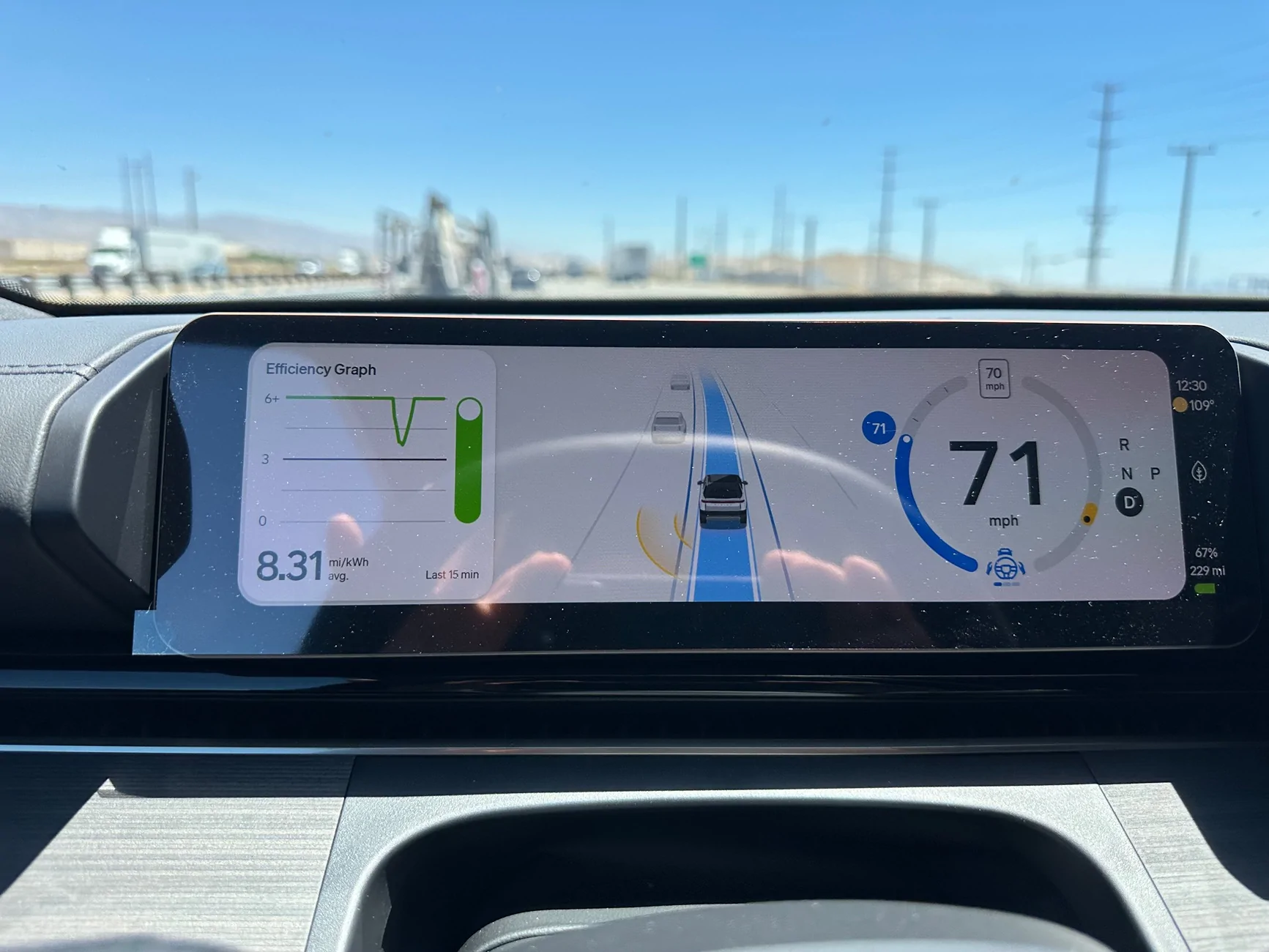
It was a hot day when I left it was 89 degrees, 35 miles in I was in triple digits, it stayed in triple digits for most of the drive dropping under 100 for the last 20 miles. Out of the 259 miles 200 was in triple digits much over 108 and topped out at 117. I did spot check the battery and motor temps, apologies for no pictures but I never saw the motors go past the halfway mark on the lines when I checked. Highest battery temp I saw was 119.
The HVAC system worked well. It was a cloudless day so 100% sun and we got on the road at 11 am and was back just before 4:30 pm. While driving had no issues maintaining a comfortable interior, used manual, temp was set at 67 and fan mostly on number 3, we did use the seat coolers as well. We did stop for lunch before the return trip. It was full sun and 115 degrees, so it did get warm in the cabin, we lowered the windows, put the fan on high for the first couple of miles to the freeway, on the freeway rolled up the windows and the cabin was comfortable within 5 minutes, set the fan back to 3 and we were good for the ride home.
Now for the drive. Used conserve for the entire drive, at 100% it estimated 334 miles.

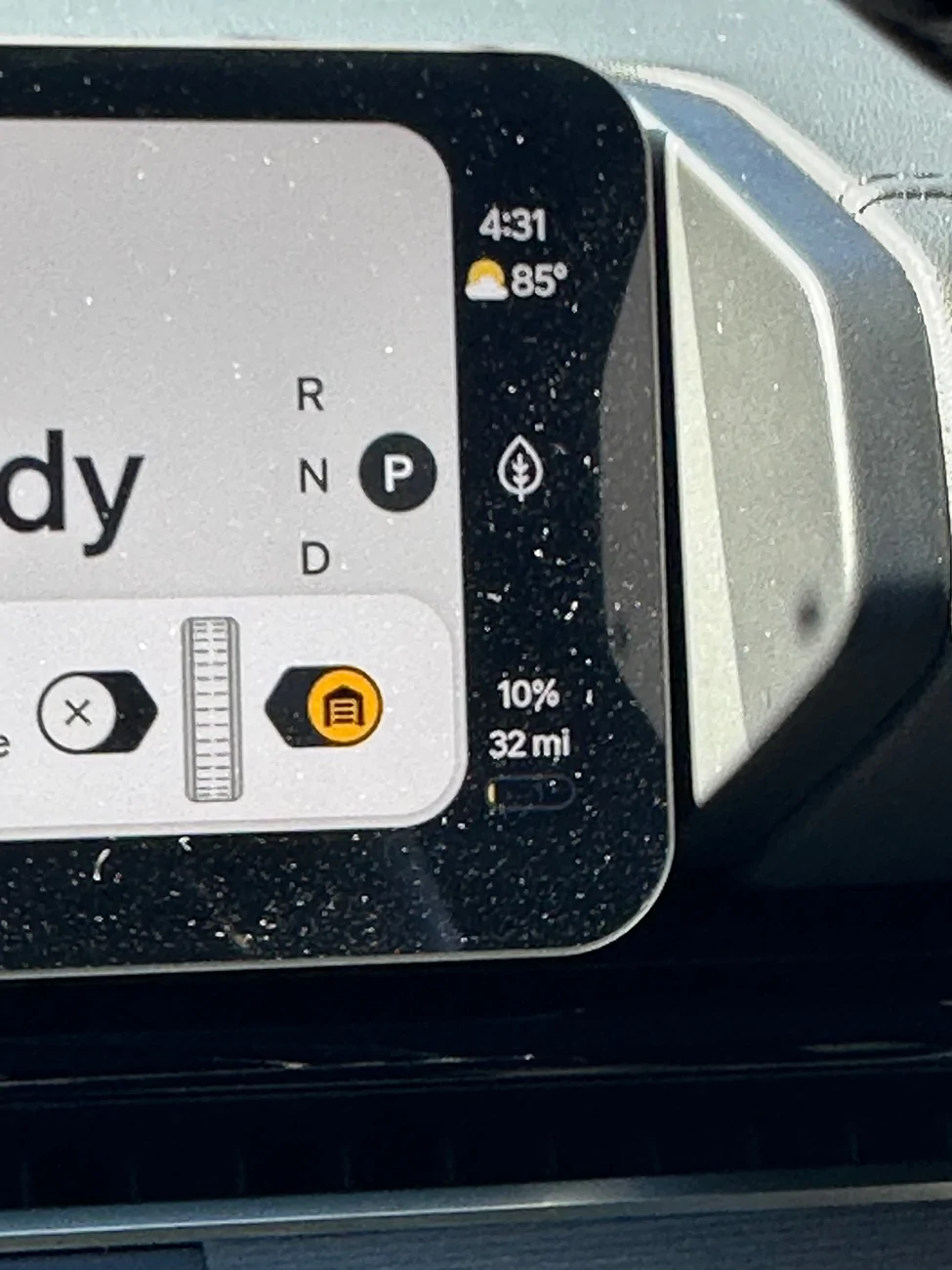
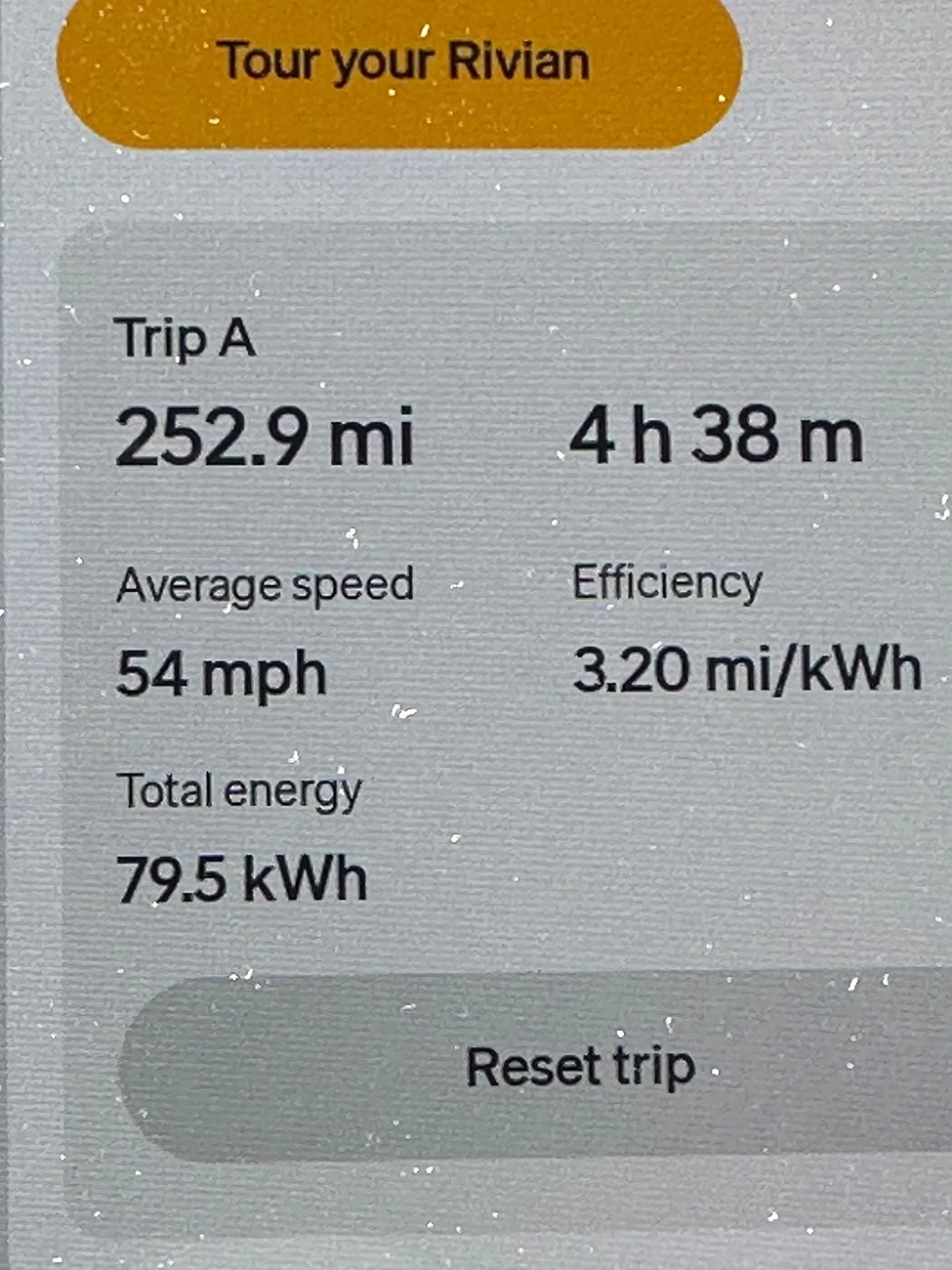
The drive was 252.9 miles, all was highway except for 9 miles. If anyone is familiar with SoCal freeways were 405/55/91/60/10. Drive was North Orange County to the Coachella Valley and back. Arrived back with 10% with an estimated 32 miles of range left. That could get me around 285 miles in normal highway driving.
I was using Universal Hands Free for much of the trip. I make this drive frequently so it was a good test for me. Compared to highway assist on my G1 R1S there were a few places where lanes split or construction corrected lines where the R1S struggles, the R2 handled those places very well. By the time we returned home I was left with a very positive feeling towards UHF, will be curious where they take it from here.
The car was comfortable and quiet, we used the soft suspension setting in conserve, it smoothed out expansion strips but still held the road well. Based on this test (no charging today) I think it will be a decent road trip vehicle for us. I was hoping for a 2.8 m/kWh average, it ended up at 3.2 which is almost 1 full mile better than the 2.25 I usually see in the R1S.

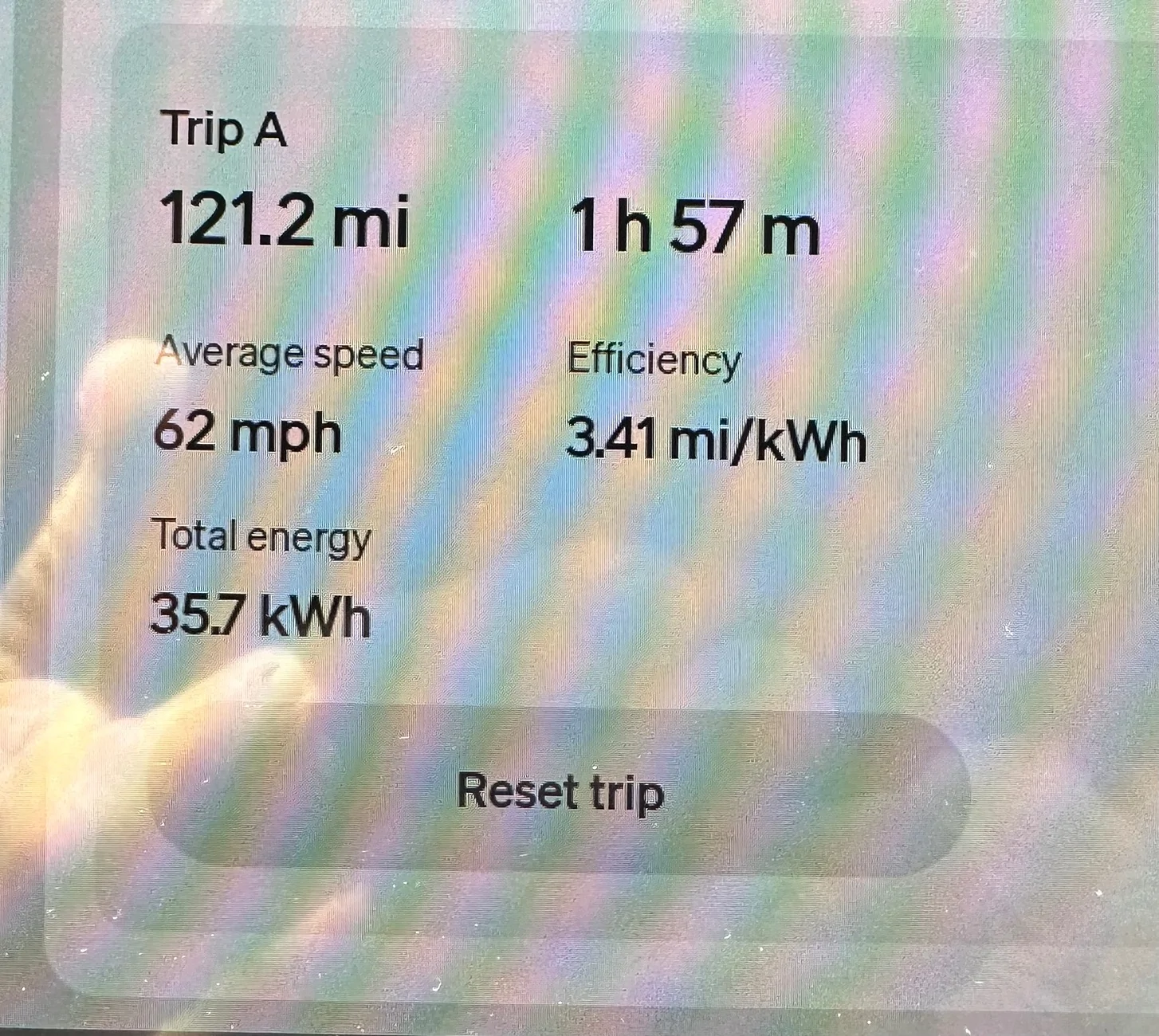
this was the destination total at the turn around

Sponsored
Similar threads

- Replies
- 47
- Views
- 9,085


- Replies
- 47
- Views
- 5,955


- Replies
- 68
- Views
- 13,008
