
Sponsored
Grabber HTS60 vs. all. Why not more popular?
- Thread starter Unexplainedbacon
- Start date
- Watchers 9

ksurfier
Well-Known Member
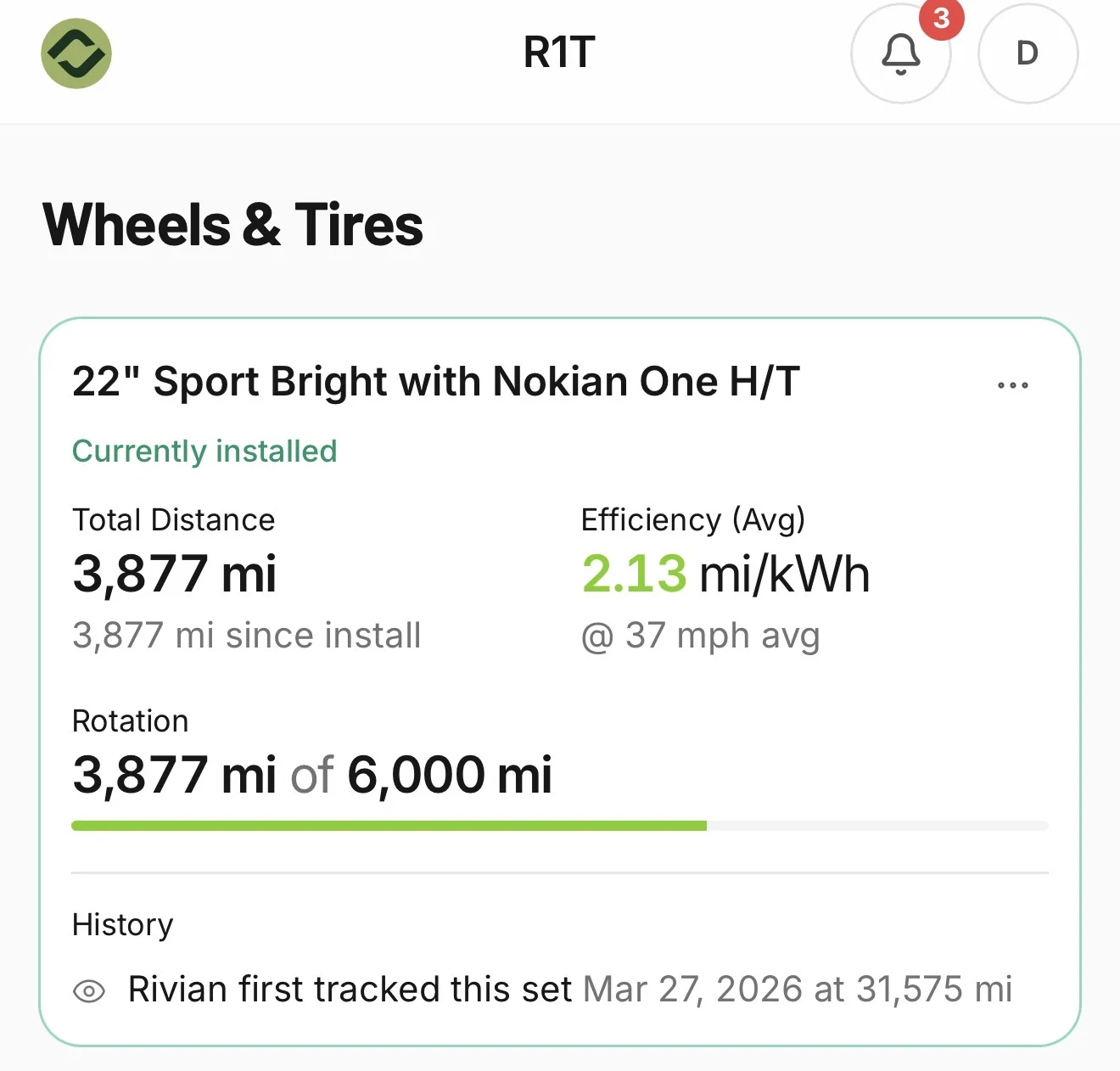
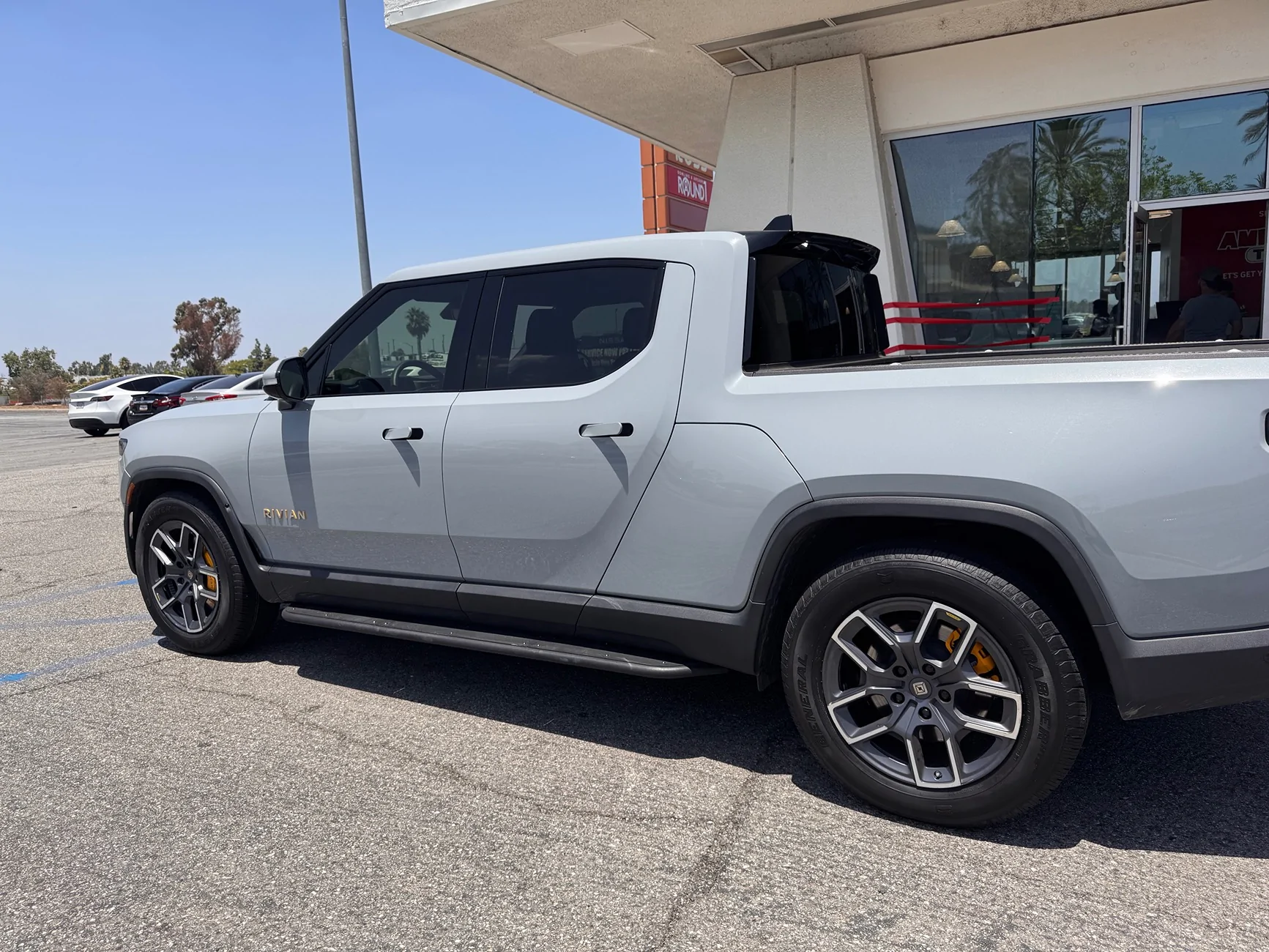
The General Grabber HTS60 is the best value tire currently available for efficiency.I need tire’s for my 20’s. Prioritizing efficiency. The General Grabber HTS 60 is tops on Rivian Tracker (https://riviantrackr.com/rivian-tire-guide/?size=275/60R20&sort=efficiencyGrade) and here (https://www.rivianforums.com/forum/...-wheels-and-33-tires-options-275-60r20.24561/) but everyone seems to be going with Wranglers or Hankook. What am I missing? They're super cheap too. Tread wear may be a knock but you’ll get prorated on the mileage warranty if you rotate.
Anyone with grabbers care to share their input? How about pics?
While its treadwear is not class-leading, the tire is backed by a mileage warranty, helping offset replacement costs and making its lifetime cost of ownership very attractive. More importantly, numerous Rivian owner reports indicate the HTS60 delivers efficiency that is comparable to, and in some cases exceeds, the OEM 21-inch road tire while significantly outperforming the OEM 20-inch all-terrain tire.
When combined with its low purchase price, light weight, quiet ride, and strong on-road manners, the HTS60 stands out as one of the lowest-cost options for achieving near-maximum efficiency.

hammick
Well-Known Member
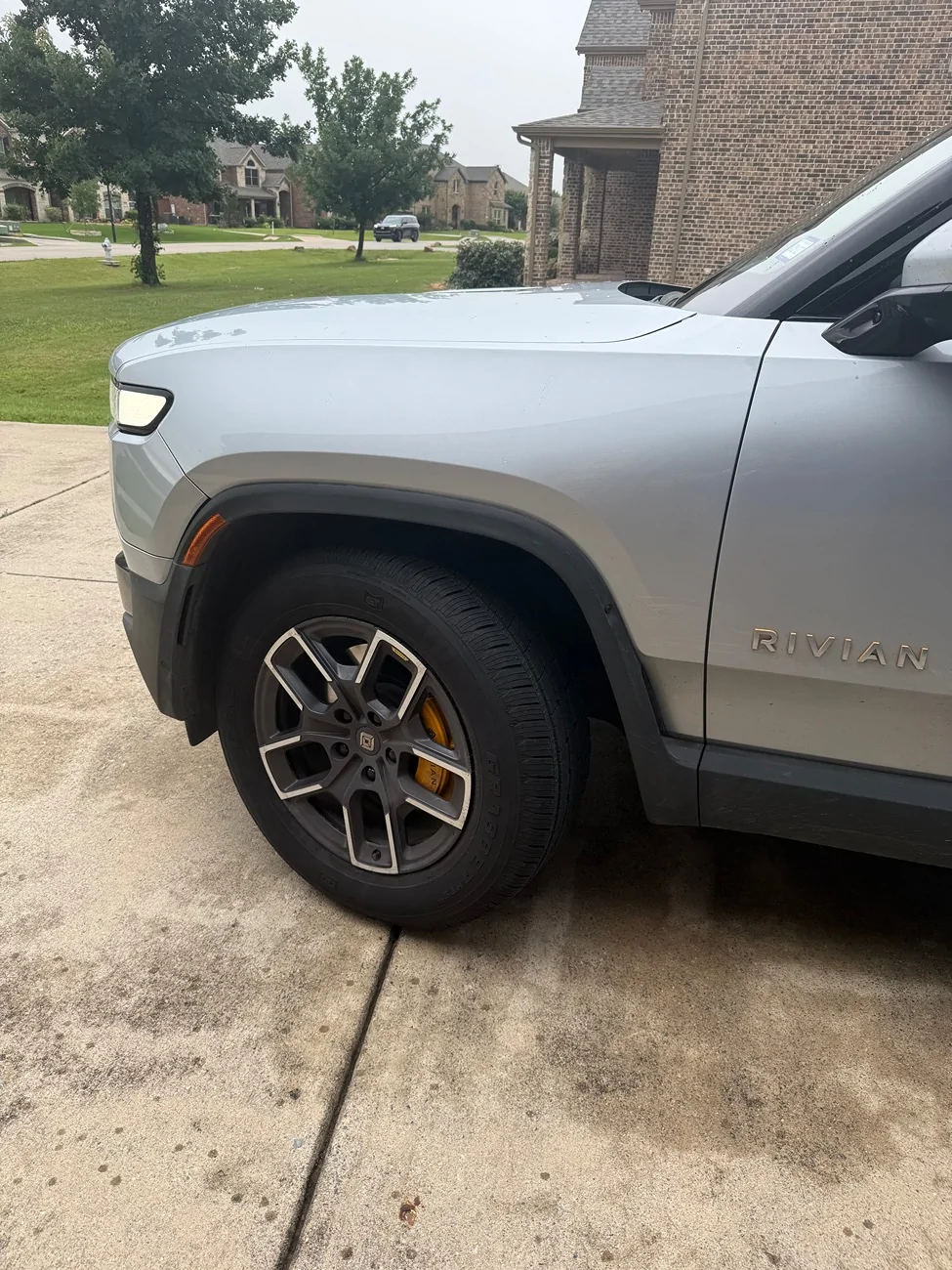
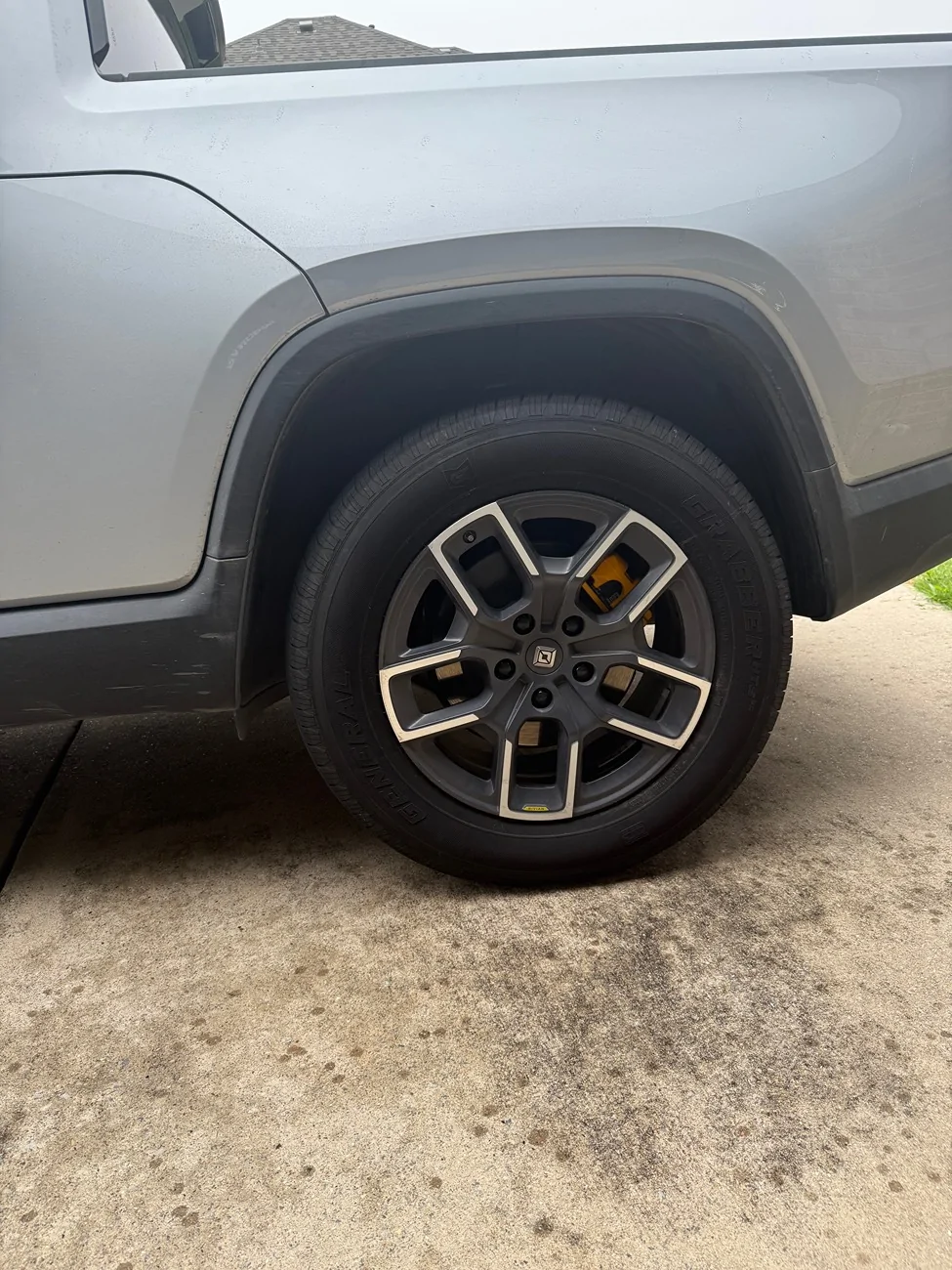
The Crappers that came on our "22 Lightning were junk.
Cruddy tires or just bad luck | Ford Lightning Forum
Cruddy tires or just bad luck |
Ford Lightning Forum Unexplainedbacon
Member
- Thread starter
- #20
So let it be written, so let it be done,
Just grabbed some new HTS60’s (275/60/20 116). First impressions is they are dead quiet and much nicer riding than the stock AT Pirellis. They look…fine. Not as cool as the AT’s but that’s the trade off. $922 out the door. Can’t be that.

Just grabbed some new HTS60’s (275/60/20 116). First impressions is they are dead quiet and much nicer riding than the stock AT Pirellis. They look…fine. Not as cool as the AT’s but that’s the trade off. $922 out the door. Can’t be that.
Sponsored
mkhuffman
Well-Known Member
FYI - weight has almost no impact on efficiency. It does matter, but rolling resistance and aerodynamics matter more. A lot more.I've got just under 2k miles on my set with about 2.09mi/kw efficiency. I'm a little disappointed as I went to the 20" equivalent of the 21's I had on previously and with the super light weight atomic wheels...was hoping for better efficiency, but it's worse then my 21's. Lighter wheel/tire combo and the same overall size diameter, would have thought it would have been the same efficiency. I think the ride is better, hopefully they will last more than 20k miles, and do have a 60k warranty. They do look way better though!
Are your efficiency numbers from a lot of highway driving? If so, I suspect the rims are the culprit. They are likely not as aerodynamic as your 21s were, and that is impacting your highway efficiency.
If it is a mixture of highway and city, then likely the rolling resistance and aerodynamics are to blame.
Weight only matters during acceleration. It increases acceleration resistance.
ksurfier
Well-Known Member
Great! Look forward to prelim efficiency numbers when you get a chance…if you can run 60 mph near 60 f that gives a good idea…So let it be written, so let it be done,
Just grabbed some new HTS60’s (275/60/20 116). First impressions is they are dead quiet and much nicer riding than the stock AT Pirellis. They look…fine. Not as cool as the AT’s but that’s the trade off. $922 out the door. Can’t be that.
Unexplainedbacon
Member
- Thread starter
- #23
i mostly commute around town but will be taking some trips soon. Towing jetski’s and much hotter than 60F though.Great! Look forward to prelim efficiency numbers when you get a chance…if you can run 60 mph near 60 f that gives a good idea…
ksurfier
Well-Known Member
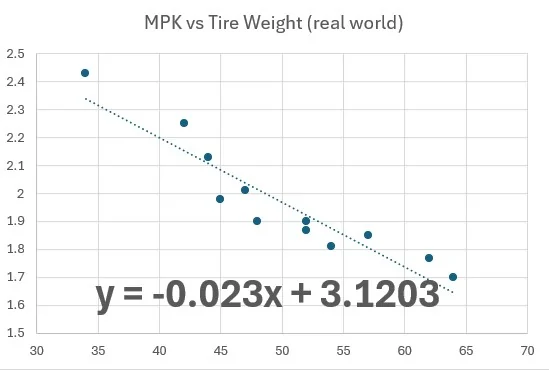
RivianForums owner data suggests MPK tracks strongly with tire weight. Tread design, compound, size, and PSI still matter, but tire weight appears to be the clearest predictor of efficiency and driving feel.FYI - weight has almost no impact on efficiency. It does matter, but rolling resistance and aerodynamics matter more. A lot more.
Are your efficiency numbers from a lot of highway driving? If so, I suspect the rims are the culprit. They are likely not as aerodynamic as your 21s were, and that is impacting your highway efficiency.
If it is a mixture of highway and city, then likely the rolling resistance and aerodynamics are to blame.
Weight only matters during acceleration. It increases acceleration resistance.
- Ultra-light ~35 lb tires: often reported near 2.4–2.7+ mi/kWh; best acceleration, braking, steering response, and ride quality.
- Low-weight ~42 lb tires: commonly around 2.2–2.5 mi/kWh; still efficient with only modest performance penalty.
- Mid-weight ~50 lb tires: often closer to 2.0–2.2 mi/kWh; more noticeable drag, heavier steering, and slower response.
- Heavy 60+ lb tires: often around 1.8–2.0 mi/kWh; biggest hit to range, braking, acceleration, and ride compliance.
The General Grabber HTS60 is a strong forum example because users report it performing close to — or even slightly better than — OEM 21” efficiency, while staying in the very light tire-weight category. By contrast, heavier setups like Michelin Defender LTX Platinum / aggressive AT tires show meaningful efficiency losses, with some owner testing around 7%+ worse than OEM 21s. The practical takeaway: for mostly road use, the Rivian sweet spot is ~35–45 lb. Once you move above 50 lb, you are trading away MPK and the quick, refined Rivian feel; above 60 lb, the tire may be durable or capable off-road, but it tends to make the truck feel heavier, slower, less efficient, and less responsive.

electruck
Well-Known Member
- Joined
- Oct 6, 2019
- Threads
- 74
- Messages
- 4,163
- Reaction score
- 7,740
- Location
- Dallas, TX
- Vehicles
- 2023 Rivian R1S
also don't overlook the impact of tread depth. per Michelin:
so folks need to be careful comparing the efficiency of worn tires with that of new tires.Tire tread also impacts range.... As tires wear down, rolling resistance decreases. Some studies show that a worn tire is about 6 percent better for range compared to a new tire. In fact, it is even normal to experience a range decrease just after installing new tires.
Sponsored
mkhuffman
Well-Known Member
Your conclusion is incorrect. There are many other differences in those tires besides weight. You didn't capture any data related to rolling resistance. Why not? Because it is practically impossible unless you do very controlled comparison tests between tires.RivianForums owner data suggests MPK tracks strongly with tire weight. Tread design, compound, size, and PSI still matter, but tire weight appears to be the clearest predictor of efficiency and driving feel.
- Ultra-light ~35 lb tires: often reported near 2.4–2.7+ mi/kWh; best acceleration, braking, steering response, and ride quality.
- Low-weight ~42 lb tires: commonly around 2.2–2.5 mi/kWh; still efficient with only modest performance penalty.
- Mid-weight ~50 lb tires: often closer to 2.0–2.2 mi/kWh; more noticeable drag, heavier steering, and slower response.
- Heavy 60+ lb tires: often around 1.8–2.0 mi/kWh; biggest hit to range, braking, acceleration, and ride compliance.
The General Grabber HTS60 is a strong forum example because users report it performing close to — or even slightly better than — OEM 21” efficiency, while staying in the very light tire-weight category. By contrast, heavier setups like Michelin Defender LTX Platinum / aggressive AT tires show meaningful efficiency losses, with some owner testing around 7%+ worse than OEM 21s. The practical takeaway: for mostly road use, the Rivian sweet spot is ~35–45 lb. Once you move above 50 lb, you are trading away MPK and the quick, refined Rivian feel; above 60 lb, the tire may be durable or capable off-road, but it tends to make the truck feel heavier, slower, less efficient, and less responsive.
And the data gathering method you used is completely unreliable. You are capturing user reported mi/kWh data, which is highly impacted by driving style and weather. The data is practically useless, yet you are trying to correlate it with one variable: weight.
The AT tire is heavy, but it also has higher rolling resistance. It is rolling resistance that matters the most with tires. At a steady speed, and when slowing down, weight has zero impact. Zero. It only reduces efficiency when you accelerate. While acceleration is certainly part of the drive cycle, it is vasty overwhelmed by tread design and rubber composition, which impacts rolling resistance. And by rim design, which has a very significant impact on air resistance at highway speeds.
ksurfier
Well-Known Member
The data are clear and well correlated to MPK, I agree that rolling resistance is the direct mechanism, and I’m not claiming tire weight alone explains every efficiency difference. Of course tread compound, tread pattern, casing construction, aero from the wheel/tire package, temperature, speed, and driving style all matter.Your conclusion is incorrect. There are many other differences in those tires besides weight. You didn't capture any data related to rolling resistance. Why not? Because it is practically impossible unless you do very controlled comparison tests between tires.
And the data gathering method you used is completely unreliable. You are capturing user reported mi/kWh data, which is highly impacted by driving style and weather. The data is practically useless, yet you are trying to correlate it with one variable: weight.
The AT tire is heavy, but it also has higher rolling resistance. It is rolling resistance that matters the most with tires. At a steady speed, and when slowing down, weight has zero impact. Zero. It only reduces efficiency when you accelerate. While acceleration is certainly part of the drive cycle, it is vasty overwhelmed by tread design and rubber composition, which impacts rolling resistance. And by rim design, which has a very significant impact on air resistance at highway speeds.
My point is more practical: consumers usually don’t have access to controlled rolling-resistance data for every tire and size, so we have to use the best available proxies. In the Rivian 20-inch fitments, the pattern is pretty clear: lighter highway/all-season tires in 275/60R20 tend to report much better efficiency than heavier, more aggressive 275/65R20 all-terrain or LT tires. That doesn’t prove weight is the only variable, but weight is highly correlated with the tire designs that hurt efficiency: deeper tread, stronger casing, larger diameter, more aggressive blocks, and higher rolling losses.
So yes, MPK data from owners is noisy and not a lab test. But if the practical question is “which tire is likely to be more efficient on a Rivian?” then weight, tread category, size, load rating, and real-world owner reports are still useful. I’m not saying this is a controlled scientific rolling-resistance study. I’m saying it is a reasonable consumer-screening method, and the signal is strong enough that a 34–40 lb highway tire is very likely to outperform a 55–65 lb aggressive A/T in real-world MPK.

UnsungZero_OldTimeAdMan
Well-Known Member
And for those needing LT AT, but better on-pavement manners than the Pirelli AT, user reports on the 52 lb LT Bridgestone Dueler Ascent look very promising. Maybe slightly better than the top pick of Toyo OC ATIII EV. Cheaper too by about $80-ish.RivianForums owner data suggests MPK tracks strongly with tire weight. Tread design, compound, size, and PSI still matter, but tire weight appears to be the clearest predictor of efficiency and driving feel.
- Ultra-light ~35 lb tires: often reported near 2.4–2.7+ mi/kWh; best acceleration, braking, steering response, and ride quality.
- Low-weight ~42 lb tires: commonly around 2.2–2.5 mi/kWh; still efficient with only modest performance penalty.
- Mid-weight ~50 lb tires: often closer to 2.0–2.2 mi/kWh; more noticeable drag, heavier steering, and slower response.
- Heavy 60+ lb tires: often around 1.8–2.0 mi/kWh; biggest hit to range, braking, acceleration, and ride compliance.
The General Grabber HTS60 is a strong forum example because users report it performing close to — or even slightly better than — OEM 21” efficiency, while staying in the very light tire-weight category. By contrast, heavier setups like Michelin Defender LTX Platinum / aggressive AT tires show meaningful efficiency losses, with some owner testing around 7%+ worse than OEM 21s. The practical takeaway: for mostly road use, the Rivian sweet spot is ~35–45 lb. Once you move above 50 lb, you are trading away MPK and the quick, refined Rivian feel; above 60 lb, the tire may be durable or capable off-road, but it tends to make the truck feel heavier, slower, less efficient, and less responsive.
Sponsored
Similar threads

- Replies
- 5
- Views
- 622


- Replies
- 11
- Views
- 1,166


- Replies
- 22
- Views
- 2,774