Sponsored
Tour of Rivian Engineering Facility Lab in Palo Alto (by Out of Spec)


mpshizzle
Well-Known Member
One dissapointing quote from the video, when James said "Expanding to more highways later this year". I fear we are father away from ditching mapping all together than I had hoped. The rest of the content though... 10/10. I LOVED the insights and show and tell from the Rivian team. I love how open they are
portdirect
Well-Known Member
I also suspect that with the cooperative steering we may have just seen the 1st case of real Rivian ADAS on the road! (Ie something that’s not possible via mobileye)
Dark-Fx
Well-Known Member
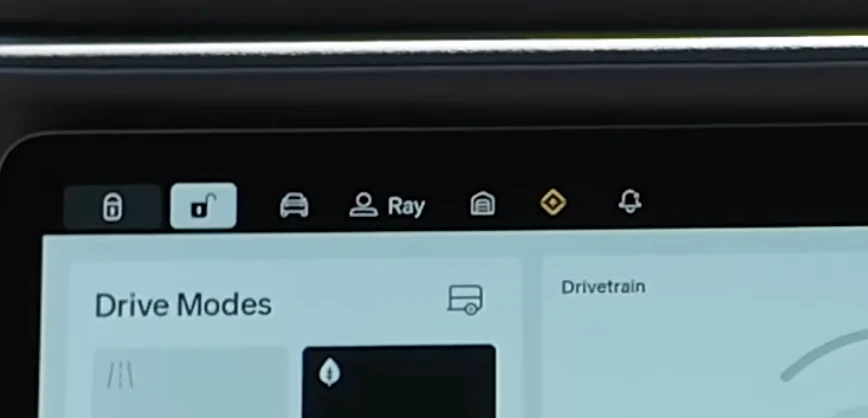
Good eye, the new icon is showing up in the us trademark database now too.
I spy, with my little eye, a Rivian AI assistant taking Alexa's spot
https://tsdr.uspto.gov/#caseNumber=...TION&caseType=DEFAULT&searchType=statusSearch

Providing online non-downloadable Internet-based software for voice-controlled information devices; providing online non-downloadable Internet-based computer software using artificial intelligence for operating automotive computer systems and for autonomous driving for use in connection with motor land vehicles; providing online non-downloadable Internet-based computer software using artificial intelligence for operating automotive computer systems and for autonomous driving for use in connection with vehicles; providing online nondownloadable Internet-based software to enable the development of tools for voice service delivery and personal assistance capabilities; providing online nondownloadable Internet-based telecommunications software for artificial intelligence services featuring software for question answering, text analytics, searching data, and conversational artificial intelligence in the fields of artificial intelligence with natural language processing technology; downloadable software for machine learning for use in vehicles; downloadable computer programs and downloadable computer software for creating and generating text; providing online non-downloadable Internet-based computer software for facilitating interaction and communication between humans and artificial intelligence (AI) chatbots; providing online non-downloadable Internet-based computer software for controlling independent voice-controlled information devices and personal assistants; Providing online non-downloadable computer software for natural language processing, generation, understanding and analysis; providing online nondownloadable computer chatbot software for simulating conversations; providing online non-downloadable Internet-based software for the transmission of vehicle conditions; providing online non-downloadable Internet-based software for controlling vehicle characteristics; providing online non-downloadable Internetbased artificial intelligence software for vehicles for use in operating vehicles; providing online non-downloadable computer software for machine-learning based language and speech processing software; providing online non-downloadable Internet-based computer software for personal information management; providing online non-downloadable Internet-based artificial intelligence software for driverless cars for use in operating vehicles; providing online nondownloadable Internet-based chatbot computer software featuring software for question answering, text analytics, searching data, and conversational artificial intelligence based on artificial intelligence in the fields of artificial intelligence with natural language processing technology; providing online non-downloadable Internet-based computer software for the analysis of data based on artificial intelligence; providing online non-downloadable Internet-based software for computers and mobile devices to improve uploading and downloading to computers, voice command and recognition software, speech-to-text conversion software and voice-activated software applications; providing online nondownloadable Internet-based computer application software for mobile phones featuring software for question answering, text analytics, searching data, and conversational artificial intelligence based on artificial intelligence in the fields of artificial intelligence with natural language processing technology; providing online non-downloadable Internet-based augmented reality software for use in mobile devices for integrating electronic data with real world environments for the purpose of locating vehicles and creating maps; providing online nondownloadable Internet-based computer software telecommunication platforms for based on artificial intelligence featuring software for question answering, text analytics, searching data, and conversational artificial intelligence based on artificial intelligence in the fields of artificial intelligence with natural language processing technology; providing online non-downloadable Internet-based chatbot software for providing information from searchable indexes and databases of information, including text, music, images, videos, software algorithms, information, data, electronic documents, and databases; telecommunications software platforms being software-as-a-service (SAAS) based on artificial intelligence featuring software for question answering, text analytics, searching data, and conversational artificial intelligence based on artificial intelligence in the fields of artificial intelligence with natural language processing technology; providing online non-downloadable Internet-based software for internet browsers, namely, web browser software for mobile communication devices and for vehicle computers; providing an online non-downloadable Internet-based interactive multimedia software for car driving; providing online non-downloadable Internetbased software for personal assistance; providing online non-downloadable Internet-based artificial intelligence software for use in machine learning
Sponsored

MountainBikeDude
Well-Known Member
Whew... that's 2 hours my company isn't getting back.
Fantastic, I love Vidya and how genuine she is. She's clearly very passionate about the work they're doing, as they all are.
The ride along with Wassym was probably one of the highlights, and further solidifies why I like Rivian as a brand. The team behind it are constantly innovating, and trying to do better for customers and you can sense the exuberance from each of them.
Fantastic, I love Vidya and how genuine she is. She's clearly very passionate about the work they're doing, as they all are.
The ride along with Wassym was probably one of the highlights, and further solidifies why I like Rivian as a brand. The team behind it are constantly innovating, and trying to do better for customers and you can sense the exuberance from each of them.
Last edited:
Dark-Fx
Well-Known Member
IMO outside of supercruise still working with trailers, this is the biggest differentiator for Supercruise today that makes it much nicer to drive with. You can still get the vehicle to steer around obstacles in the road without it entirely dropping out of assist.I also suspect that with the cooperative steering we may have just seen the 1st case of real Rivian ADAS on the road! (Ie something that’s not possible via mobileye)
MountainBikeDude
Well-Known Member
I saw that too, but i dismissed it as an engineering sub mode similar to when service mode is enabled, but didn't put 2 and 2 together.
I spy, with my little eye, a Rivian AI assistant taking Alexa's spot
mpshizzle
Well-Known Member
I could be wrong. But it certainly looks likely!I saw that too, but i dismissed it as an engineering sub mode similar to when service mode is enabled, but didn't put 2 and 2 together.
MountainBikeDude
Well-Known Member
The pervasive point of it being "Online and non downloadable" is not entirely unexpected, but I do wonder how well it will function with basic commands like "turn on the drivers heated seat" as an example when out of connectivity.Good eye, the new icon is showing up in the us trademark database now too.
https://tsdr.uspto.gov/#caseNumber=...TION&caseType=DEFAULT&searchType=statusSearch

Sponsored
MountainBikeDude
Well-Known Member
no, you're totally right, as evidenced by @Dark-FxI could be wrong. But it certainly looks likely!

HapticWagon
Well-Known Member
Summary
Insights Based on Numbers
Summary
Insights Based on Numbers
Summary
Insights Based on Numbers
Summary
 Behind-the-scenes access to Rivian’s engineering
The video offers an in-depth tour of Rivian’s Palo Alto lab, showcasing the software and hardware development process for Gen 1 and Gen 2 products, including upcoming R2 innovations. Fully vertically integrated approach
Rivian designs key vehicle hardware in-house—such as zonal controllers and ECUs—unlike traditional automakers who rely on third-party suppliers. This enables better synergy, faster iteration, and deep understanding of every system component. Robust testing systems
From subsystem validation to full vehicle simulation using life-sized lab cars, Rivian uses advanced testing methods including hardware-in-the-loop (HIL) setups, shaker tables, and thermal chambers to ensure reliability and durability. Drastic simplification of vehicle architecture
Moving from domain to zonal architecture reduced wiring by 1.6 miles and consolidated 17 ECUs down to 7, improving serviceability, cost, and vehicle weight. Advanced infotainment and ADAS integration
The autonomy and infotainment computers are liquid-cooled and packed with computing power, using Nvidia Orin chips, preparing Rivian vehicles for future over-the-air updates and self-driving capabilities. Internal control over electronic components
The team carefully selects camera sensors and lenses based on real-world performance (e.g., low light, temperature extremes) and then works directly with manufacturers, allowing for optimal hardware-software synergy. Modular and future-proof systems
Rivian’s architecture is built with headroom for future capabilities, including updates to software-defined vehicles. Their framework also supports scalability for the upcoming R2 and joint ventures like the one with Volkswagen. Prototype-first development philosophy
Lab cars are built before production vehicles, integrating production harnesses and electronics to simulate real-world interactions, allowing early detection of signal interference and fault conditions. Self-developed testing infrastructure
The end-of-line testers and validation tools are developed in-house, ensuring traceability and compliance with rigorous automotive standards over the product lifecycle. Silicon Valley influence on product velocity
Proximity to high-tech talent and an agile, collaborative culture allows Rivian to iterate quickly and make bold architectural shifts much faster than traditional automakers.
Insights Based on Numbers
 1.6 miles of wiring eliminated: Shows the major engineering leap from Gen 1 to Gen 2, improving weight, cost, and reliability.
- Reduction from 17 to 7 ECUs: Demonstrates the consolidation and efficiency gained through vertical integration and zonal architecture.
- 🧊 Dual Nvidia Orin processors with liquid cooling: Rivian’s commitment to cutting-edge autonomous and infotainment systems surpasses many existing automotive standards
Summary
- Shared data between modules for efficiency
Rivian integrates infotainment and ADAS via high-speed connections and shared sensors. This avoids redundant systems like multiple GPS units, resulting in better performance and reduced cost. - Thermal and durability stress-testing
The video details how Rivian tests ECUs under extreme conditions using chambers, replicating off-road stresses. These tests ensure component reliability in tough environments. - Autonomy development and ‘Penguin’ test fleet
A fleet of camouflaged “Penguin” vehicles, equipped with LIDAR and extensive sensor arrays, collects data across diverse conditions to train perception models for Rivian’s autonomous driving systems.  Collaborative steering and highway assist
New driver-assist features include collaborative steering with tactile feedback and enhanced hands-free highway assist, using eye-tracking and smart perception to boost driver confidence and system reliability. Global data diversity for AI training
Rivian collects data from coast-to-coast trips (e.g., Vancouver to Miami) to expose AI to various road/weather conditions, ensuring robust behavior beyond California’s sunny roads.- Autonomous vision built on camera/radar, not lidar
While LIDAR is used for training, Rivian’s production vehicles rely on camera and radar. The goal is to achieve superhuman safety using optimized sensor fusion and headroom in the compute stack.  Automated calibration and vision alignment
Rivian calibrates cameras and radar using a surveyed environment and linear algebra to ensure accuracy at the factory and during repairs like windshield replacement. Energy app and improved user experience
The new energy app aims to simplify EV use for non-tech users by visualizing energy consumption and charging in an intuitive, demystified way. From functional to zonal architecture
Transitioning from Gen 1’s domain-specific controllers (like door or seat modules) to Gen 2’s zonal controllers drastically reduces wiring, improves efficiency, and simplifies software and hardware management.- In-house ownership of the entire stack
Thanks to full vertical integration, Rivian can iterate fast, push over-the-air updates monthly, and react to user feedback in a fraction of the time it would take legacy OEMs dealing with third-party suppliers.
Insights Based on Numbers
- 1.7 miles of wiring reduced: Transitioning to zonal control shrinks harness complexity, boosting efficiency and serviceability.
 20+ Penguin vehicles collecting data: Massive scale of autonomous data collection helps train diverse and resilient AI models.
- 11 cameras in Gen 2: Reinforces the precision needed for perception and calibration across Rivian’s vehicle lineup.
Summary
 Advanced Software-Hardware Integration
Rivian engineers have built their own operating system to closely integrate software with hardware, enhancing control and enabling robust over-the-air (OTA) updates. This vertical integration allows them to test and simulate real-world conditions through complex lab environments.- Fault Injection and Safety Protocols
Their lab setups include fault injection systems that simulate various failures—crash sensors, thermal issues, or battery anomalies. These simulations test the response time and logic of safety-critical systems, ensuring vehicles can handle emergencies with minimal user disruption. - OTA Updates & Predictive Testing
Rivian performs thousands of OTA simulations monthly, testing updates for their impact on software reliability. Automation racks reproduce edge cases like communication timing failures between ECUs, ensuring a high success rate and minimizing customer inconvenience.  Real-Time Data Use for Reliability
Vehicles constantly feed reliability data to the cloud, enabling engineers to identify patterns and improve response logic. For instance, a customer-reported acceleration issue led to fleet-wide data analysis, revealing a manufacturing batch defect fixed in just four days via a software patch. Rapid Feature Deployment from Feedback
Customer feedback leads to swift product changes—like updating “Dog Mode” cooling within 8 weeks. This responsiveness is rooted in their direct-to-consumer model, which cuts out traditional dealership middlemen.- Infotainment System Testing & UI Speed
Infotainment systems are stress-tested both structurally and randomly to catch anomalies. Metrics like frame rate and memory use are tracked to ensure UI elements remain fast and responsive.  Energy App to Demystify EV Charging
A newly designed energy app visualizes energy inflow and outflow with accessible graphics and real-time consumption breakdowns. It’s tailored for both EV enthusiasts and everyday drivers, showing insights like projected charge limits and consumption distribution. Optimized Charging Curve
Through software and hardware collaboration, Rivian has enhanced the charging performance across all battery types—max pack, standard, and large packs—resulting in time savings of 3–6 minutes per charge.
Insights Based on Numbers
- Over 150 cars are tested per OTA cycle monthly—highlighting the scale of Rivian’s predictive testing.
 1% failure rate in OTA updates could mean 1,000 unhappy customers, stressing the need for near-perfect reliability.
 4 days to issue a safety recall fix via software—unmatched speed in the industry.
- 50 kW charging at 97% SOC—demonstrates significant improvements in thermal and battery management systems.
Summary
- New drivetrain software for dual-motor vehicles
Rivian demonstrates prototype software that enables locking the dual-motor drivetrain into all-wheel drive full-time, rather than relying solely on clutch connect/disconnect for efficiency, based on feedback from drivers. - Enhanced preconditioning and energy app
The new energy app allows on-demand battery preconditioning for fast charging, visually representing thermal activity and charge readiness. This feature complements GPS-based automatic preconditioning. - Customizable drive modes and ride height
Dual-motor vehicles now feature a redefined “All Purpose” mode for permanent 4x4 engagement, while “Conserve” focuses on maximizing range. Ride height preferences are retained across sessions.  User-driven enhancements
Users can toggle between modes depending on trip needs. A hotkey suggestion to quickly switch modes is under consideration, pending regulation and usability assessments. Feedback-centric engineering process
Rivian actively listens to customer input via comments, Reddit, and direct feedback, leading to fast software iterations and enhanced user-focused features. Real-world testing and continuous feedback loop
The video ends with the presenter embarking on a 1,300-mile road trip to test the new energy and thermal mapping features, showcasing Rivian’s dedication to real-world validation.
- 410+ miles achievable in “Conserve” mode for dual-motor R1T
 4-hour reset cycle mandated by regulations for drive mode reversion
 Real-time thermal data planned for future UI inclusion in energy app

UnsungZero_OldTimeAdMan
Well-Known Member
So basically 2 hours of nothing new.Summary
The video offers an in-depth tour of Rivian’s Palo Alto lab, showcasing the software and hardware development process for Gen 1 and Gen 2 products, including upcoming R2 innovations.
Rivian designs key vehicle hardware in-house—such as zonal controllers and ECUs—unlike traditional automakers who rely on third-party suppliers. This enables better synergy, faster iteration, and deep understanding of every system component.
From subsystem validation to full vehicle simulation using life-sized lab cars, Rivian uses advanced testing methods including hardware-in-the-loop (HIL) setups, shaker tables, and thermal chambers to ensure reliability and durability.
Moving from domain to zonal architecture reduced wiring by 1.6 miles and consolidated 17 ECUs down to 7, improving serviceability, cost, and vehicle weight.
The autonomy and infotainment computers are liquid-cooled and packed with computing power, using Nvidia Orin chips, preparing Rivian vehicles for future over-the-air updates and self-driving capabilities.
The team carefully selects camera sensors and lenses based on real-world performance (e.g., low light, temperature extremes) and then works directly with manufacturers, allowing for optimal hardware-software synergy.
Rivian’s architecture is built with headroom for future capabilities, including updates to software-defined vehicles. Their framework also supports scalability for the upcoming R2 and joint ventures like the one with Volkswagen.
Lab cars are built before production vehicles, integrating production harnesses and electronics to simulate real-world interactions, allowing early detection of signal interference and fault conditions.
The end-of-line testers and validation tools are developed in-house, ensuring traceability and compliance with rigorous automotive standards over the product lifecycle.
Proximity to high-tech talent and an agile, collaborative culture allows Rivian to iterate quickly and make bold architectural shifts much faster than traditional automakers.
Insights Based on Numbers
- 🧊 Dual Nvidia Orin processors with liquid cooling: Rivian’s commitment to cutting-edge autonomous and infotainment systems surpasses many existing automotive standards
Summary
Rivian integrates infotainment and ADAS via high-speed connections and shared sensors. This avoids redundant systems like multiple GPS units, resulting in better performance and reduced cost.
The video details how Rivian tests ECUs under extreme conditions using chambers, replicating off-road stresses. These tests ensure component reliability in tough environments.
A fleet of camouflaged “Penguin” vehicles, equipped with LIDAR and extensive sensor arrays, collects data across diverse conditions to train perception models for Rivian’s autonomous driving systems.
New driver-assist features include collaborative steering with tactile feedback and enhanced hands-free highway assist, using eye-tracking and smart perception to boost driver confidence and system reliability.
Rivian collects data from coast-to-coast trips (e.g., Vancouver to Miami) to expose AI to various road/weather conditions, ensuring robust behavior beyond California’s sunny roads.
While LIDAR is used for training, Rivian’s production vehicles rely on camera and radar. The goal is to achieve superhuman safety using optimized sensor fusion and headroom in the compute stack.
Rivian calibrates cameras and radar using a surveyed environment and linear algebra to ensure accuracy at the factory and during repairs like windshield replacement.
The new energy app aims to simplify EV use for non-tech users by visualizing energy consumption and charging in an intuitive, demystified way.
Transitioning from Gen 1’s domain-specific controllers (like door or seat modules) to Gen 2’s zonal controllers drastically reduces wiring, improves efficiency, and simplifies software and hardware management.
Thanks to full vertical integration, Rivian can iterate fast, push over-the-air updates monthly, and react to user feedback in a fraction of the time it would take legacy OEMs dealing with third-party suppliers.
Insights Based on Numbers
Summary
Rivian engineers have built their own operating system to closely integrate software with hardware, enhancing control and enabling robust over-the-air (OTA) updates. This vertical integration allows them to test and simulate real-world conditions through complex lab environments.
Their lab setups include fault injection systems that simulate various failures—crash sensors, thermal issues, or battery anomalies. These simulations test the response time and logic of safety-critical systems, ensuring vehicles can handle emergencies with minimal user disruption.
Rivian performs thousands of OTA simulations monthly, testing updates for their impact on software reliability. Automation racks reproduce edge cases like communication timing failures between ECUs, ensuring a high success rate and minimizing customer inconvenience.
Vehicles constantly feed reliability data to the cloud, enabling engineers to identify patterns and improve response logic. For instance, a customer-reported acceleration issue led to fleet-wide data analysis, revealing a manufacturing batch defect fixed in just four days via a software patch.
Customer feedback leads to swift product changes—like updating “Dog Mode” cooling within 8 weeks. This responsiveness is rooted in their direct-to-consumer model, which cuts out traditional dealership middlemen.
Infotainment systems are stress-tested both structurally and randomly to catch anomalies. Metrics like frame rate and memory use are tracked to ensure UI elements remain fast and responsive.
A newly designed energy app visualizes energy inflow and outflow with accessible graphics and real-time consumption breakdowns. It’s tailored for both EV enthusiasts and everyday drivers, showing insights like projected charge limits and consumption distribution.
Through software and hardware collaboration, Rivian has enhanced the charging performance across all battery types—max pack, standard, and large packs—resulting in time savings of 3–6 minutes per charge.
Insights Based on Numbers
Summary
Insights Based on Numbers
Rivian demonstrates prototype software that enables locking the dual-motor drivetrain into all-wheel drive full-time, rather than relying solely on clutch connect/disconnect for efficiency, based on feedback from drivers.
The new energy app allows on-demand battery preconditioning for fast charging, visually representing thermal activity and charge readiness. This feature complements GPS-based automatic preconditioning.
Dual-motor vehicles now feature a redefined “All Purpose” mode for permanent 4x4 engagement, while “Conserve” focuses on maximizing range. Ride height preferences are retained across sessions.
Users can toggle between modes depending on trip needs. A hotkey suggestion to quickly switch modes is under consideration, pending regulation and usability assessments.
Rivian actively listens to customer input via comments, Reddit, and direct feedback, leading to fast software iterations and enhanced user-focused features.
The video ends with the presenter embarking on a 1,300-mile road trip to test the new energy and thermal mapping features, showcasing Rivian’s dedication to real-world validation.

narmstrong79
Well-Known Member
- First Name
- Nick
- Joined
- Apr 2, 2022
- Threads
- 61
- Messages
- 847
- Reaction score
- 1,186
- Location
- New Hampshire
- Website
- www.youtube.com
- Vehicles
- 2024 Rivian R1S Performance Dual Motor Standard+
- Occupation
- Marketing
Even the summary is too longSummary
The video offers an in-depth tour of Rivian’s Palo Alto lab, showcasing the software and hardware development process for Gen 1 and Gen 2 products, including upcoming R2 innovations.
Rivian designs key vehicle hardware in-house—such as zonal controllers and ECUs—unlike traditional automakers who rely on third-party suppliers. This enables better synergy, faster iteration, and deep understanding of every system component.
From subsystem validation to full vehicle simulation using life-sized lab cars, Rivian uses advanced testing methods including hardware-in-the-loop (HIL) setups, shaker tables, and thermal chambers to ensure reliability and durability.
Moving from domain to zonal architecture reduced wiring by 1.6 miles and consolidated 17 ECUs down to 7, improving serviceability, cost, and vehicle weight.
The autonomy and infotainment computers are liquid-cooled and packed with computing power, using Nvidia Orin chips, preparing Rivian vehicles for future over-the-air updates and self-driving capabilities.
The team carefully selects camera sensors and lenses based on real-world performance (e.g., low light, temperature extremes) and then works directly with manufacturers, allowing for optimal hardware-software synergy.
Rivian’s architecture is built with headroom for future capabilities, including updates to software-defined vehicles. Their framework also supports scalability for the upcoming R2 and joint ventures like the one with Volkswagen.
Lab cars are built before production vehicles, integrating production harnesses and electronics to simulate real-world interactions, allowing early detection of signal interference and fault conditions.
The end-of-line testers and validation tools are developed in-house, ensuring traceability and compliance with rigorous automotive standards over the product lifecycle.
Proximity to high-tech talent and an agile, collaborative culture allows Rivian to iterate quickly and make bold architectural shifts much faster than traditional automakers.
Insights Based on Numbers
- 🧊 Dual Nvidia Orin processors with liquid cooling: Rivian’s commitment to cutting-edge autonomous and infotainment systems surpasses many existing automotive standards
Summary
Rivian integrates infotainment and ADAS via high-speed connections and shared sensors. This avoids redundant systems like multiple GPS units, resulting in better performance and reduced cost.
The video details how Rivian tests ECUs under extreme conditions using chambers, replicating off-road stresses. These tests ensure component reliability in tough environments.
A fleet of camouflaged “Penguin” vehicles, equipped with LIDAR and extensive sensor arrays, collects data across diverse conditions to train perception models for Rivian’s autonomous driving systems.
New driver-assist features include collaborative steering with tactile feedback and enhanced hands-free highway assist, using eye-tracking and smart perception to boost driver confidence and system reliability.
Rivian collects data from coast-to-coast trips (e.g., Vancouver to Miami) to expose AI to various road/weather conditions, ensuring robust behavior beyond California’s sunny roads.
While LIDAR is used for training, Rivian’s production vehicles rely on camera and radar. The goal is to achieve superhuman safety using optimized sensor fusion and headroom in the compute stack.
Rivian calibrates cameras and radar using a surveyed environment and linear algebra to ensure accuracy at the factory and during repairs like windshield replacement.
The new energy app aims to simplify EV use for non-tech users by visualizing energy consumption and charging in an intuitive, demystified way.
Transitioning from Gen 1’s domain-specific controllers (like door or seat modules) to Gen 2’s zonal controllers drastically reduces wiring, improves efficiency, and simplifies software and hardware management.
Thanks to full vertical integration, Rivian can iterate fast, push over-the-air updates monthly, and react to user feedback in a fraction of the time it would take legacy OEMs dealing with third-party suppliers.
Insights Based on Numbers
Summary
Rivian engineers have built their own operating system to closely integrate software with hardware, enhancing control and enabling robust over-the-air (OTA) updates. This vertical integration allows them to test and simulate real-world conditions through complex lab environments.
Their lab setups include fault injection systems that simulate various failures—crash sensors, thermal issues, or battery anomalies. These simulations test the response time and logic of safety-critical systems, ensuring vehicles can handle emergencies with minimal user disruption.
Rivian performs thousands of OTA simulations monthly, testing updates for their impact on software reliability. Automation racks reproduce edge cases like communication timing failures between ECUs, ensuring a high success rate and minimizing customer inconvenience.
Vehicles constantly feed reliability data to the cloud, enabling engineers to identify patterns and improve response logic. For instance, a customer-reported acceleration issue led to fleet-wide data analysis, revealing a manufacturing batch defect fixed in just four days via a software patch.
Customer feedback leads to swift product changes—like updating “Dog Mode” cooling within 8 weeks. This responsiveness is rooted in their direct-to-consumer model, which cuts out traditional dealership middlemen.
Infotainment systems are stress-tested both structurally and randomly to catch anomalies. Metrics like frame rate and memory use are tracked to ensure UI elements remain fast and responsive.
A newly designed energy app visualizes energy inflow and outflow with accessible graphics and real-time consumption breakdowns. It’s tailored for both EV enthusiasts and everyday drivers, showing insights like projected charge limits and consumption distribution.
Through software and hardware collaboration, Rivian has enhanced the charging performance across all battery types—max pack, standard, and large packs—resulting in time savings of 3–6 minutes per charge.
Insights Based on Numbers
Summary
Insights Based on Numbers
Rivian demonstrates prototype software that enables locking the dual-motor drivetrain into all-wheel drive full-time, rather than relying solely on clutch connect/disconnect for efficiency, based on feedback from drivers.
The new energy app allows on-demand battery preconditioning for fast charging, visually representing thermal activity and charge readiness. This feature complements GPS-based automatic preconditioning.
Dual-motor vehicles now feature a redefined “All Purpose” mode for permanent 4x4 engagement, while “Conserve” focuses on maximizing range. Ride height preferences are retained across sessions.
Users can toggle between modes depending on trip needs. A hotkey suggestion to quickly switch modes is under consideration, pending regulation and usability assessments.
Rivian actively listens to customer input via comments, Reddit, and direct feedback, leading to fast software iterations and enhanced user-focused features.
The video ends with the presenter embarking on a 1,300-mile road trip to test the new energy and thermal mapping features, showcasing Rivian’s dedication to real-world validation.

foxerson
Well-Known Member
- First Name
- Mike
- Joined
- Dec 13, 2022
- Threads
- 16
- Messages
- 363
- Reaction score
- 651
- Location
- San Francisco
- Vehicles
- 2023 R1T LE, 2011 328i, 2010 Outback, R2 reservation
- Occupation
- IT Guy
Five observations:
- This was 2-hours well spent.
- This is the best Out of Spec video I have ever seen. Normally, Kyle pitches a lot of hype about inane details. This contains a lot more substance. Never mind that it covers a lot of ground that has already been reported
- Vidya is kick-ass. She demonstrated a rock solid hardware and network architecture philosophy.
- Wassym does a great job of substantiating a customer-centric perspective while acknowledging inherent challenges of sustaining a consistent experience across gen1 and gen2.
- I am reinvigorated to be a Rivian owner and stockholder.
Sponsored
Similar threads

- Replies
- 79
- Views
- 8,100


