
Sponsored

mudito

Well-Known Member
First Name
Aldo
Joined
Jul 30, 2024
Threads
18
Messages
1,010
Reaction score
1,413
Location
Texas
Vehicles
Rivian R1T
As many discussed and some showed in their setups, this is safe and works. I'm showing two options available for my case.


TL;DW:
Rivian connected to a DC Power Supply, then you can de-couple the input to something from the A/C output of that something.
- My case #1: Rivian >> DC Power Supply >> Solar Inverter input >> Home. This WON'T WORK off-grid if you don't have batteries in your solar system.
- My case #2: Rivian >> DC Power Supply >> Ecoflow Delta 3 Solar Input >> Generator Inlet port >> Home. This will require you to have a Generator Inlet por and a transfer switch or an interlock in your panel (Very easy, safe and cheap to do and DIY).

The EcoFlow method is quite versatile and easy/cheap to implement (other than the cost of the Ecoflow DP3 itself), also, with it's output and battery power it can handle spikes on the loads (if you don't have a home-battery system like I do, this is by far the best option).


Links to what I used:
Generator Inlet Box - https://amzn.to/4siOhgn
30Amp Generator cord - https://amzn.to/4rFM2E1
DC Power Supply - https://amzn.to/3N6O9ln
Comes with an SB50 to O Ring connector that I spliced and connected to my Inverter
Ecoflow Delta Pro 3 - https://amzn.to/47glLny
50 to 30amp Generator Adapter - https://amzn.to/4rR0nOk
Heavy Duty Extension Cord (15amp) - https://amzn.to/46zahLO
Anderson SB50 to XT90 - https://amzn.to/4aTSWOR (Connect to DC Power Supply)
Anderson SB50 to XT60 - https://amzn.to/4bgdNNM (Connect to EcoFlow)
Sponsored


KBabione

Well-Known Member
First Name
Kevin
Joined
Sep 11, 2023
Threads
48
Messages
1,456
Reaction score
1,986
Location
Lititz, PA
Vehicles
R1S and other ICE
Occupation
Consultant
Nice setup and video - I especially appreciate the links to the parts you used. I'm constantly looking at ways to have periods of more than 3000W of output while using the Rivian as my primary energy source for camping and tailgating. I don't need V2H - we just never lose power for more than 10-15 minutes.

My biggest gripe about all of the solar generators is that as soon as you plug them into an AC source all draw is immediately passed directly through the generator as if it's not there! I currently have a Bluetti AC180 which allows up to 1800W, but I need more wattage.

I thought I was on to something when I found the Pecron F3000LFP (currently $799 on Amazon), which allows up to 3600W of output with a maximum of 1800W AC input that you can limit the AC by percentage to, for example 80% (1440W). I emailed their technical support (they were very responsive) and learned to my dismay that, like the others, it jumps to "UPS Mode" as soon as you plug it into AC input and you're limited to 1800W, or half of what it can output when it's not plugged into AC. Don't plug it into AC and you can draw up to 3600W until the 3270Wh battery is depleted. So I'm basically looking at the same solution you came up with as option #2: Using the Solar Input and a DC charger to add juice to the battery while it's being used.

I had built my own DC charger for the Bluetti as a proof of concept (here's the thread), but it was limited to 400W and the AC180 drained pretty quickly even with the DC input. I found this 84V 10A DC Charger for $99 on Amazon and, if my math is correct, it should output 840W which the Pecron can handle. I really like the DC charger you found, but it's probably overkill for my use case.

Thanks again for posting - I've learned so much "non-Rivian" stuff from the talented and creative folks in this forum. My family refers to the Rivian Forums as "Dad's FaceBook" :like: I'm okay with that.
 

BrayBay

Well-Known Member
First Name
Paul
Joined
Aug 22, 2021
Threads
29
Messages
339
Reaction score
625
Location
Texas
Vehicles
Launch Edition R1S - Forest Green/Forest Edge
Clubs
 
Thank you very much for posting, I would give you more likes if I could! This was exactly a scenario I was thinking about how to pull off, and I'm so glad you were able to demonstrate it works.

I've documented my experiences using my R1S as an emergency backup power. Grateful to have the on-board outlets to keep stuff running, but limited to ~1500W really constrains my options. I was about to purchase one of these portable power generators like EcoFlow, but every single review I saw and every documentation I read from every brand stated the same thing: charging from the AC input will automatically limit the output to 1800W. I always wondered if you could "trick" the portable battery generators to think that the Rivian is providing "solar" but didn't really see too many people pull it off.

Your video demonstration is great and showed exactly what I was thinking was possible. A little more research, and I'll definitely try and replicate your setup at my home. Appreciate the video, creativity, and sharing!

...now if Rivian and the industry could get back on V2H, that would be even better!
 

KBabione

Well-Known Member
First Name
Kevin
Joined
Sep 11, 2023
Threads
48
Messages
1,456
Reaction score
1,986
Location
Lititz, PA
Vehicles
R1S and other ICE
Occupation
Consultant
...now if Rivian and the industry could get back on V2H, that would be even better!
In one of the R2 videos they show a Rivian V2L device for their fancy RTT so I'm hoping that they enable something like that for the R1 when the R2 comes out. They've always said that the hardware is there - they just need to turn it on. A2Z already makes a J1772 V2L 20A Adapter that's only $82 - it will be one of my first purchases as soon as I see anything about V2L in a software update.
 
OP
OP
mudito

mudito

Well-Known Member
First Name
Aldo
Joined
Jul 30, 2024
Threads
18
Messages
1,010
Reaction score
1,413
Location
Texas
Vehicles
Rivian R1T
Nice setup and video - I especially appreciate the links to the parts you used. I'm constantly looking at ways to have periods of more than 3000W of output while using the Rivian as my primary energy source for camping and tailgating. I don't need V2H - we just never lose power for more than 10-15 minutes.

My biggest gripe about all of the solar generators is that as soon as you plug them into an AC source all draw is immediately passed directly through the generator as if it's not there! I currently have a Bluetti AC180 which allows up to 1800W, but I need more wattage.

I thought I was on to something when I found the Pecron F3000LFP (currently $799 on Amazon), which allows up to 3600W of output with a maximum of 1800W AC input that you can limit the AC by percentage to, for example 80% (1440W). I emailed their technical support (they were very responsive) and learned to my dismay that, like the others, it jumps to "UPS Mode" as soon as you plug it into AC input and you're limited to 1800W, or half of what it can output when it's not plugged into AC. Don't plug it into AC and you can draw up to 3600W until the 3270Wh battery is depleted. So I'm basically looking at the same solution you came up with as option #2: Using the Solar Input and a DC charger to add juice to the battery while it's being used.

I had built my own DC charger for the Bluetti as a proof of concept (here's the thread), but it was limited to 400W and the AC180 drained pretty quickly even with the DC input. I found this 84V 10A DC Charger for $99 on Amazon and, if my math is correct, it should output 840W which the Pecron can handle. I really like the DC charger you found, but it's probably overkill for my use case.

Thanks again for posting - I've learned so much "non-Rivian" stuff from the talented and creative folks in this forum. My family refers to the Rivian Forums as "Dad's FaceBook" :like: I'm okay with that.
My advise is to go as high as possible for DC voltage. If your unit can take 100-110v,aim for that voltage. I was about to pull the plug in another DC PSU but it wasn't adjustable (110v DC and. 1500w) and good thing I didn't since depending the load, above 1000w it gets twitchy.
 

Sponsored

OP
OP
mudito

mudito

Well-Known Member
First Name
Aldo
Joined
Jul 30, 2024
Threads
18
Messages
1,010
Reaction score
1,413
Location
Texas
Vehicles
Rivian R1T
Your video demonstration is great and showed exactly what I was thinking was possible. A little more research, and I'll definitely try and replicate your setup at my home. Appreciate the video, creativity, and sharing!

...now if Rivian and the industry could get back on V2H, that would be even better!
I'm still dreaming about V2H... Some day 😉

But yeah, Going DC 'solar' from the Rivian provides a lot of flexibility. You can use Delta Pros or Ultras, Bluetti, Anker... Basically any unit in the market will support DC in while maxing the 240v output. Works perfectly 😊
 
OP
OP
mudito

mudito

Well-Known Member
First Name
Aldo
Joined
Jul 30, 2024
Threads
18
Messages
1,010
Reaction score
1,413
Location
Texas
Vehicles
Rivian R1T
In one of the R2 videos they show a Rivian V2L device for their fancy RTT so I'm hoping that they enable something like that for the R1 when the R2 comes out. They've always said that the hardware is there - they just need to turn it on. A2Z already makes a J1772 V2L 20A Adapter that's only $82 - it will be one of my first purchases as soon as I see anything about V2L in a software update.
If/when an Official V2L is released, I have like 3 different ways to input that power to my house, I can even add it as an extra 'inverter' and use it for peak-shaving during the day (basically I'm doing that today with the 25 kWh LFP bank that I have, I would just add Rivian's battery as part of it (kind of)
 

KBabione

Well-Known Member
First Name
Kevin
Joined
Sep 11, 2023
Threads
48
Messages
1,456
Reaction score
1,986
Location
Lititz, PA
Vehicles
R1S and other ICE
Occupation
Consultant
My advise is to go as high as possible for DC voltage. If your unit can take 100-110v,aim for that voltage. I was about to pull the plug in another DC PSU but it wasn't adjustable (110v DC and. 1500w) and good thing I didn't since depending the load, above 1000w it gets twitchy.
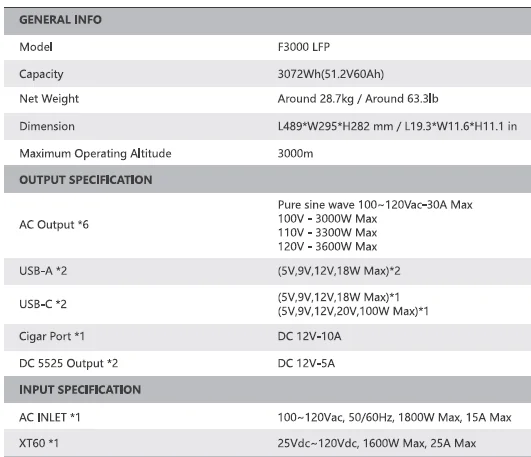
Thanks for the advice...Love the technical term "twitchy" :) The Pecron will take DC input up to 25-120Vdc, 1600W max, 25A max:

Rivian R1T R1S How to use your Rivian as a Power Bank (safe way) 1772415609716-ar


I've bookmarked this thread - as I go to improve my energy game for camping and tailgating this year I'll definitely make use of your efforts!
 
OP
OP
mudito

mudito

Well-Known Member
First Name
Aldo
Joined
Jul 30, 2024
Threads
18
Messages
1,010
Reaction score
1,413
Location
Texas
Vehicles
Rivian R1T
Thanks for the advice...Love the technical term "twitchy" :) The Pecron will take DC input up to 25-120Vdc, 1600W max, 25A max:
1772415609716-ar.webp


I've bookmarked this thread - as I go to improve my energy game for camping and tailgating this year I'll definitely make use of your efforts!
I would then run anything between 100-110v DC to have some marging and you should be great.
 

LivingInKaos

Well-Known Member
Joined
Jun 30, 2022
Threads
19
Messages
970
Reaction score
1,909
Location
Oregon
Vehicles
R1T Launch Green Forest Edge
Occupation
Own Fabrication Company / VP of Portland Rivian Club
Clubs
 
Case #1 is somewhat incorrect. If you utilize the right hybrid inverter, you can set it to prioritize AC output from the PV input - this isn't normal so you'd have to make sure your hybrid inverter has the ability. They shy from this because they can't guarantee that the ac output is always less kw than the pv input.

I've connected a hybrid inverter to the dc lines at the ac inverter under the seat in the Rivian and powered random items (including a 220v wirefeed welder). The one thing to be aware of for Gen 1 vehicles here is that the fuse feeding the ac inverter is IN THE BATTERY PACK - so if you blow it, they have to drop it to replace it.

Now, as for some history here - I live off-grid and charge my home system at night with the truck 110v when my solar isn't enough (cloudy winters). Feeding 1440w continuously ( you can never achieve 1500w as the voltage drops like a rock as the amperage approaches the max) into a battery system is plenty as the avg home power use is in the 30-35kwh range per day. So, 24hrs at 1.44kw is about 34kwh (obviously there is some loss in the process, but nothing near 4kwh over that period)
 

Sponsored

OP
OP
mudito

mudito

Well-Known Member
First Name
Aldo
Joined
Jul 30, 2024
Threads
18
Messages
1,010
Reaction score
1,413
Location
Texas
Vehicles
Rivian R1T
Case #1 is somewhat incorrect. If you utilize the right hybrid inverter, you can set it to prioritize AC output from the PV input - this isn't normal so you'd have to make sure your hybrid inverter has the ability. They shy from this because they can't guarantee that the ac output is always less kw than the pv input.
Wonder which part is incorrect? I did make some assumptions before making my statements, but just to cover the vast majority of installations. i.e.: Most Solar installs feed into the grid, so as soon as power goes out, the inverter stops converting PV input for safety. If it's a fully off-grid system, this is always different. I was just making the point that if you don't know how your inverter works, probably not good to mess up with :)

Mine has 4 different modes and I do not have ANY solar installed and I also don't feed back to the grid, so I normally use it in "Self-consumption mode" and I have Charge/discharge rules so peak-shave my utility plan (I went from ~250/mo average to $30/mo)


I've connected a hybrid inverter to the dc lines at the ac inverter under the seat in the Rivian and powered random items (including a 220v wirefeed welder). The one thing to be aware of for Gen 1 vehicles here is that the fuse feeding the ac inverter is IN THE BATTERY PACK - so if you blow it, they have to drop it to replace it.
Hence my title "Safe way" and under normal use-case. I don't want to do something that might risk an out-of-warranty repair... And yeah, the decision to have that fuse there it wasn't the best :)
 

theonetruestripes

Well-Known Member
First Name
Josh
Joined
Mar 19, 2025
Threads
7
Messages
167
Reaction score
169
Location
VT - North Eastern Kingdom
Vehicles
Tesla Model Y, for a few days before I “swap” it for an R1S
Occupation
Programmer
Clubs
 
but limited to ~1500W really constrains my options. I was about to purchase one of these portable power generators like EcoFlow, but every single review I saw and every documentation I read from every brand stated the same thing: charging from the AC input will automatically limit the output to 1800W.
That is true for most of the big ass power banks that claim to be solar generators (a term I intensely dislike because they don’t generate anything, and don’t have any solar they are a thing you can use to hook up solar...).

However the Bluetti Apex 300 claims (and Bluetti tech support backs it up) that it can receive 120V in (up to about 18000W) and the 240V output is still 240V.

I have not yet verified it, although I have recently purchased one and my planned use is on my house’s “generator port” where I need about 600W to keep the home heating & other misc things running so the Rivain should be able to keep the Apex charged essensaly turning the Apex into a ~$1200 120V to 240V converter for the Rivain’s AC inverter (as well as a ~3kWh demand buffer). Anyway that is the theory. In practice I might have temperature issues (generator port on the house is outside the garage).
 
OP
OP
mudito

mudito

Well-Known Member
First Name
Aldo
Joined
Jul 30, 2024
Threads
18
Messages
1,010
Reaction score
1,413
Location
Texas
Vehicles
Rivian R1T
That is true for most of the big ass power banks that claim to be solar generators (a term I intensely dislike because they don’t generate anything, and don’t have any solar they are a thing you can use to hook up solar...).

However the Bluetti Apex 300 claims (and Bluetti tech support backs it up) that it can receive 120V in (up to about 18000W) and the 240V output is still 240V.
The EcoFlow does the same thing, BUT, there's a big CAVEAT that I mentioned in the video. I'm not sure if the Bluetti Apex 300 does the same thing, but I'm willing to bet that it does.

Normally when you connect a 240v output and plug a 120v input at the same time, the unit enters in "UPS mode". In the case of the EcoFlow, when you have a set the AC Input limit to avoid overloading your 120v source (Rivian in this case), this limit it's 100% ignored in UPS mode. So as soon as your load (house) surpasses 1500w, your inverter in your Rivian will trip. When it trips, the bonded ground also changes which might impact your output (I already recommend you to NOT use the grounding from the Rivian if you do this, use something like this) causing disruption on your 240v output.

My recommendation is to AVOID this AC 120/AC240 setup as, while it works, you're looking for trouble. ALSO, if the fuse of the Rivian inverter trips (like mentioned a couple of posts up there), that means a High-voltage battery removal job. Stupid, I know.

You MUST find the way to keep the output from the Rivian in check, and going DC-AC-DC-AC is by far the worst way to do it, but it's the only safe-warranted way to do it today.
 

theonetruestripes

Well-Known Member
First Name
Josh
Joined
Mar 19, 2025
Threads
7
Messages
167
Reaction score
169
Location
VT - North Eastern Kingdom
Vehicles
Tesla Model Y, for a few days before I “swap” it for an R1S
Occupation
Programmer
Clubs
 
The EcoFlow does the same thing, BUT, there's a big CAVEAT that I mentioned in the video. I'm not sure if the Bluetti Apex 300 does the same thing, but I'm willing to bet that it does.

Normally when you connect a 240v output and plug a 120v input at the same time, the unit enters in "UPS mode". [...]
Ahhh! Ok, so before I deploy this in anger I need to put a 240V load on it, like the Rivian’s mobile charger, and supply 120V from house power to it and see if it sticks with my current “backup” settings where it warns me “Input power limited to 1200W while output can exceed (1800W)” (but I should expect it to say ~16000W), and I should put it the Rivian on the mobile charger and tell it to pull 16A and see if the input goes past 1200W. Hmmm, I think I have the right equipment to measure that.
 
OP
OP
mudito

mudito

Well-Known Member
First Name
Aldo
Joined
Jul 30, 2024
Threads
18
Messages
1,010
Reaction score
1,413
Location
Texas
Vehicles
Rivian R1T
Ahhh! Ok, so before I deploy this in anger I need to put a 240V load on it, like the Rivian’s mobile charger, and supply 120V from house power to it and see if it sticks with my current “backup” settings where it warns me “Input power limited to 1200W while output can exceed (1800W)” (but I should expect it to say ~16000W), and I should put it the Rivian on the mobile charger and tell it to pull 16A and see if the input goes past 1200W. Hmmm, I think I have the right equipment to measure that.
Yup, that's an easy test to do and in fact, I did exactly that. The EcoFlow has a setting in the app that says "GFCI/RCD Support" that you MUST check in order for the charger to be able to operate properly (ground bonding).

I used a 3-pron high amp 120v adapter connected to the output of the EcoFlow (in this case it was 120v in, and 120v out, but the same concept of matching the output applies) but I think the Apex 300 has a NEMA 14-50, right? so you should be able to directly plug that to the mobile charger.

Definitely encourage to test the 240v out of the Bluetti while plugged in to a wall outlet before trying it on the Rivian :)
Sponsored


Top