starbux
Well-Known Member
- First Name
- Dom
- Joined
- Sep 7, 2024
- Threads
- 16
- Messages
- 96
- Reaction score
- 438
- Location
- Gig Harbor, WA
- Vehicles
- R1T
- Thread starter
- #1
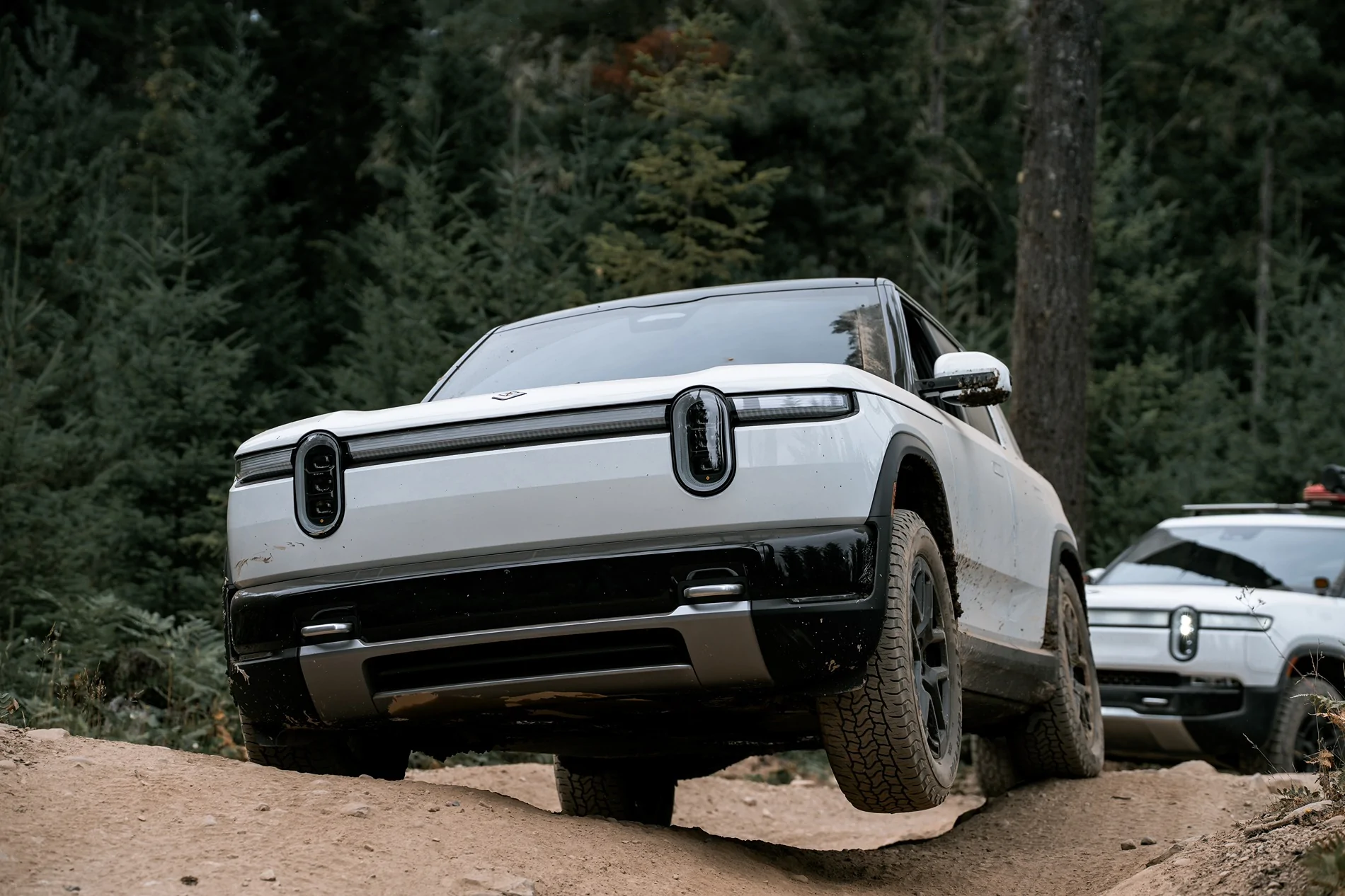
There has been a lot of discussion around the R2’s real-world range, especially after recent 70 mph testing. Rather than trying to recreate a controlled range test, I wanted to show what the R2 looks like during an actual week of work and fun for someone who drives considerably more than average.
As a real estate photographer, a typical workday involves traveling to multiple homes throughout Pierce and Kitsap counties in Western Washington State. The routes include highways at around 60 to 65 mph, back roads, neighborhood streets, traffic, and constant elevation changes. Many of these drives repeatedly move from near sea level to around 400 feet. Traffic around Bremerton and the shipyard can also be rough, so there is plenty of stop-and-go driving mixed in.
There is also a pretty established history here of putting serious mileage on Rivians.
The Gen 1 Quad-Motor R1T covered more than 40,000 miles in just under two years. The Gen 2 Tri Max then reached 45,000 miles in only 18 months, which works out to roughly 30,000 miles per year.
Between those two trucks, that is more than 85,000 miles in less than three and a half years. So the question with the R2 was never whether it could handle a short commute or occasional weekend use. The question was whether a smaller and more affordable Rivian could still keep up with a high-mileage work schedule.
The R2 is charged to 100% every night, just like both previous R1Ts. It is currently equipped with BFGoodrich Trail-Terrain tires, and most highway driving stays around 60 to 65 mph, with very little time spent over 70 mph.
Rivian Roamer is being used to track driving and charging. For whatever reason, it missed the first 75 miles, but tracking started during an off-road trip through Tahuya ORV Park. Monday marked the beginning of the work week, which continued through Thursday evening. By then, the R2 had about 745 miles on the odometer, with nearly 700 miles driven in roughly five days.
During the recorded portion, Rivian Roamer tracked 641.9 miles across 41 separate drives, with an overall efficiency of 3.0 mi/kWh. That included an off-road day, four days of work travel, highways, back roads, traffic congestion, elevation changes, and dozens of individual stops.
Sunday’s trip through Tahuya ORV Park also brought the weekly efficiency down. Slow off-road driving is not particularly efficient because the vehicle is still powering its systems and moving a heavy vehicle while covering very little distance. Even with that included, the R2 averaged 3.0 mi/kWh across the tracked week.
Monday through Thursday alone accounted for approximately 534 miles, or more than 130 miles per workday. The busiest day was close to 150 miles.
That is probably more daily driving than most R2 owners will experience. But for this kind of work, the vehicle needs to travel between counties, carry equipment, deal with unpredictable traffic, and still leave enough flexibility for another appointment or an unexpected detour.
Across the tracked period, 222.6 kWh was added through five charging sessions. At a home electricity rate of approximately 7.5 cents per kWh, that cost only $16.70.
The biggest takeaway was not a theoretical maximum range. It was how easily the R2 fit into a normal routine.
The vehicle was driven throughout the day, plugged in at home each night, and ready again the next morning. There was no need to stop at a public charger during the work week, and no need to organize appointments around charging. Even on days with 140 to 150 miles of driving, the R2 completed the schedule without making range something that required constant attention.
This is not intended to be a controlled range test, and it is not meant to dispute anyone else’s results. Weather, speed, terrain, tires, climate use, and driving style will all affect efficiency.
This is simply an example of what the R2 looks like when used as a high-mileage work vehicle.
In its first several days, it went from an off-road park to more than 500 miles of work travel across Pierce and Kitsap counties. It handled highways, back roads, hills, traffic, frequent stops, and 41 separate drives while averaging 3.0 mi/kWh.
After more than 85,000 miles across two R1Ts, the expectations were already clear. The R2 did not need to produce one specific range number.
It needed to keep up with someone who drives as much as 30,000 miles a year.
So far, it has.
Sponsored