
Donald Stanfield
Well-Known Member
- Thread starter
- #1
I went from Knoxville to North Western, WI, and back this past weekend. There were some interesting takeaways from my trip. I want to take this opportunity to give my impressions of the trip and EV charging in general. I'll break it down into sections, as I usually do with my reviews, so feel free to skip any section that doesn't interest you.
R1T General Impressions
I have had pickups and trucks make the best road trip vehicles. There is enough space; they are versatile and can handle weather conditions. The Rivian was no exception to this general rule and is the best truck I've ever had for road-tripping. The vehicle was comfortable, had plenty of power, the GPS was accurate and fast, and the storage was terrific. I went hunting and took my uncle with me. Even with all our gear, we never felt cramped. If anyone here has ever been hunting, you'd know there is a ton of gear required, so that's saying something that it all fits nicely. The truck handled driving on my hunting land, primarily hills, just as well as if it was in a parking lot. The HP also comes in handy on the freeway, making passing and merging effortless.
Charging
This is where the review gets interesting. My trip was the first time I had to make fast charging stops, and I made quite a few of them on this trip. I have to say most of the reviews on here talking about how poor the charging experience is are spot on. There are so many easy things to improve on for the charging experience, and you can tell we have a long way to educate EV owners on things that should be common sense. First off, there is no standardization of chargers and locations of chargers. They are buried in random parking lots with no real rhyme or reason. When driving an ICE car on a road trip, I only stop at truck stops to fuel up because their proximity to the freeway makes fuel stops easy and as quick as possible. EV charging is more like going to your local station, where you have to drive a ways off the expressway to get to and deal with local traffic. A few were in truck stop configurations, only the ones at Pilot stations, but most were far out of the way. That is a pain, but it's not a massive deal.
I enjoyed taking the longer stops, especially when the stops were in good locations. When it was just a Walmart with nothing else around, the stop got boring quickly. My favorite stops were in strip malls with local stores. I enjoyed going in and checking them out, and the 40-minute stops sometimes seemed too short. That positive is contrasted with the experience I had with the chargers themselves.
The chargers were a mixed bag, with some trouble-free and some needing improvement. The first thing was the size of the stalls. Depending on the configuration, hooking up was easy, or it could be a nightmare. It was easy to pull up and charge for everyone when they had chargers in front of individual parking spots, like the Tesla configuration. Some EA stations had the chargers in a stall configuration where there was a parking spot, two chargers, and another spot all in a line. This configuration was terrible for a truck because depending on which charger was open meant I could get in to charge only when certain chargers were free.
Those stalls in that config were extremely narrow, and it was difficult to avoid hitting a pilon with my doors getting in and out of the vehicle. Whoever designed that wasn't planning on trucks. However, the biggest problem I had with charging was with other users. I couldn't count how many Bolts or Mach E's were clogging up the 350kW chargers. Those abject morons don't seem to realize the faster charger won't do them any good because their vehicles are limited to under the 150kW charger's output.
So when I have to plug into a 150kW charger because some moron is pulling 45kW in his bolt, I get pretty pissed off. My uncle, who has a degree in and many years experience fixing electronic equipment, also had a theory that the repeated charging of these low draw vehicles on the high output chargers is a reason those chargers were buggy because they weren't designed to throttle down output for that long of a period. They were probably built to run higher current for vehicles that can use it than spend an hour running 40kW constantly.
What could fix this is a sliding charging scale. Charge per minute as default and run a higher rate on the more powerful chargers. Additionally, the vehicles that come with free EA charging for some time need to have that apply ONLY to the chargers the vehicle maxes out at. So if your car can charge at 50kW max, make it so the only free sessions you get are for those chargers, or if it maxes out at 110, like the Mustang, have it limited to 150kW chargers for free sessions. They also need a screen explaining charging rates to these morons when it detects a vehicle like a bolt on a 350kW station. Something like you are driving a vehicle limited to 55kW charging, and this charger will cost you more than plugging into a different one. That way, it could keep the high-output chargers free from these morons and available for the vehicles that can take advantage of them.
The weather also brought up another difference between ICE and EVs regarding fueling. The Pilot stations were smart enough to put a canopy over the station, which was lovely regarding the rain. I drove an entire day and a half through. It sucked having to get out to charge and plug-in during the rain in the uncovered stations. Why do gas stations get the canopies and we don't? It's another terrible design choice.
Availability of chargers wasn't a huge problem, but it would have been nice if there were enough chargers that a few times I needed to charge to 80% didn't happen. With the charging curve, it seemed like 60% came in about 10 min of charging at 350kW, and that would have saved time had more chargers been spaced out accordingly.
The last complaint I have is regarding garbage can availability. At gas stations, they have garbage cans where you can clean out your vehicle while stopped to fuel. Why do they not have this at the Chargers as well? I want to clean out my truck while stopped, just like I did when driving an ICE vehicle. The windshield washing squeegee would also be excellent to have there as well.
Stopping to charge made the trip much longer than an ICE car would have, but the length broke up the trip and made it less stressful. So that wasn't an entirely unwelcome change. If the above processes were addressed when it came to charging, being forced to charge wouldn't be an issue because what you lose in extra time, you gain less stress and discomfort.
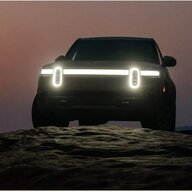
Overall, the Rivian is an excellent vehicle to road trip in, and many of the issues I experienced should go away with some planning and education. Here is a bonus picture of my R1 on my hunting property.

R1T General Impressions
I have had pickups and trucks make the best road trip vehicles. There is enough space; they are versatile and can handle weather conditions. The Rivian was no exception to this general rule and is the best truck I've ever had for road-tripping. The vehicle was comfortable, had plenty of power, the GPS was accurate and fast, and the storage was terrific. I went hunting and took my uncle with me. Even with all our gear, we never felt cramped. If anyone here has ever been hunting, you'd know there is a ton of gear required, so that's saying something that it all fits nicely. The truck handled driving on my hunting land, primarily hills, just as well as if it was in a parking lot. The HP also comes in handy on the freeway, making passing and merging effortless.
Charging
This is where the review gets interesting. My trip was the first time I had to make fast charging stops, and I made quite a few of them on this trip. I have to say most of the reviews on here talking about how poor the charging experience is are spot on. There are so many easy things to improve on for the charging experience, and you can tell we have a long way to educate EV owners on things that should be common sense. First off, there is no standardization of chargers and locations of chargers. They are buried in random parking lots with no real rhyme or reason. When driving an ICE car on a road trip, I only stop at truck stops to fuel up because their proximity to the freeway makes fuel stops easy and as quick as possible. EV charging is more like going to your local station, where you have to drive a ways off the expressway to get to and deal with local traffic. A few were in truck stop configurations, only the ones at Pilot stations, but most were far out of the way. That is a pain, but it's not a massive deal.
I enjoyed taking the longer stops, especially when the stops were in good locations. When it was just a Walmart with nothing else around, the stop got boring quickly. My favorite stops were in strip malls with local stores. I enjoyed going in and checking them out, and the 40-minute stops sometimes seemed too short. That positive is contrasted with the experience I had with the chargers themselves.
The chargers were a mixed bag, with some trouble-free and some needing improvement. The first thing was the size of the stalls. Depending on the configuration, hooking up was easy, or it could be a nightmare. It was easy to pull up and charge for everyone when they had chargers in front of individual parking spots, like the Tesla configuration. Some EA stations had the chargers in a stall configuration where there was a parking spot, two chargers, and another spot all in a line. This configuration was terrible for a truck because depending on which charger was open meant I could get in to charge only when certain chargers were free.
Those stalls in that config were extremely narrow, and it was difficult to avoid hitting a pilon with my doors getting in and out of the vehicle. Whoever designed that wasn't planning on trucks. However, the biggest problem I had with charging was with other users. I couldn't count how many Bolts or Mach E's were clogging up the 350kW chargers. Those abject morons don't seem to realize the faster charger won't do them any good because their vehicles are limited to under the 150kW charger's output.
So when I have to plug into a 150kW charger because some moron is pulling 45kW in his bolt, I get pretty pissed off. My uncle, who has a degree in and many years experience fixing electronic equipment, also had a theory that the repeated charging of these low draw vehicles on the high output chargers is a reason those chargers were buggy because they weren't designed to throttle down output for that long of a period. They were probably built to run higher current for vehicles that can use it than spend an hour running 40kW constantly.
What could fix this is a sliding charging scale. Charge per minute as default and run a higher rate on the more powerful chargers. Additionally, the vehicles that come with free EA charging for some time need to have that apply ONLY to the chargers the vehicle maxes out at. So if your car can charge at 50kW max, make it so the only free sessions you get are for those chargers, or if it maxes out at 110, like the Mustang, have it limited to 150kW chargers for free sessions. They also need a screen explaining charging rates to these morons when it detects a vehicle like a bolt on a 350kW station. Something like you are driving a vehicle limited to 55kW charging, and this charger will cost you more than plugging into a different one. That way, it could keep the high-output chargers free from these morons and available for the vehicles that can take advantage of them.
The weather also brought up another difference between ICE and EVs regarding fueling. The Pilot stations were smart enough to put a canopy over the station, which was lovely regarding the rain. I drove an entire day and a half through. It sucked having to get out to charge and plug-in during the rain in the uncovered stations. Why do gas stations get the canopies and we don't? It's another terrible design choice.
Availability of chargers wasn't a huge problem, but it would have been nice if there were enough chargers that a few times I needed to charge to 80% didn't happen. With the charging curve, it seemed like 60% came in about 10 min of charging at 350kW, and that would have saved time had more chargers been spaced out accordingly.
The last complaint I have is regarding garbage can availability. At gas stations, they have garbage cans where you can clean out your vehicle while stopped to fuel. Why do they not have this at the Chargers as well? I want to clean out my truck while stopped, just like I did when driving an ICE vehicle. The windshield washing squeegee would also be excellent to have there as well.
Stopping to charge made the trip much longer than an ICE car would have, but the length broke up the trip and made it less stressful. So that wasn't an entirely unwelcome change. If the above processes were addressed when it came to charging, being forced to charge wouldn't be an issue because what you lose in extra time, you gain less stress and discomfort.
Overall, the Rivian is an excellent vehicle to road trip in, and many of the issues I experienced should go away with some planning and education. Here is a bonus picture of my R1 on my hunting property.

Sponsored
Last edited: